Some animals are naturally chubby — not from overeating, but from survival science. They store fat for warmth, energy, migration, or hibernation. The world’s fattest animals range from ocean giants with blubber layers thicker than your arm to tiny insects that are 80% fat by body weight. Here are 20 naturally chubby animals that prove roundness is a real biological superpower.
Table of Contents
Quick List of Naturally Chubby Animals
- Blue Whale
- Southern Elephant Seal
- Manatee
- Walrus
- Hippopotamus
- African Elephant
- White Rhinoceros
- Giant Panda
- Capybara
- Pallas’s Cat
- Wombat
- Red Panda
- Polar Bear
- Kodiak Bear
- Black Rain Frog
- Fat-tailed Lemur
- Army Cutworm Moth
- Pika
- Penguin
- Maine Coon
Why Some Animals Are Naturally Fat (And It’s Brilliant)
Picture this: a mouse-sized frog shaped like a stress ball. Or a moth that is more fat than anything else — literally 80% body fat. These aren’t unhealthy animals. They are masterclasses in survival engineering.
Some of the chubbiest animals on Earth have evolved their roundness over millions of years. A few store fat for brutal winters. Others need blubber to stay warm in freezing ocean water. These are fat animals with a purpose — and some of the most fascinating biology on the planet.
1. Blue Whale
- Scientific name: Balaenoptera musculus
- Size: Up to 100 feet (30 m)
- Weight: Up to 200 tons
- Diet: Krill
- Habitat: All major oceans
- Lifespan: 80–90 years
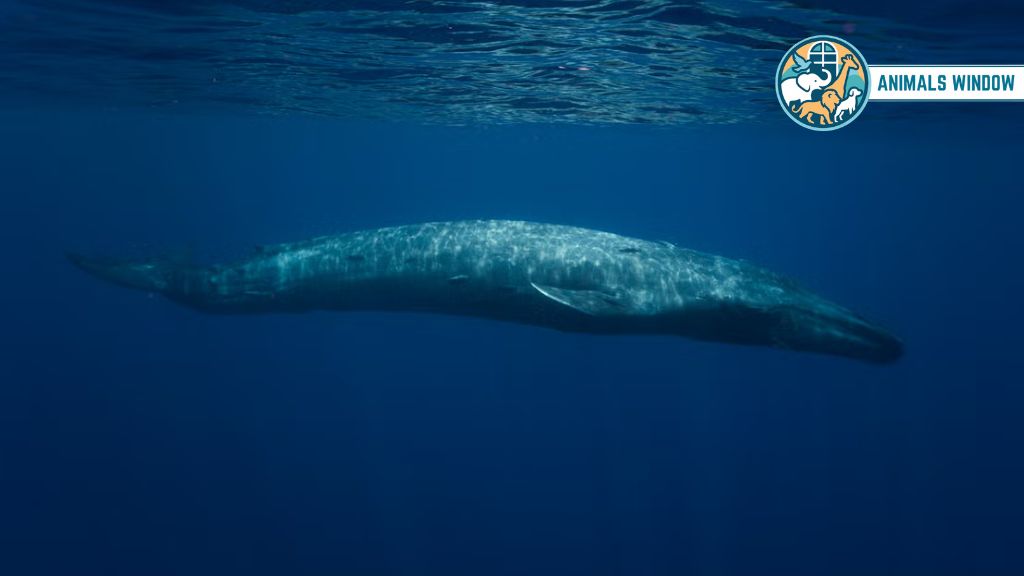
The blue whale is the largest animal ever to exist on Earth. It also holds the record for the single largest fat reserve of any creature — its blubber layer can be up to 12 inches thick and makes up roughly 27% of its total body weight. That fat layer isn’t just insulation; it stores calories for long migrations where the whale may eat very little for months.
They eat almost exclusively krill — tiny shrimp-like creatures barely the size of a paperclip. But they eat up to 40 million of them per day during feeding season. The fat built from that krill fuels everything: warmth, reproduction, and ocean-crossing travel. A blue whale’s tongue alone weighs as much as an entire elephant, and the fat beneath its skin is thick enough that early whalers used it to make lamp oil for entire cities.
🔥 Comparison Fact: A blue whale’s blubber layer is as thick as a standard carry-on suitcase is tall.
2. Southern Elephant Seal
- Scientific name: Mirounga leonina
- Size: Up to 20 feet (6 m) for males
- Weight: Up to 8,800 lbs (4,000 kg)
- Diet: Fish, squid
- Habitat: Sub-Antarctic and Antarctic waters
- Lifespan: 20–22 years
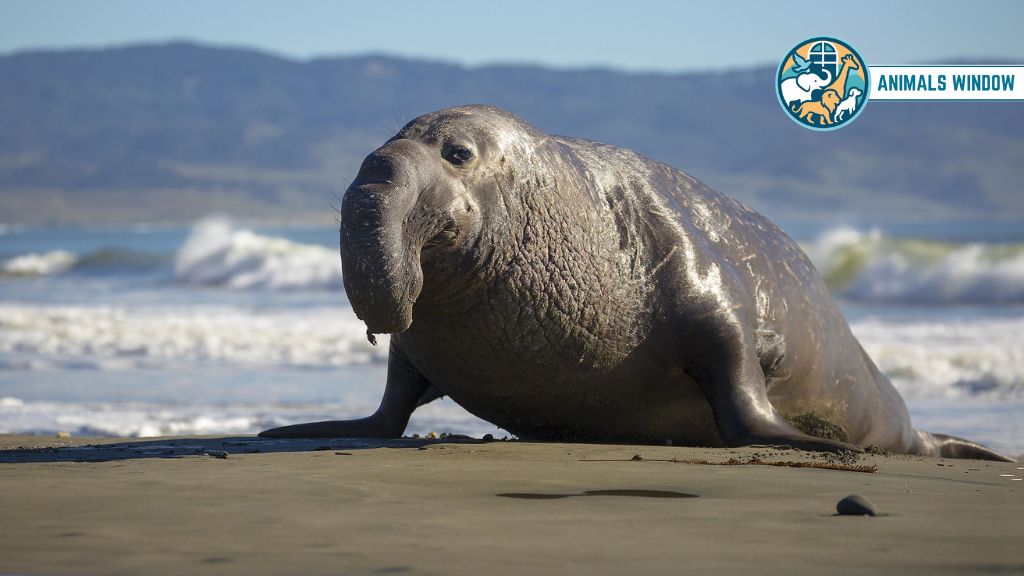
The southern elephant seal is the chunky marine mammal champion of the Southern Ocean. At peak condition, males carry body fat levels around 40% — meaning nearly half of what you’re looking at is pure blubber. This is one of the highest body fat percentages of any large mammal on Earth.
But here’s what separates this seal from other fat animals: it undergoes catastrophic molting. Once a year, it sheds not just its fur but the entire outer layer of its skin in large flaking patches. During this time, it cannot enter the water — so it lives entirely off its fat reserves for weeks. No eating, no drinking. Just burning stored energy while sitting on a beach looking absolutely miserable. That fat isn’t just insulation; it’s a built-in food supply for one of nature’s most extreme survival routines.
🔥 Comparison Fact: A fully grown male southern elephant seal weighs about as much as a full-size pickup truck.
3. Manatee
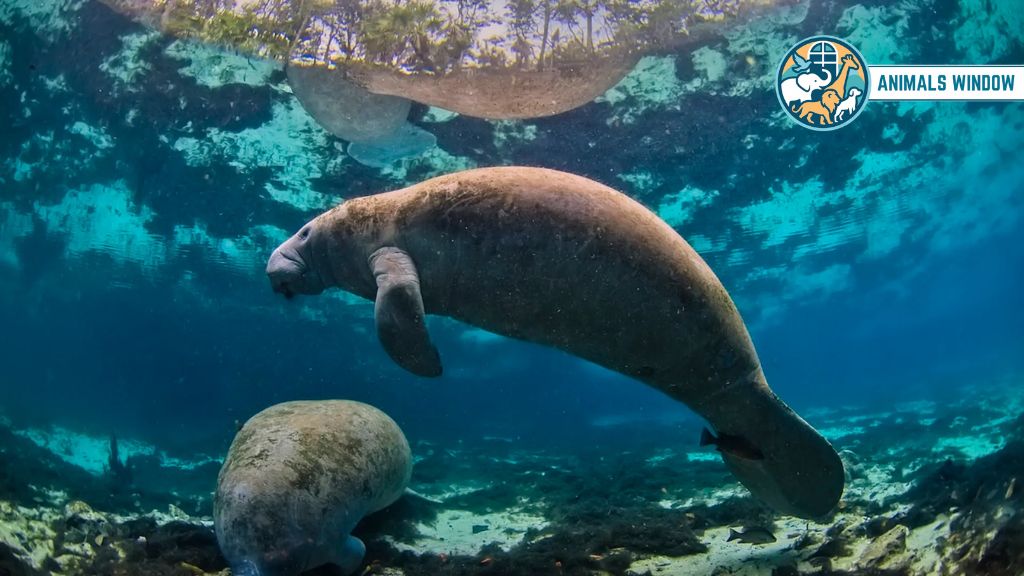
- Scientific name: Trichechus spp.
- Size: 8–13 feet (2.4–4 m)
- Weight: 400–1,300 lbs (180–590 kg)
- Diet: Aquatic plants, sea grasses
- Habitat: Shallow coastal waters, rivers (Florida, Caribbean, West Africa)
- Lifespan: 40–60 years
The manatee is the original sea cow — and it earns that nickname completely. Round, slow-moving, and peaceful, manatees spend most of their day grazing on underwater plants. They can eat up to 10% of their body weight in vegetation every single day, which keeps their thick, barrel-shaped body well padded.
What makes manatees fascinating is that they have almost no natural predators — so their chubby build isn’t defensive armor. It’s purely functional. That fat layer keeps them warm in cool water, since manatees are unusually sensitive to cold for a marine mammal. Water below 68°F (20°C) can kill them. Their biggest threat today is motorboat propellers, and most adult manatees carry propeller scars on their backs. Their round profile and slow pace make them nearly impossible to miss — yet somehow, they still get hit. It’s one of conservation’s saddest ironies.
🔥 Comparison Fact: A manatee’s body is roughly the shape and size of a large hot water heater standing on its side.
4. Walrus
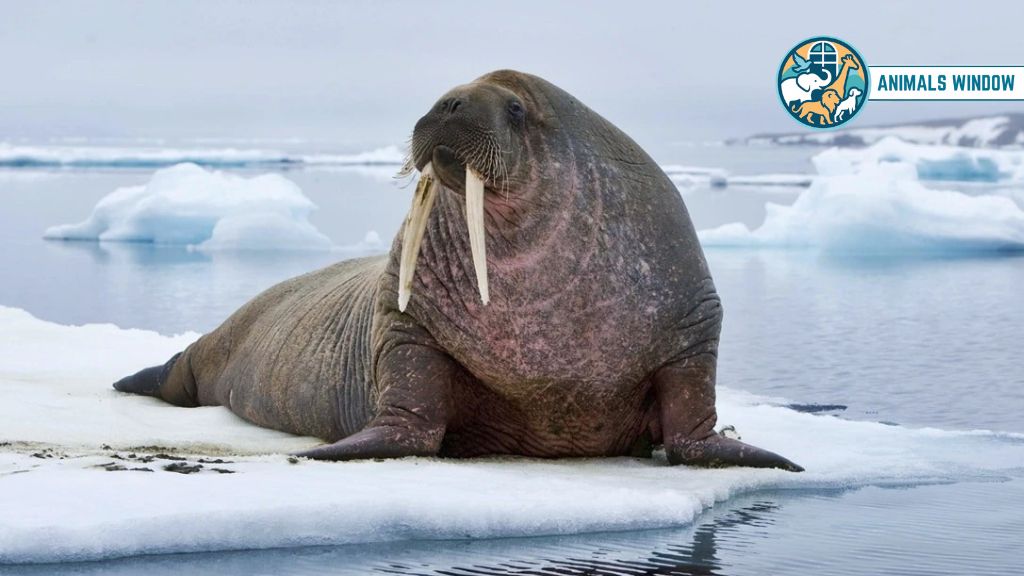
- Scientific name: Odobenus rosmarus
- Size: 7.5–11.5 feet (2.3–3.5 m)
- Weight: Up to 3,700 lbs (1,680 kg)
- Diet: Clams, mussels, sea cucumbers
- Habitat: Arctic and sub-Arctic
- Lifespan: 30–40 years
Walruses are one of the thickest animals in the Arctic. Their skin can be up to 4 centimeters thick on its own — and beneath that sits a blubber layer measuring 6 inches or more. Together, this makes the walrus look like a heavily upholstered armchair with tusks.
The blubber layer is actually dynamic. Walruses pump blood into it to warm up when they’re cold and restrict blood flow to cool down when they’re hot — turning their fat into a living thermostat. When they haul out onto ice in massive groups, you can see them shift from a pale grayish-white (cold, blood pulled inward) to a flushed pink or red (hot, blood flooding the surface). It’s one of the most visible fat-management systems in the animal kingdom.
🔥 Comparison Fact: A walrus’s blubber layer alone is about as thick as a brick.
5. Hippopotamus
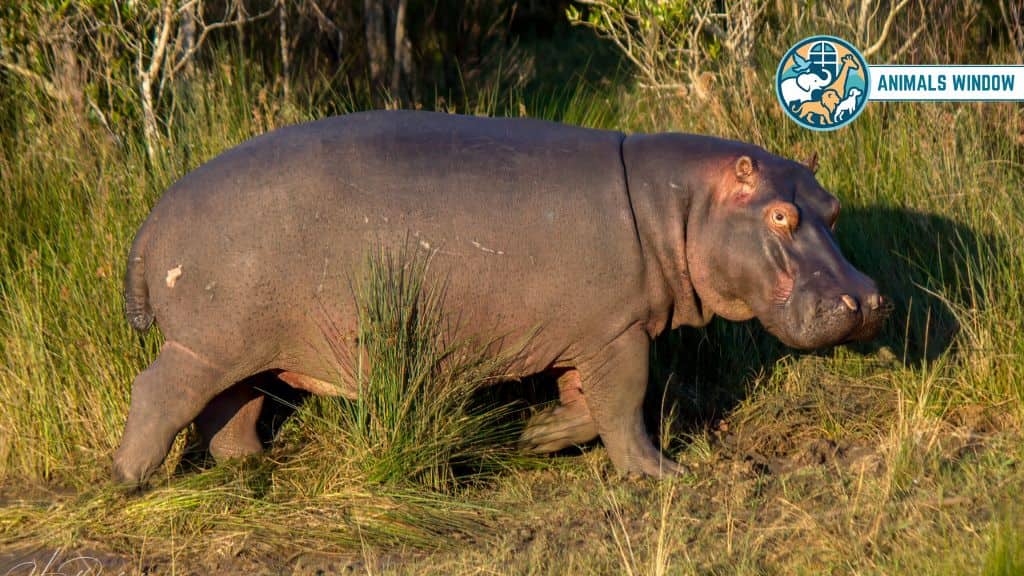
- Scientific name: Hippopotamus amphibius
- Size: 10–17 feet (3–5 m)
- Weight: 3,300–9,900 lbs (1,500–4,500 kg)
- Diet: Grasses
- Habitat: Sub-Saharan Africa, rivers and lakes
- Lifespan: 40–50 years
The hippo is the barrel-shaped land animal that needs no introduction. Its torso structure is a near-perfect cylinder — wide, deep, and almost no neck visible from a distance. Despite looking like a slow, lumpy creature, the hippo is one of the most dangerous animals in Africa, capable of running at 19 mph for short bursts.
Hippos have almost no sweat glands. Instead, they secrete a reddish, oily fluid from their skin sometimes called “blood sweat” — though it’s neither blood nor sweat. This secretion acts as sunscreen, moisturizer, and an antimicrobial agent all at once. Their chubby exterior is so well-sealed that they can stay out of water for hours in intense heat without drying out. That thick layer of skin and fat is their personal environmental suit.
🔥 Comparison Fact: An adult hippo’s torso is approximately the same width as a standard refrigerator laid on its side.
6. African Elephant
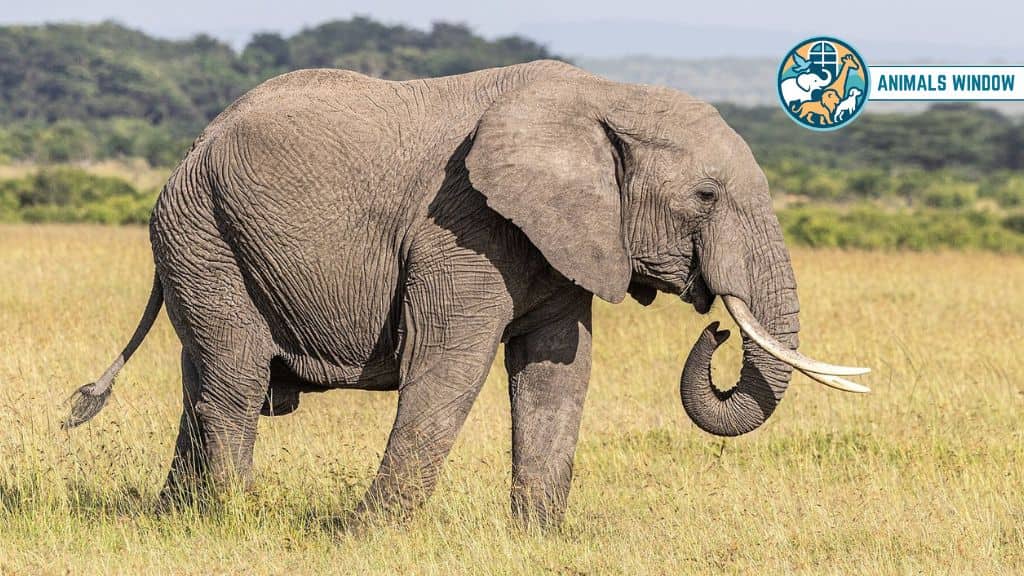
- Scientific name: Loxodonta africana
- Size: 8.2–13 feet (2.5–4 m) at the shoulder
- Weight: 6,000–14,000 lbs (2,700–6,350 kg)
- Diet: Grasses, bark, fruit, roots
- Habitat: Savannas and forests of sub-Saharan Africa
- Lifespan: 60–70 years
The African elephant is the largest land animal on Earth. Its thick, deeply wrinkled skin — which can be 1.5 inches (3.8 cm) thick in places — traps moisture in the folds, helping it stay cool and preventing excessive water loss in hot savanna environments.
Elephants have an unusual fat behavior: they store significant fat reserves behind their heads in a structure called the temporal pad. When an elephant is in good health and well-fed, this pad is visibly full and rounded. When food is scarce, the pad deflates. Wildlife rangers actually use the shape of the head to quickly assess an elephant’s nutritional status from a distance. It’s a built-in health gauge on the most recognizable animal on the planet.
🔥 Comparison Fact: An African elephant’s skin alone can weigh as much as a full-grown adult male human — around 2,200 lbs for the whole hide.
7. White Rhinoceros
- Scientific name: Ceratotherium simum
- Size: 11–13 feet (3.4–4 m)
- Weight: 4,000–5,100 lbs (1,800–2,300 kg)
- Diet: Grasses
- Habitat: Grasslands of southern Africa
- Lifespan: 35–50 years
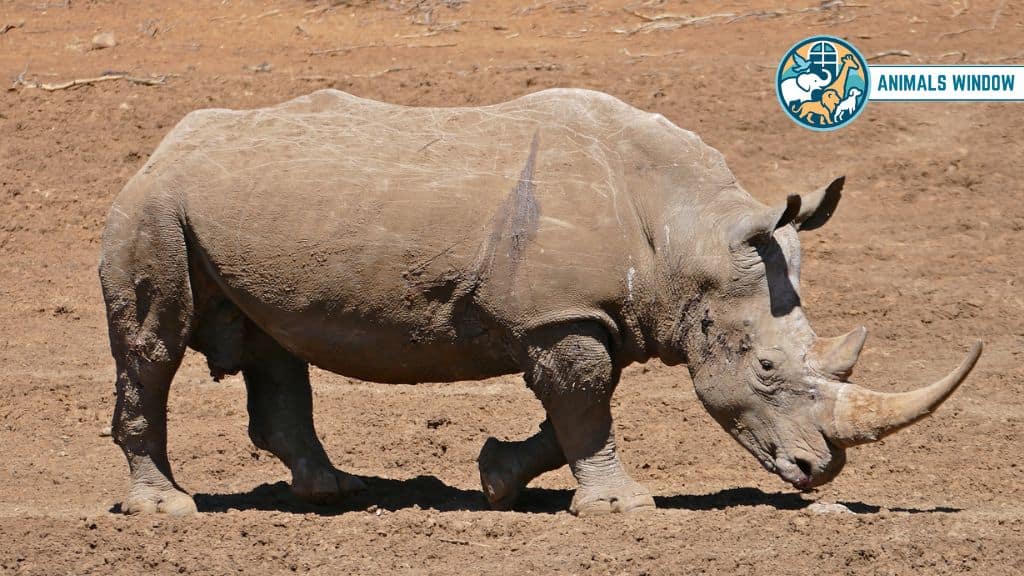
The white rhino looks like someone welded a tank to a pair of short legs. Its body is nearly square — wide at the chest, wide at the hips, with almost no visible waist. That armor-like skin, which can be 1.5–2 inches thick, makes it the second-largest land animal and one of the most physically imposing creatures alive.
Despite its bulk, the white rhino is a grazer. Its wide, flat lips — the trait that actually gave it its name (the word “white” is thought to be a mistranslation of the Afrikaans word weit, meaning “wide”) — are designed to crop grass at ground level with efficiency. A white rhino can graze for up to 12 hours a day. That kind of sustained fuel consumption powers a body that’s essentially a self-propelled boulder with poor eyesight but an exceptional sense of smell.
🔥 Comparison Fact: A white rhino’s body is roughly the length of a mid-size SUV.
8. Giant Panda
- Scientific name: Ailuropoda melanoleuca
- Size: 4–5 feet (1.2–1.5 m) body length
- Weight: 220–330 lbs (100–150 kg)
- Diet: Bamboo (99% of diet)
- Habitat: Mountain forests of central China
- Lifespan: 15–20 years (wild)
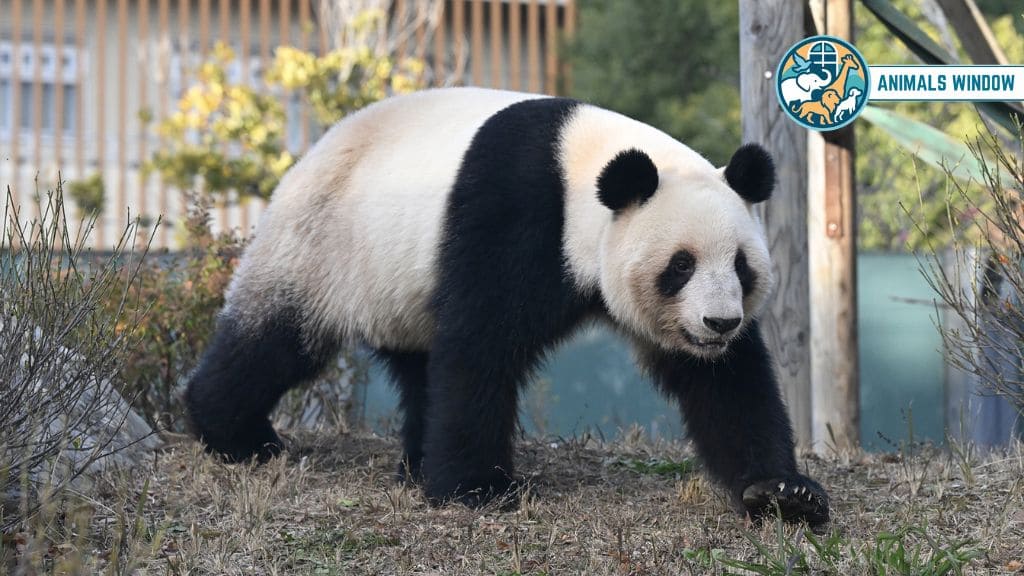
The giant panda’s round face and plump body are the result of one of the strangest dietary choices in the carnivore family. Pandas are technically carnivores — their digestive system is built like a carnivore’s — but they eat bamboo almost exclusively. Bamboo has very low nutritional value, so pandas must eat 20–40 lbs of it every single day just to get enough energy to function.
All that eating keeps them sitting still for most of the day, which gives them their signature doughy silhouette. But there’s a twist: giant pandas have an extra pseudo-thumb — a modified wrist bone that evolved specifically to grip bamboo stalks. It’s not a real thumb, but it functions like one. No other bear has this structure. Their chubbiness is essentially the price they pay for a food choice that made zero evolutionary sense — and yet, it worked out well enough to survive millions of years.
🔥 Comparison Fact: A giant panda’s daily bamboo intake weighs about as much as a large microwave oven.
9. Capybara
- Scientific name: Hydrochoerus hydrochaeris
- Size: 3.5–4.4 feet (1.1–1.3 m)
- Weight: 77–150 lbs (35–66 kg)
- Diet: Grasses, aquatic plants, bark
- Habitat: South American rivers and wetlands
- Lifespan: 8–10 years
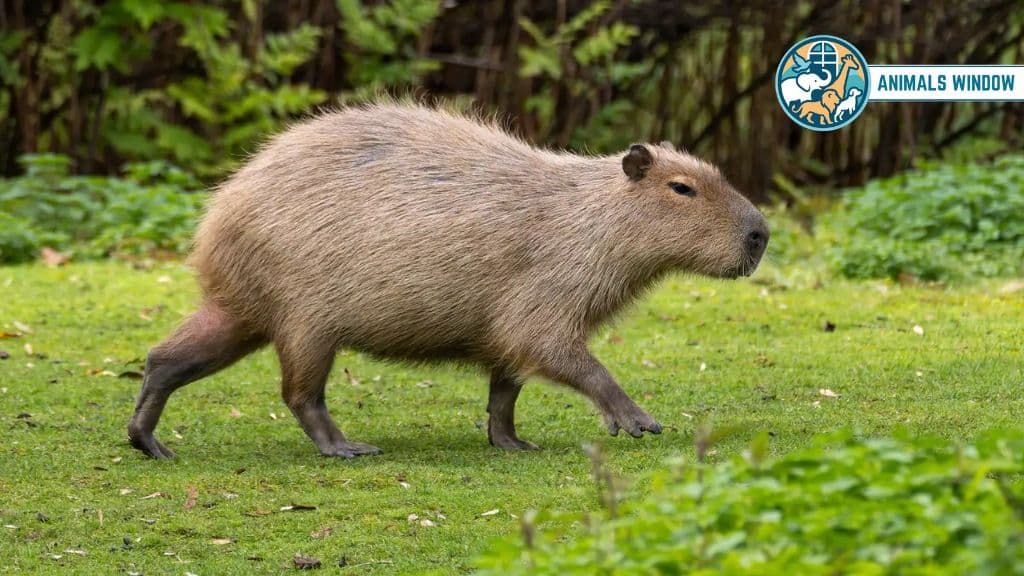
The capybara is the world’s largest rodent — basically a guinea pig that went to the gym, then ate the gym. Its barrel-chest and stubby legs give it a shape that looks comically oversized for what is, at its core, just a very large hamster relative.
What’s less well-known is the capybara’s social role. They are arguably the most universally friendly wild animal on Earth — other species actively seek them out. Toucans perch on them. Monkeys groom them. Ducks ride on their backs. Caimans rest nearby without attacking. Capybaras seem to exist in a state of interspecies peace that no one has fully explained. Some researchers think their calm, non-threatening body language — combined with being large enough that nothing feels threatened — makes them the perfect neutral party in the animal world.
🔥 Comparison Fact: A capybara is about the same size and weight as a large German Shepherd dog.
10. Pallas’s Cat

- Scientific name: Otocolobus manul
- Size: 18–26 inches (46–65 cm) body length
- Weight: 5.5–10 lbs (2.5–4.5 kg)
- Diet: Small rodents, birds, pikas
- Habitat: Central Asian grasslands and steppes
- Lifespan: 11–12 years
Pallas’s cat looks like it is permanently furious about everything, and it looks much larger than it actually is. The secret? It has the densest fur of any cat species on Earth. The fur is nearly twice as thick as that of domestic cats, and it grows in long, flat layers that make the cat appear dramatically puffier than it truly is.
Underneath all that fur, Pallas’s cat is actually quite lean. But its visual chubbiness serves a function: the insulating fur lets it hunt in temperatures down to -50°F (-45°C) in Mongolia and the Tibetan Plateau. Its flat face is not just distinctive — the low-set ears and flat forehead let it peer over rocks while keeping its entire head below the horizon line, making it nearly invisible to prey. It is a surprisingly stealthy predator dressed in what looks like an oversized winter coat.
🔥 Comparison Fact: A Pallas’s cat’s fur, fully fluffed out, makes the cat look about the size of a large house cat — but without that fur, it’s closer in build to a large squirrel.
11. Wombat

- Scientific name: Vombatus ursinus (Common Wombat)
- Size: 28–47 inches (71–120 cm)
- Weight: 32–80 lbs (14–36 kg)
- Diet: Grasses, roots, bark
- Habitat: Southeastern Australia
- Lifespan: 5–26 years
The wombat is a solid, low-to-the-ground marsupial that looks like someone inflated a badger and glued it to the floor. Its body is so dense and barrel-shaped that it feels almost cartoonishly round — and its backside is made of cartilage-reinforced skin that is essentially a natural shield.
When a predator chases a wombat into its burrow, the wombat plugs the entrance with its cartilage-padded rear end. Predators can’t get past it. The wombat then slowly crushes the predator’s skull against the burrow ceiling by pressing upward with its armored rump. But the wombat’s most bizarre claim to fame is biological: it is the only animal on Earth that produces cube-shaped poop.
Scientists only recently figured out why — the last 8% of the wombat’s intestine has varying elasticity that molds feces into cubes. Wombats use these cubes to mark territory on flat rocks without the poop rolling away. Every part of this animal’s body, including its digestive system, seems to have its own specialty.
🔥 Comparison Fact: A common wombat weighs about the same as a medium-size dog — around 50 lbs — but packed into a body the shape of a football.
12. Red Panda
- Scientific name: Ailurus fulgens
- Size: 20–26 inches (50–64 cm) body, plus tail
- Weight: 8–17 lbs (3.7–7.7 kg)
- Diet: Bamboo, berries, birds’ eggs, insects
- Habitat: Eastern Himalayas, southwestern China
- Lifespan: 8–10 years (wild)
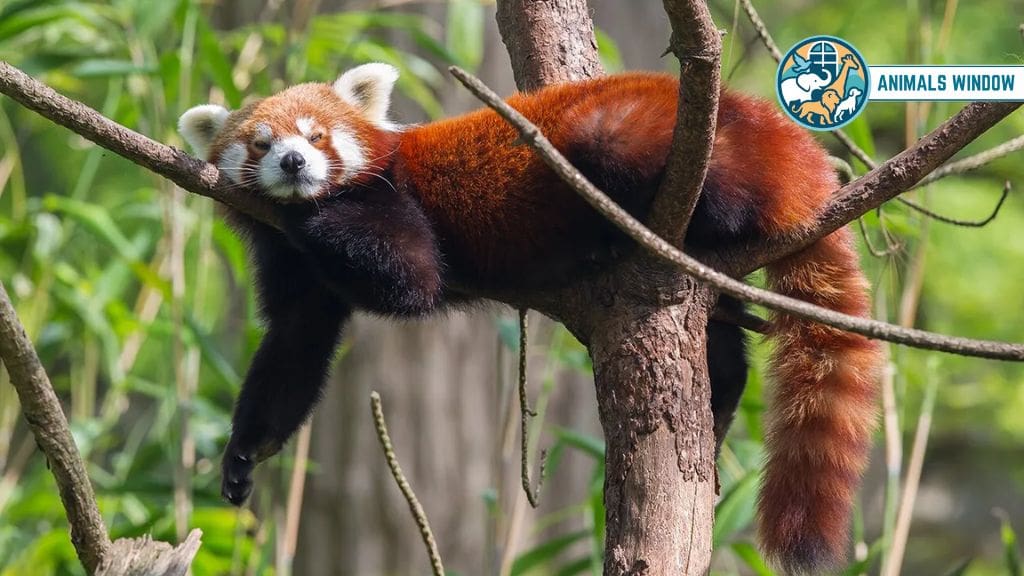
The red panda has a plump, rounded body covered in rust-colored fur with a ringed tail nearly as long as its body. Despite the name, it is not closely related to the giant panda — it belongs to its own family, Ailuridae, and is the only living member of it.
Red pandas have a remarkably precise internal clock. They are most active at dusk and dawn, spending daytime curled up in tree branches with their bushy tail wrapped around themselves for warmth. In winter, they can enter a torpor-like state — slowing their metabolic rate by up to 30% — to conserve energy when bamboo shoots are scarce.
What’s striking is that their false thumb (a modified radial sesamoid bone) for gripping bamboo evolved completely independently from the giant panda’s version. Two unrelated animals arrived at the exact same anatomical solution for the same problem — separated by millions of years of evolution.
🔥 Comparison Fact: A red panda is roughly the same length as a standard school ruler from nose to base of tail — about 24 inches.
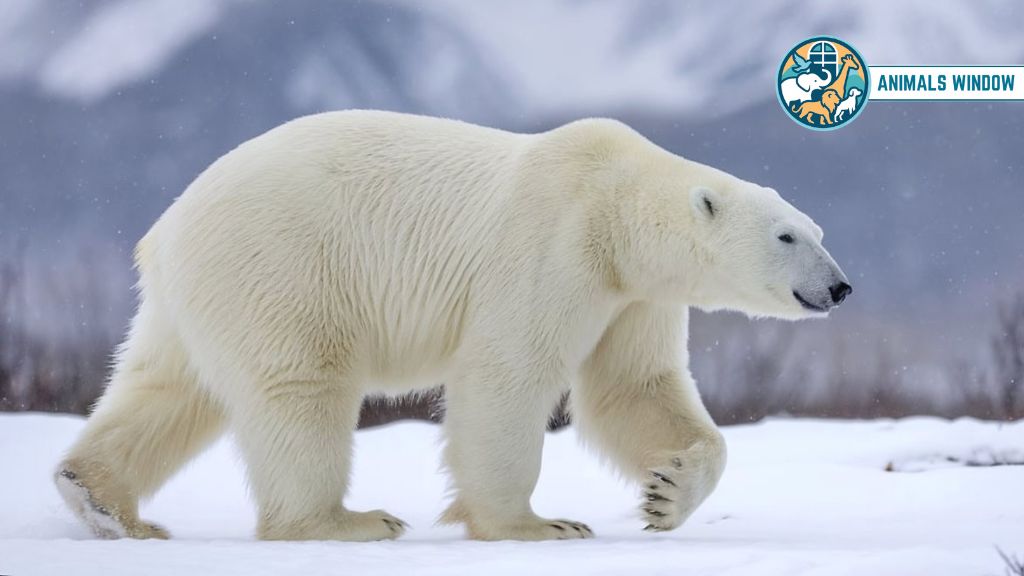
13. Polar Bear
- Scientific name: Ursus maritimus
- Size: 7–8 feet (2.1–2.4 m)
- Weight: 800–1,500 lbs (363–680 kg)
- Diet: Ringed seals, bearded seals
- Habitat: Arctic sea ice
- Lifespan: 25–30 years
The polar bear is the world’s largest land carnivore, and its blubber layer — up to 4.5 inches (11 cm) thick — is what makes survival possible in the Arctic. That fat does double duty: it provides insulation in water temperatures near freezing, and it fuels the bear during long stretches without food.
Polar bears are the only bear species considered to be marine mammals, largely because they spend so much time in and around the ocean. Their fat is so calorie-dense that a polar bear can fast for up to 8 months during lean periods — particularly pregnant females who den without eating from October through March while giving birth and nursing cubs.
The bear’s white fur, often believed to be hollow and fiber-optic, is actually a standard hollow shaft — but its black skin beneath absorbs solar heat with exceptional efficiency. Fat and skin together form one of the most effective thermal systems in the animal kingdom.
🔥 Comparison Fact: A polar bear’s blubber layer is thicker than a standard hardback novel standing on its spine.
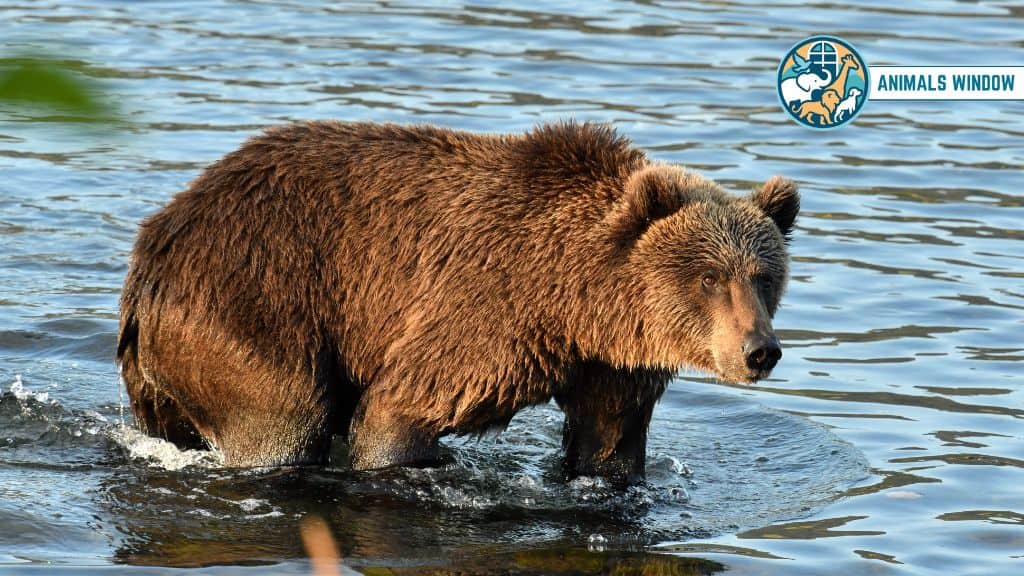
14. Kodiak Bear
- Scientific name: Ursus arctos middendorffi
- Size: Up to 10 feet (3 m) standing
- Weight: 400–1,500 lbs (180–680 kg)
- Diet: Salmon, berries, grasses, carrion
- Habitat: Kodiak Archipelago, Alaska
- Lifespan: 20–25 years
The Kodiak bear is the largest subspecies of brown bear and one of the biggest land carnivores alive. Before entering hibernation, a Kodiak can gain up to 3 lbs of fat per day during hyperphagia — a feeding frenzy state where it eats for 20 hours straight.
By the time a Kodiak is ready to den in late fall, nearly 50% of its body weight may be pure fat. This isn’t just stored energy — it’s a biological system. The bear’s body temperature drops only slightly during hibernation (unlike true hibernators), but its heart rate drops from 40–50 beats per minute down to just 8.
It doesn’t eat, drink, urinate, or defecate for up to 6 months. And yet it wakes up in spring without any muscle loss — because the bear’s body recycles its own urea into protein to maintain muscle mass. Scientists are actively studying this mechanism for potential applications in treating human muscle-wasting diseases.
🔥 Comparison Fact: A Kodiak bear standing on its hind legs is as tall as a standard interior door — around 6.5–7 feet.
15. Black Rain Frog

- Scientific name: Breviceps fuscus
- Size: 1.5–2 inches (4–5 cm)
- Weight: Less than 0.5 oz (14 g)
- Diet: Termites, ants, small invertebrates
- Habitat: Southern Afromontane forests, South Africa
- Lifespan: Unknown (likely 15–20 years)
The black rain frog looks like someone squeezed a tiny black balloon into the shape of a frog and gave it a permanent look of deep disappointment. Its body is nearly perfectly spherical — short limbs, wide belly, and an expression that appears to be the unhappiest face in the animal kingdom. And it lives up to it: the black rain frog is notably aggressive for its size, puffing up and squeaking loudly when threatened.
This frog burrows underground and emerges only during or after rainfall — which is where its name comes from. It is one of the few frog species that doesn’t need standing water to breed. It lays eggs directly in underground burrows, and the eggs hatch directly into small frogs with no tadpole stage. The entire aquatic phase of a typical frog’s life has been skipped entirely. Its round, chubby shape helps retain moisture in the dry mountain soil where it spends most of its life.
🔥 Comparison Fact: A black rain frog is roughly the size and shape of a large grape.
16. Fat-tailed Lemur

- Scientific name: Cheirogaleus medius
- Size: 7–9 inches (18–22 cm) body length
- Weight: 5–7 oz when lean; up to 12 oz before hibernation
- Diet: Fruit, nectar, insects
- Habitat: Western and southern Madagascar
- Lifespan: 15–18 years
The fat-tailed dwarf lemur has one of the most unusual fat storage systems in the entire mammal world. Instead of building fat reserves across its body, it deposits fat almost exclusively in its tail. Before the dry season, the tail can become so thick it looks swollen — storing enough energy to sustain the animal through 7 months of dormancy.
This makes it the only primate known to undergo true hibernation. And unlike most mammals that hibernate in cold environments, the fat-tailed lemur hibernates in a warm, tropical climate — where temperatures in its tree-hole den can climb above 77°F (25°C). Scientists discovered this challenges the assumption that hibernation is purely a response to cold. The metabolic slowdown appears to be triggered by drought and food scarcity, not temperature. Its chunky tail is, essentially, a rechargeable battery pack built right into its body.
🔥 Comparison Fact: Before hibernation, the fat-tailed lemur’s tail can be nearly as thick as its own body — like a sausage grafted onto the back of a mouse.
17. Army Cutworm Moth

- Scientific name: Euxoa auxiliaris
- Size: Wingspan of about 1.4 inches (3.5 cm)
- Weight: Less than 0.1 oz
- Diet (larva): Crops, grasses; (adult): Alpine flower nectar
- Habitat: Great Plains to Rocky Mountains (USA)
- Lifespan: 1 year (full cycle)
This is the answer to what is the fattest animal in the world — by percentage. The army cutworm moth, at peak fat-loading stage, can be up to 80% fat by body weight. Nothing else on Earth comes close. Not the elephant seal. Not the polar bear. By proportion, this small moth is the fattest creature ever measured.
Here’s how it happens. In summer, millions of moths migrate to high-altitude alpine meadows in the Rocky Mountains, where they feed on nectar almost nonstop. The fat accumulates so rapidly and in such quantities that grizzly bears travel specifically to these elevations to eat them — eating up to 40,000 moths per day.
A single moth is so calorie-dense that bears can get most of their pre-hibernation fat just from eating moths. Essentially, this tiny insect is acting as a flying calorie capsule — the highest-energy food item available to the largest omnivore in North America.
🔥 Comparison Fact: If a human were 80% fat by body weight, nearly every cell of non-essential tissue would be replaced with stored lipid. The army cutworm moth achieves this in a body the size of a small paper clip.
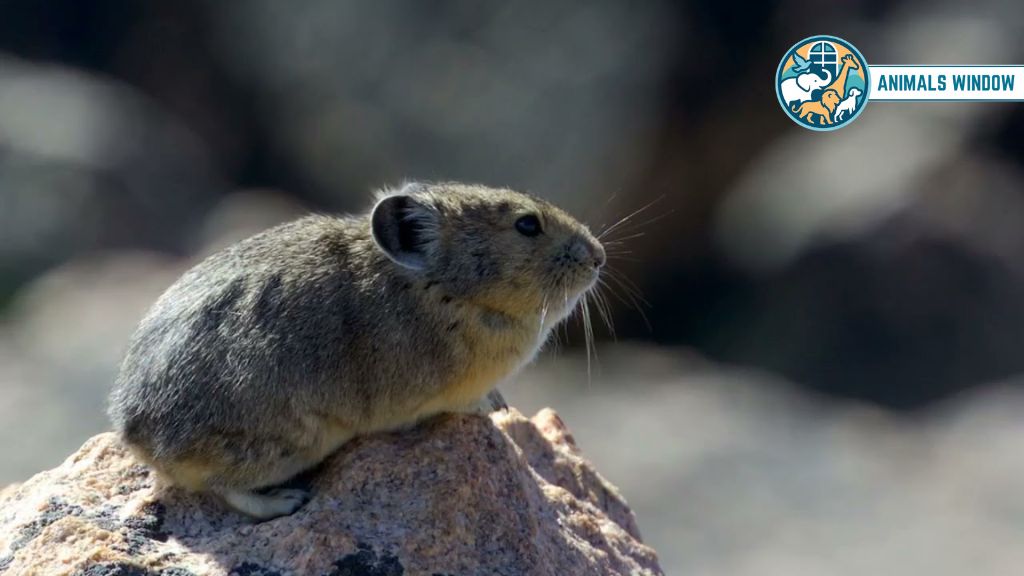
18. Pika
- Scientific name: Ochotona spp.
- Size: 5–9 inches (12–23 cm)
- Weight: 3.5–10 oz (100–280 g)
- Diet: Grasses, wildflowers, sedges
- Habitat: Rocky alpine slopes, Central Asia, Western North America
- Lifespan: 3–6 years
The pika is a tiny, round, ear-equipped mammal that lives in rocky mountain slopes at high altitude — and it looks like a stuffed animal someone left out in the sun. Its compact, oval body is one of the most extreme examples of a small mammal adapted to cold. Pikas don’t hibernate; instead, they spend all summer harvesting and drying grasses under rocks, building “haypiles” to eat through winter under the snowpack.
What makes pikas unusual among small mammals is their extremely narrow thermal tolerance. They can die from heat stress at temperatures as low as 77°F (25°C) — which is comfortable weather for most humans. This means their chubby, round shape (which minimizes surface area relative to volume, retaining heat) is simultaneously their greatest survival advantage and their biggest vulnerability.
As climate change pushes warmer air to higher elevations, pikas are literally running out of mountain to climb. Some populations have already disappeared from ranges they occupied for thousands of years.
🔥 Comparison Fact: A pika fits comfortably inside a standard tennis ball can.
19. Penguin (Emperor & King)

- Scientific name: Aptenodytes forsteri (Emperor), A. patagonicus (King)
- Size: 3–4 feet (0.9–1.2 m)
- Weight: 49–99 lbs (22–45 kg)
- Diet: Fish, squid, krill
- Habitat: Antarctic and sub-Antarctic
- Lifespan: 15–20 years
Emperor and King penguins carry roughly 30% of their body weight as fat — a necessity for one of the most extreme breeding environments on the planet. Emperor penguins breed in the Antarctic winter, where temperatures drop to -76°F (-60°C) and winds can hit 124 mph. Their fat is essentially a built-in dry suit.
But the fat distribution in penguins is unusual: it sits in a layer directly under the skin, acting as both insulation and energy. Emperor penguins fast for up to 115 days while incubating their eggs. Males balance the egg on their feet, huddle in rotating groups of thousands for warmth, and lose up to 45% of their body weight by the time the egg hatches.
The huddle behavior itself is highly organized — birds slowly rotate from the cold outer edge to the warm interior, so everyone gets equal time in the warmth. It is the most efficient communal heating system in the animal kingdom, powered entirely by stored fat.
🔥 Comparison Fact: An emperor penguin’s fat layer, combined with its waterproof feather structure, keeps its skin at 100°F (38°C) even while standing on ice at -60°F (-51°C).
20. Maine Coon

- Scientific name: Felis catus (domestic cat)
- Size: 10–16 inches (25–41 cm) at the shoulder; up to 40 inches (1 m) body length
- Weight: 10–25 lbs (4.5–11 kg)
- Diet: Commercial cat food (high-protein)
- Habitat: Domestic
- Lifespan: 12–15 years
The Maine Coon is the largest domestic cat breed in the world — and in photos, it often looks less like a pet and more like a small wildcat wearing a fur coat. Its tufted paws, lynx-like ear tips, and massive rectangular body make it look almost implausibly large next to a standard house cat.
Maine Coons are slow to fully mature — they don’t reach their full size until age 3–5, which is unusually late for a domestic cat. Their thick, multi-layered coat evolved in the harsh winters of the American Northeast, and it is water-resistant at the outer layer. Unlike most cats, many Maine Coons enjoy playing in water.
They are also one of the most dog-like cat breeds behaviorally — they follow owners around, learn to walk on leashes, and play fetch with an enthusiasm that is slightly embarrassing for an animal that’s supposed to be aloof. Their chunky, substantial build combined with that personality has made them one of the most searched domestic “chubby pet” animals online.
🔥 Comparison Fact: A fully grown male Maine Coon can be as long as a standard acoustic guitar — around 40 inches from nose to tail tip.
FAQs About Chubby Animals
What is the fattest animal in the world?
By body fat percentage, the Army Cutworm Moth wins — up to 80% of its body weight is fat. By sheer total fat mass, the blue whale carries the most fat of any creature alive.
What makes some animals naturally chubby?
Fat in wild animals serves real survival functions — insulation in cold climates, energy storage for fasting periods, fuel for migration, and protection from predators. These are naturally chubby animals shaped by evolution, not diet excess.
Are chubby animals healthy?
Yes — for wild animals, fat is a sign of health. A plump elephant seal, a well-padded penguin, or a fat-loaded bear is a thriving animal. Their chubby build is biologically optimal for their environment.
What is the chubbiest land animal?
The hippopotamus is the most barrel-shaped large land animal. But the Kodiak bear packs the highest percentage of body fat among large land mammals before hibernation — up to 50%.
Which cute chubby animal is the most popular online?
The capybara, giant panda, and Maine Coon consistently top searches for cute fat animals. The black rain frog has gone massively viral for its expression, which looks like a tiny furious plum.
Do chubby animals move slowly?
Not always. Hippos can sprint at 19 mph. Polar bears can run at 25 mph. Fat doesn’t equal slow — in most cases, the fat stores are what give these animals the energy to move at all in harsh environments.
Which animal stores fat in the most unusual location?
The fat-tailed dwarf lemur of Madagascar stores fat almost entirely in its tail — the only primate known to do this — using it as a fuel tank for 7 months of hibernation in a tropical climate.
Related More Animals Guides:

I have loved animals since I was a kid. I enjoy reading about how animals live, eat, move, and survive. I started Animals Window to share what I learn in a simple and easy way. I write about animal body parts, size, behavior, diet, habitats, and species. My goal is to make animal facts clear and fun for everyone to understand.