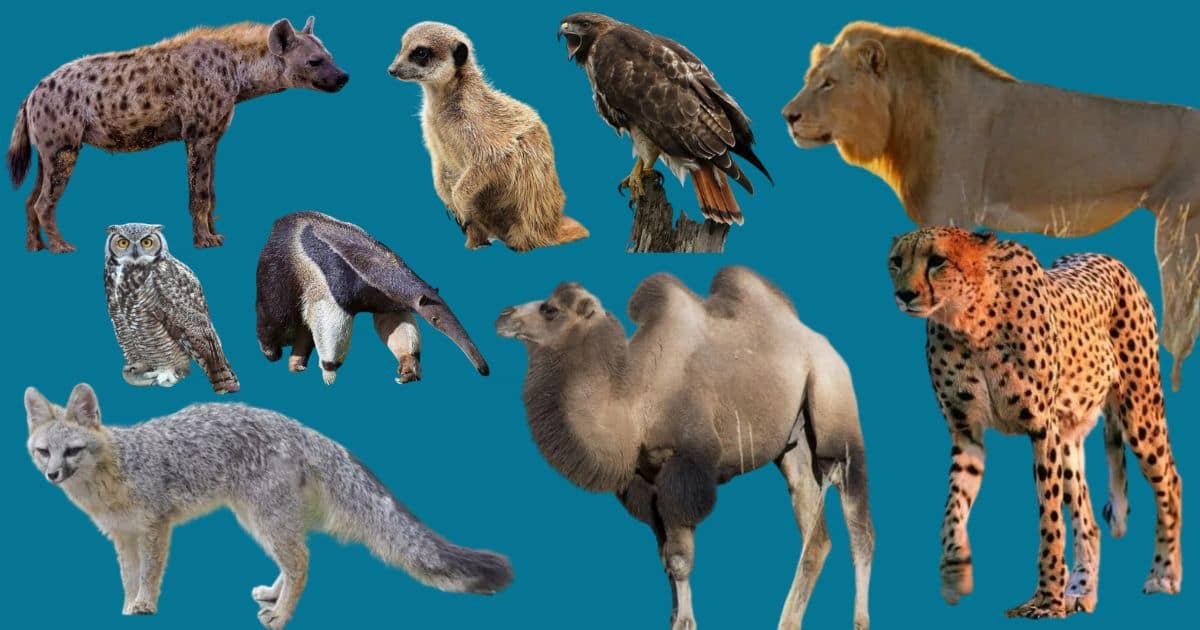
An animal’s diet is not simply a list of foods — it is the single most important factor shaping its anatomy, behavior, habitat range, social structure, and ecological role. Teeth, digestive length, stomach acidity, jaw mechanics, sensory systems, daily movement patterns, and even social group size all trace back to what an animal eats and how it obtains food.
This guide covers the major dietary categories found across the animal kingdom — what defines each one, which species represent the extreme end of each type, and what unusual or misunderstood feeding behaviors actually involve when examined closely.
Table of Contents
1. Carnivores: Not Just Meat-Eaters
Carnivory covers a wide spectrum. Obligate carnivores — animals that cannot survive without animal-derived nutrients — include cats, ferrets, dolphins, and eagles. Facultative carnivores eat meat as a primary food source but can survive on plant matter if necessary. The distinction matters because it determines how an animal responds to prey scarcity and whether it competes directly with herbivores for territory.
Stomach pH separates carnivores from other animals more reliably than tooth shape. Obligate carnivores maintain stomach acidity between pH 1 and 2 — acidic enough to dissolve bone and kill the bacteria present in decomposing flesh. Human stomach acid sits around pH 1.5 to 3.5. Herbivores typically maintain pH 4 to 7, which is sufficient for fermenting plant matter but would leave them vulnerable to the bacterial load in raw meat.
The most extreme carnivores are those that eat other predators. Animals that prey specifically on lions — one of the apex predators of the African savanna — occupy an unusual ecological position where their diet requires outcompeting or ambushing animals already evolved for killing. Our article on animals that eat lions covers which species actually prey on lions, under what conditions, and how they manage to do so.
Some carnivores specialize so narrowly that their entire body plan reflects a single prey type. The aardwolf eats almost exclusively termites — up to 300,000 per night — and has evolved teeth so reduced they are nearly vestigial, because crushing termite exoskeletons requires less jaw force than its hyena relatives need for bone-cracking.
The giant anteater has no teeth at all, using a tongue that extends 60 cm and flicks in and out 150 times per minute to collect the insects that make up its entire diet. Our article on animals that eat insects covers the full range of insectivores — from tiny shrews to large mammals — and the feeding adaptations each species has developed.
Squirrels are a primary food source for a surprisingly wide range of predators, including species not typically associated with hunting small mammals. Our article on animals that eat squirrels identifies which species actively target squirrels as a significant part of their diet and the hunting strategies each uses.
2. Herbivores: The Most Demanding Digestive Systems
Plant matter is nutritionally dilute and structurally difficult to break down. Cellulose — the primary structural material in plant cell walls — cannot be digested by any vertebrate enzyme. Every herbivore that derives nutrition from plant cell contents relies on microbial fermentation: bacteria and protozoa in the gut break down cellulose into short-chain fatty acids the animal can absorb.
Ruminants (cattle, sheep, giraffes, deer) solve this by fermenting plant matter before digestion — swallowing food, fermenting it in a specialized stomach chamber, regurgitating it for further chewing (rumination), then passing it through additional stomach compartments. A cow spends roughly 8 hours per day actively chewing cud.
Hindgut fermenters (horses, elephants, rhinos, rabbits) ferment plant matter after initial digestion, in a large cecum or colon. This is less efficient than ruminant digestion but allows faster food throughput — which matters for animals that need to consume enormous volumes. An elephant eats up to 150 kg of plant matter daily and processes it in approximately 24 hours. A cow eats far less and takes 70–100 hours to process a similar meal — but extracts more nutrition from it.
Rabbits solve the inefficiency of hindgut fermentation by eating their own fecal pellets — a behavior called cecotrophy. The first round of pellets produced (soft cecotropes) are eaten directly from the anus and re-digested, allowing the rabbit a second pass at nutrients the first digestion could not fully extract. The hard fecal pellets rabbits leave behind are the second-pass output.
Wood is among the most nutritionally challenging plant materials any animal attempts to eat. It is almost entirely cellulose and lignin, with extremely low protein and fat content. Animals that consume wood as a primary food source require either extraordinary microbial gut communities or an extremely slow metabolism to extract sufficient energy.
Our article on animals that eat wood covers the species — from termites to shipworms to beavers — that genuinely digest wood as a food source and the biological systems that make it possible.
3. Omnivores: The Most Ecologically Flexible Feeders
Omnivory is not simply eating both plants and meat — it is the capacity to shift dietary composition in response to availability, season, and energy requirements. This flexibility makes omnivores among the most ecologically resilient animals on Earth.
Bears shift from near-total carnivory during salmon runs (consuming thousands of calories per fish) to near-total herbivory during berry seasons, to virtual fasting during winter denning. Their digestive system does not specialize for any single food type, which means they are slightly less efficient at processing any one food than a specialist — but they can eat almost anything available.
Pigs have a digestive system structurally similar to humans — a simple stomach, medium-length intestine, and functional cecum. This similarity allowed domestic pigs to thrive on human food waste for thousands of years, eating the same dietary range as their human handlers. Wild boars extend this further, consuming roots, tubers, carrion, eggs, small vertebrates, insects, fruit, and grain within a single foraging range.
Honey is one of the most calorie-dense natural foods available — roughly 300 calories per 100 grams, composed almost entirely of simple sugars requiring no digestion before absorption. The number of species that actively seek out and consume honey extends well beyond bears and humans. Our article on animals that eat honey covers the range of species attracted to honey, how each locates and accesses it, and which ones have evolved specific adaptations for honeycomb consumption.
4. Specialist Feeders: Diets So Narrow They Shaped Entire Body Plans
Some animals have narrowed their diet so completely that their anatomy reflects nothing else. These specialists trade dietary flexibility for maximum efficiency at exploiting a single food source.
The koala eats almost exclusively eucalyptus leaves — a food so toxic that most mammals cannot consume it. Eucalyptus contains phenolic compounds and terpenes at concentrations that would damage the liver of most herbivores.
Koalas possess a specialized liver enzyme system that detoxifies these compounds at high speed, and a very long cecum (up to 2 meters) that slows digestion to extract maximum nutrition from extremely low-calorie leaves.
A koala sleeps 18–22 hours per day — not from laziness, but because eucalyptus provides so few calories that energy conservation is a survival necessity.
The vampire bat is one of only three mammal species that feeds exclusively on blood — a diet called hematophagy. Blood is nutritionally incomplete (low in calories, high in protein, almost no carbohydrates or fat), so the vampire bat must consume up to 60% of its body weight in blood per feeding to meet its energy requirements.
It cannot store more than two days of energy, which has driven the evolution of food sharing within bat colonies — bats that fed successfully will regurgitate blood to share with colony members who failed to feed, behavior reciprocated across future nights.
Animals that eat large quantities regardless of food type represent a different kind of specialist — not narrow in diet composition but extreme in volume. Our article on animals that eat a lot covers the species with the highest food intake relative to body size and the metabolic or ecological reasons behind extreme consumption.
5. Predators That Eat Humans: Rare but Real
Human predation by animals is statistically rare but not biologically unusual. Humans are nutritionally similar to other large primates and fall within the prey size range of several large predators. The reason most predators avoid humans is learned avoidance — not physical incapability.
Man-eating behavior in large predators (tigers, lions, crocodiles, leopards) is almost always associated with specific circumstances: injury preventing normal prey capture, removal of natural prey from an area, or habituation to human presence through access to waste or livestock. A tiger that has eaten one human and experienced no negative consequence has learned that humans are catchable prey — and will repeat the behavior.
Nile crocodiles kill more humans than any other reptile — estimated at several hundred deaths per year across sub-Saharan Africa — because they inhabit the same rivers and lakeshores that rural populations depend on for water, washing, and fishing. The crocodile does not seek out humans specifically; it takes the prey that enters its ambush zone.
Our article on animals that eat humans covers the species with confirmed records of human predation, the circumstances in which it occurs, and the actual frequency of attacks by species.
6. Water Intake: Diet Extends Beyond Food
Water consumption is as much a dietary behavior as food intake — and the variation across species is as extreme as variation in food choice. The kangaroo rat of North American deserts never drinks water in its entire life, obtaining all moisture from metabolic water produced during the digestion of dry seeds. The elephant drinks up to 200 liters per day and walks up to 80 kilometers specifically to reach water sources during dry seasons.
Camels do not store water in their humps — the humps contain fat, which serves as an energy reserve. Camels tolerate dehydration to a degree that would kill most mammals: they can lose up to 30% of their body weight in water without suffering organ damage, and rehydrate by drinking up to 100 liters within minutes when water becomes available.
Their blood cells are oval-shaped rather than round, which allows them to continue flowing through vessels even when blood becomes highly viscous from dehydration.
Some animals are attracted to salt and minerals as strongly as to food and water — a behavior called geophagy when it involves soil consumption. Parrots in the Amazon gather in large numbers at clay licks — riverbank exposures of mineral-rich clay — to consume soil that neutralizes toxins in their fruit-heavy diet.
African elephants excavate caves in Mount Elgon, Uganda, using their tusks to mine mineral-rich rock that supplements sodium otherwise absent from their vegetation diet.
Our article on animals that drink a lot of water covers the species with the highest water requirements and the physiological reasons behind them.
7. Dietary Behaviors Not Yet Covered in Detail
Several specific dietary behaviors across the animal kingdom deserve focused attention beyond what a single overview can provide.
Animals that consume the blood of other species (hematophages beyond vampire bats — including certain moths, mosquitoes, lampreys, and candiru fish) represent a feeding strategy with unique physiological and ecological implications.
Animals that eat their own young — a behavior called filial cannibalism documented in fish, rodents, insects, and some primates — is not pathological but serves specific ecological functions including population regulation and nutrient recycling under resource stress.
Animals with diets so narrow they consume only a single food type represent some of the most evolutionarily committed feeding strategies in biology. Each of these topics will be covered in dedicated articles in this category.
How Diet Connects to Everything Else
Every article in this category connects back to the same principle: what an animal eats determines what it becomes. Body shape, daily schedule, geographic range, social behavior, and reproductive strategy all shift in response to dietary requirements. The specialist that eats only one food is as successful as the generalist that eats everything — each is optimized for a different ecological situation.
Follow the links in each section for deeper coverage of individual dietary categories, specific species, and the anatomy behind each feeding strategy.

I have loved animals since I was a kid. I enjoy reading about how animals live, eat, move, and survive. I started Animals Window to share what I learn in a simple and easy way. I write about animal body parts, size, behavior, diet, habitats, and species. My goal is to make animal facts clear and fun for everyone to understand.