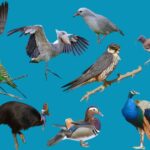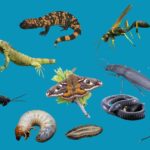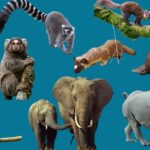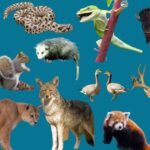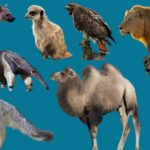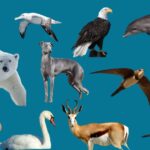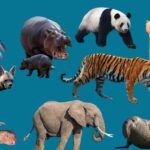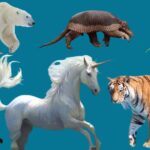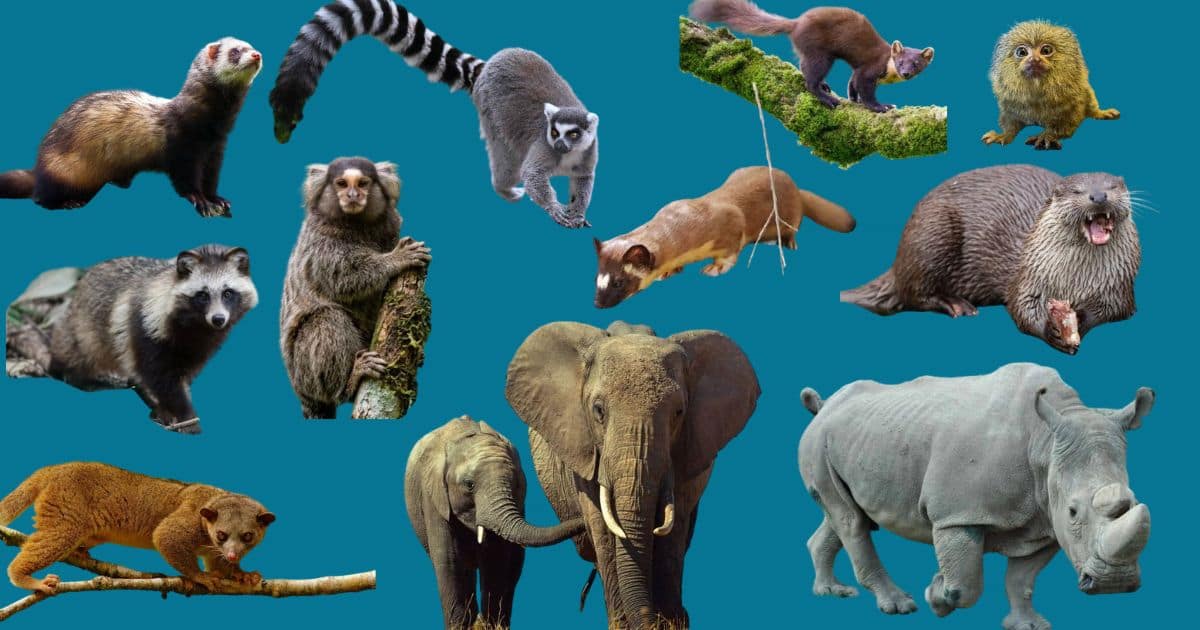
Animal classification exists at multiple levels simultaneously — from the broad biological divisions (mammal, reptile, bird, fish, invertebrate) down to the specific behavioral, physical, and ecological traits that define individual species within those groups.
Popular classification systems often focus on visible features — what an animal looks like, how big it is, what color it is — while biological classification focuses on evolutionary relationships that are not always visible at all.
This guide covers both: the formal biological categories that define major animal groups, and the practical trait-based groupings that help explain why certain unrelated animals look or behave similarly despite having no recent common ancestor.
Table of Contents
1. Mammals: Warm Blood, Hair, and Live Birth — With Exceptions
Mammals are defined by three traits shared across all species in the group: warm-bloodedness (endothermy), hair or fur at some life stage, and the production of milk to feed young. These three traits are more consistent across mammals than any visible feature — whales have hair (sparse, mostly lost in adults), dolphins are warm-blooded, and even the duck-billed platypus produces milk despite laying eggs.
Mammal body plans diverge more dramatically than those of any other vertebrate class. Bats are mammals. Blue whales are mammals. Armadillos, sloths, elephants, and shrews are all mammals. This diversity reflects the fact that mammals have colonized more habitat types — land, sea, air, underground, freshwater — than any other vertebrate group, adapting their body plans in each case while retaining the core defining traits.
Primates — the mammal order containing monkeys, apes, and humans — show the most variation in size within a single order of any mammal group. The pygmy mouse lemur weighs 30 grams; the gorilla exceeds 200 kilograms. Both are primates. Our article on small monkey breeds covers the smallest primate species, their distinguishing features, and how they differ from larger monkey relatives in behavior and habitat use.
Marsupials — the pouched mammals — carry young in an external pouch after an extremely short gestation period rather than via a placenta. A red kangaroo is born after 33 days of gestation, blind and hairless, the size of a jellybean, and completes its development over 8 months in the pouch.
This reproductive strategy is neither primitive nor inferior to placental reproduction — it is differently specialized, and marsupials have been highly successful in the environments where they evolved. Future articles in this category will cover pouched mammals and their reproductive strategies in dedicated detail.
The heaviest animals on Earth — blue whales, elephants, hippos, rhinos, giraffes — are almost all mammals, and almost all are herbivores. The relationship between large body mass and plant-based diet is not coincidental.
Our article on the heaviest animals in the world ranks the largest species by category and explains why herbivory and extreme mass appear together so consistently across evolutionary history.
2. Convergent Evolution: Why Unrelated Animals Look Alike
Convergent evolution — where unrelated species independently evolve similar features in response to similar environmental pressures — is one of the most important concepts for understanding why animal classification sometimes contradicts appearance.
The dolphin, the ichthyosaur (an extinct marine reptile), and the shark look nearly identical in body shape — streamlined torso, dorsal fin, tail for propulsion. They are not closely related. The dolphin is a mammal. The ichthyosaur was a reptile. The shark is a cartilaginous fish.
All three arrived at the same hydrodynamic body plan independently because it is the most efficient shape for fast swimming in open water. The convergence is so precise that early naturalists grouped them together before understanding evolutionary relationships.
This convergence explains why so many animals resemble other animals they are not closely related to. Raccoons and certain Asian civets share similar markings and body proportions despite being on entirely different branches of the mammal family tree.
Our article on animals similar to raccoons covers the species most commonly confused with or compared to raccoons, explaining what features they share and where the evolutionary paths diverge.
Mongooses and ferrets are frequently compared because of similar body shape — long, low, slender, fast. They are not closely related. Mongooses are in the family Herpestidae; ferrets are mustelids, more closely related to otters and wolverines than to mongooses. The similar body plan reflects a similar ecological role: both are active, fast-moving predators that pursue prey into confined spaces.
Our article on animals like mongooses covers species that share the mongoose body plan and ecological role, and our article on animals like ferrets does the same for the mustelid body type.
Beavers represent a semi-aquatic rodent body plan — heavy, flat-tailed, with webbed feet and dense water-resistant fur — that several other rodent species partially replicate. Our article on animals that look like beavers covers species that share key beaver features and why the beaver body plan recurs across unrelated semi-aquatic mammals.
3. Animals Without Limbs: When Legs Disappeared
The loss of limbs in animal evolution is not a single event — it has occurred independently dozens of times across different animal lineages, driven by the same recurring advantage: a limbless body moves more efficiently through narrow spaces, dense substrate, and certain aquatic environments than a limbed one.
Snakes lost their limbs approximately 100 million years ago. Vestigial pelvic bones remain in pythons and boas — visible as small claw-like structures called pelvic spurs near the tail — confirming their limbed ancestry. Some snake species retain these spurs into adulthood, using them during mating. The transition from lizard to snake involved not just limb loss but a complete reorganization of internal organs into a linear arrangement, elongation of the spine to up to 400 vertebrae, and modification of the skull to allow consumption of prey wider than the snake’s own body.
Caecilians — legless amphibians — are among the least-known vertebrates on Earth. They resemble large earthworms, live underground or in water, and are found across tropical regions worldwide. They are not snakes or worms — they are amphibians that independently lost their limbs through a separate evolutionary event from snakes. Unlike snakes, some caecilian species give birth to live young that feed on the mother’s skin cells during development.
Legless lizards (distinct from snakes in having eyelids, external ear openings, and different skull structure) demonstrate that limb loss is an ongoing evolutionary process — not something that happened once and stopped. Several lizard families have independently produced limbless species within the last few million years.
Our article on animals without legs covers the full range of limbless vertebrates and invertebrates, the evolutionary paths that led to limb loss in each case, and how these animals move without limbs.
4. Animals Without Tails: When the Tail Became Unnecessary
Most vertebrates have tails — extensions of the spine beyond the pelvis that serve functions ranging from balance and propulsion to communication and fat storage. Tail loss in evolution occurs when the original functions of the tail are replaced by other adaptations, making the tail metabolically costly to maintain without providing survival benefit.
Great apes — gorillas, chimpanzees, bonobos, orangutans, gibbons, and humans — all lack external tails. The tail was lost in the common ancestor of this group approximately 25 million years ago, and the specific selective pressure responsible is still debated. One current hypothesis links tail loss to changes in locomotion: apes developed broader, more stable pelvises and different patterns of movement through trees that made a tail unnecessary or mechanically disadvantageous.
The Manx cat is a domestic breed where a natural mutation in the T-box gene eliminates tail development. The same mutation affects spinal development — severely affected kittens do not survive, but mildly affected ones are born tailless with otherwise normal anatomy. The mutation has been maintained in the breed through selective breeding, demonstrating that tail loss in domesticated animals can occur through human-driven selection rather than natural selection.
Frogs and toads are the only tailless amphibians — the tail present in tadpoles is fully reabsorbed during metamorphosis. The absorbed tail material is recycled as nutrients during the transformation. Our article on animals without tails covers the species in which tail absence is notable, the evolutionary or developmental reasons for tail loss in each case, and what functions (if any) the tail served in their ancestors.
5. Color as a Classification Tool: Blue, Striped, and Pink Animals
Color is not a reliable basis for biological classification — unrelated animals frequently share colors for entirely different biological reasons, while closely related animals can differ dramatically in coloration. However, color-based groupings are useful for understanding the specific mechanisms that produce animal coloration and the functions those colors serve.
Blue is the rarest pigment color in the animal kingdom because true blue pigment does not exist in most species. Blue morpho butterflies, blue poison dart frogs, and blue jays all appear blue through structural coloration — microscopic surface structures that scatter light to produce blue wavelengths — rather than through pigment.
The blue of a bluebird feather disappears entirely when the feather is crushed, because the color was never in the pigment; it was in the structure. Our article on blue animals covers species that display blue as a primary color and the specific mechanism producing blue in each case.
Stripes in animals serve several distinct functions across species — predator confusion, fly deterrence, species recognition, and disruptive camouflage — and appear independently in mammals, fish, insects, and reptiles with no evolutionary connection between the striped species. Our article on striped animals covers the most recognizable striped species and what the stripes actually do in each case.
Pink coloration in animals almost always signals something biologically specific — health status in flamingos, aggression signaling in mandrills, UV reflection in hippopotamus sweat, or skin exposure in hairless species. Our article on pink animals covers the species most distinctly associated with pink coloration and the biological source of the color in each.
6. Nocturnal Animals: A Completely Different Operating Schedule
Nocturnal animals do not simply stay awake at night — they operate in a sensory world that diurnal animals cannot access. In complete darkness, smell, hearing, electroreception, and mechanoreception replace vision as primary senses.
The brain allocates processing power accordingly: nocturnal mammals typically have proportionally larger olfactory bulbs, larger auditory cortex areas, and more sensitive touch receptors than diurnal relatives of similar body size.
The shift to nocturnality in early mammals is thought to have been driven by dinosaur predation — early small mammals active during the day faced severe predation pressure from diurnal dinosaurs, and nighttime activity reduced this pressure dramatically.
This “nocturnal bottleneck” hypothesis is supported by genetic evidence showing that most mammal lineages carry ancestral traits associated with low-light vision that were secondarily lost in species that later returned to daytime activity, including humans.
Nocturnality is not fixed — some species are crepuscular (active at dawn and dusk), others shift their activity timing seasonally, and some species show individual variation where some members of a population are nocturnal while others are diurnal. Future articles in this category will cover nocturnal animals in detail, including the sensory adaptations that make nighttime activity possible and the species that have taken nocturnality furthest.
7. Cold-Blooded Animals: What Ectothermy Actually Means
“Cold-blooded” is a misleading term — ectothermic animals are not cold; they rely on external heat sources to regulate body temperature rather than generating heat internally. A basking lizard in direct sunlight can maintain a body temperature warmer than a mammal of the same size. The distinction is the energy source: endotherms (mammals, birds) burn calories to generate heat; ectotherms absorb it from their environment.
The metabolic consequence of ectothermy is dramatic. A Burmese python can survive for over a year without eating a single meal, because it expends almost no energy on heat generation. A mammal of the same body mass would starve in weeks.
This makes ectothermy extremely efficient in stable warm environments but risky in cold or variable climates — when external temperature drops, body temperature drops with it, and metabolic processes slow to the point of inactivity.
Reptiles, amphibians, fish, and all invertebrates are ectothermic. Some fish (tuna, some sharks, the opah) are partially endothermic — they generate enough metabolic heat to maintain core body temperatures above ambient water temperature, though not to the same degree as true endotherms. Future articles will cover cold-blooded animal groups in dedicated detail.
Classification Is a Tool, Not a Perfect System
Every classification system simplifies a reality that is more complex than any category can contain. Animals that look alike are not always related. Animals that are closely related can look completely different.
The most useful approach is using multiple classification frameworks together — biological taxonomy for understanding evolutionary relationships, and trait-based groupings for understanding ecological roles and behavioral patterns.
Each article linked in this guide goes deeper into one specific type or grouping — with the species, anatomy, and ecological context that makes each group distinct. Follow the links to whichever animal type interests you most.

I have loved animals since I was a kid. I enjoy reading about how animals live, eat, move, and survive. I started Animals Window to share what I learn in a simple and easy way. I write about animal body parts, size, behavior, diet, habitats, and species. My goal is to make animal facts clear and fun for everyone to understand.