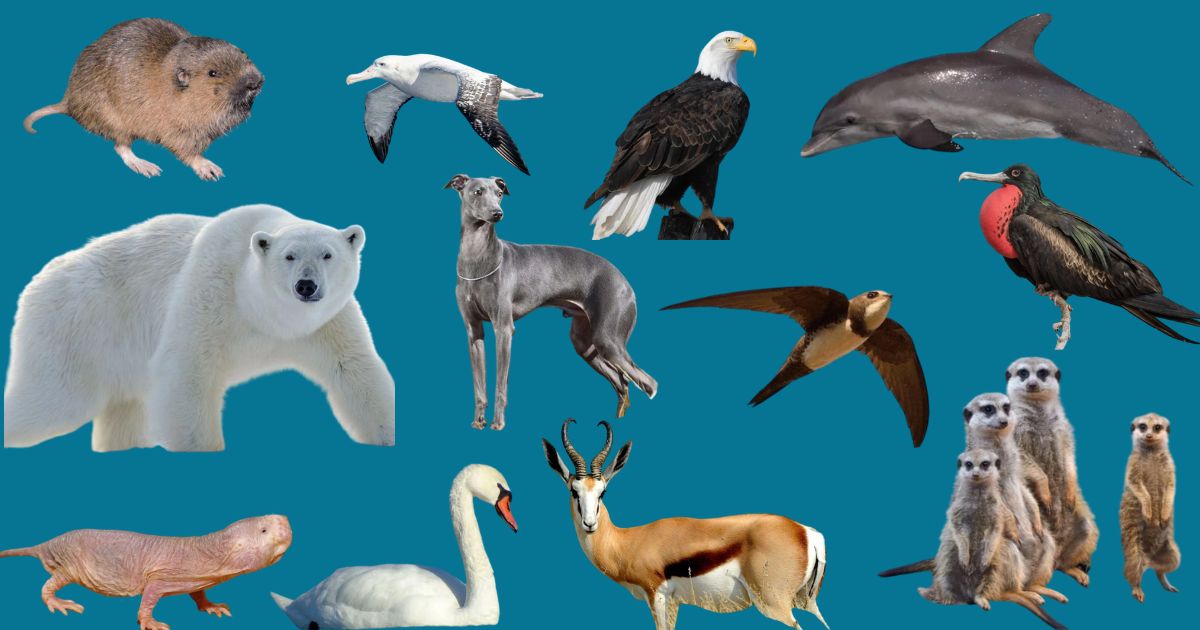
Animal behavior is not instinct alone. It is a layered combination of genetic programming, learned experience, environmental pressure, and social context — all operating simultaneously. The same species can behave differently depending on season, food availability, age, social rank, and individual history. Understanding why an animal does something specific requires looking at all of these layers, not just the surface action.
This guide covers the major behavioral categories observed across the animal kingdom — movement, sleep, reproduction, feeding strategy, communication, and survival responses — with specific focus on the mechanisms behind each behavior and the species that demonstrate each one most clearly.
Table of Contents
1. Burrowing: The Underground Survival Strategy
Burrowing is one of the oldest and most widespread survival behaviors in the animal kingdom. It serves three distinct functions depending on the species: temperature regulation, predator avoidance, and reproduction. Underground environments maintain relatively stable temperatures year-round — typically between 10°C and 15°C regardless of surface conditions — which makes burrows effective shelters against both extreme heat and extreme cold.
The prairie dog constructs some of the most complex burrow systems of any mammal — multi-entrance tunnel networks that can extend 5 meters deep and stretch over 30 meters horizontally, with designated sleeping chambers, nursery areas, and listening posts near the entrance. Prairie dog colonies (called towns) once covered areas of the American Great Plains measuring thousands of square kilometers. A single colony recorded in Texas in the early 1900s was estimated to contain 400 million individuals across 65,000 square kilometers.
The naked mole rat takes burrowing further than almost any other mammal — it spends its entire life underground, never voluntarily surfacing, and has evolved body features that reflect this completely: nearly no fur (unnecessary in stable underground temperatures), poor eyesight (darkness makes it irrelevant), and enlarged incisor teeth used to excavate soil, with lips that seal behind the teeth to prevent swallowing dirt while digging.
The aardvark digs faster than any other animal relative to its size — it can excavate a burrow deep enough to hide its entire body within minutes when threatened. It typically abandons burrows after use, which benefits dozens of other species (warthogs, hyenas, African wild dogs, porcupines, monitor lizards) that move into vacated aardvark burrows rather than digging their own. For a complete look at the range of species that burrow and how each uses underground space differently, see our article on animals that live in burrows.
2. Sleep: One of the Most Variable Behaviors in Nature
Sleep is not universal across animals — and even among animals that do sleep, the form, duration, and timing of sleep varies more than almost any other biological behavior. The giraffe sleeps an average of 30 minutes per day, in short 5-minute intervals, often standing upright. The brown bat sleeps up to 20 hours per day. Both are mammals with similar neurological structures, yet their sleep requirements differ by a factor of 40.
Dolphins and some whale species practice unihemispheric sleep — one brain hemisphere sleeps while the other remains active, allowing the animal to continue swimming, breathing at the surface, and monitoring its environment while technically asleep. Dolphins have been observed swimming in slow circles for hours in this state. Frigate birds perform the same feat during long ocean-crossing flights, sleeping one hemisphere at a time mid-flight.
Migratory birds suppress sleep almost entirely during migration periods — some species cross thousands of kilometers with less than 1 hour of sleep per day by alternating micro-sleeps lasting a few seconds each. These micro-sleep episodes are too brief to detect without EEG monitoring, and the birds show no behavioral disruption during them.
Some animals do not sleep in any form that researchers have been able to detect using standard measures. The bullfrog shows no measurable difference in brain activity or responsiveness between periods of rest and activity. Whether it sleeps in some currently undetectable way, or genuinely does not sleep, remains an open question.
Our article on animals that don’t sleep covers the species with the lowest confirmed sleep requirements and what is currently understood about why sleep is reduced or absent in these cases.
3. Mating for Life: What Monogamy Actually Looks Like in Animals
Monogamy in animals is more complex than the popular understanding suggests. Researchers separate social monogamy (living with one partner) from sexual monogamy (reproducing only with that partner) — and many species that appear monogamous socially are not sexually monogamous when DNA evidence is examined.
In songbirds studied for decades as model pairs, genetic testing has shown that 10–40% of offspring in apparently monogamous pairs were fathered by a different male.
True long-term pair bonding — where both social and reproductive monogamy are maintained across multiple breeding seasons — is relatively rare and tends to appear in species where both parents are essential for offspring survival.
Emperor penguins pair for a season at a time, with the same pair reforming in subsequent years at a rate of about 85%. Albatrosses form pair bonds that last decades, reuniting at the same nest site year after year, and spend their first several years together in a period of synchronized behavioral development before breeding for the first time.
Wolves maintain pair bonds between the dominant male and female of a pack across multiple years — the alpha pair breeds exclusively with each other while subordinate pack members assist in raising pups. Our article on whether wolves mate for life examines wolf pair bonding in detail, including what happens to the bond when one partner dies and how pack structure affects mating behavior.
For a broader comparison of species that form lasting reproductive partnerships — including surprising examples from fish, birds, and invertebrates — see our article on animals that mate for life, which covers the range of monogamous behavior across animal groups and the ecological conditions that favor it.
4. Galloping and Locomotion: How Animals Move at Speed
Galloping is a specific gait pattern — a four-beat asymmetric movement where all four limbs leave the ground simultaneously during a suspension phase. Not all fast-moving animals gallop. Cheetahs gallop. Horses gallop. Rabbits use a bounding gait that resembles galloping but has a different footfall sequence. Ostriches run using a bipedal stride that has no suspension phase and technically does not qualify as galloping despite their speed.
The mechanical difference between a walk, trot, and gallop is not simply speed — it is a fundamentally different coordination pattern that switches like a gear. A horse transitioning from trot to canter changes its entire footfall sequence, not just the pace.
This transition happens at a specific energy-efficiency threshold: the metabolic cost of trotting at high speed exceeds the cost of galloping at the same speed, so the animal switches gaits the way a car changes gears — to maintain speed at lower energy cost.
The cheetah’s gallop is the most biomechanically extreme of any land animal. Its flexible spine acts as a spring — compressing and extending with each stride to add distance beyond what the legs alone could produce. At full speed, the cheetah’s stride covers 7–8 meters, and its feet touch the ground for only about 25% of each stride cycle. The remaining 75% is airborne. Acceleration from 0 to 96 km/h takes approximately 3 seconds.
Our article on animals that gallop covers the species that use this specific gait pattern, how their anatomy supports it, and how speed records compare across different animal groups.
5. Migration: One of the Most Energy-Intensive Behaviors in Nature
Migration is not simply movement — it is a precisely timed, genetically programmed behavioral response to seasonal change that involves navigation over distances and terrain that most animals never encounter. The mechanisms animals use to navigate during migration include magnetic field detection, star pattern reading, polarized light detection, olfactory mapping, and memorized landmark recognition — often several of these simultaneously.
The Arctic tern holds the migration distance record — travelling from Arctic breeding grounds to Antarctic feeding grounds and back annually, covering up to 90,000 kilometers per year. Over a lifespan of 30 years, a single Arctic tern may travel the equivalent of three round trips to the Moon. During this journey it experiences more hours of daylight than any other animal on Earth, because it follows summer from pole to pole.
The monarch butterfly migrates up to 4,500 kilometers from Canada to specific overwintering sites in central Mexico — sites the individual butterfly has never visited, because the migration takes multiple generations to complete. The butterflies that arrive in Mexico are the great-grandchildren of those that left. How they navigate to a specific location none of their ancestors knew in their lifetime remains one of the most studied puzzles in animal behavior.
Wildebeest migration across the Serengeti involves approximately 1.5 million animals moving in a circular pattern that follows rainfall and new grass growth — a movement pattern triggered not by a single leader but by collective detection of environmental cues across the herd. No individual wildebeest directs the migration; the pattern emerges from thousands of individual decisions made simultaneously in response to the same environmental signals.
Our article on animals that migrate covers the full range of migratory species across birds, mammals, fish, and insects, with detail on navigation mechanisms and distance records for each group.
6. Vocalization and Growling: Sound as a Behavioral Tool
Animal vocalizations serve a wider range of functions than most people realize. The obvious functions — warning calls and mating calls — are only two entries in a much longer list that includes territorial marking, group coordination, individual recognition, emotional state signaling, and in some species, learned communication that adapts to new information.
Growling specifically is a low-frequency vocalization produced by controlled airflow through the larynx, used almost exclusively as a threat or warning signal. The low frequency of a growl carries further through dense environments (forest, tall grass) than higher-frequency sounds and is perceived as threatening by many species across the animal kingdom — including humans, who show a measurable stress response to low-frequency animal vocalizations even when consciously aware the sound is not dangerous.
Tigers produce infrasound alongside their audible roars — frequencies below 20 Hz that humans cannot consciously hear but can physically feel as vibration. This infrasound component is thought to temporarily paralyze prey or smaller predators through sheer acoustic pressure, giving the tiger a fraction of a second of immobility in its target that improves its strike success rate.
Prairie dogs have one of the most information-dense alarm call systems documented in any non-human animal. Different calls encode not just the presence of a predator but the predator’s size, shape, color, and speed of approach — allowing colony members to determine exactly what threat is approaching before seeing it themselves. Our article on animals that growl covers the species most associated with growling behavior, the anatomy that produces it, and what each species communicates through it.
7. Feeding Behavior: When and How Animals Eat
Feeding behavior encompasses not just what animals eat but when, how, and in what sequence — patterns that reveal as much about ecology as diet composition alone. Some feeding behaviors are purely opportunistic; others are precisely timed, spatially specific, and socially coordinated.
Crocodiles practice a feeding behavior called the death roll — a rapid full-body rotation used to detach chunks of flesh from prey too large to swallow whole. The rotation creates enough torque to tear through muscle and tendon that the jaw alone cannot sever. Multiple crocodiles feeding on the same carcass will roll in opposite directions simultaneously, pulling the carcass apart between them without any apparent coordination — the opposing torques are simply the most mechanically efficient way for each individual to extract its share.
Humpback whales use bubble-net feeding — a cooperative hunting technique where a group of whales creates a cylindrical curtain of bubbles by swimming in a circle while exhaling, which herds fish into a compressed column.
One whale then dives deep and emits a feeding call that triggers the entire group to lunge upward simultaneously through the fish column with mouths open. Each whale executes a specific role — some create the bubble curtain, one produces the call, others lead the lunge — and these roles remain consistent across multiple feeding events.
8. Defense Behaviors: Beyond Fight or Flight
The fight-or-flight response is real but incomplete as a description of animal defense behavior. Animals use at least eight distinct defense strategies, and many species switch between them based on the specific threat they face.
Thanatosis — death feigning — is used by opossums, some sharks, ducks, and several insect species. The Virginia opossum enters an involuntary comatose state when severely stressed, complete with slowed heart rate, reduced breathing, and the production of a foul-smelling secretion that mimics a decomposing carcass.
This is not a conscious performance — the opossum cannot control when it enters or exits this state. Many predators are hardwired to avoid carrion, so an animal that appears and smells dead is simply ignored.
Autotomy — deliberate self-amputation — allows some lizards to detach their tails when grabbed by a predator. The detached tail continues to wriggle for several minutes, holding the predator’s attention while the lizard escapes. The tail regrows, though the replacement is cartilage rather than bone and is never quite identical to the original. Some octopus species can detach and regrow entire arms using the same principle.
Collective defense — mobbing — appears in many bird species, where multiple small birds will attack a larger predator (hawk, owl, crow) as a group, diving at it repeatedly until it leaves the area. Individual birds take turns at the highest-risk position directly above the predator, suggesting a coordination that goes beyond simple mob instinct.
Why Behavior Cannot Be Separated from Ecology
Every behavior covered in this guide is inseparable from the environment that shaped it. Burrowing makes sense only in landscapes where underground space provides something the surface cannot. Migration makes sense only where seasonal resource distribution creates a reward for covering long distances. Monogamy makes sense only where both parents are required for offspring survival.
The articles linked throughout this guide go deeper into each behavioral category, with the ecological context that explains why the behavior exists and which specific species demonstrate it most clearly. Follow the links to whichever behavior interests you most.

I have loved animals since I was a kid. I enjoy reading about how animals live, eat, move, and survive. I started Animals Window to share what I learn in a simple and easy way. I write about animal body parts, size, behavior, diet, habitats, and species. My goal is to make animal facts clear and fun for everyone to understand.