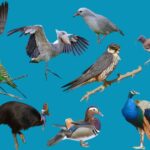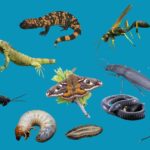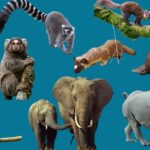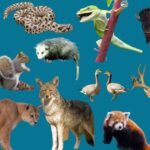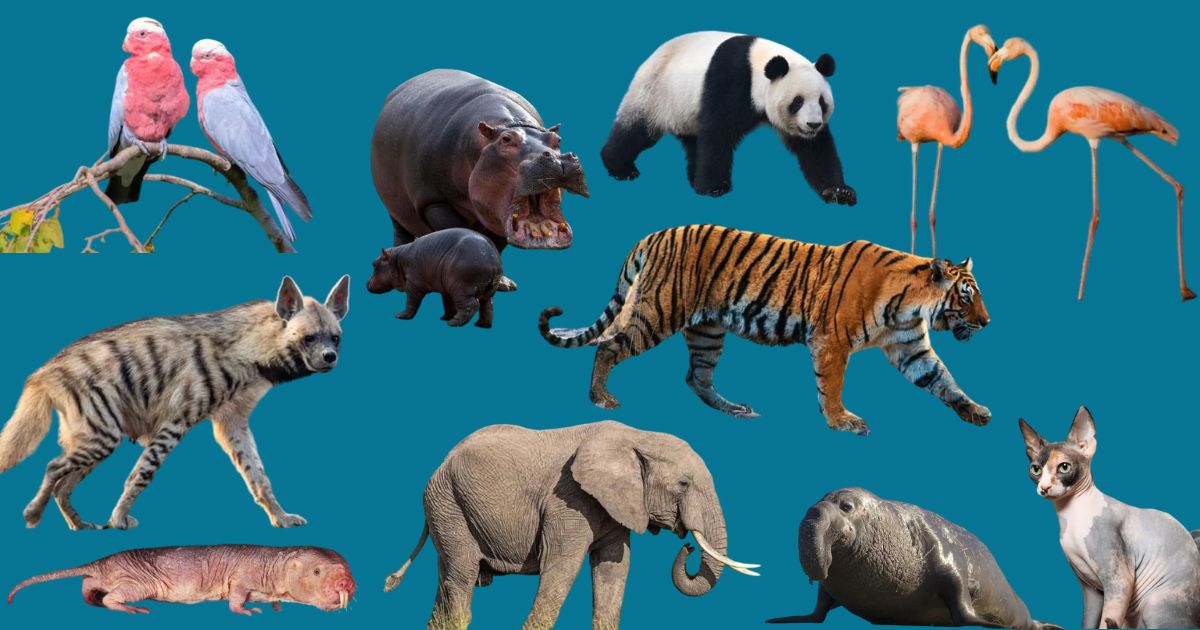
Every animal carries a set of traits — physical markings, temperament, body shape, and raw physical capability — that determine where it fits in the natural world. These traits are not random. Each one is the result of specific evolutionary pressure: a coloring that hides from predators, a disposition shaped by social structure, a body mass that reflects what an animal eats and how it moves.
This guide covers the major trait categories that define animal identity — color, size, strength, temperament, and physical build — with a focus on what each trait actually does, why it exists, and which animals carry it to an extreme. No broad generalizations. Just what the evidence shows.
Table of Contents
1. Color and Patterning: Never Just for Looks
Animal coloration serves one or more of four functions: camouflage, warning, communication, and temperature regulation. Understanding which function drives a specific animal’s color explains a great deal about how that animal behaves and where it lives.
Camouflage coloring matches the environment closely enough to make the animal nearly invisible to both prey and predators. The Arctic fox turns white in winter and brown in summer — not through pigment change but by shedding and regrowing fur twice yearly. The leafy sea dragon, a relative of the seahorse, grows skin flaps that are structurally indistinguishable from floating kelp. Neither animal does anything to hide — their coloring does the work passively.
Warning coloration (aposematism) works in the opposite direction: being seen is the point. Poison dart frogs carry enough toxin in a single specimen to kill ten adult humans, and they advertise this openly with vivid red, blue, and yellow patterning. Predators that have encountered one learn quickly to avoid anything that looks similar. The monarch butterfly uses the same principle — its orange and black wings signal toxicity absorbed from milkweed during its larval stage.
Stripes serve multiple purposes depending on species. Zebra stripes are one of the most studied and most debated patterns in biology. Proposed explanations have included predator confusion, heat management, and fly deterrence.
The most current research points most strongly to the fly deterrence hypothesis — horseflies and tsetse flies (carriers of disease) show measurably reduced landing rates on striped surfaces compared to solid-colored ones.
The zebra’s stripes may be, at their core, an insect repellent. Our article on striped animals examines the full range of species that carry stripe patterns and what function those stripes serve in each case.
Pink coloration in animals is rarer than most other colors and almost always serves a specific purpose. Flamingos are not born pink — they turn pink from carotenoid pigments in the algae and crustaceans they eat. A flamingo kept on a diet without carotenoids turns white within months.
Their pink color is essentially a health signal: the deeper the pink, the better the diet, and the more attractive the individual to potential mates. Explore the range of naturally pink species and the biology behind their coloring in our article on animals that are pink.
Blue is even rarer than pink in the animal kingdom — true blue pigment does not exist in most species. Animals that appear blue, such as blue morpho butterflies and mandrill faces, achieve this through structural coloration: microscopic surface structures that scatter light in a way that produces blue wavelengths rather than absorbing them.
When a blue morpho wing is crushed, the blue disappears entirely because the structure is destroyed. For species that genuinely display blue as a primary trait, see our article on blue animals.
Some animals take the opposite approach to visibility entirely — they lose their surface covering altogether. Bald animals represent a distinct trait group where hair, feathers, or fur is either absent or dramatically reduced, usually driven by aquatic adaptation, heat regulation, or in some cases genetic conditions that have been selectively maintained in domesticated breeds.
2. Body Size and Build: What Mass Actually Determines
An animal’s body size is one of the strongest predictors of its ecological role. Large body mass requires more food, more territory, and longer reproduction cycles — but also provides protection from predators, greater heat retention in cold climates, and the ability to dominate resources.
The relationship between size and metabolism follows a clear rule: smaller animals have faster metabolisms relative to body weight. A shrew must eat nearly its own body weight in food every day or it will starve. An elephant eats roughly 4% of its body weight daily. This difference in metabolic rate drives everything from how often an animal must hunt to how long it sleeps.
Body build — specifically the ratio of muscle mass to fat to bone density — tells you how an animal moves and what it eats. Ambush predators (crocodiles, leopards) carry dense muscle in short bursts, built for explosive power over short distances. Pursuit predators (wolves, African wild dogs) carry leaner muscle optimized for sustained effort. Grazers carry wide, flat digestive systems to process plant matter, which requires far more gut volume than meat.
Animals often described as “chubby” — walruses, hippos, wombats, manatees — are not carrying excess fat in the way the word implies. Their rounded shape serves precise purposes: insulation in cold water (walrus, manatee), protection during territorial combat (hippo), and structural support for burrowing (wombat).
The walrus’s blubber layer can reach 6 inches thick, contributing up to one third of its total body weight, and acts as both thermal insulation and an energy reserve during periods when food is scarce. Our article on chubby animals covers the species most commonly described this way and the actual biological function their body shape serves.
At the other end of the spectrum, extremely lean body builds are equally purposeful. Animals with visibly thin frames — such as the banded mongoose, the meerkat, and several wading bird species — carry minimal fat reserves because their high metabolic rate and food availability make storage unnecessary.
Speed and agility are prioritized over energy reserves. Our article on skinny animals examines which species are naturally slender and the survival advantage a lean build provides in their specific environments.
Body mass also directly determines where a species sits in the food chain. The heaviest animals on Earth — blue whales, elephants, hippos, giraffes — are almost all herbivores or filter feeders. Carrying extreme mass is only sustainable when food is abundant, low in calories, and requires little pursuit to obtain. Our article on the heaviest animals in the world ranks the largest species by category and explains why herbivory and large body mass so consistently appear together.
3. Strength: Raw Power Versus Relative Power
Comparing animal strength requires separating absolute strength (total force produced) from relative strength (force produced relative to body weight). These two measures produce completely different rankings and tell completely different stories.
By absolute strength, the elephant is the strongest land animal — it can carry loads exceeding 9,000 kg and has been recorded pushing over trees with a trunk base diameter of more than a meter. Sperm whales generate enough jaw force to crush giant squid, and their dives to depths of 3,000 meters require muscular endurance beyond any land animal.
By relative strength, the picture changes dramatically. The dung beetle can pull 1,141 times its own body weight — the equivalent of an average human pulling six double-decker buses. The leafcutter ant carries leaf fragments 50 times its own body weight over distances of hundreds of meters daily. The mantis shrimp strikes with the acceleration of a bullet (roughly 10,000 g-force) — if scaled to human size, the impact would be enough to vaporize water on contact.
Strength in predators is often expressed through bite force rather than lifting or carrying capacity. The saltwater crocodile holds the measured record for bite force among living animals at approximately 3,700 psi — enough to crush bone without effort. The jaguar has a proportionally stronger bite for its size than any other big cat, specifically adapted to pierce turtle shells and caiman skulls. Our article on the strongest and toughest animals on Earth ranks species across multiple strength categories and explains the biology behind each.
4. Temperament: Why Some Animals Are Gentle and Others Are Not
Animal temperament — the consistent behavioral patterns an individual or species shows across situations — is shaped by a combination of genetics, social structure, evolutionary history, and individual experience. The idea that “wild animals are dangerous” is too broad to be useful. Many wild animals are remarkably tolerant of humans and other species; others are aggressive by necessity of their ecology.
Prey animals with strong social structures (elephants, horses, dolphins) tend to show high behavioral flexibility and what researchers describe as emotional complexity — they form bonds, show distress at the death of companions, and demonstrate consistent individual personalities. This is not sentimentality; it is the result of living in groups where social intelligence is as important as physical capability.
Solitary predators tend toward what appears as indifference rather than aggression — a wild tiger does not attack humans because it dislikes them; it attacks when it is old, injured, and cannot catch normal prey, or when it is surprised at close range. The same tiger in a stable environment with adequate prey will avoid human contact consistently.
The animals most consistently described as gentle or docile share common traits: they evolved in low-predation environments, they are large enough that aggression is unnecessary for self-defense, or they have long coexisted with humans in domesticated or semi-domesticated contexts.
Capybaras, for example, are the largest rodents on Earth and are known for an almost universally calm temperament — they share their habitats with caimans, anacondas, and jaguars, yet spend most of their time grazing in open water. Their calm is not naivety; it is the behavior of an animal that has learned predator avoidance through stillness and group proximity rather than aggression. Our article on the most docile animals in the world covers the genuinely gentle species across both wild and domestic contexts.
Shyness in animals is a measurable, consistent personality trait — not simply a reaction to a single frightening event. Researchers studying individual variation in animal behavior have documented that shy individuals within a species consistently take longer to explore new environments, retreat faster from novel stimuli, and maintain greater distance from potential threats compared to bold individuals of the same species.
This behavioral type persists across years and across different situations. Our article on shy animals looks at which species are consistently documented as cautious and what ecological pressures maintain shyness as a viable survival strategy.
Greediness — or more precisely, resource overconsumption relative to immediate need — appears in several species and serves a clear evolutionary function: storing energy against future scarcity. Animals that display this trait most visibly tend to live in environments where food availability fluctuates significantly.
The behavior that appears “greedy” from the outside is simply opportunistic feeding hardwired by cycles of feast and famine. Our article on greedy animals identifies the species most associated with this feeding pattern and the biology that drives it.
Clumsiness — where it genuinely exists in animals rather than being a human projection — usually reflects a mismatch between body design and a specific task. Baby giraffes are notoriously unstable in their first hours of life because their legs are nearly full adult length at birth, creating an ungainly proportion that takes days to coordinate.
The star-nosed mole moves awkwardly above ground because every aspect of its body is optimized for underground tunneling, not surface movement. Our article on clumsy animals separates genuinely awkward species from those that only appear clumsy in out-of-context situations.
Energy levels vary as dramatically across species as any other trait. High-energy animals — hummingbirds, shrews, ferrets — operate at metabolic rates so fast they must feed almost continuously or risk death from energy depletion within hours.
Low-energy animals — sloths, Komodo dragons, some deep-sea fish — have evolved to minimize caloric expenditure as their primary survival strategy. Neither approach is superior; each is precisely matched to the ecological niche the animal occupies. Our article on the most energetic animals covers the species with the highest sustained activity levels and the physiology that makes it possible.
Weakness as a trait is rarely discussed because it seems counterintuitive from an evolutionary perspective — yet some species genuinely occupy the low end of the strength spectrum and survive precisely because their other traits compensate. Speed, toxicity, camouflage, reproductive rate, and social protection all substitute for physical power in the animal kingdom. Our article on the weakest animals in the world examines which species rank lowest in physical capability and how each one survives without brute strength.
Quiet behavior — minimal vocalization and low physical noise output — is a survival trait in prey animals and ambush predators alike. Animals that are consistently silent reduce their detectability to both predators and prey. The key difference between the two is intent: a prey animal is quiet to avoid being found; an ambush predator is quiet to avoid giving itself away before striking. Our article on quiet animals covers species at both ends of the predator-prey relationship that have made silence central to their survival.
5. Camouflage as a Trait System: Beyond Color
Camouflage is not limited to color matching. It operates through at least five distinct mechanisms, and many animals combine more than one.
Background matching — the most common form — involves color and pattern that blends with the animal’s primary habitat. The peppered moth is the textbook example: before industrialization in England, the light-colored form dominated because it matched lichen-covered tree bark. After industrial soot killed the lichen and darkened the bark, the dark-colored form became dominant within decades — one of the fastest documented examples of natural selection in a wild population.
Disruptive coloration uses high-contrast patterns (spots, patches, irregular shapes) to break up the outline of the body, making the overall shape harder to recognize. A leopard’s rosettes do not match any specific background — they break up the silhouette of the leopard’s body so predators and prey cannot easily distinguish its edges from surrounding vegetation.
Counter-shading — dark on top, light on bottom — is found in sharks, dolphins, penguins, and many fish. Viewed from above, the dark back blends with deep water. Viewed from below, the light belly blends with the bright surface. This single color arrangement provides camouflage from two directions simultaneously.
Active camouflage — the ability to change color in real time — is most developed in cephalopods. The cuttlefish can change both color and skin texture in under one second, matching gravel, sand, rock, and coral with enough precision to become effectively invisible at arm’s length.
It does this with no pigment — only chromatophores (expandable color cells), iridophores (light-reflecting cells), and papillae (skin bumps that change texture). The cuttlefish is colorblind, yet produces color patterns of extraordinary precision — a paradox that researchers have not fully explained.
6. Social Traits: How Group Behavior Becomes a Survival Trait
Some of the most important animal traits are not individual characteristics but group behaviors — patterns that emerge when animals live together and that no single animal could produce alone.
Starling murmurations — the shifting, fluid formations of thousands of birds moving as a single coordinated mass — are not choreographed. Each starling follows three simple rules: stay close to neighbors, match their speed, avoid collision. The complex shapes emerge from these three local rules applied simultaneously by thousands of individuals. The formation confuses aerial predators like peregrine falcons, which cannot easily target a single bird in a moving mass.
Naked mole rats live in eusocial colonies similar to ants and bees — with a single breeding queen, non-reproducing workers, and soldier castes. They are the only known eusocial mammal. They are also nearly immune to cancer (no recorded case in captivity across decades of study), feel no pain from acid or capsaicin, and can survive up to 18 minutes without oxygen by switching their metabolism to fructose-based energy, a pathway normally found only in plants.
Wolves hunt in coordinated packs not because any individual wolf is incapable of hunting alone — lone wolves do hunt successfully — but because coordinated hunting allows them to pursue prey far larger than any individual could bring down. The pack structure also provides territory defense, pup-rearing support, and information sharing about prey movement across large ranges.
Why Traits Matter for Understanding Any Animal
A single trait rarely explains an animal fully. The flamingo’s pink color, its long neck, its filter-feeding bill, and its habit of standing on one leg are all connected — each one shapes and is shaped by the others. Understanding one trait in isolation misses the system it belongs to.
The articles linked throughout this guide go deeper into individual trait categories — coloring, size, strength, and temperament — with species-specific detail and the ecological context behind each. Start with the trait that interests you most and follow the links from there.

I have loved animals since I was a kid. I enjoy reading about how animals live, eat, move, and survive. I started Animals Window to share what I learn in a simple and easy way. I write about animal body parts, size, behavior, diet, habitats, and species. My goal is to make animal facts clear and fun for everyone to understand.