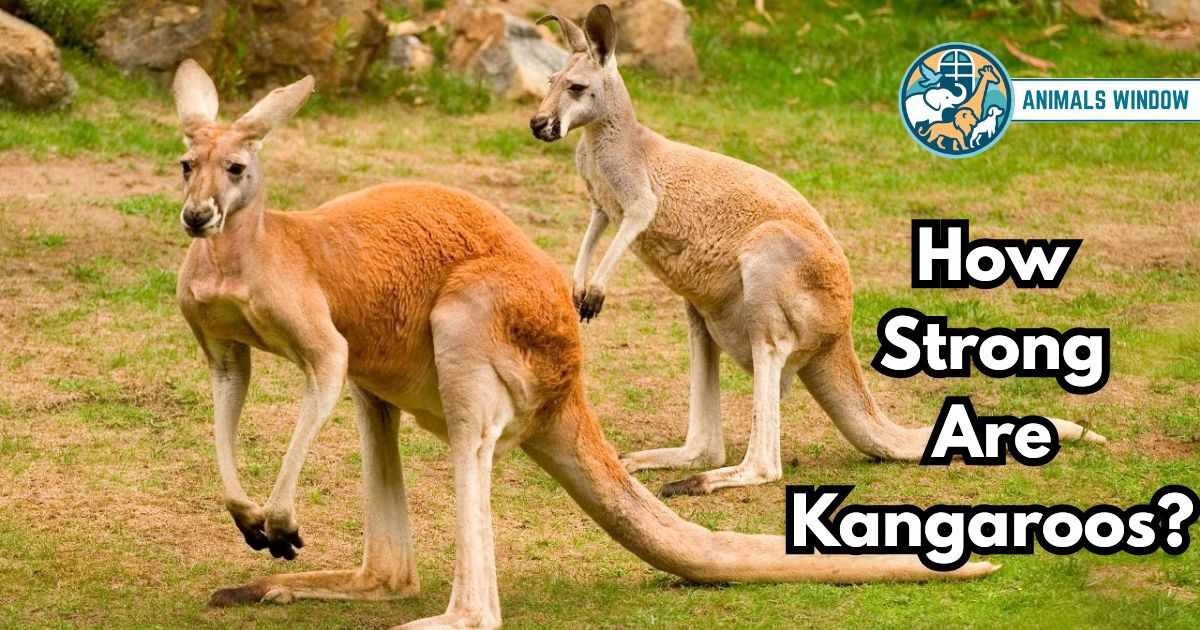
Kangaroos look like large, gentle hoppers. Up close, they are built like athletes. How strong are kangaroos, really? Strong enough to split skin with one kick, strong enough to drown a dog in water, and strong enough to make experienced wildlife rangers stay cautious. This article breaks down exactly how powerful kangaroos are — their kicks, punches, arms, tail, jumping ability, and how they compare to humans and other animals.
Table of Contents
Quick Answer
A large male red kangaroo can weigh up to 90 kg (198 lbs) and deliver a kick with an estimated force of around 759 psi. Their hind legs combine thick muscle groups with elastic tendons that store and release energy like springs. They are significantly stronger than an average human in raw lower-body power, though direct scientific measurements of kick force in wild kangaroos remain limited.
Quick Kangaroos Key Facts at a Glance
| Feature | Measurement / Estimate |
| Max weight (red kangaroo) | 90 kg / 198 lbs |
| Standing height (large male) | Up to 2 meters / 6.6 ft |
| Estimated kick force | 700–759 psi range |
| Top speed | 70–71 km/h (44 mph) |
| Cruising speed | ~50 km/h (31 mph) |
| Max jump length | ~9 meters (30 ft) per bound |
| Max jump height | ~3 meters (10 ft) |
| Bite force | ~925 Newtons |
| Strongest species | Red kangaroo (Osphranter rufus) |
What Makes Kangaroos So Physically Powerful?
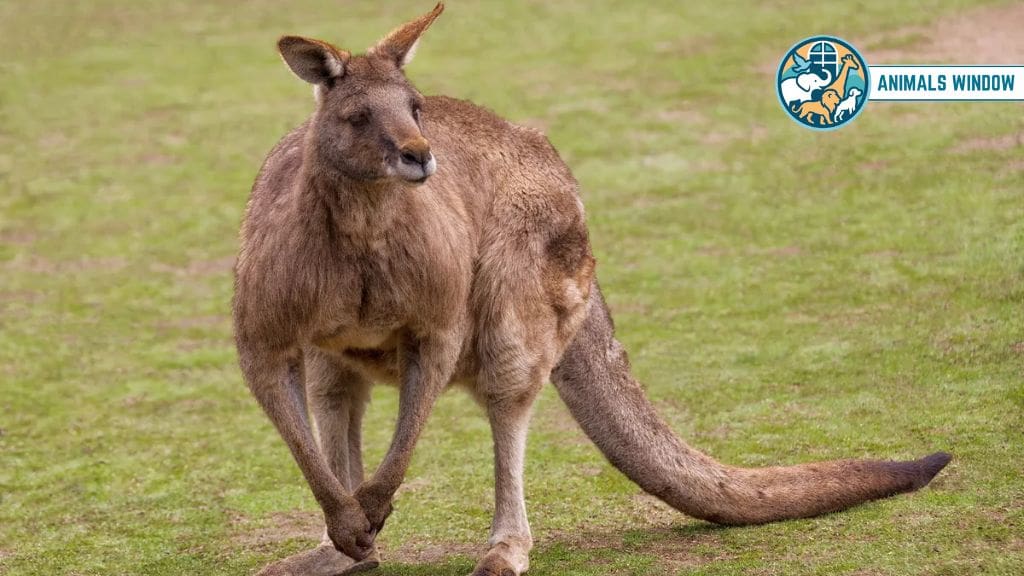
Male kangaroos — called boomers — spend years competing with other males for dominance and mating rights. That competition has shaped their bodies over millions of years. The result is an animal built for both endurance and explosive force.
Their power is not just muscle size. It comes from muscle placement, tendon mechanics, skeletal structure, and years of physical conditioning from daily movement — all working together.
Muscle and Tendon Working as One System
The hind legs contain dense quadriceps, hamstrings, and calf muscles that are large relative to body size. But the Achilles tendon is what makes the system exceptional.
When a kangaroo lands from a hop, that tendon stretches and stores elastic energy. On the next push-off, it releases that energy — almost for free. This is why kangaroos maintain high speeds without burning energy proportional to their effort. During a kick, the same stored energy contributes to explosive impact. The whole system — bone, tendon, and muscle — combines to produce force well beyond what muscle size alone would suggest.
Why Male Kangaroos Look So Muscular
Female kangaroos are lean and built for mobility. Males develop broad shoulders, thick forearms, and deep chest muscles as they mature — driven directly by fighting behavior. Males that win more sparring matches gain territory and reproductive access. Those with more developed upper bodies consistently win. Over generations, this created animals that are physically powerful by design, not accident.
How Strong Is a Kangaroo Kick?
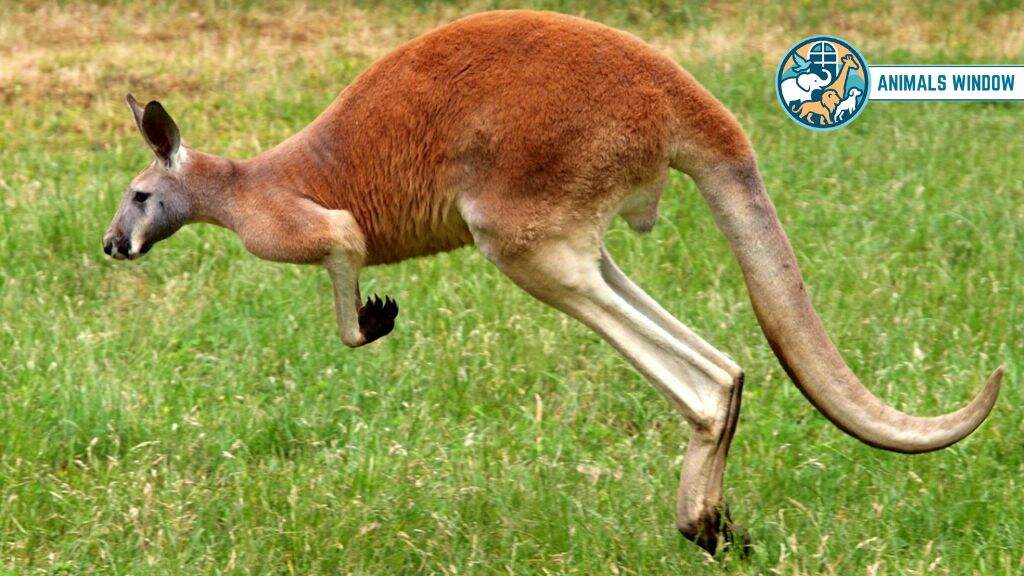
A kangaroo does not kick like a horse. It kicks forward — leaning back onto its tail and driving both hind legs into a target simultaneously. That two-legged strike concentrates enormous force into a small impact area, made sharper by long, hard claws on the hind feet.
Estimated kick force ranges between 700 and 759 psi for large male red kangaroos. A trained human boxer generates around 770 lbs of force in a punch, but across a much larger surface area. A kangaroo’s kick focuses similar energy through claw-tipped feet onto a much smaller contact point — making the penetrating force far more damaging per square inch.
In practice, a kick from a large male can disembowel a predator, break ribs, fracture limbs, and cause serious internal bleeding. Wildlife workers treat kangaroo kicks as genuinely life-threatening. There are documented cases of kangaroos killing dogs and seriously injuring adult humans.
These numbers apply to large, healthy adult males. A smaller eastern grey kangaroo kicks with considerably less force.
Can a Kangaroo Break Human Bones?
Yes. A full-force kick from a large kangaroo can fracture ribs, break arms, and cause severe abdominal injury. The combination of leg speed, muscle mass, and claw surface makes this consistent with what wildlife rangers and animal rescue workers report from direct experience.
Can a Kangaroo Kill a Human?
It is possible but rare. Fatalities from kangaroo attacks are extremely uncommon in recorded history. Serious injuries are documented, particularly when a human tries to intervene while a kangaroo feels cornered. An animal with no escape route will fight at full force.
How Powerful Is a Kangaroo Punch?
Kangaroos do box — two males will clinch with their forearms, pull each other close, and trade rapid strikes. But calling it a punch in the human sense is misleading. Kangaroos lack the rotating shoulder and elbow mechanics that make a human punch powerful. Their forelimb strikes are closer to controlled raking grabs — forearms and claws working together.
A forearm strike from a large male is forceful enough to knock a person off balance or cause bruising. Their arms are built for grappling, not precision striking. The primary power in any serious kangaroo fight is always the hind leg kick.
How Strong Are Kangaroo Arms?
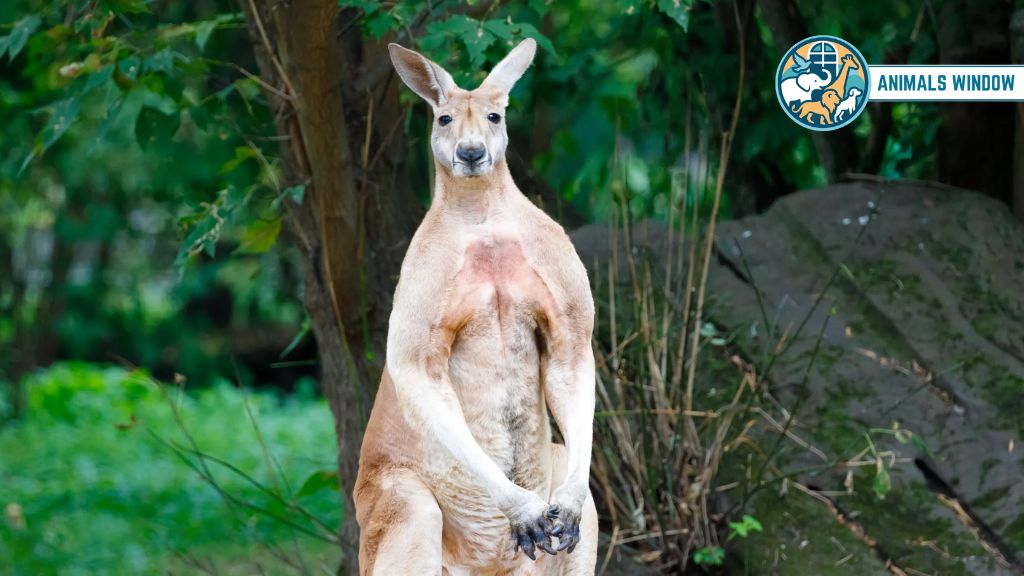
Dominant male kangaroos develop forearms that look almost disproportionately large — because those arms are used in sparring from a young age, continuously. Their grip is strong enough to hold another kangaroo’s head or neck during combat while delivering kicks with the hind legs.
Outside of fighting, they use their arms to push through dense brush, dig for water in dry riverbeds, and groom their young. These are not lifting limbs like primate arms. They are built for gripping, pulling, and short-burst striking — combat tools rather than general-purpose limbs.
How Strong Is a Kangaroo’s Tail?
The tail is the most underrated part of kangaroo anatomy.
A large red kangaroo’s tail can exceed one meter in length with a base as thick as a human thigh. It is densely muscular and functions as a genuine third limb. Research published in the Journal of Experimental Biology found that during slow-speed movement, the tail does as much propulsive work as all four limbs combined — a remarkable mechanical contribution.
In combat, males lean back onto the tail to free both hind legs for forward kicks. Without that tail support, the two-legged strike would not be mechanically possible. A swinging tail strike can also knock a person off their feet directly.
How Fast Are Kangaroos?
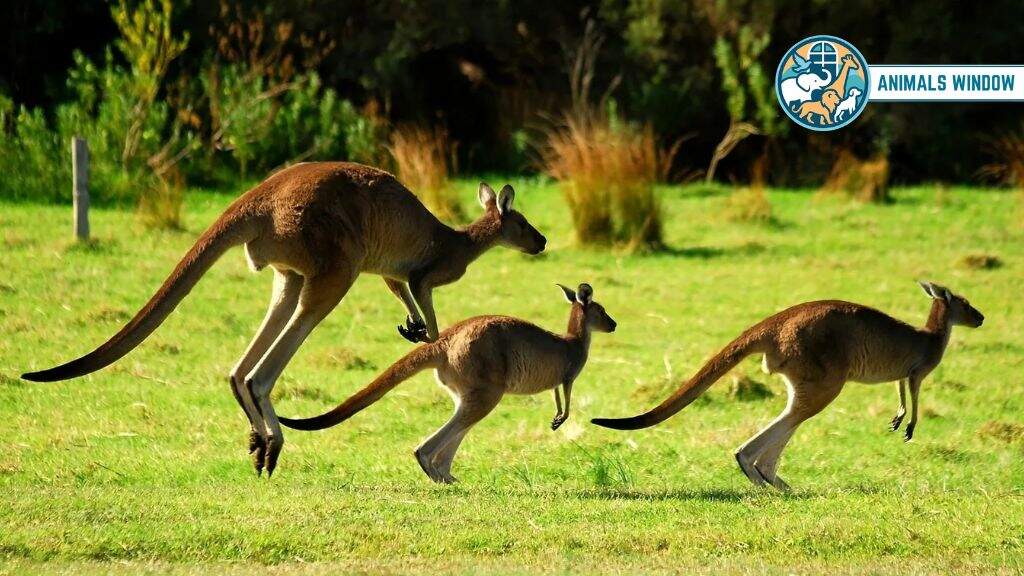
Red kangaroos are the fastest marsupials on Earth. Their top recorded speed is around 71 km/h (44 mph) in short bursts — faster than a thoroughbred horse over a short sprint.
At cruising speed near 50 km/h (31 mph), kangaroos are near peak fuel efficiency. Their elastic tendon system means they are essentially bouncing on biological springs rather than burning pure muscle energy with each stride. A dingo chasing a kangaroo in open country may exhaust itself before the kangaroo does — which is a meaningful survival advantage that speed numbers alone do not capture.
How High and How Far Can a Kangaroo Jump?
A red kangaroo can clear about 3 meters (10 feet) in height and cover up to 9 meters (30 feet) in a single bound at full speed. During regular travel, bounds are shorter — typically 1.5 to 2 meters.
Every jump requires enough leg force to propel 60–90 kg of body weight into the air, repeated thousands of times daily. Their lifestyle is essentially a continuous conditioning program, which explains why kangaroos maintain exceptional leg strength without any variation in activity.
Are Kangaroos Stronger Than Humans?
| Attribute | Kangaroo (Large Male) | Athletic Adult Human Male |
| Lower body kick force | ~700–759 psi (estimated) | ~150–450 psi (trained kick) |
| Top running speed | ~71 km/h | ~45 km/h (elite sprinter) |
| Jump height | ~3 meters | ~1.2 meters (elite) |
| Jump distance | ~9 meters | ~8.95 meters (world record) |
| Upper body striking | Grappling-based | ~770 lbs (trained boxer punch) |
| Sustained speed | ~50 km/h for extended periods | Cannot sustain 45 km/h |
In lower body power, jumping ability, and sustained speed, kangaroos clearly outperform humans. A trained boxer likely hits harder with a clean punch than a kangaroo forearm strike. Overall, a large male kangaroo is far more dangerous in a physical confrontation than most people assume — and a healthy adult human has essentially no realistic chance of winning an open confrontation with one.
Are Kangaroos Stronger Than Gorillas?
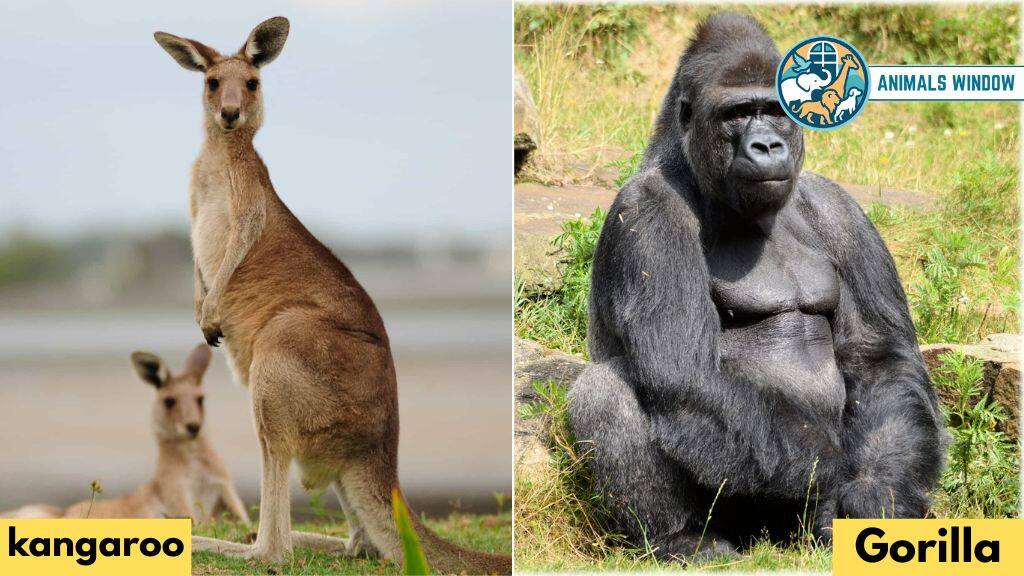
No. In overall raw strength, a gorilla is considerably more powerful.
| Attribute | Red Kangaroo (Large Male) | Western Gorilla (Large Male) |
| Weight | Up to 90 kg | 140–180 kg |
| Upper body strength | Moderate, grappling-focused | Estimated 4–10x human strength |
| Lower body kick force | ~700+ psi (estimated) | Not comparably measured |
| Top speed | ~71 km/h | ~25 km/h (short burst) |
| Jumping ability | Exceptional | Limited |
A gorilla outweighs a large kangaroo by 50–90 kg and carries upper body strength that dwarfs most mammals. A kangaroo’s advantages are speed and kicking power. In direct confrontation, the gorilla’s mass would likely decide the outcome — though a clean kangaroo kick to an unguarded target would cause serious damage to any animal regardless of size.
Kangaroo Bite Force
Kangaroos are herbivores that process tough native grasses, shrubs, and leaves daily. That diet demands a powerful jaw. Their estimated bite force sits around 925 Newtons — roughly comparable to a Rottweiler.
They do not bite as a first move in combat. But if cornered or gripping a smaller animal, that jaw force would cause real damage. Most people overlook the bite entirely because the kick dominates attention.
How Kangaroos Actually Fight
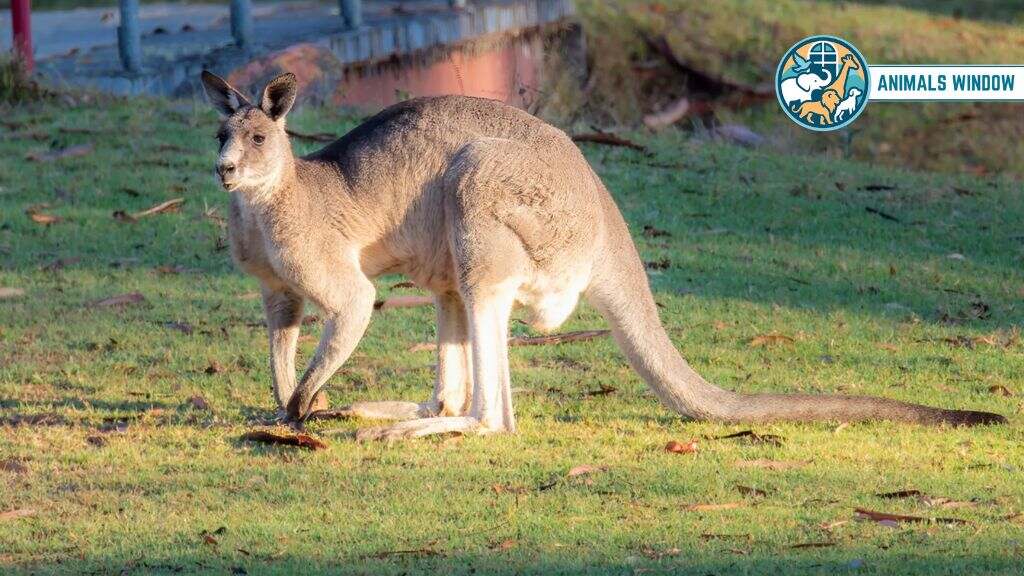
Two males begin by sizing each other up — standing at full height to display mass and muscle. Many confrontations end here when a smaller male backs down.
If neither retreats, they clinch. Each tries to grip the other’s head or neck with forearms while trading rapid strikes. Serious escalation follows when one leans back onto its tail and drives both hind legs forward in a two-legged kick. These fights cause broken bones, torn muscle, and occasionally fatal injuries between animals. Males that survive multiple serious fights carry visible scars. This sustained combat pressure is the direct driver of their physical development as a species.
Myths vs. Facts
Myth: Kangaroos punch like human boxers.
Fact: Kangaroo forearm strikes are grappling-based, not rotational punches. The kick is the true power.
Myth: Kangaroos are only dangerous when provoked.
Fact: A kangaroo that feels cornered or is protecting a joey can attack without obvious warning. Distance is the only reliable protection.
Myth: Small kangaroos are harmless.
Fact: Even eastern grey kangaroos — lighter than red kangaroos — can cause genuine injury. Size affects degree, not presence, of danger.
Myth: Kick force figures are precisely measured scientific data.
Fact: Widely cited numbers are biomechanical estimates based on body mass and muscle cross-section modeling. Direct experimental measurements from wild kangaroos are not consistently available in published literature.
Myth: Viral “buff kangaroo” photos show unusually strong individuals.
Fact: Those images typically show older dominant males near water sources during drought — animals that are territorial, mature, and naturally more muscular. No exceptional conditioning explains it; age and dominance do.
How Dangerous Are Kangaroos to Humans?
Kangaroos are not predators. Most will hop away rather than engage. Defensive aggression triggers under specific conditions: being cornered, approached too closely, or separated from their group.
Wildlife rangers in Australia advise:
- Never approach a kangaroo directly or quickly
- Never corner one near a fence, water, or enclosed space
- Crouch low and back away slowly if aggression displays begin
- Never intervene when a kangaroo is attacking a pet — give the animal space and wait
The most dangerous situations involve people who get too close for photos, attempt to hand-feed them, or try to separate fighting animals. Injuries in those situations can be severe and have required surgical treatment.
Common FAQ’s About How Strong Are Kangaroos
What is the strongest kangaroo species?
The red kangaroo (Osphranter rufus). Males reach up to 90 kg and 2 meters tall — the largest and most powerful of all kangaroo species.
Do female kangaroos pose a danger?
Yes, but far less than males. Females are smaller and less muscular. Their kick can injure a person, but it is nowhere near the force an adult male delivers.
What is a kangaroo’s main predator?
Dingoes. They rarely target healthy adult kangaroos though — they go after joeys, sick animals, or exhausted individuals instead.
Can a human beat a kangaroo in a fight?
Realistically, no. A large male kangaroo is heavier, faster, and kicks hard enough to cause serious injury before most people could react.
Why do male kangaroos fight each other?
To establish dominance. The strongest males win territory and mating access. Fighting is how rank is decided.
Final Takeaway
Kangaroos are far more physically capable than their image suggests. Their lower-body power, elastic tendon mechanics, combat behavior, and natural daily conditioning combine to make large male red kangaroos genuinely dangerous animals. The kick alone can cause life-threatening injury, and their speed and endurance make escape from conflict difficult for most predators.
Understanding how strong kangaroos are matters beyond trivia — it shapes how you approach them in the wild and explains what millions of years of survival pressure can build into an animal’s body.
Read More Animals Guides:

I have loved animals since I was a kid. I enjoy reading about how animals live, eat, move, and survive. I started Animals Window to share what I learn in a simple and easy way. I write about animal body parts, size, behavior, diet, habitats, and species. My goal is to make animal facts clear and fun for everyone to understand.