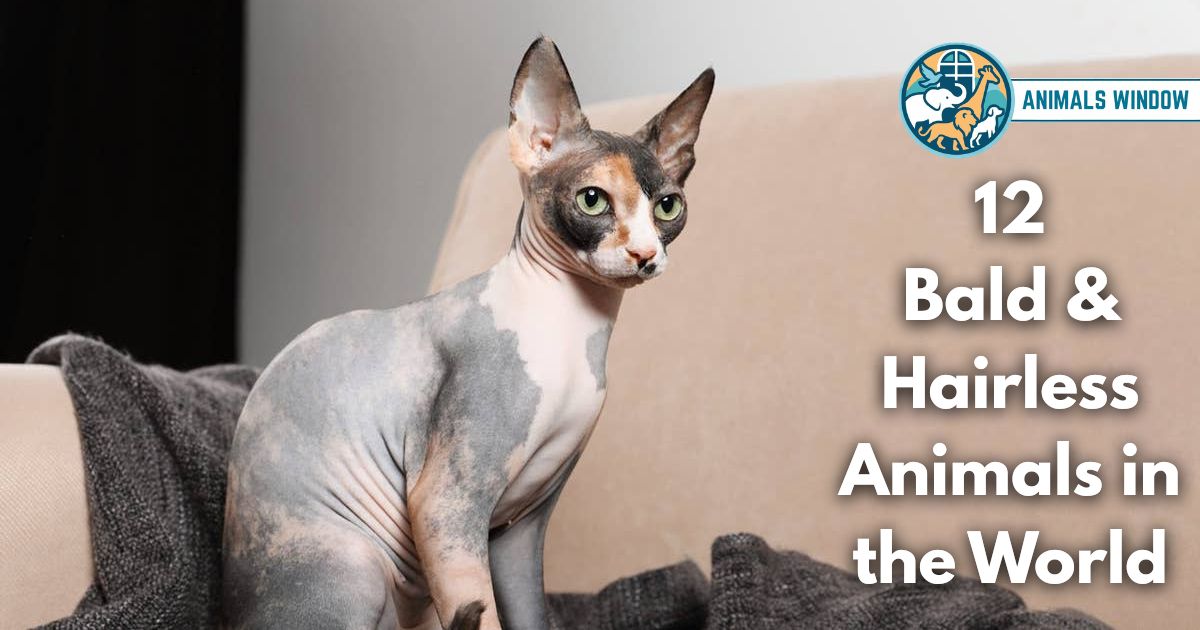
Hairless animals are mammals (and a few others) that are born with little to no fur, hair, or feathers covering their bodies. Some evolved this way over millions of years as a survival advantage. Others were selectively bred by humans. Right now, at least a dozen well-known species live their entire lives — wild or domestic — completely bare-skinned.
Table of Contents
Quick Table: Bald Animals at a Glance
| Animal Name | Scientific Name | Key Trait |
| Sphynx Cat | Felis catus | Wrinkled, velvety skin; zero fur |
| Naked Mole-Rat | Heterocephalus glaber | Nearly immune to cancer |
| Cetaceans | Cetacea (order) | Streamlined for underwater speed |
| Hippopotamus | Hippopotamus amphibius | Sweats a natural pink sunscreen |
| Skinny Pig | Cavia porcellus | Hairless guinea pig with peach-fuzz face |
| Xoloitzcuintli | Xoloitzcuintli | One of the world’s oldest dog breeds |
| Chinese Crested Dog | Canis lupus familiaris | Two coat types in one breed |
| Hairless Syrian Hamster | Mesocricetus auratus | Result of a genetic mutation |
| Bald Uakari | Cacajao calvus | Red face signals health to mates |
| Hairless Rat | Rattus norvegicus | Immune-compromised but highly social |
| North Sulawesi Babirusa | Babyrousa celebensis | Tusks that can pierce its own skull |
| Hairless Bat | Cheiromeles torquatus | Only truly hairless bat in the world |
This article covers 12 real hairless animals — wild and domestic — with facts you probably haven’t read before.
1. Sphynx Cat
- Scientific name: Felis catus
- Size: 8–10 inches tall
- Weight: 6–12 lbs
- Diet: Carnivore (high-protein diet)
- Habitat: Domestic
- Lifespan: 9–15 years
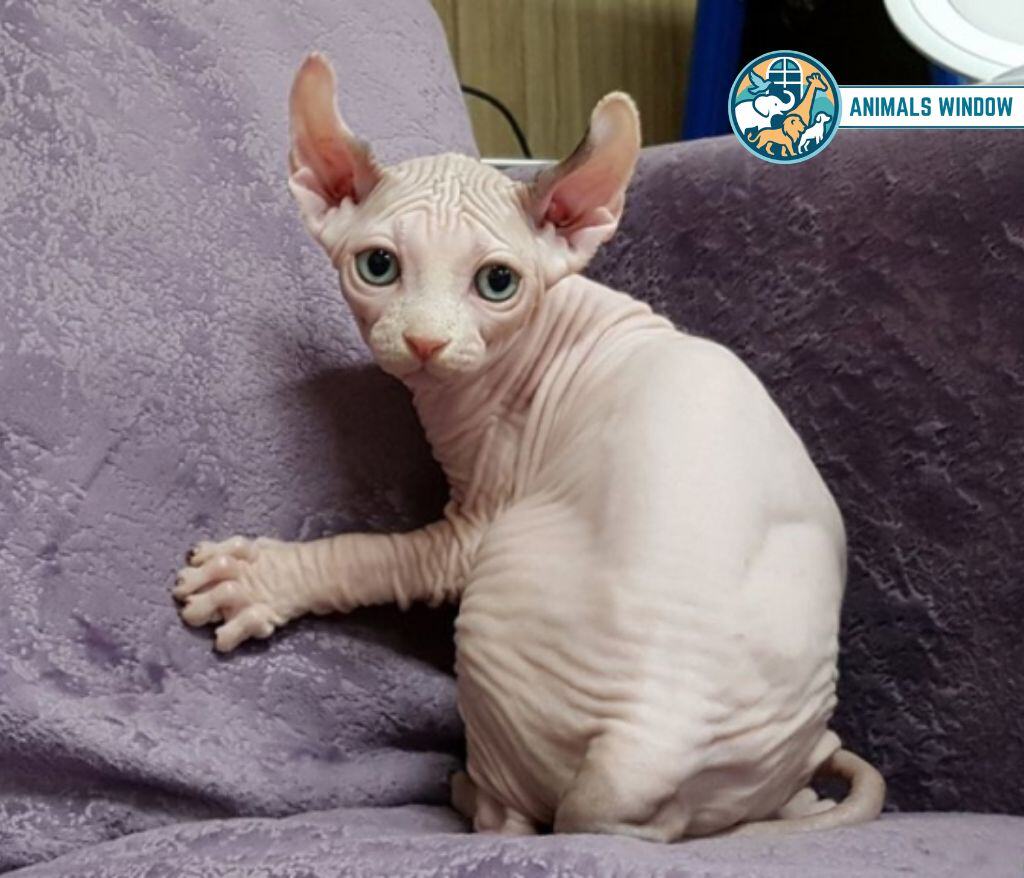
The Sphynx Cat isn’t actually bald. Run your hand across its skin and you’ll feel something — a fine layer of downy fuzz, almost like a peach. What it lacks is the long guard hairs that give most cats their fluffy look. The result is a wrinkled, warm-to-the-touch cat that feels like a hot water bottle with opinions.
What makes the Sphynx unusual isn’t just its skin. It runs about 4°F warmer than the average cat because it has no fur to trap heat. So it burns through food faster and needs more calories per pound of body weight than most domestic cats. Owners often describe feeding it like fueling a small furnace.
🔥 Comparison Fact: A full-grown Sphynx weighs about as much as a large bag of flour — but it radiates more warmth than your average lap dog.
2. Naked Mole-Rat
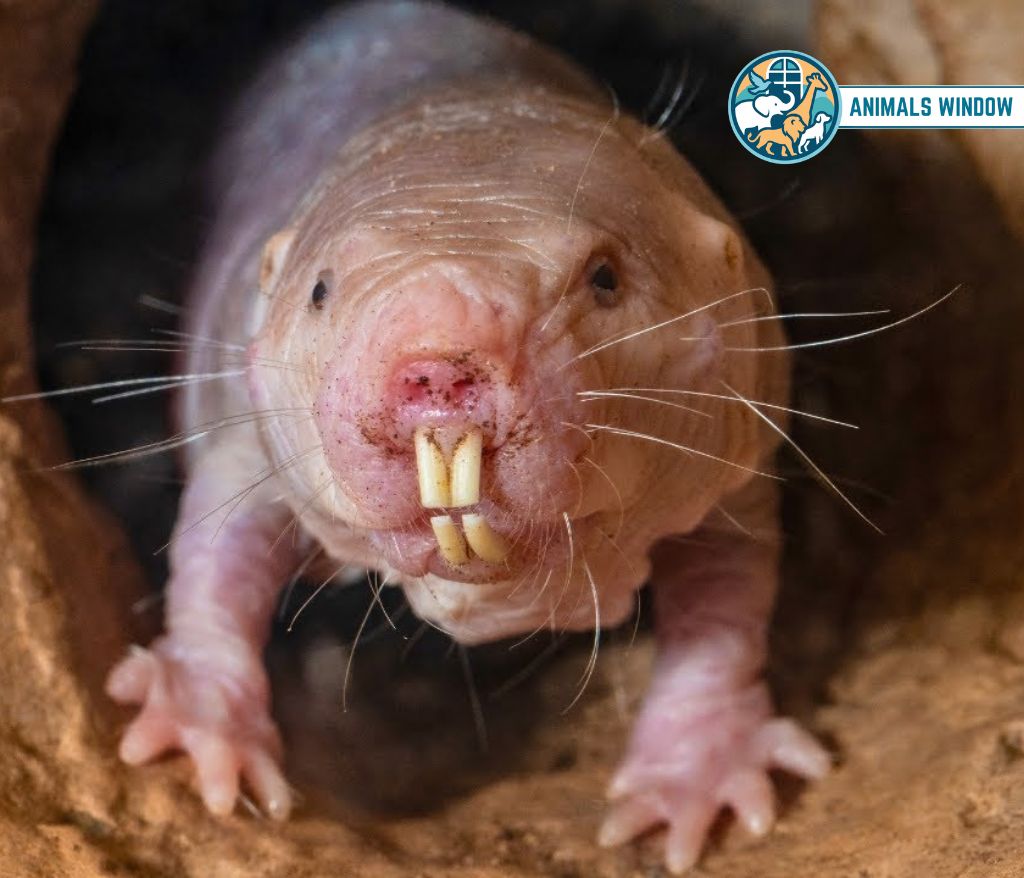
- Scientific name: Heterocephalus glaber
- Size: 3–4 inches long
- Weight: 1–1.5 oz
- Diet: Roots, tubers, plant matter
- Habitat: Underground tunnels in East Africa
- Lifespan: Up to 30 years (extraordinary for its size)
Look up “ugly animal” and the Naked Mole-Rat shows up almost immediately. But underneath that wrinkled pink exterior is one of the most scientifically remarkable mammals alive. It’s cold-blooded in behavior — something almost no other mammal can claim. It can’t regulate its body temperature the way typical mammals do, so it huddles with colony members to stay warm.
Here’s what separates it from every other small mammal on Earth: it is functionally resistant to cancer. Scientists have studied it for decades and found that its cells contain a sugar molecule called hyaluronan — in concentrations far higher than in humans or mice — that appears to stop tumor growth before it starts. Researchers are actively studying this mechanism as a possible path toward human cancer treatments.
🔥 Comparison Fact: A Naked Mole-Rat is roughly the size of a AA battery, yet it can live 10 times longer than a similarly-sized mouse.
3. Cetaceans (Whales, Dolphins, and Porpoises)
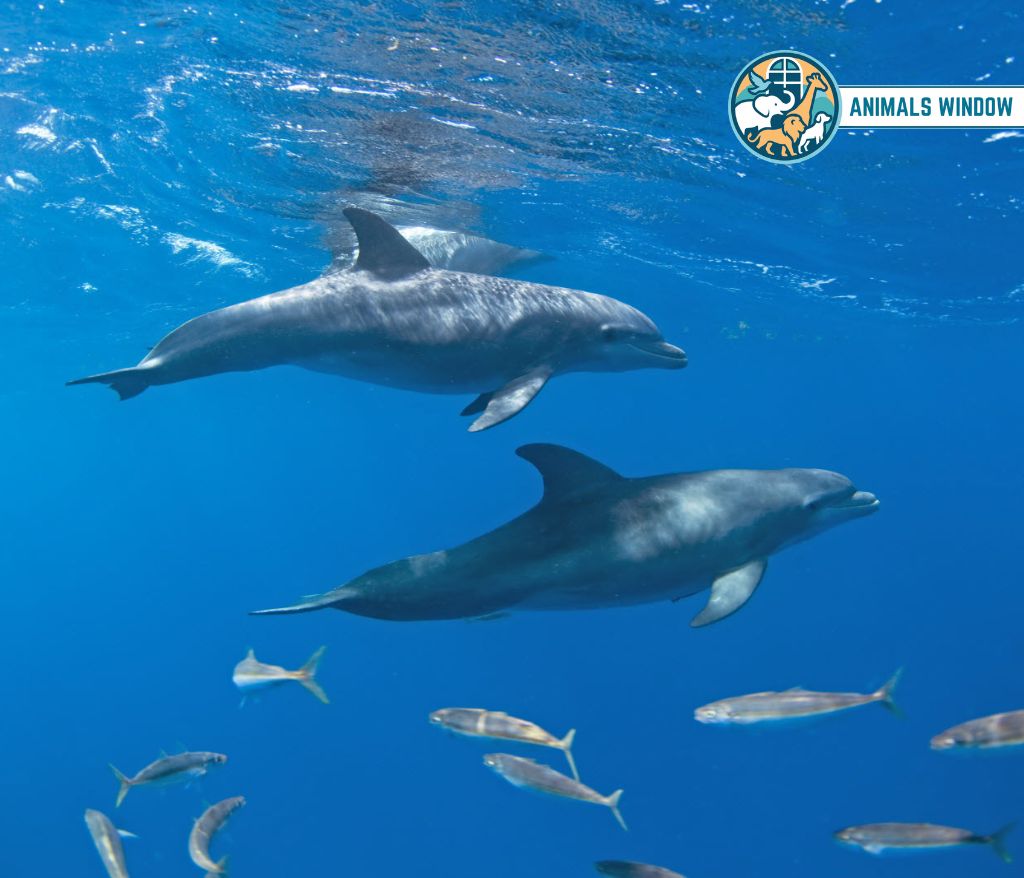
- Scientific name: Cetacea (order)
- Size: 4 feet (porpoises) to 100 feet (blue whale)
- Weight: 130 lbs to 200 tons
- Diet: Fish, krill, squid, plankton
- Habitat: All oceans; some rivers
- Lifespan: 20 years (porpoises) to 200+ years (bowhead whale)
Cetaceans are mammals — which means their ancestors had hair. And technically, they still do. Baby dolphins and whales are born with a small patch of bristle-like hairs near their snouts. But within days or weeks after birth, those hairs fall out, and the animal spends the rest of its life with smooth, almost frictionless skin.
That smoothness is intentional. Cetacean skin is built for hydrodynamic efficiency — it reduces drag so effectively that engineers have studied dolphin skin to improve submarine and aircraft designs. The skin also regenerates at a remarkable rate. A bottlenose dolphin replaces its entire outer skin layer every two hours, which helps it stay sleek and free of barnacles.
🔥 Comparison Fact: A blue whale is longer than two school buses parked end-to-end — and its skin is smoother than most polished metals.
4. Hippopotamus
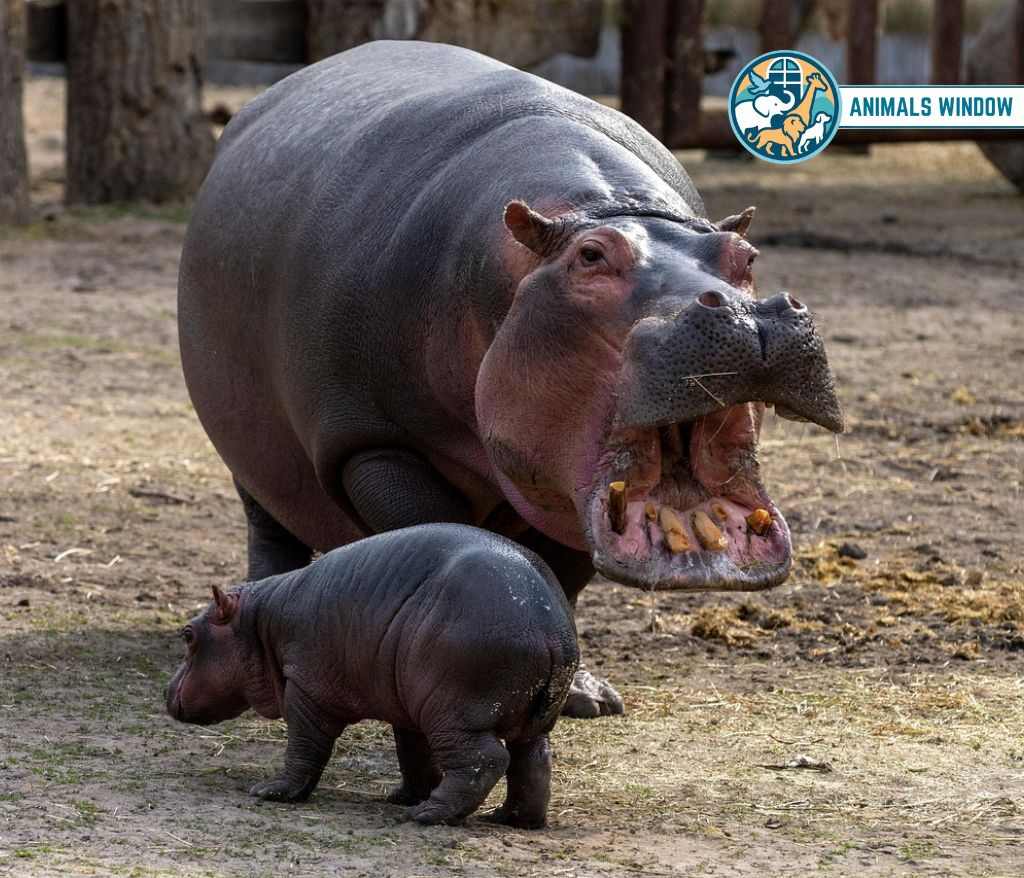
- Scientific name: Hippopotamus amphibius
- Size: 9.5–14 feet long
- Weight: 3,000–9,900 lbs
- Diet: Grasses, aquatic plants
- Habitat: Sub-Saharan African rivers and lakes
- Lifespan: 40–50 years
The Hippopotamus has almost no hair — just a few sparse bristles around its mouth and the tip of its tail. But what makes its skin truly fascinating isn’t what’s missing. It’s what replaces fur. Hippos secrete a thick, oily fluid from their skin pores. This fluid starts out colorless, then turns red, then brown as it oxidizes in the air.
For a long time, people called it “blood sweat” — which was dramatic but wrong. Scientists confirmed it’s neither blood nor sweat. It’s a natural bio-sunscreen that also has antibiotic properties. This oily secretion protects hippos from sunburn while simultaneously killing bacteria on skin wounds. No other mammal on Earth produces anything quite like it.
🔥 Comparison Fact: A hippo weighs about the same as a full-size pickup truck — and its skin secretion does the job of both sunscreen and antibiotic cream combined.
5. Skinny Pig (Hairless Guinea Pig)
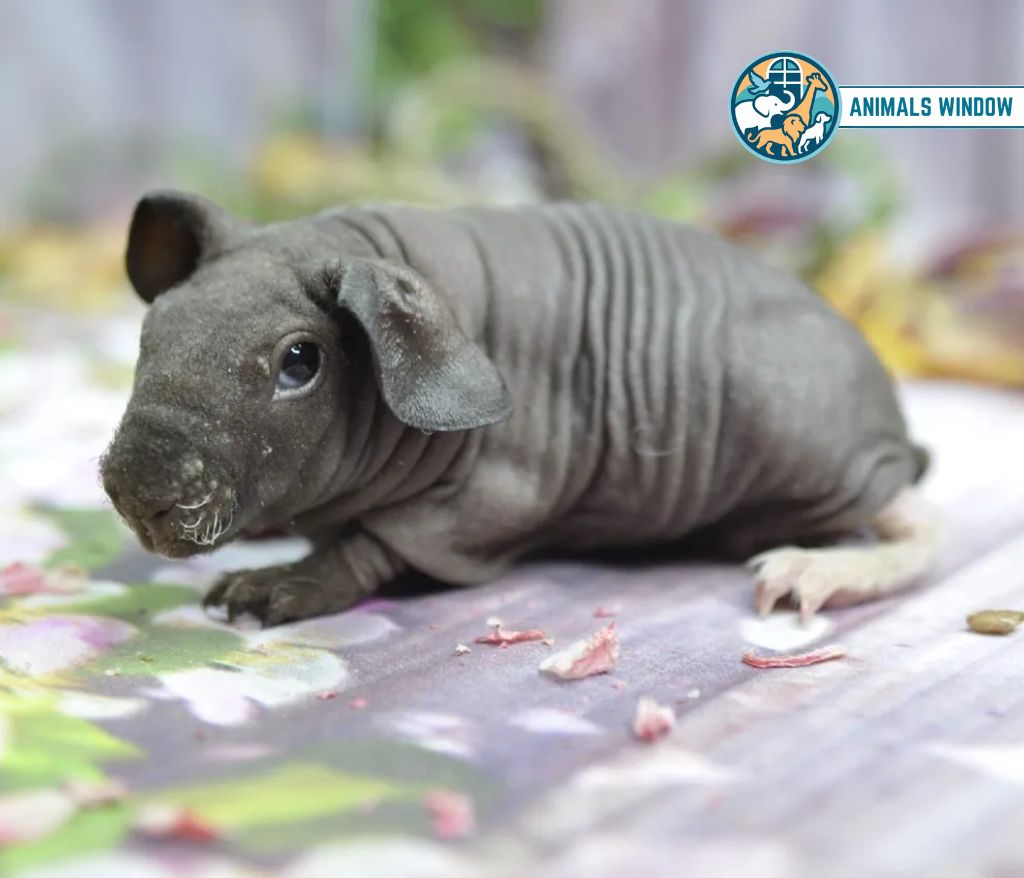
- Scientific name: Cavia porcellus
- Size: 8–11 inches long
- Weight: 1.5–2.6 lbs
- Diet: Hay, leafy greens, vegetables, vitamin C-rich foods
- Habitat: Domestic
- Lifespan: 4–7 years
The Skinny Pig looks like a tiny hippo, honestly. It has smooth, exposed skin stretched over a plump body, with just a tuft of fur on its muzzle and feet. It was developed in labs in the 1970s as a result of a genetic mutation — and later adopted as a pet breed.
What stands out is how temperature-sensitive these animals are. A regular guinea pig can tolerate room temperatures that dip into the low 60s°F. A Skinny Pig needs the room to stay at at least 75°F or it starts to shiver and stress. Owners sometimes knit tiny sweaters for them — which sounds silly until you realize the animal genuinely can’t stay warm without help.
🔥 Comparison Fact: A Skinny Pig is about the size of a large baked potato and needs roughly the same ambient warmth as a human baby to stay comfortable.
6. Xoloitzcuintli (Mexican Hairless Dog)
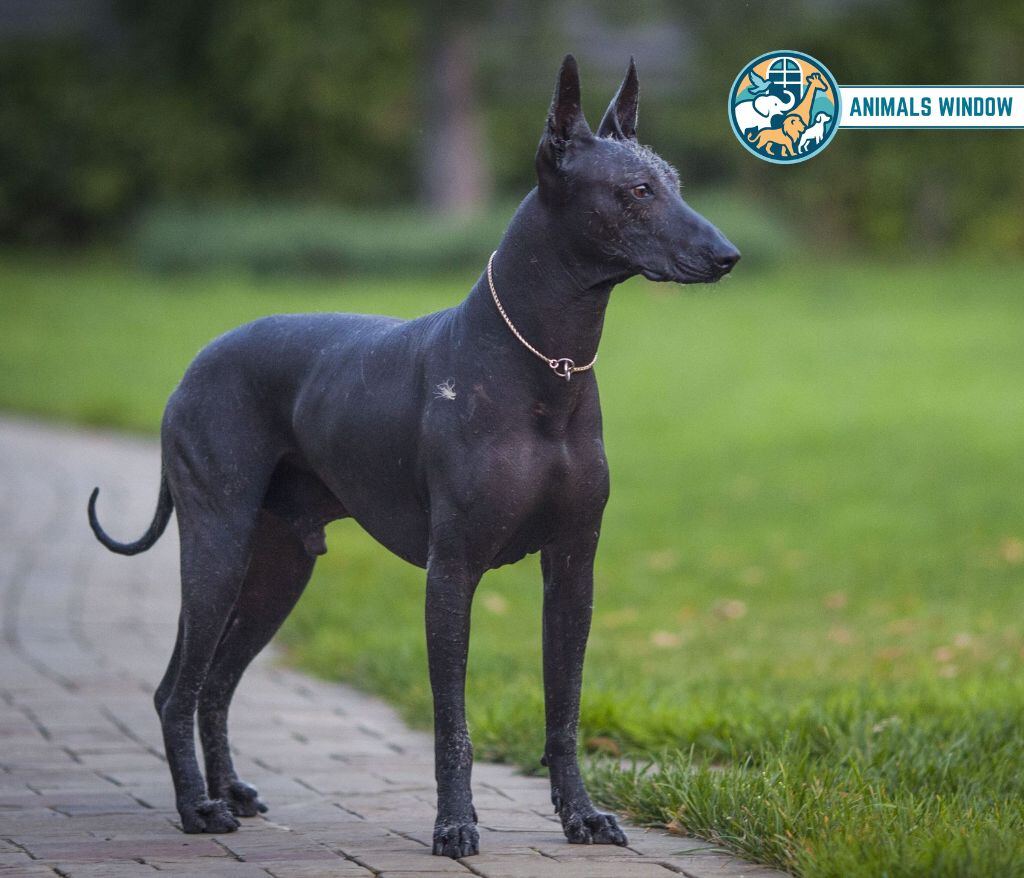
- Scientific name: Xoloitzcuintli
- Size: Toy (10–14 in), Miniature (14–18 in), Standard (18–23 in)
- Weight: 10–55 lbs (varies by size)
- Diet: Omnivore; standard dog diet
- Habitat: Domestic
- Lifespan: 13–18 years
The Xoloitzcuintli — pronounced “show-lo-eets-QUEENT-lee” — has been around for at least 3,500 years. Ancient Aztecs kept them as sacred companions, believing they could guide human souls through the underworld. Dogs don’t get a more dramatic origin story than that.
What’s less known is the breed’s thermal quirk. Because it lacks an insulating fur coat, its skin surface absorbs and radiates heat quickly. In warm climates, Xolos can feel noticeably warmer to the touch than furred dogs — sometimes reaching skin temps that feel almost feverish. This is normal for the breed. Early Spanish explorers reportedly used them as living hot water bottles on cold nights, pressing them against sore joints for warmth.
🔥 Comparison Fact: A standard Xolo can weigh up to 55 lbs — about the same as a medium-sized car tire — and its skin surface runs several degrees warmer than that of a coated dog.
7. Chinese Crested Dog
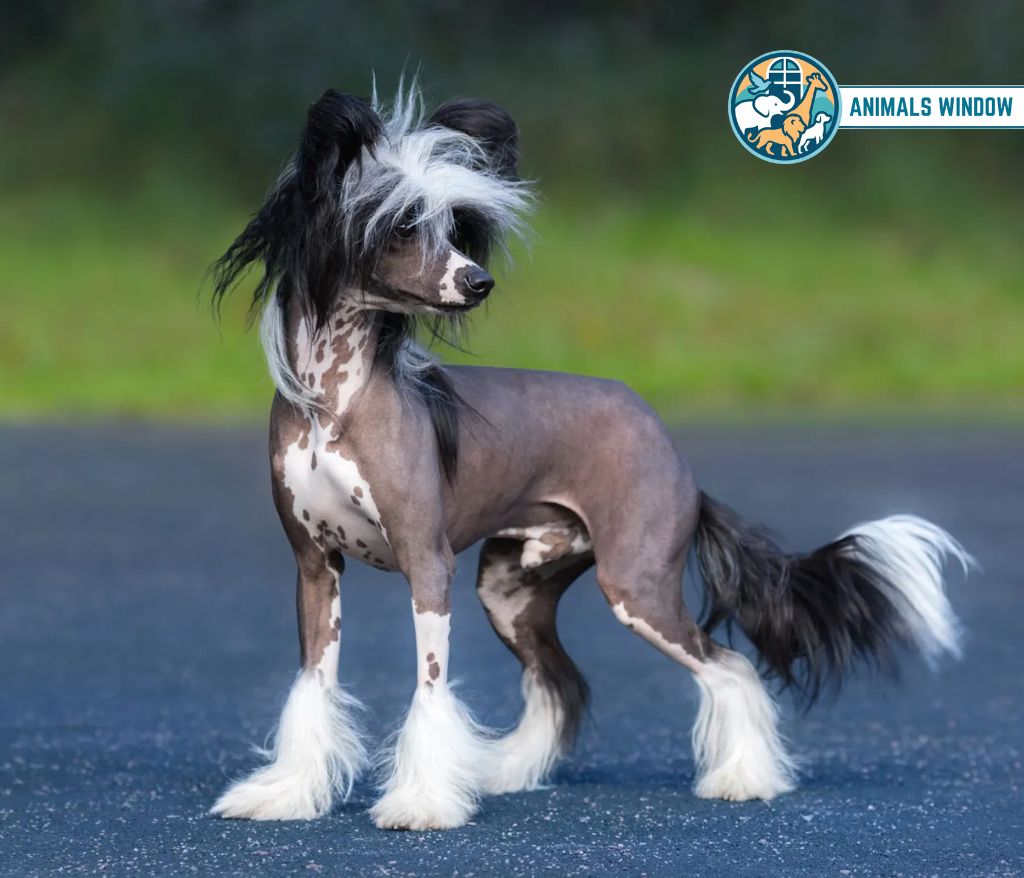
- Scientific name: Canis lupus familiaris
- Size: 11–13 inches tall
- Weight: 8–12 lbs
- Diet: Omnivore; standard small-breed dog diet
- Habitat: Domestic
- Lifespan: 13–18 years
The Chinese Crested Dog exists in two forms within the same breed. One is the Hairless variety — smooth bare skin with tufts of fur only on the head, paws, and tail. The other is the Powderpuff — fully covered in a silky double coat. And here’s the part that surprises people: both types can appear in the same litter, from the same parents.
The hairless trait is caused by a dominant gene mutation that affects not just fur — it also affects dentition. Hairless Chinese Crested dogs commonly have missing or malformed teeth, and often have teeth that remain pointed and fang-like throughout their lives. The same gene that strips their coat also disrupts normal tooth development. Powderpuff dogs in the same litter typically have normal teeth.
🔥 Comparison Fact: A Chinese Crested weighs about as much as a full one-gallon jug of water — and a single dominant gene controls whether it looks naked or fluffy.
8. Hairless Syrian Hamster
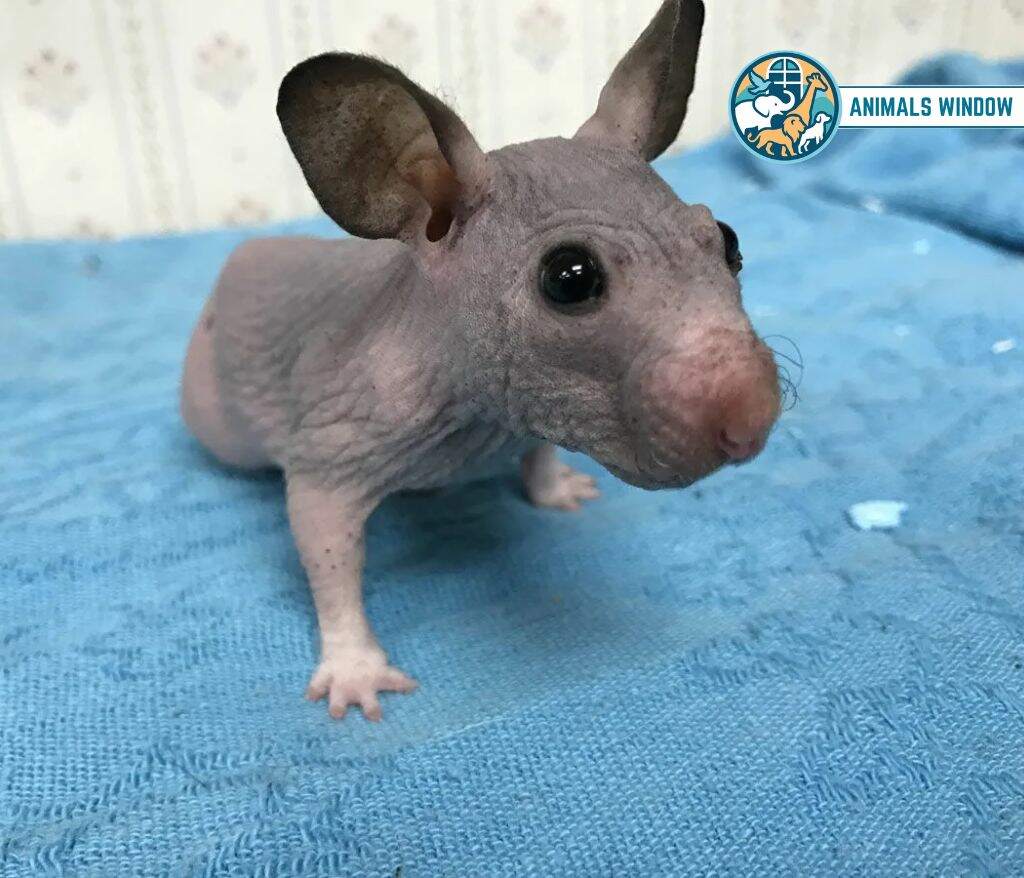
- Scientific name: Mesocricetus auratus
- Size: 5–7 inches long
- Weight: 4–5 oz
- Diet: Seeds, grains, fruits, vegetables, insects
- Habitat: Domestic (wild type has fur)
- Lifespan: 2–3 years
The Hairless Syrian Hamster is not a separate species — it’s a genetic variant of the same Syrian hamster people keep as pets worldwide. A spontaneous mutation in the gene that controls hair follicle development produces a completely bald individual. Most are discovered in captive breeding programs and are then purposely bred to maintain the line.
These hamsters have a significant thermoregulation problem. Because hamsters normally hibernate in the wild when temperatures drop, and because hairless individuals have no insulation at all, they are dangerously prone to entering torpor — a sleep-like hibernation state — even at temperatures that wouldn’t affect a coated hamster. Owners have to maintain a very stable warm environment or the animal can drop into a torpor so deep it looks dead.
🔥 Comparison Fact: A Hairless Syrian Hamster weighs about the same as a standard egg — and it can drop into a cold-induced hibernation-like state at room temperatures that feel perfectly comfortable to you.
9. Bald Uakari
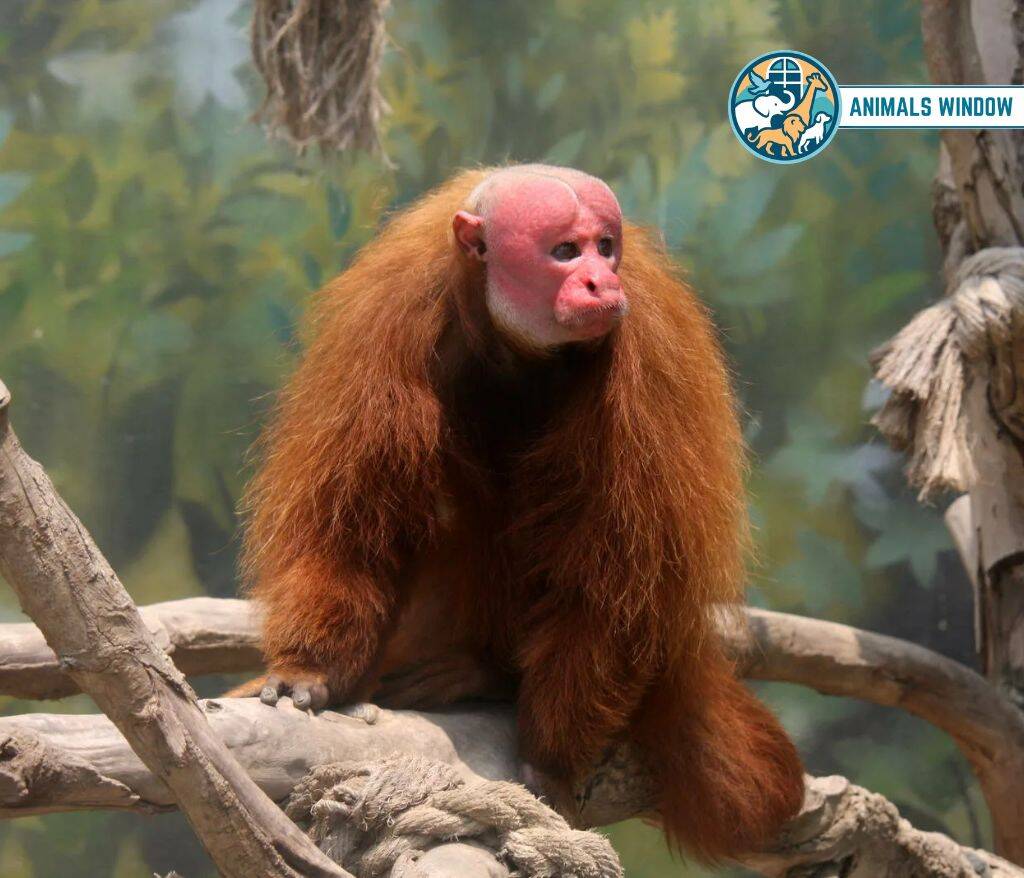
- Scientific name: Cacajao calvus
- Size: 14–22 inches long (body)
- Weight: 5–8 lbs
- Diet: Seeds, fruit, insects, some small vertebrates
- Habitat: Flooded Amazon rainforests, South America
- Lifespan: 20+ years in captivity
The Bald Uakari is arguably the most striking-looking primate on the list. Its face and head are almost completely bare — exposing vivid red or scarlet skin that can look almost sunburned. And that redness isn’t an accident. It’s a health signal.
The red coloration comes from blood vessels close to the surface of the skin. Healthy uakaris with strong immune systems have the most intensely red faces. A pale or washed-out face signals illness, parasite load, or poor health. This means facial redness functions as a direct fitness signal to potential mates — similar to the way peacock feathers work, but written directly on the face. Researchers believe uakaris may choose mates partly based on face color, making their baldness an evolutionary advantage rather than a liability.
🔥 Comparison Fact: A Bald Uakari’s body is roughly the size of a large house cat, but its bright red face — measuring just a few square inches — does the same job as a full peacock tail when it comes to attracting a mate.
10. Hairless Rat (Double Rex / Sphynx Rat)
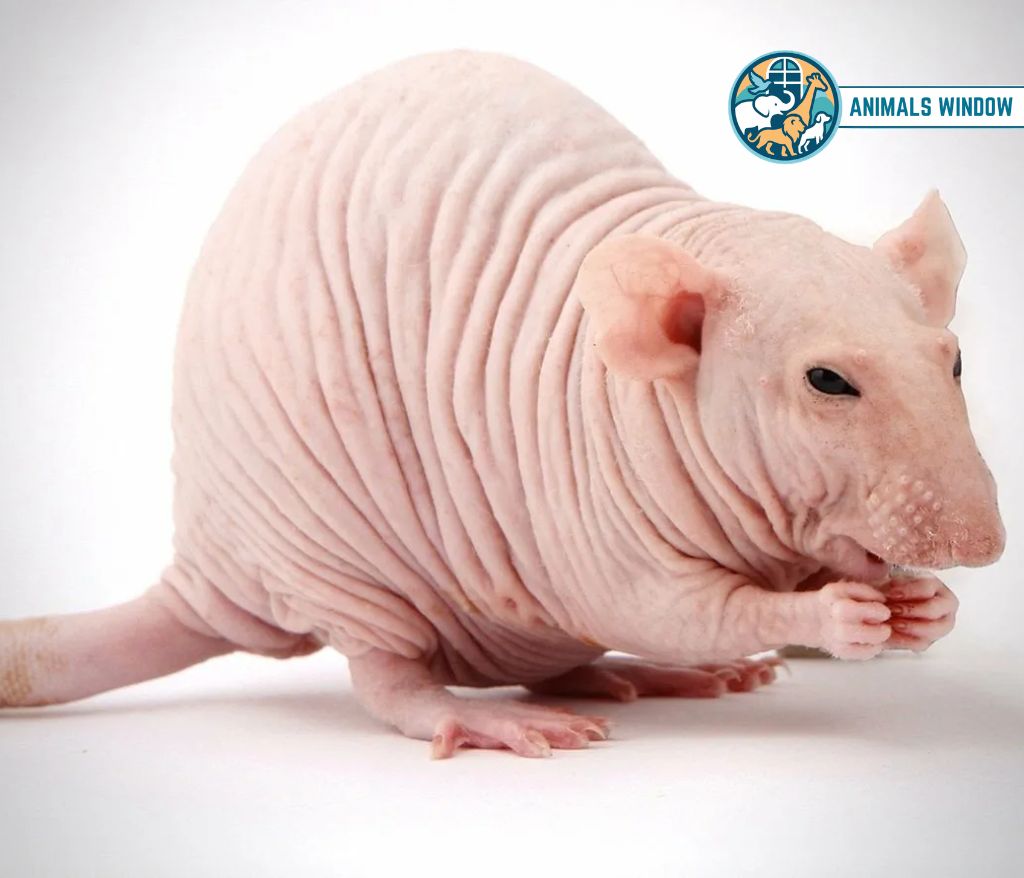
- Scientific name: Rattus norvegicus
- Size: 9–11 inches long
- Weight: 0.5–1.1 lbs
- Diet: Grains, vegetables, fruits, lean protein
- Habitat: Domestic
- Lifespan: 2–3 years
The Hairless Rat — sometimes called a Double Rex or Sphynx Rat — comes from breeding two Rex-gene rats together. The Rex gene creates curly, wiry fur on its own. But when a rat inherits two copies of it, the hair follicles become so distorted that the rat produces little to no fur at all. Some Double Rex rats grow patchy, thin coats that fall out in clumps. True Sphynx rats are completely bare.
What stands out about these animals is their immune system. Many hairless rat lines also carry a genetic thymus abnormality — meaning they have a weakened immune system and are especially vulnerable to respiratory infections. Researchers actually use this trait intentionally. Immunocompromised hairless rats are valuable in medical research because their bodies won’t reject foreign tissue grafts, making them useful for studying tumor growth and testing cancer treatments.
🔥 Comparison Fact: A Hairless Rat weighs about the same as a deck of playing cards — and its immune-compromised body has contributed to more cancer research than almost any other small lab animal.
11. North Sulawesi Babirusa
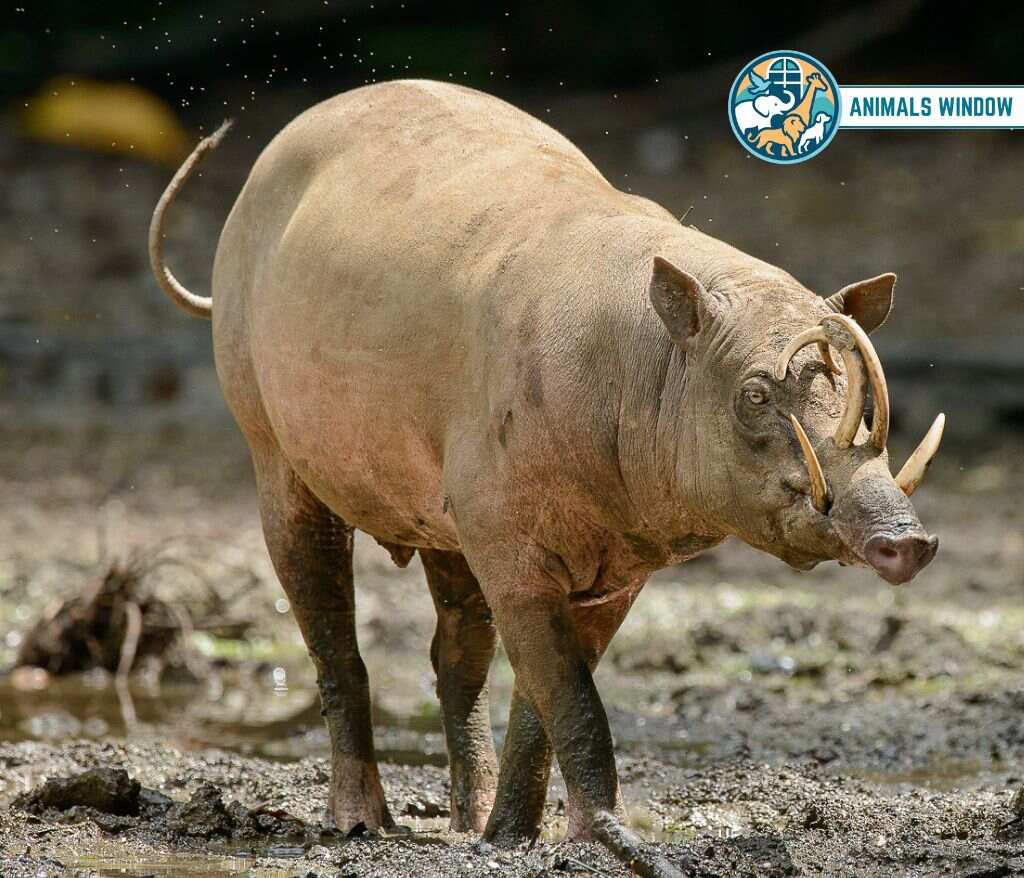
- Scientific name: Babyrousa celebensis
- Size: 34–39 inches long
- Weight: 100–220 lbs
- Diet: Fruit, leaves, roots, fungi, small animals
- Habitat: Rainforests of Sulawesi, Indonesia
- Lifespan: Up to 24 years
The North Sulawesi Babirusa looks like what would happen if a wild pig tried to become a mythological creature. Its body is almost entirely hairless — covered only by sparse, thin bristles. But the skin isn’t what grabs your attention first. It’s the tusks.
Male babirusas have upper canines that grow upward through the skin of the snout and curve back toward the skull. Left untrimmed, these tusks can keep growing until they curl completely back and pierce the animal’s own forehead.
Scientists debate whether these tusks serve any real combat function — they seem too fragile for fighting — or whether they exist purely as a display structure. Some researchers believe they act as a visual dominance signal, similar to a peacock’s tail. The babirusa is the only animal on Earth with tusks that can kill it if left to grow unchecked.
🔥 Comparison Fact: A babirusa’s upper tusk can reach over 12 inches in length — longer than a standard ruler — and curve completely back into the skull if never worn down.
12. Hairless Bat (Cheiromeles torquatus)
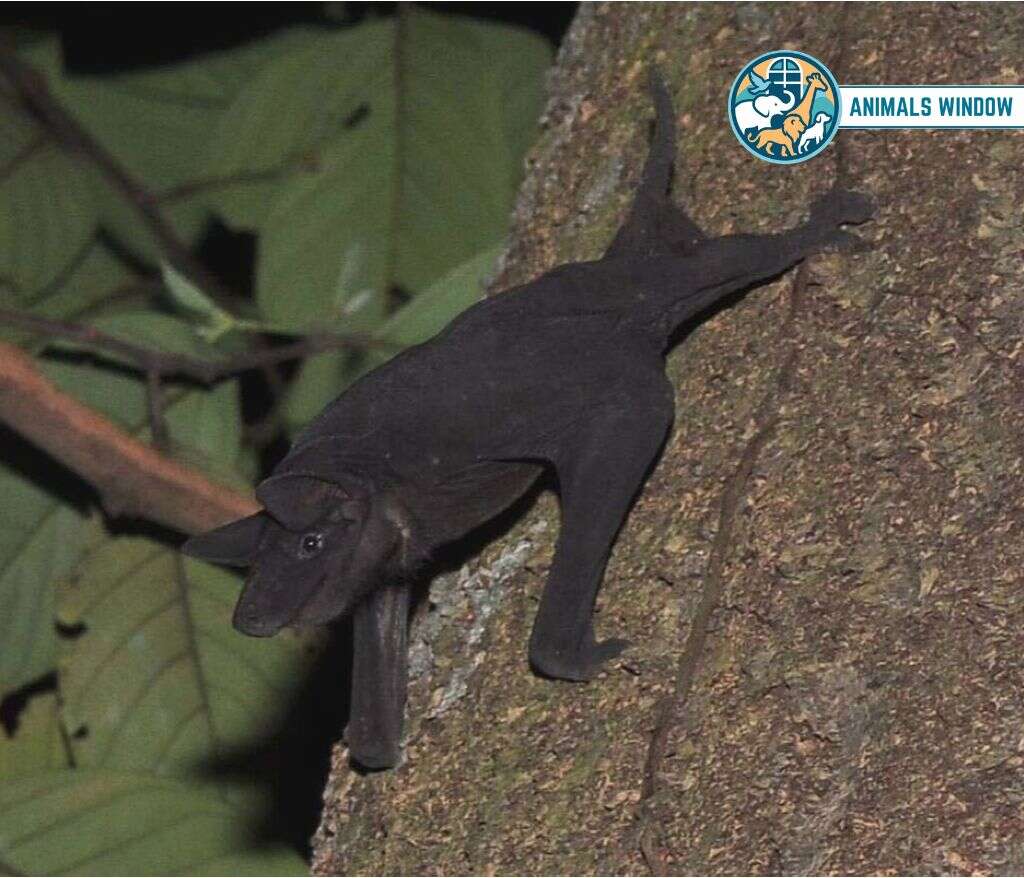
- Scientific name: Cheiromeles torquatus
- Size: 5–6 inches long (body)
- Weight: 5.7–6.2 oz
- Diet: Insects (heavy moth specialist)
- Habitat: Tropical forests of Southeast Asia and the Philippines
- Lifespan: Estimated 10–15 years
The Hairless Bat — also called the Naked Bulldog Bat — is the only bat species in the world with truly hairless skin covering most of its body. Most bats have some degree of fur. This one has thick, leathery, almost rubber-like skin with virtually no hair at all except for a tiny patch under the throat.
But the most jaw-dropping feature isn’t the missing fur — it’s the skin pouch. Female Cheiromeles have a specialized pouch of loose skin on each side of their body, just under the wings. When a pup is born, the mother tucks it into this pouch and keeps flying — sometimes for hours — while the pup clings inside.
The pouch holds the young bat firmly enough to survive full-speed flight. No other bat species uses a skin pouch this way. As a bonus, the Hairless Bat is one of the most prolific insect hunters in its range, capable of eating thousands of moths per night.
🔥 Comparison Fact: A Hairless Bat weighs roughly the same as a golf ball — but it carries its pup in a built-in skin pocket while hunting thousands of insects every single night.
FAQ’s About Hairless Animals
Q1: Are hairless animals born that way, or do they lose their hair over time?
Both. Cetaceans are born with a little hair that falls off within days. Breeds like the Sphynx Cat are born hairless. Others, like the Hairless Syrian Hamster, result from a gene mutation within an otherwise furred species.
Q2: Do hairless animals get cold more easily?
Yes. No fur means faster heat loss. Most hairless pets need warm rooms, extra bedding, or clothing to stay comfortable.
Q3: Are hairless animals hypoallergenic?
No. Pet allergies come from proteins in saliva and dander — not fur. Hairless pets still produce both. A Sphynx Cat, for example, still triggers reactions in many allergy sufferers.
Q4: Can hairless animals get sunburned?
Yes. Animals like the Xoloitzcuintli and Skinny Pig are vulnerable to UV damage. Hippos handle this naturally with their own skin secretion. Domestic hairless pets may need pet-safe sunscreen outdoors.
Q5: What is the rarest hairless animal in the world?
The Hairless Bat (Cheiromeles torquatus). It’s the only truly hairless bat species, lives in shrinking Southeast Asian forests, and remains one of the least-studied mammals on Earth.
Myth-Busting: Are These Animals Naturally Bald or Seriously Ill?
| Animal | Common Claim / Internet Myth | The Real Scientific Fact |
| Polar Bear Without Fur | “Polar bears are naturally hairless underneath” | False. Every polar bear has dense fur. Hairless polar bears seen in photos or zoos have a rare skin condition — likely mange or alopecia — not a natural trait. |
| Hairless Bear | “Some bear species are naturally bald” | No bear species is naturally hairless. Bald bears seen online have severe mange caused by parasitic mites (Sarcoptes scabiei), a disease — not a species trait. |
| Hairless Parrot / PBFD | “Some parrot species are naturally featherless” | Featherless parrots almost always have Psittacine Beak and Feather Disease (PBFD) — a viral infection that destroys feather follicles. It’s a serious and contagious disease, not a natural variant. |
| Hairless Penguin | “Bald penguins are a unique species” | Featherless penguins seen in aquariums are chicks with a hormonal or immune disorder that prevents feather growth. No penguin species is born or stays naturally bald. |
| Hairless Raccoon | “Some raccoons naturally lack fur” | Hairless raccoons in the wild have severe mange — a painful, often fatal parasitic skin disease. It’s a welfare crisis, not a natural look. |
| Hairless Wombat | “Wombats are naturally hairless” | Wombats are fully furred. Hairless wombats in rescue facilities have sarcoptic mange, which wildlife carers treat aggressively with medication. |
Real hairless animals — from the Naked Mole-Rat to the Hairless Bat — evolved their bare skin over millions of years for specific reasons. A sick bear or a viral-infected parrot that loses its coat is not the same thing. Knowing the difference matters, especially when these images go viral and people mistake disease for natural diversity.
More Related Animals Guides:

I have loved animals since I was a kid. I enjoy reading about how animals live, eat, move, and survive. I started Animals Window to share what I learn in a simple and easy way. I write about animal body parts, size, behavior, diet, habitats, and species. My goal is to make animal facts clear and fun for everyone to understand.