Feathers aren’t just for flying. Every bird on Earth has them, but feathers do far more than lift a bird into the sky. They keep animals warm in frozen oceans, help hunters hit targets at 200 mph, and even produce sound. Below are 15 remarkable feathered animals — from a parrot that forgot how to fly to a duck that looks painted by hand.
Table of Contents
What Animals Have Feathers?
All birds have feathers — they are the only animals on Earth that do. Feathers grow from follicles in the skin and serve multiple roles: flight, insulation, waterproofing, camouflage, and display. Some feathered animals like penguins and cassowaries cannot fly at all, while others like the peregrine falcon use their feathers to break speed records. There are roughly 10,000 known bird species alive today.
Quick Table of Animals That Have Feathers
| Animal Name | Scientific Name | Key Trait |
| Shoebill | Balaeniceps rex | Enormous shoe-shaped bill |
| Kakapo | Strigops habroptila | World’s heaviest parrot, flightless |
| Superb Lyrebird | Menura novaehollandiae | Mimics chainsaws and camera shutters |
| Eurasian Hobby | Falco subbuteo | Catches dragonflies mid-air |
| Flightless Cormorant | Nannopteryx harrisi | Only cormorant that cannot fly |
| Kagu | Rhynochetos jubatus | Ghost bird of New Caledonia |
| Mandarin Duck | Aix galericulata | Widely considered the world’s most beautiful duck |
| Red-breasted Merganser | Mergus serrator | Fastest duck in level flight |
| Harpy Eagle | Harpia harpyja | Talons the size of grizzly bear claws |
| Peregrine Falcon | Falco peregrinus | Fastest animal on Earth |
| Budgerigar | Melopsittacus undulatus | Can learn 1,700+ words |
| Dodo | Raphus cucullatus | Extinct; icon of human-caused extinction |
| Peacock/Peafowl | Pavo cristatus | Train feathers reach 6 feet long |
| Cassowary | Casuarius casuarius | Dagger-like casque on its head |
| Emperor Penguin | Aptenodytes forsteri | Stands deepest winter cold of any bird |
| Wandering Albatross | Diomedea exulans | Largest wingspan of any living bird |
| Resplendent Quetzal | Pharomachrus mocinno | Sacred bird of ancient Maya |
| Victoria Crowned Pigeon | Goura victoria | Largest living pigeon species |
1. Shoebill
- Scientific name: Balaeniceps rex
- Size: 3.5–5 ft tall
- Weight: 11–15 lbs
- Diet: Lungfish, eels, small crocodiles, frogs
- Habitat: Papyrus swamps of central Africa (Uganda, South Sudan, DR Congo)
- Lifespan: 35+ years in the wild
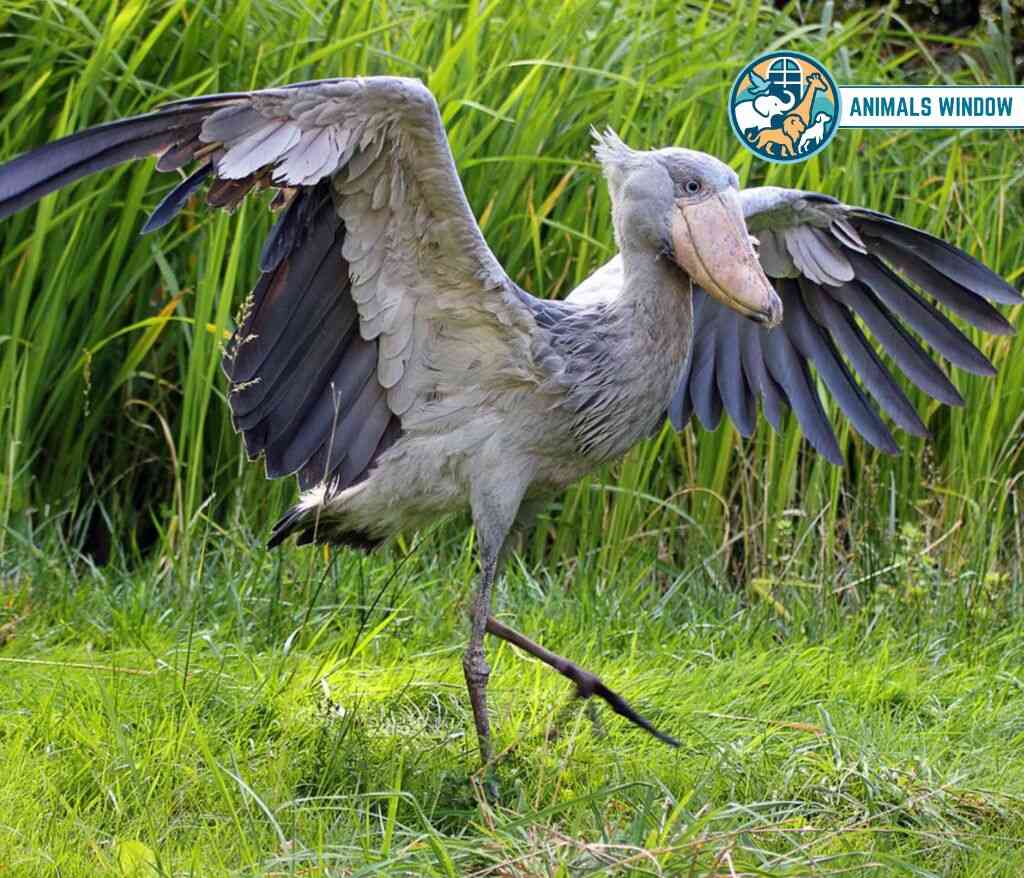
The shoebill is one of those birds that looks like a prehistoric mistake. It stands nearly as tall as a 5-year-old child, completely still in swamp water, sometimes for over an hour. Then it lunges. That massive bill — shaped like a Dutch clog — can snap shut with enough force to decapitate a small crocodile. Not many birds eat baby crocs for breakfast.
What sets the shoebill apart from nearly every other large wading bird is its hunting strategy. It practices something called “stand-and-wait” predation, where it stays motionless until a lungfish surfaces to breathe air. The lungfish has to come up — it will suffocate otherwise. The shoebill knows this. It simply waits it out.
🔥 Comparison Fact: That bill is about the size of a size-12 shoe and can be 9 inches long and 4 inches wide.
2. Kakapo
- Scientific name: Strigops habroptila
- Size: 23–25 inches long
- Weight: Up to 9 lbs
- Diet: Seeds, fruit, pollen, bark
- Habitat: Small managed islands off New Zealand
- Lifespan: Up to 90+ years
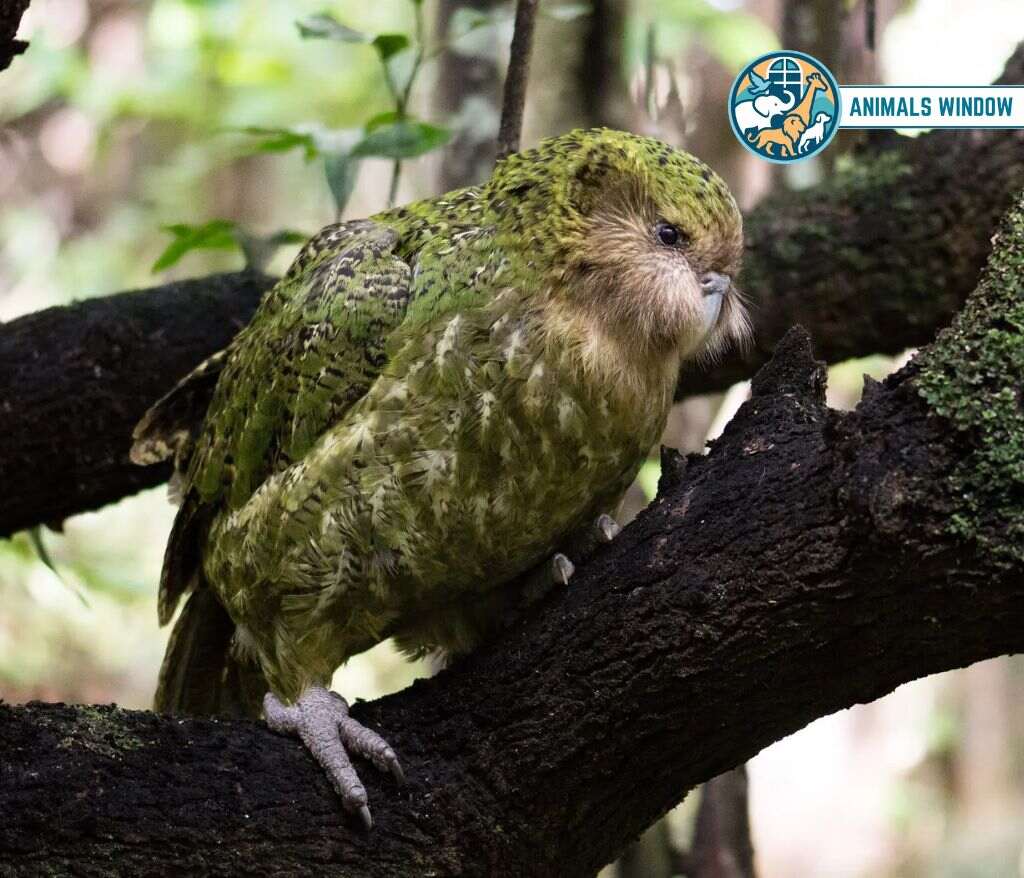
The kakapo is a parrot that decided flight was simply not worth the effort. It is the heaviest parrot alive, the only flightless one, and one of the longest-lived birds on the planet. At 90+ years, some individuals may outlive their human caretakers. Today, fewer than 250 remain — every single one has a name and is monitored by conservationists.
Here’s the surprising part: the kakapo breeds only once every 2–5 years, and only when a specific tree called the rimu produces a heavy fruit harvest. It can literally sense when the forest is producing enough food to raise chicks. Outside of that narrow window, it simply doesn’t reproduce. That feast-or-famine reproductive system works fine without predators — but it made recovery painfully slow once cats and rats arrived in New Zealand.
🔥 Comparison Fact: A full-grown kakapo weighs about as much as a large bottle of olive oil — roughly 9 lbs packed into a round, surprisingly cuddly-looking body.
3. Superb Lyrebird
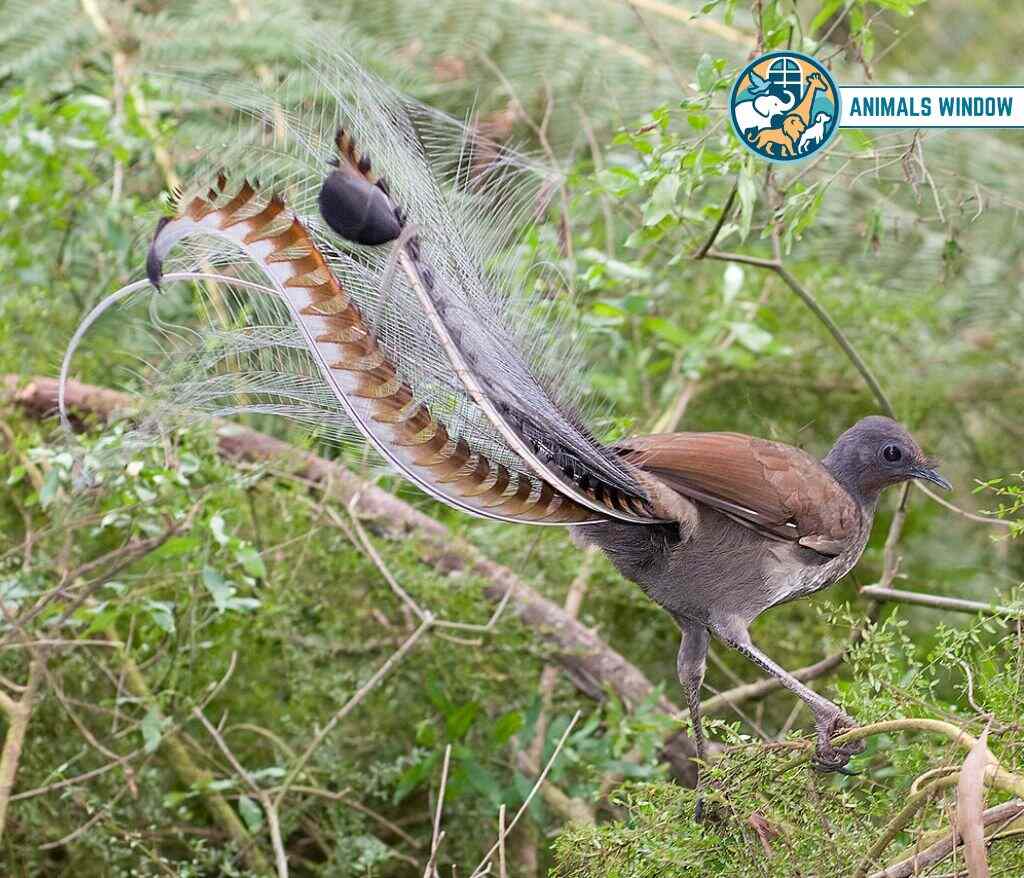
- Scientific name: Menura novaehollandiae
- Size: Up to 39 inches (including tail)
- Weight: 1.7–2.4 lbs
- Diet: Insects, worms, spiders, seeds
- Habitat: Dense rainforests of southeastern Australia
- Lifespan: Up to 30 years
The lyrebird’s tail feathers are shaped like the ancient Greek lyre instrument — beautiful, intricate, and fanned out during display. But the tail is actually the second most impressive thing about this bird. The first is its voice.
The superb lyrebird is the most accurate sound mimic in the animal kingdom. It can replicate camera shutters, car alarms, chainsaws, crying babies, other bird species, and even entire song sequences it heard once from a passing hiker.
Males in Australia’s forests have been recorded mimicking power saws so accurately that wildlife surveys had to stop and verify whether logging was actually happening nearby. They build these sounds into long, flowing songs to attract females.
🔥 Comparison Fact: The male lyrebird’s tail can span up to 28 inches — nearly as long as a standard guitar.
4. Eurasian Hobby

- Scientific name: Falco subbuteo
- Size: 12–14 inches
- Weight: 5–7.7 oz
- Diet: Dragonflies, large insects, small birds, bats
- Habitat: Open woodlands and farmland across Europe and Asia
- Lifespan: Up to 10 years
Most birds avoid dragonflies because they’re just too fast and maneuverable to catch reliably. The Eurasian hobby doesn’t care. It specializes in hunting dragonflies at full speed, snatching them from the air with its talons and then eating them mid-flight — transferring the insect from foot to beak without landing. Watch one hunt and it looks more like a fighter jet on an intercept course than a bird looking for lunch.
The hobby is also one of the few birds fast enough to catch a swift — a bird many falconers consider the hardest prey target in Europe. It can reach 60 mph in a hunting dive and turns tightly enough to match the evasive patterns of insects that evolved specifically to escape predators.
🔥 Comparison Fact: The hobby’s wingspan is about the length of a standard ruler (30 cm) on each side — compact and built entirely for speed.
5. Flightless Cormorant
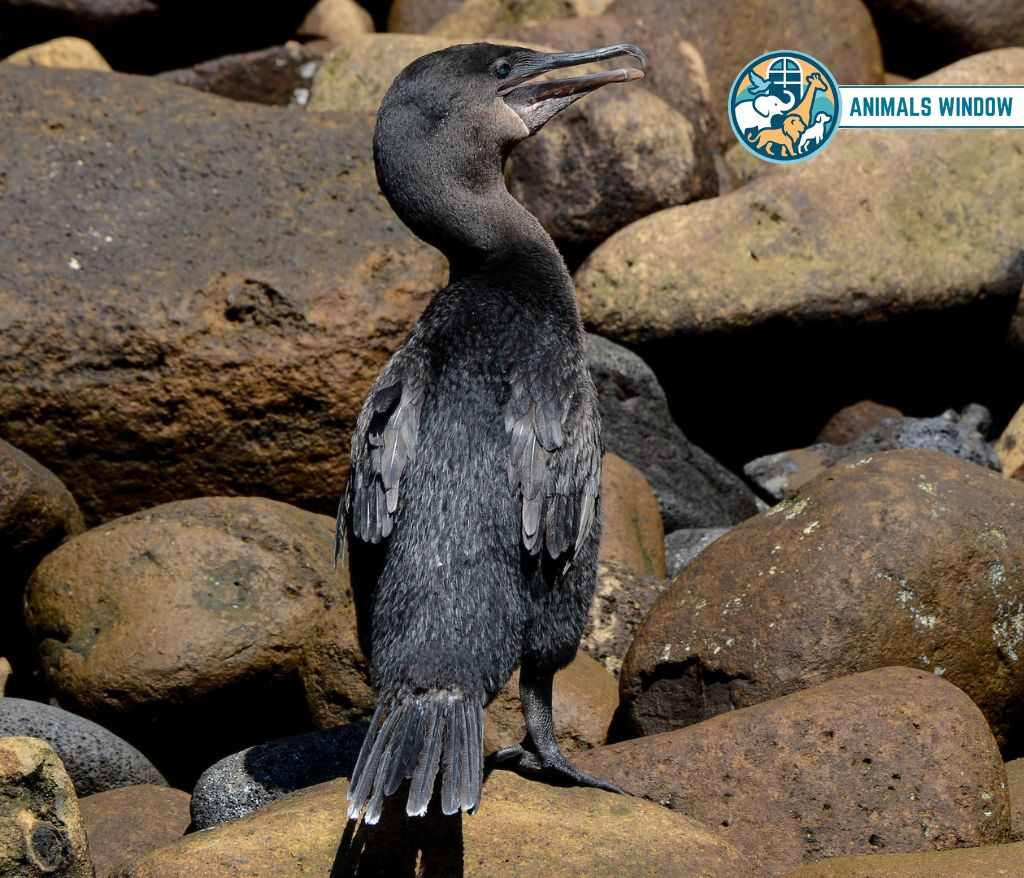
- Scientific name: Nannopteryx harrisi
- Size: 35–40 inches
- Weight: 5.5–11 lbs
- Diet: Eels, octopus, fish
- Habitat: Fernandina and Isabela Islands, Galápagos only
- Lifespan: ~13 years
There are 40 species of cormorant worldwide. All of them can fly — except this one. The flightless cormorant lives only on two islands in the Galápagos, where there are no land predators and the cold Humboldt Current keeps the surrounding water packed with food. Flight became expensive without offering any benefit, so evolution got rid of it.
What makes this bird biologically fascinating is that it lost its flight muscles almost entirely. Its wings are stubby, ragged-looking things — about one-third the size needed to lift its body. But underwater, it becomes something else. It swims using powerful legs and webbed feet, pursuing eels and octopus along rocky seafloors. Its wings actually help with steering at depth, the same way a penguin uses its flippers.
🔥 Comparison Fact: The flightless cormorant is roughly the size of a large domestic cat in body length, though much heavier at up to 11 lbs.
6. Kagu
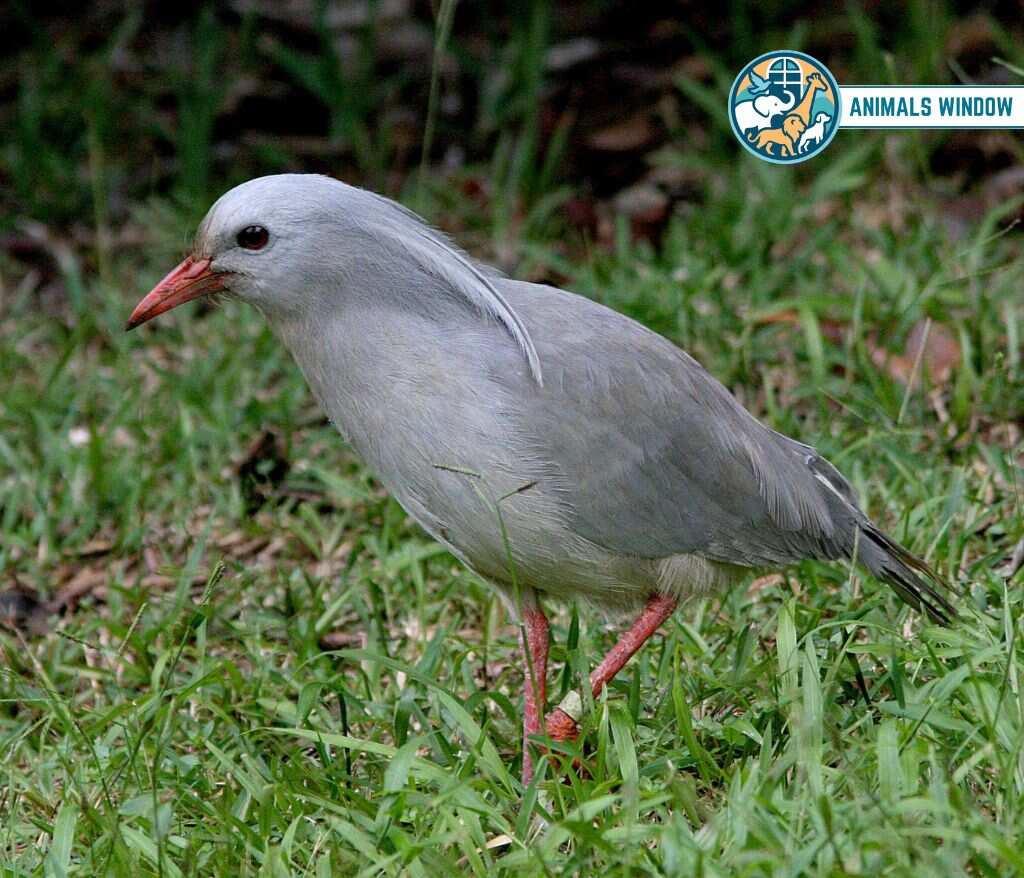
- Scientific name: Rhynochetos jubatus
- Size: 22 inches tall
- Weight: About 2.2 lbs
- Diet: Snails, worms, lizards, insects
- Habitat: Dense mountain forests of New Caledonia (Pacific island)
- Lifespan: Up to 20+ years
The kagu is sometimes called the “ghost of the forest” because of its ash-gray plumage and near-silent movement through dense undergrowth. It lives only on New Caledonia, a single French island territory in the Pacific, making it one of the most geographically restricted birds alive. If something goes wrong there, the whole species can disappear overnight.
What you’d notice immediately is how it uses its crest. When threatened, the kagu fans a dramatic spiky crest of long feathers around its head, makes a harsh bark that carries far through the forest, and holds its wings out wide — displaying a striking barred pattern. It looks enormous compared to its actual 2-lb frame.
The kagu has also evolved a unique nasal structure called nasal corns, which cover its nostrils and likely prevent soil from entering while it probes the ground for food.
🔥 Comparison Fact: The kagu weighs about as much as a large baked potato — but its threat display makes it look three times that size.
7. Mandarin Duck
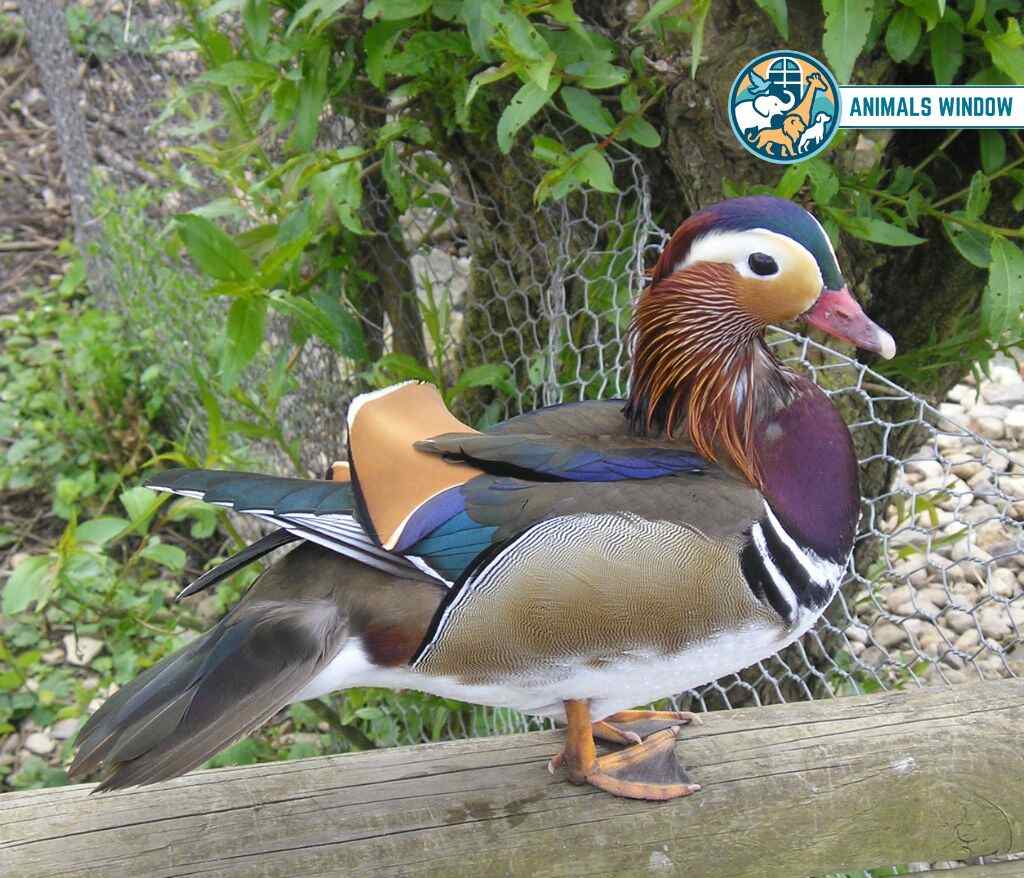
- Scientific name: Aix galericulata
- Size: 16–19 inches
- Weight: 1–1.5 lbs
- Diet: Seeds, acorns, aquatic plants, small fish
- Habitat: East Asia: China, Japan, Korea; introduced populations in Europe
- Lifespan: Up to 10 years
If you’ve ever seen a photo of this bird and assumed it was digitally edited, you’re not alone. The male mandarin duck wears colors that look almost cartoon-like — orange “sail” feathers that stand up from its back, a purple chest, a green-and-gold head, and a bright red bill. There is nothing subtle about it. In Chinese culture, mandarins symbolize fidelity because pairs were thought to mate for life.
What stands out is the way the male moults after breeding season. He temporarily loses all his bright plumage and enters “eclipse” — a dull brown phase where he looks nearly identical to a female. During this vulnerable period, he can’t fly well and hides in dense waterside vegetation. All that color comes back once molting is complete, usually in late summer.
🔥 Comparison Fact: A mandarin duck is roughly the size of a standard tablet device — compact, but almost impossibly colorful.
8. Red-breasted Merganser
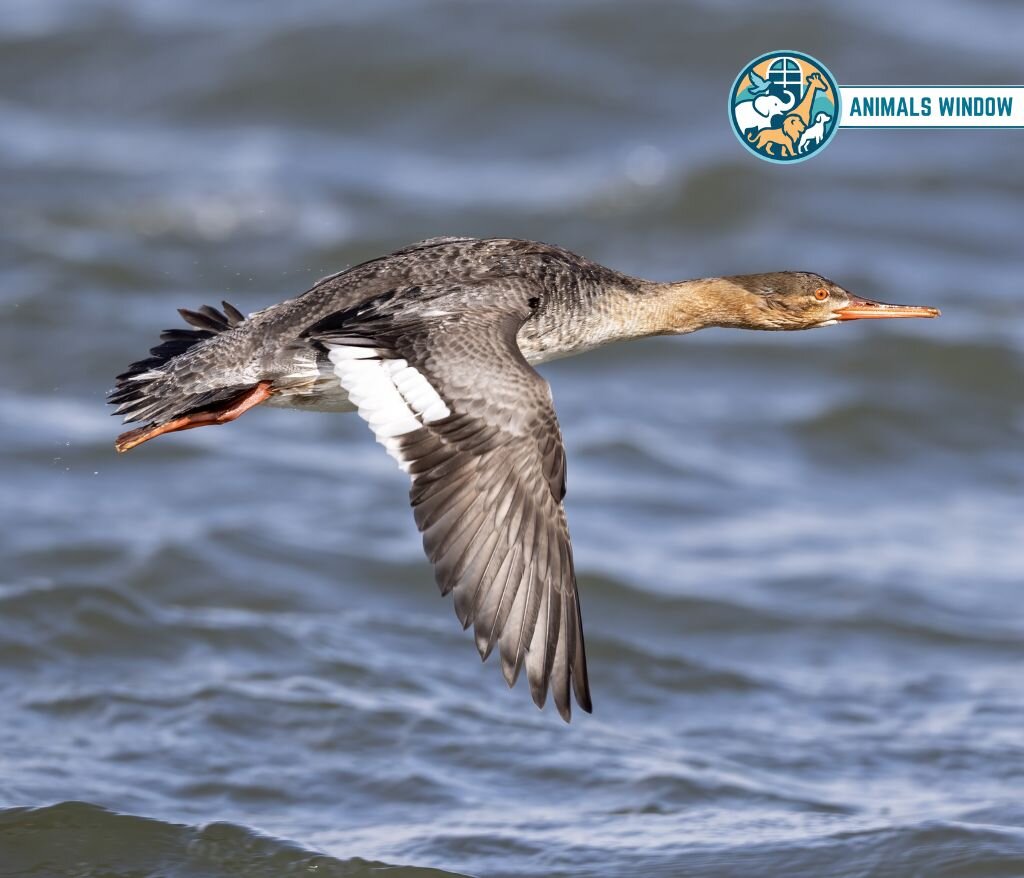
- Scientific name: Mergus serrator
- Size: 20–25 inches
- Weight: 1.7–3 lbs
- Diet: Fish (primarily), crustaceans
- Habitat: Coastal waters, lakes, and rivers across North America, Europe, and Asia
- Lifespan: Up to 9 years
Speed-wise, the red-breasted merganser holds a record most people haven’t heard of. It is widely regarded as the fastest duck in level flight, recorded at 100 mph when pushed by a chasing aircraft during a study — though typical cruising speed is closer to 50–65 mph. Most ducks max out around 50 mph. The merganser appears built for something different.
That speed helps it catch fish — not by diving from height like a gannet, but by chasing them underwater after a running surface start. Its bill is long, narrow, and serrated along the edges — tiny backwards-pointing teeth that grip slippery fish so they can’t escape sideways. That serrated structure is where the name “sawbill” comes from, a nickname shared by all mergansers.
🔥 Comparison Fact: The merganser’s serrated bill is about 2.5 inches long — roughly the length of a standard lipstick tube, but lined with tiny backward teeth.
9. Harpy Eagle
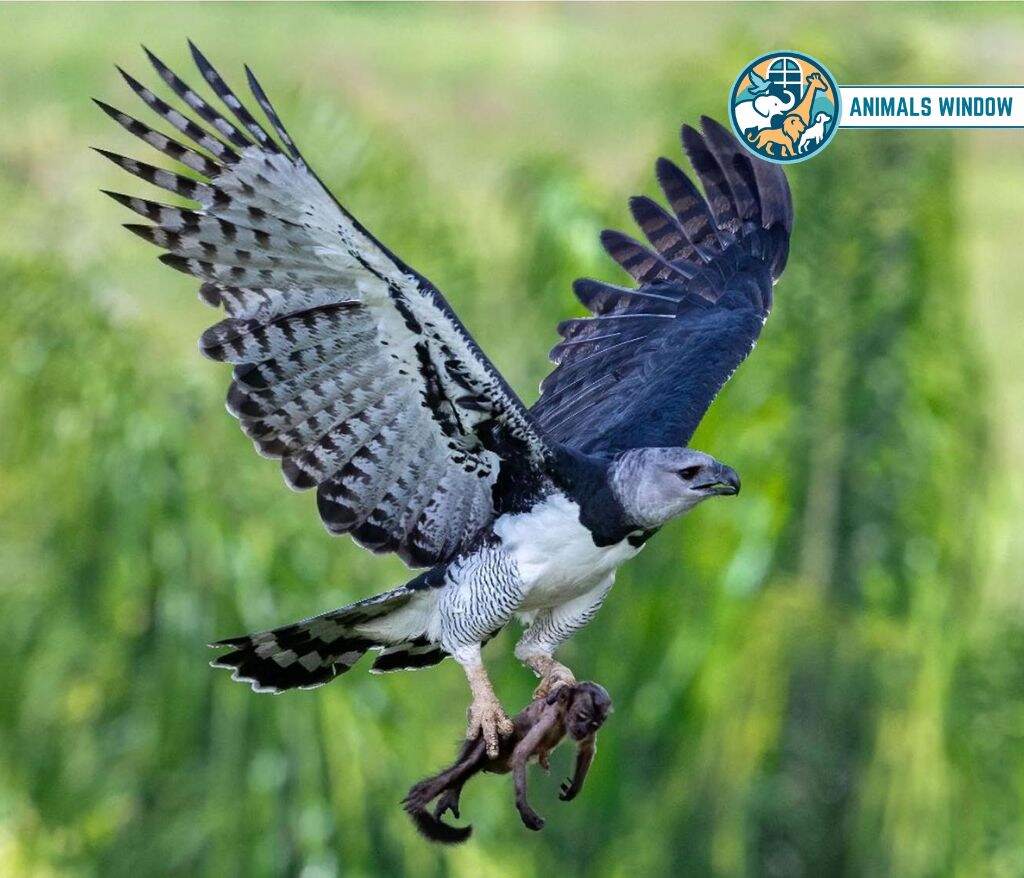
- Scientific name: Harpia harpyja
- Size: 36–42 inches body length; 6–7 ft wingspan
- Weight: 9–20 lbs
- Diet: Sloths, monkeys, iguanas, large birds
- Habitat: Lowland tropical rainforest, Central and South America
- Lifespan: Up to 35 years
The harpy eagle is what happens when you build a predator specifically for rainforest hunting. It’s one of the largest, most powerful eagles on the planet — and it hunts animals the size of small dogs. A female harpy eagle (larger than the male) can carry prey that matches its own body weight, flying upward through dense canopy to a feeding perch.
The anatomy here is extraordinary. Its talons are the part that makes even zookeepers pause — each rear talon can reach 5 inches long, roughly matching the curved claw of a grizzly bear. Those talons hit prey with a crushing force of around 110 pounds per square inch. A sloth clinging tightly to a branch doesn’t stand much of a chance once a harpy eagle has selected it.
🔥 Comparison Fact: Those talons are about as long as a grizzly bear’s claws — on a bird that weighs less than a large turkey.
10. Peregrine Falcon

- Scientific name: Falco peregrinus
- Size: 14–20 inches
- Weight: 0.75–3.3 lbs
- Diet: Medium-sized birds (pigeons, starlings, shorebirds)
- Habitat: Every continent except Antarctica; one of the most widespread birds alive
- Lifespan: Up to 20 years
No animal on Earth moves faster than a peregrine falcon in a hunting dive. In the “stoop” — a near-vertical plunge from altitude — it reaches speeds above 240 mph. That’s faster than a NASCAR car on a straightaway, faster than a skydiver in a standard freefall, and fast enough that the impact alone can kill prey instantly.
But the speed only works because of specific physical adaptations. The peregrine has bony structures inside its nostrils that redirect airflow so its lungs don’t get forced shut at high velocity.
It has a third eyelid — the nictitating membrane — that sweeps across the eye to keep it clear at speed. And its eye-to-brain processing is fast enough to track a pigeon banking at 60 mph while closing in at four times that speed.
🔥 Comparison Fact: At full stoop speed, a peregrine covers a football field’s length in just over half a second.
11. Budgerigar (Parakeet)
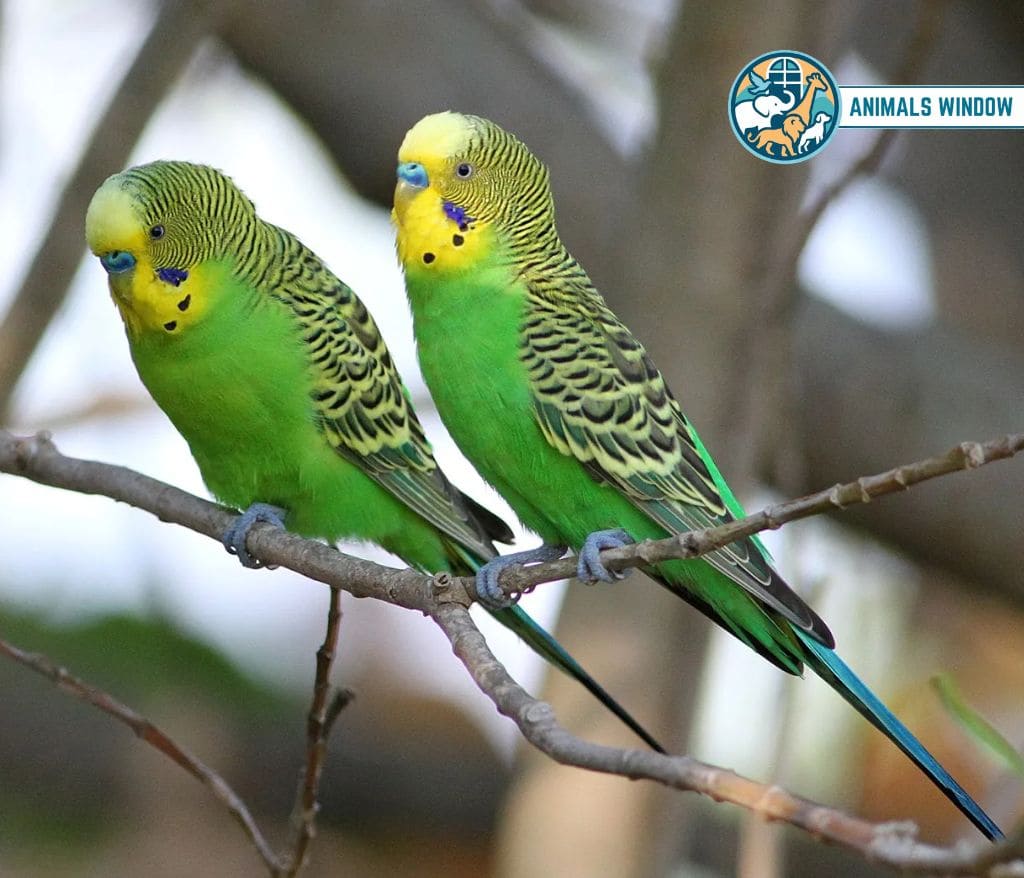
- Scientific name: Melopsittacus undulatus
- Size: About 7 inches
- Weight: 1–1.4 oz
- Diet: Seeds, grasses, occasional insects
- Habitat: Dry interior of Australia; worldwide as a pet bird
- Lifespan: 5–8 years (wild); up to 15 years (captive)
Most people know budgies as cheerful little pets. What most people don’t know is that in their native Australia, wild budgerigars form some of the largest bird flocks on the continent — sometimes 30,000 strong, moving like a single shape-shifting cloud over dry grasslands. Tracking any individual bird through that flock is essentially impossible.
The language ability of budgerigars is also genuinely remarkable. A budgie named Puck was verified by Guinness World Records to know 1,728 words — more than any other bird ever recorded. Budgies don’t just repeat sounds randomly; they associate words with context, respond to familiar voices differently than strangers, and can pick up new sounds for years into adulthood.
🔥 Comparison Fact: A wild budgerigar weighs about as much as four sheets of printer paper — yet carries a vocabulary larger than most people expect.
12. Dodo
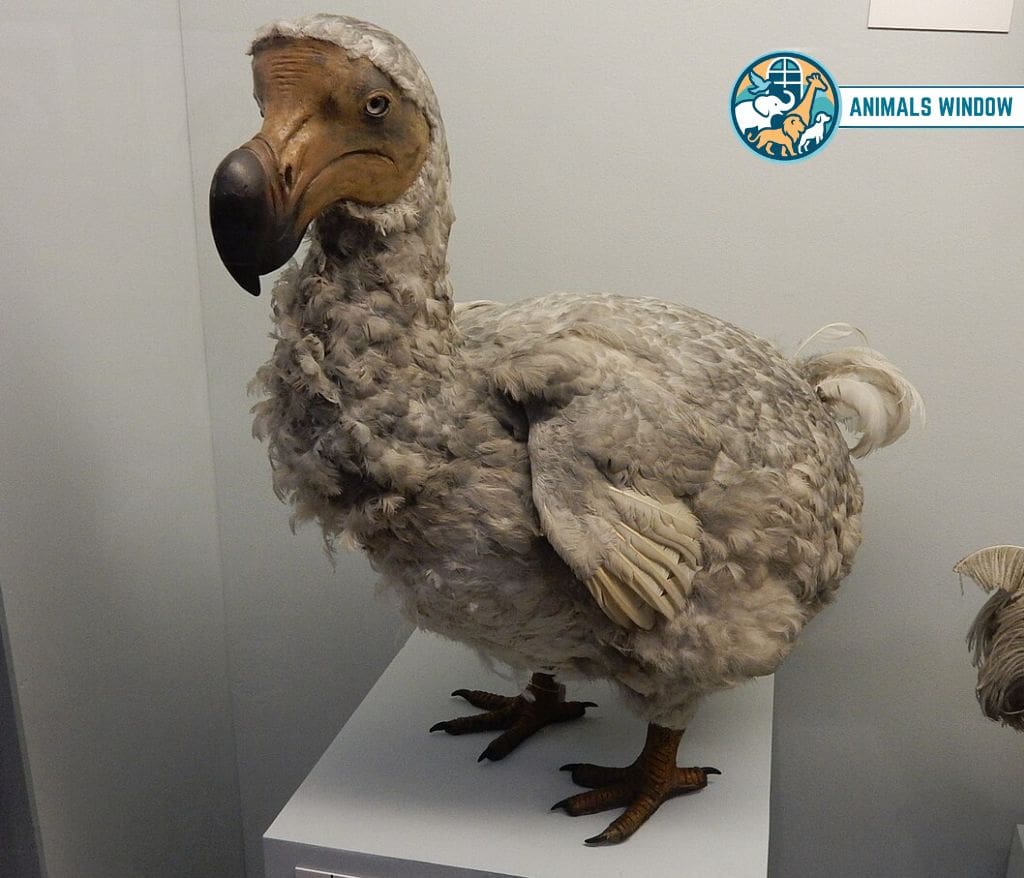
- Scientific name: Raphus cucullatus
- Size: About 3 feet tall
- Weight: Up to 50 lbs (estimated)
- Diet: Fruits, seeds, nuts, bulbs
- Habitat: Mauritius (Indian Ocean island) — now extinct
- Lifespan: Unknown; extinct since ~1681
The dodo went extinct faster than almost any large animal in recorded history. Sailors landed on Mauritius in 1598. By 1681, the last dodo was gone. That’s 83 years from first contact to total extinction — largely because the dodo had no fear of humans and no evolved defenses against mammals like pigs, rats, and dogs that arrived on ships.
What’s been revised in recent years is the old idea that dodos were slow and stupid. New skeletal analysis shows their leg bones were dense and muscular, suggesting they could move quickly when needed. Their brains, compared to body size, weren’t that different from related pigeons. The dodo wasn’t dim — it just evolved on an island with no predators for millions of years and had no frame of reference for what a hungry sailor with a club represented.
🔥 Comparison Fact: An adult dodo weighed roughly as much as a 5-year-old child — making it one of the largest pigeons (yes, pigeon relative) that ever lived.
13. Peacock / Peafowl

- Scientific name: Pavo cristatus
- Size: Body 3–4 ft; train feathers add another 4–6 ft
- Weight: 8.5–13 lbs
- Diet: Insects, grains, small reptiles, berries
- Habitat: South Asia (India, Sri Lanka); introduced widely worldwide
- Lifespan: Up to 20 years
Everyone knows the peacock’s display — those enormous “eye” feathers fanned out in a shaking, iridescent semicircle. But those aren’t actually tail feathers. They grow from the bird’s lower back and are called a “train.” The real tail is a short, stiff fan underneath that holds the whole structure upright.
Here’s what makes the display more interesting than it looks: those iridescent spots on the feathers contain no blue or green pigment. The color comes entirely from microscopic crystal-like structures in the feather barbules that bend light waves. Change the angle, and the color shifts. Scientists studying peacock feathers have drawn comparisons to the structural optics used in certain anti-counterfeiting technologies on banknotes.
🔥 Comparison Fact: A peacock’s full train can extend to 6 feet behind it — about as long as a standard park bench from end to end.
14. Cassowary
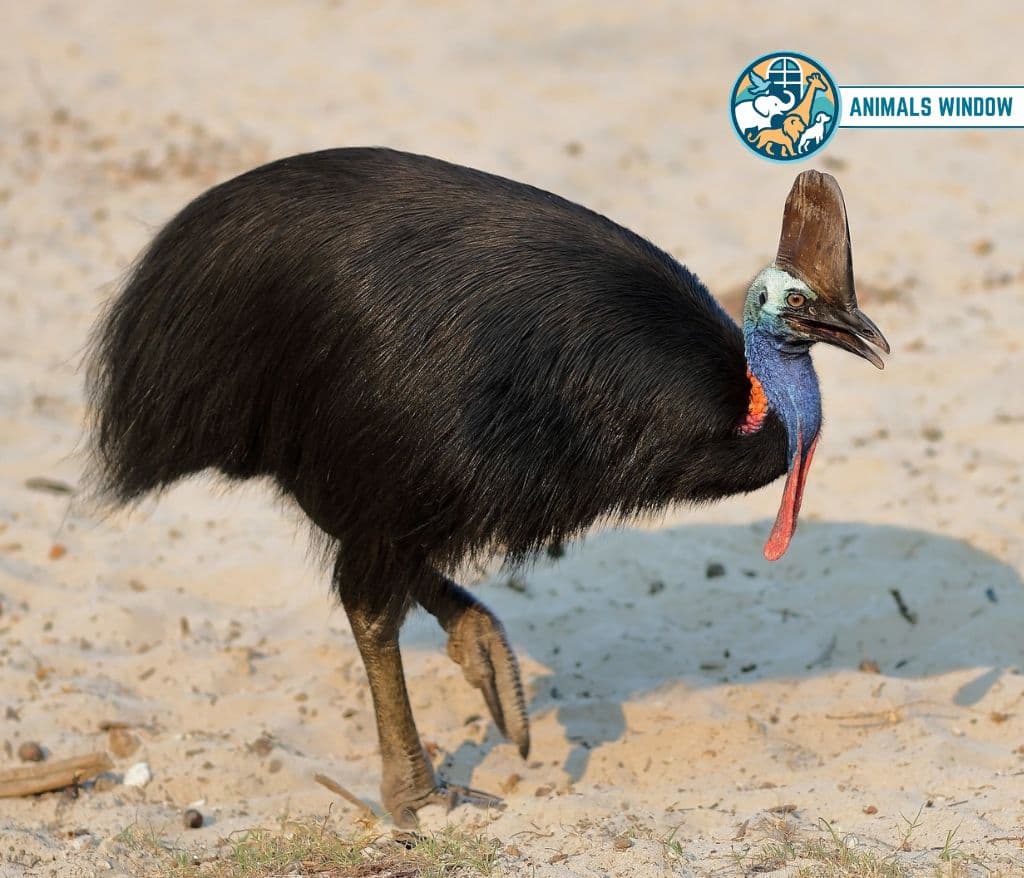
- Scientific name: Casuarius casuarius
- Size: 4.9–5.9 ft tall
- Weight: 130–170 lbs
- Diet: Fallen fruit, small animals, fungi, carrion
- Habitat: Tropical rainforest, New Guinea and northeastern Australia
- Lifespan: Up to 40+ years
The cassowary is sometimes called the world’s most dangerous bird, but that framing undersells the biology. It’s primarily a shy, fruit-eating rainforest animal that attacks only when cornered or protecting chicks. The real story is the casque — that tall, bony helmet on its head. Scientists still debate its exact purpose: sound amplification, a display structure for dominance, a tool for pushing through undergrowth, or a way to regulate head temperature.
The cassowary’s role in its rainforest ecosystem is outsized. It eats large fruits whole and deposits the seeds intact far from the parent tree — some seeds up to 3.5 inches long that almost no other animal can swallow and pass. Dozens of rainforest plant species depend almost entirely on the cassowary for seed dispersal. Lose the cassowary, and the structure of those forests changes.
🔥 Comparison Fact: An adult cassowary weighs about as much as a concert grand piano bench — but stands 5+ feet tall and can run at 31 mph.
15. Emperor Penguin
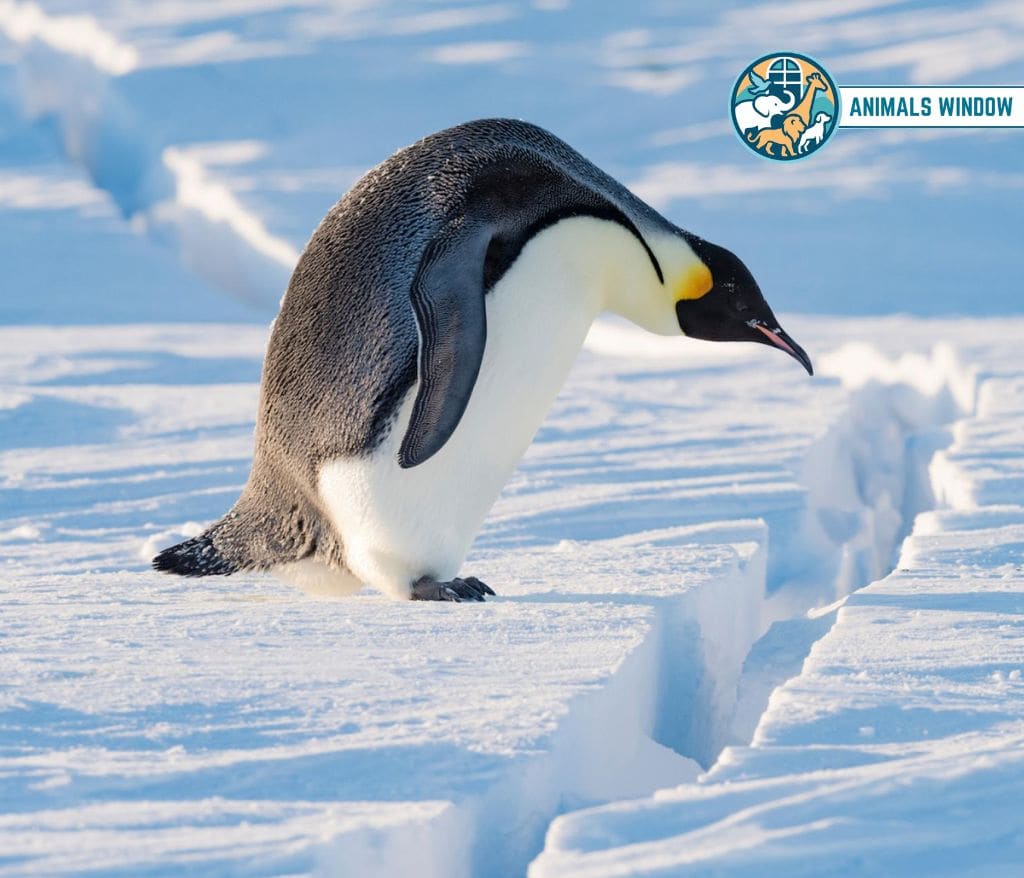
- Scientific name: Aptenodytes forsteri
- Size: About 3.7–4.3 ft tall
- Weight: 49–100 lbs
- Diet: Fish, squid, krill
- Habitat: Antarctica; breeds on sea ice
- Lifespan: 15–20 years (wild)
The emperor penguin does something no other bird on Earth attempts: it breeds in the middle of Antarctic winter, in darkness, with temperatures dropping to -76°F (-60°C) and winds reaching 125 mph. The male incubates a single egg on his feet for 65 days straight without eating, drawing on fat reserves while huddling in rotating groups with thousands of other males.
What’s remarkable about emperor penguin feathers specifically is their density: around 100 feathers per square inch — more per unit area than almost any other bird. Those feathers trap a layer of still air against the skin that acts as insulation. They also have a waterproof outer layer that keeps cold seawater from reaching the down beneath. An emperor penguin diving to 1,850 feet needs that insulation to stay warm even under enormous pressure.
🔥 Comparison Fact: An emperor penguin stands about as tall as a 4-year-old child — but survives conditions that would kill an unprotected adult human in minutes.
Common FAQ’s Related to Animals with Feathers
What makes feathers different from fur or scales?
Feathers are made of keratin and have a branching structure with interlocking barbs. Fur is solid strands. Scales are flat and overlapping. Only feathers can be “zipped” back together after being ruffled.
Are all feathered animals birds?
Yes. Feathers are exclusive to birds. No other living animal grows them.
What are feathers made of?
Beta-keratin — the same tough protein found in human fingernails. The central shaft is hollow to keep them lightweight.
Can flightless birds still use their feathers?
Yes. Penguins use feathers for insulation and waterproofing. Cassowaries use them for temperature regulation. Feathers serve about a dozen functions beyond flight.
Which bird has the most feathers?
The tundra swan — one individual was counted at 25,216 feathers. Cold-weather and water birds tend to have the highest counts.
Related Animals Guides:
- 20 Animals with Scales (With Pictures and Unique Facts)
- 18 Animals That Eat Wood (With Pictures and Unique Facts)
- Top 20 Blue Animals in the World (With Pictures & Unique Facts)
- 15 Animals with Opposable Thumbs (With Pictures and Unique Facts)
Trait Comparison: Flight Feathers vs. Display Feathers vs. Insulating Feathers
| Feature | Flight Feathers | Display Feathers | Insulating Feathers (Down) |
| Primary function | Lift and steering during flight | Attracting mates, intimidation | Trapping heat close to body |
| Structure | Stiff, asymmetric; barbules lock together | Often long, pigmented, or structurally colored | Soft, fluffy; no interlocking barbules |
| Location on bird | Wings and tail | Back, crest, tail train | Under the flight feathers, near skin |
| Examples in this list | Peregrine falcon, Eurasian hobby | Peacock train, quetzal streamers | Emperor penguin, wandering albatross |
| Water resistance | Moderate | Low (display feathers often damage easily) | High in waterbirds; near-zero in land birds |
| Replaced after use | Annually (moult) | Seasonally (moult between breeding cycles) | Continuously shed and regrown |
| Evolutionary pressure | Speed, lift efficiency, maneuverability | Sexual selection — showiest wins | Survival in cold or wet environments |
These 15 birds show just how much a single biological structure — the feather — can be shaped by millions of years of pressure into something completely different depending on where a bird lives and what it needs to survive. A penguin feather and a peacock feather are made of the same material, grown by the same kind of follicle. What they do couldn’t be more different.

I have loved animals since I was a kid. I enjoy reading about how animals live, eat, move, and survive. I started Animals Window to share what I learn in a simple and easy way. I write about animal body parts, size, behavior, diet, habitats, and species. My goal is to make animal facts clear and fun for everyone to understand.