Animals that eat insects are called insectivores. Their diet consists mostly — or entirely — of bugs, ants, termites, larvae, and other small invertebrates. These creatures appear on every continent except Antarctica and use wildly different body parts and hunting methods to do it. Some use sticky tongues, some shoot water jets, one taps wood with a single elongated finger, and one shoots blood from its eyes.
Table of Contents
Quick List: Insect-Eating Animals
- Aardwolf
- Aye-Aye
- Banded Archerfish
- Meerkat
- Giant Anteater
- Pangolin
- Numbat
- Hero Shrew
- Texas Horned Lizard
- Star-Nosed Mole
- Short-Beaked Echidna
- Red-Billed Scythebill
- Dragonfly
- Philippine Tarsier
What You’re About to Find Out
Most lists of insect-eating animals give you anteaters and frogs. This one goes much further.
One animal here has a spine that held a 70-kg man without injury. Another calculates the weight of a target insect before adjusting how hard to spit. And a bird the size of a sparrow uses a curved sickle for a beak to unlock food hidden inside tree trunks — food that no straight-beaked competitor can reach.
These aren’t just animals that happen to eat bugs. Each one evolved a completely separate solution to the same problem.
Aardwolf
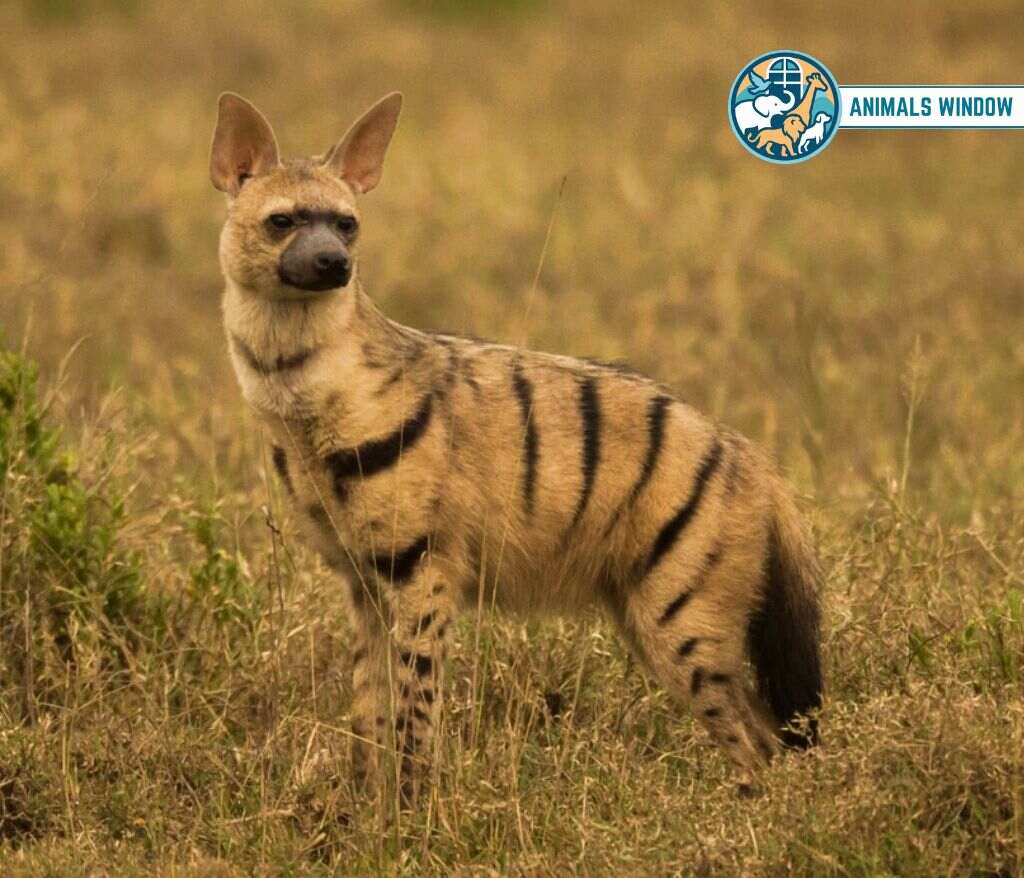
- Scientific Name: Proteles cristatus
- Size: 55–80 cm body length
- Weight: 7–10 kg
- Diet: Termites (mainly Trinervitermes species)
- Habitat: Open grasslands and scrublands of East and Southern Africa
- Lifespan: Up to 15 years
Despite belonging to the hyena family, the Aardwolf doesn’t crack bones or hunt antelope. It eats termites and nothing else — up to 250,000 in a single night, lapping them off the surface with a wide, saliva-coated tongue that works like a sticky paddle.
What separates it from other insectivores is its targeting strategy. Soldier termites carry toxic chemical sprays. The Aardwolf avoids them completely and selects only worker termites — making every feeding session a precision operation, not a random sweep. Its teeth are so reduced they can’t chew much of anything. It doesn’t need them.
🔥 Size Comparison: The Aardwolf’s tongue is roughly as wide as a credit card and sweeps across termite trails the way a windshield wiper clears glass.
Aye-Aye
- Scientific Name: Daubentonia madagascariensis
- Size: 30–37 cm body length
- Weight: 2–2.7 kg
- Diet: Wood-boring grubs, insects, seeds, nectar
- Habitat: Rainforests of Madagascar
- Lifespan: Up to 23 years in captivity
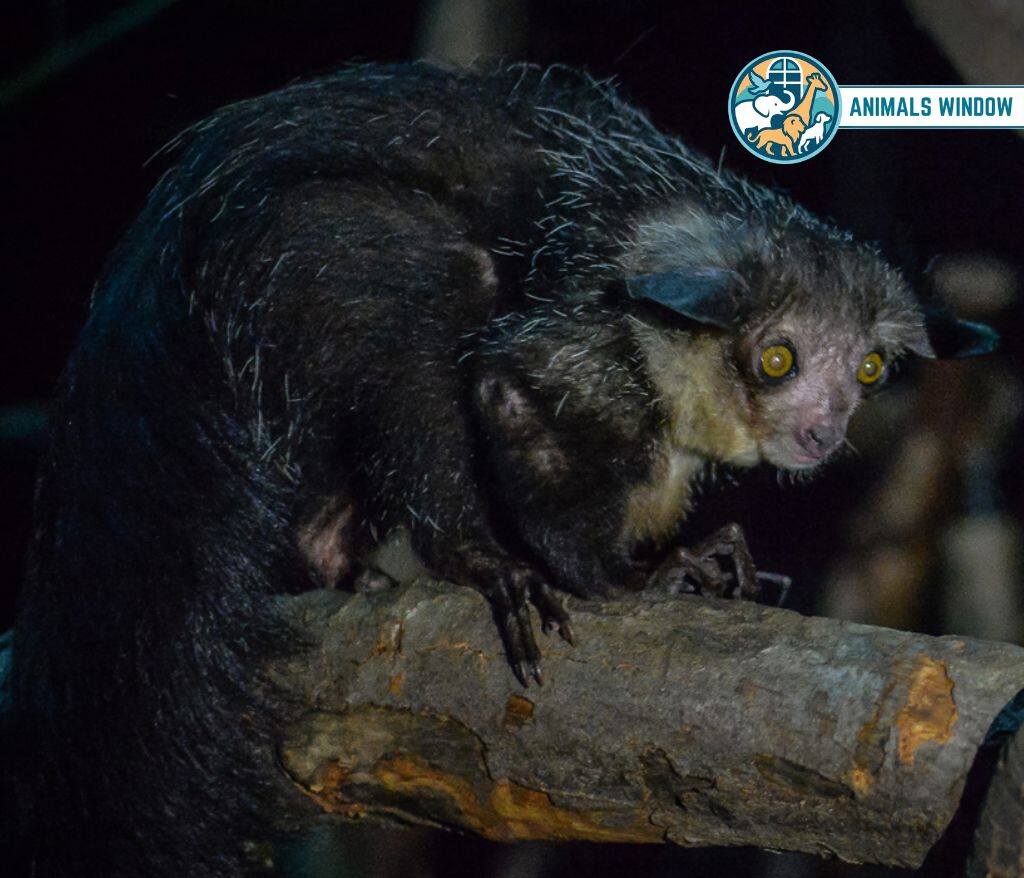
The Aye-Aye is a primate — a distant cousin of lemurs — and it feeds on insects in a way no other primate on Earth does. It taps on tree bark with its permanently thin, bony middle finger at up to 8 taps per second, listening for the hollow echo of a grub tunnel underneath. When it finds one, it gnaws through the bark and hooks the larva out with that same finger.
Scientists call this percussive foraging. That middle finger can rotate 360 degrees and is permanently skeletal — thin as a twig — even when the rest of the hand is fully fleshed. It’s doing a woodpecker’s job using anatomy, not a beak. And it does all of this in total darkness.
🔥 Size Comparison: The Aye-Aye’s hunting finger is roughly the length of a wooden chopstick — but thin as a pencil lead at the tip.
Banded Archerfish
- Scientific Name: Toxotes jaculatrix
- Size: Up to 30 cm (11.8 in)
- Weight: Around 400 g (14 oz)
- Diet: Insects, spiders, and small invertebrates above the waterline
- Habitat: Mangroves, estuaries, and rivers in Southeast Asia and northern Australia
- Lifespan: Up to 10 years
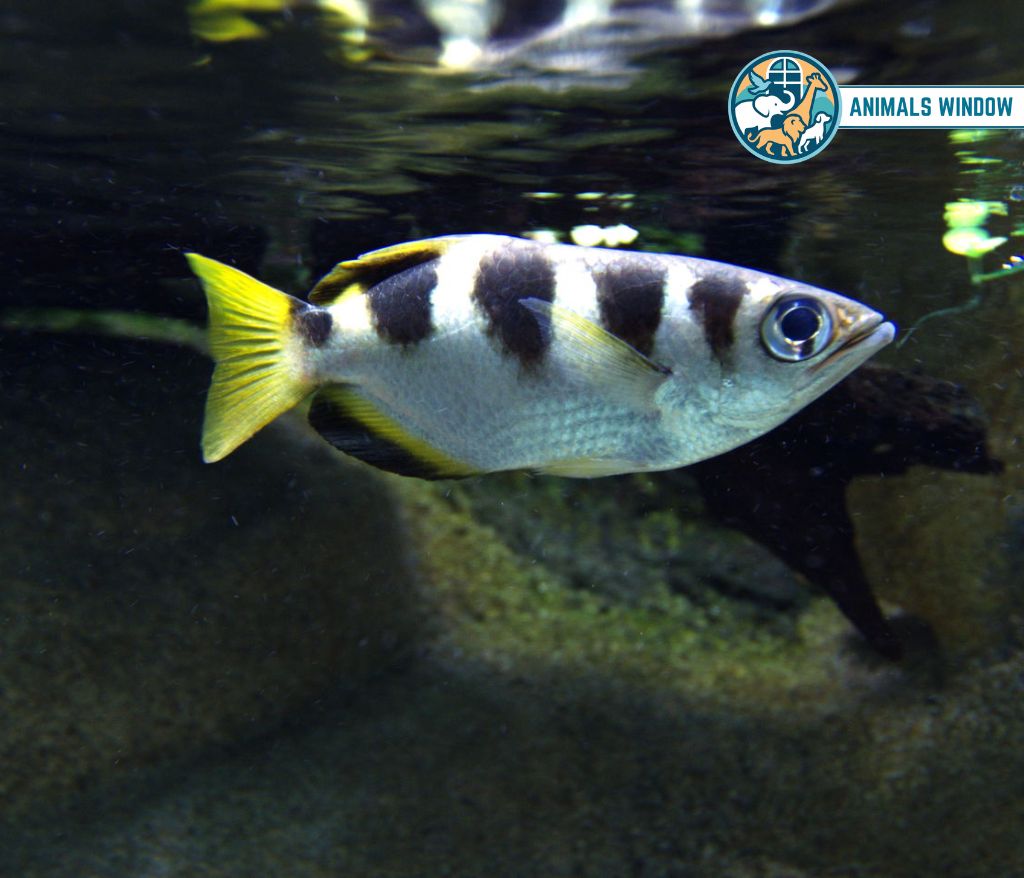
The Banded Archerfish never leaves the water to hunt. It positions itself just below the surface and fires a pressurized jet of water at insects and spiders sitting on branches up to 3 meters above. The prey falls. The fish eats it.
What most sources skip is the physics problem this creates. Water refracts light, which means the insect appears to be in a slightly different position than it actually is. The Archerfish corrects for this refraction instinctively every time. Studies also show it reads the movement of an insect on a branch to estimate its weight, then adjusts the force of the water jet accordingly. It’s solving two separate physics problems simultaneously — from underwater — with a brain the size of a pea.
🔥 Size Comparison: The Archerfish’s water jet has roughly the same force as a water pistol squirt — but lands on a target the size of a fly, three body-lengths above the shooter.
Meerkat
- Scientific Name: Suricata suricatta
- Size: 25–35 cm body length
- Weight: 0.6–0.97 kg
- Diet: Insects, scorpions, grubs, lizards, small snakes
- Habitat: Kalahari Desert (South Africa, Botswana, Namibia)
- Lifespan: 12–14 years (in the wild)
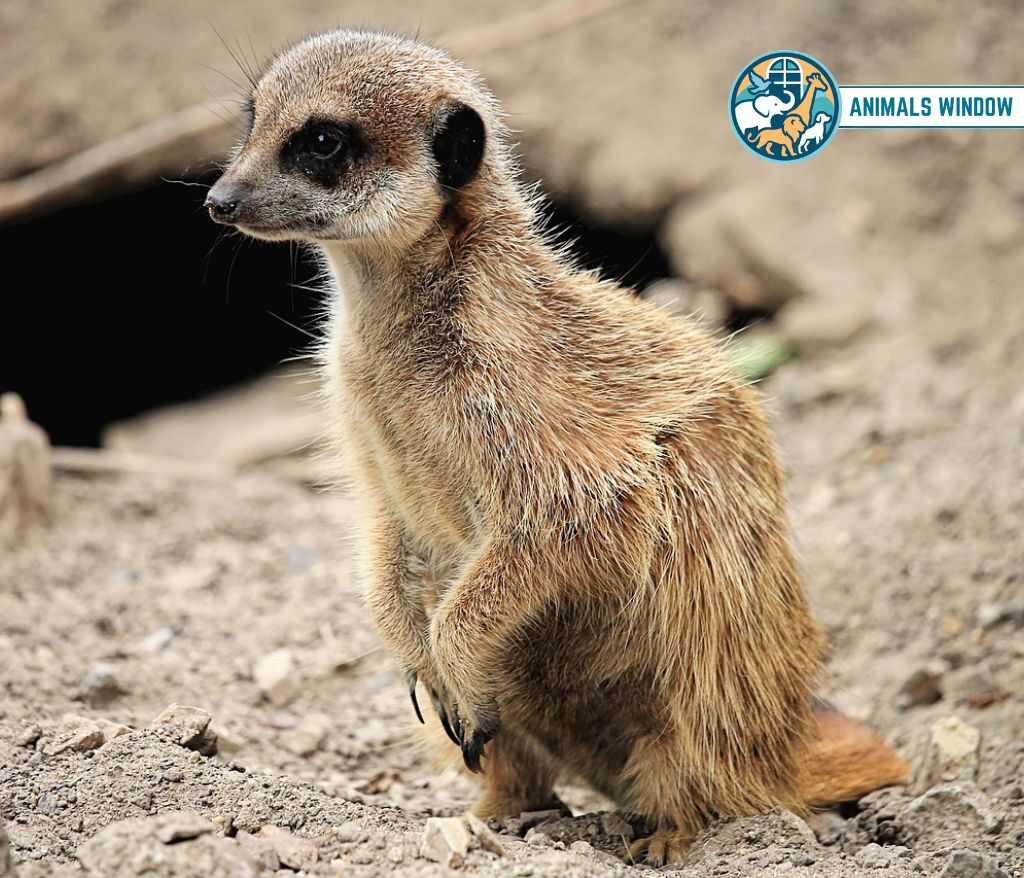
Meerkats are small members of the mongoose family and spend a large part of each day digging in desert sand for insects and grubs. But the thing that sets them apart from most insectivores isn’t what they eat — it’s what they teach.
Adult meerkats are immune to scorpion venom. They pass this advantage on deliberately. They bring dead scorpions to pups first, then stunned ones, then live ones — incrementally building their young’s exposure and technique. Researchers consider this one of the clearest documented examples of intentional teaching in a non-human species. Young meerkats learn to bite off the stinger first. They get it wrong sometimes, then practice until they don’t.
🔥 Size Comparison: A Meerkat weighs about the same as a standard can of soup — and regularly defeats prey that kills animals ten times its size.
Giant Anteater

- Scientific Name: Myrmecophaga tridactyla
- Size: Up to 2.1 meters (snout to tail)
- Weight: 22–39 kg
- Diet: Ants and termites exclusively
- Habitat: Grasslands and forests of Central and South America
- Lifespan: 14–16 years (wild)
The Giant Anteater is the largest insect-eating land animal alive. It has no teeth. Its mouth is a narrow tube barely wide enough to fit a finger. But its tongue — which stretches 60 cm out of that tube and flicks at 150 times per minute — makes up for everything its anatomy lacks.
It doesn’t destroy colonies. It feeds for around 40 seconds per mound, then moves on, returning to the same nest days later once it has recovered. The front claws that tear open those concrete-hard mounds can reach 10 cm in length — longer than most kitchen knives — and the animal walks on its knuckles to avoid self-injury with every step. Its resting body temperature of 32.7°C is the lowest of any placental mammal, an apparent adaptation to surviving on a calorie-sparse diet of insects.
🔥 Size Comparison: The Giant Anteater’s tongue, fully extended, would stretch from one end of a 30 cm school ruler past the other.
Pangolin
- Scientific Name: Manis spp. (8 species)
- Size: 30 cm to 1 m (depending on species)
- Weight: 1.8–33 kg
- Diet: Ants and termites (almost exclusively)
- Habitat: Forests, grasslands, and savannas across Africa and Asia
- Lifespan: Up to 20 years
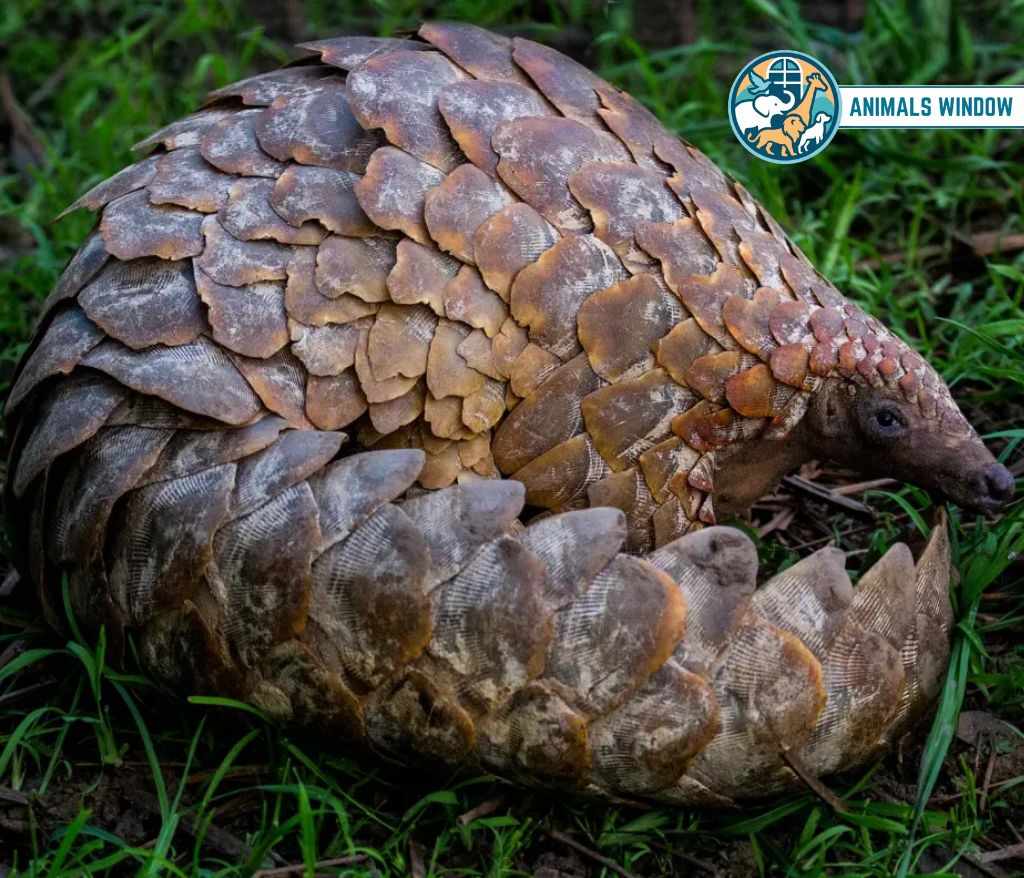
Pangolins are the only mammals on Earth covered in true keratin scales — the same material as your fingernails, layered across the entire body. When threatened, they curl into a tight ball. Those overlapping scales become a closed shell of overlapping blades. Even lions have walked away from a rolled-up pangolin without making progress.
There are no teeth inside that armored body. Instead, the Pangolin swallows small stones that sit in its muscular stomach and grind insects into paste — the same function as a chicken’s gizzard. Its tongue, when fully extended, is longer than the animal’s own body and is anchored not in the mouth or throat, but near the pelvis, where it coils around the ribcage at rest. Pangolins are the most illegally trafficked wild mammal on Earth, with over a million taken in the past decade.
🔥 Size Comparison: A Pangolin’s tongue stores coiled inside its chest cavity — and when unrolled, extends longer than a standard 30 cm ruler, from an animal that might only be 40 cm long.
Numbat
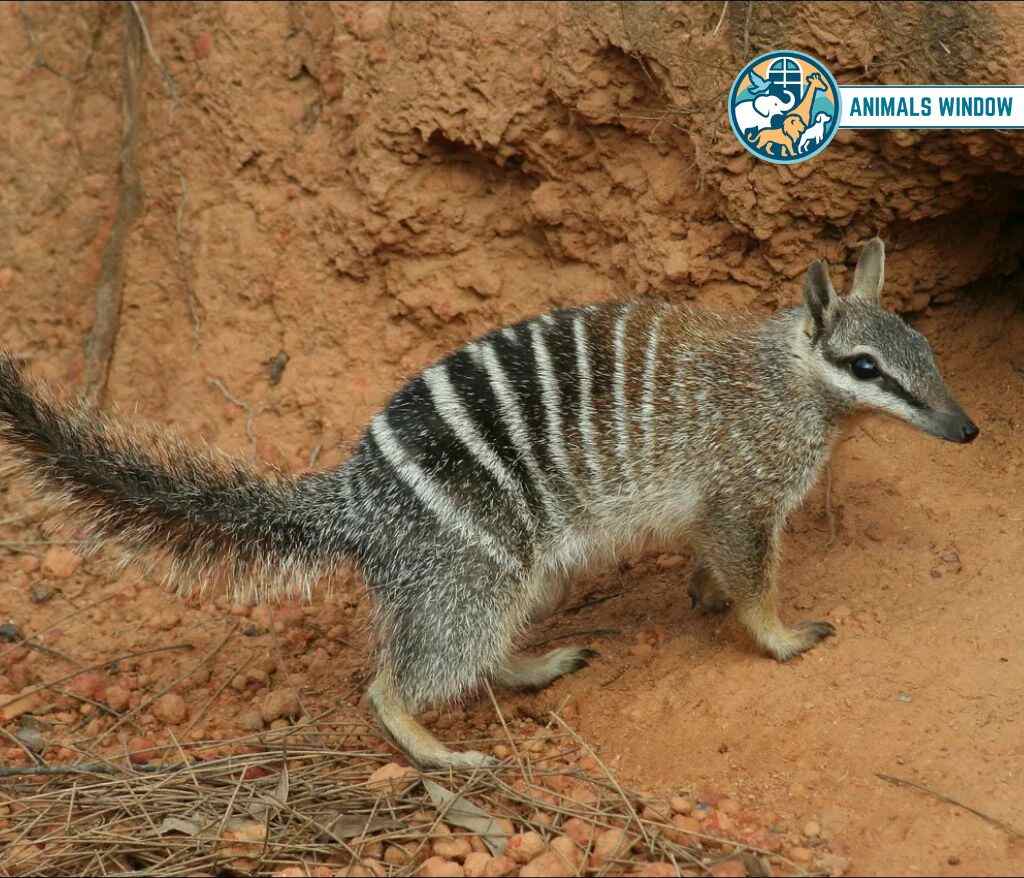
- Scientific Name: Myrmecobius fasciatus
- Size: 20–27 cm body length
- Weight: 280–700 g
- Diet: Termites (up to 20,000 per day)
- Habitat: Eucalyptus woodlands of southwestern Australia
- Lifespan: About 5 years in the wild
The Numbat eats only termites. Not ants. Not grubs. Not anything else. And it does all its hunting during daylight — making it the only marsupial with a strictly diurnal, insect-exclusive lifestyle. It also has no pouch. Its young cling to fur on the mother’s underside instead.
Rather than digging deep like an anteater, the Numbat follows shallow termite galleries just under the soil surface, positioning its snout above the right spot and lapping up termites at up to 100 tongue-flicks per minute. Researchers suspect it may locate these underground galleries using thermal or electromagnetic sensing — but this hasn’t been confirmed. Fewer than 1,000 individuals remain in the wild.
🔥 Size Comparison: A Numbat is about the size and weight of a large baked potato, and needs to eat 20,000 termites daily to meet its caloric needs.
Hero Shrew

- Scientific Name: Scutisorex somereni
- Size: 12–15 cm body length
- Weight: 37–114 g
- Diet: Insects, earthworms, and small invertebrates
- Habitat: Dense rainforests of the Democratic Republic of the Congo Democratic Republic of the Congo
- Lifespan: 1–3 years
From the outside, the Hero Shrew is unremarkable — a small, gray forest shrew. But its lumbar spine is unlike anything else in mammal biology. Each vertebra interlocks with the next through a mesh of bony projections, like fingers clasped together, creating compressive strength that no other small mammal comes close to matching.
In documented accounts from the Congo, local people demonstrated this by having an adult man — approximately 70 kg — stand on a live Hero Shrew. The animal walked away uninjured. Researchers believe the spine may help it force apart tightly packed palm fronds to access insects underneath, though the full evolutionary explanation is still being studied.
🔥 Size Comparison: The Hero Shrew weighs less than a AA battery. Its backbone can withstand compression loads that would shatter the spine of any other animal its size.
Texas Horned Lizard

- Scientific Name: Phrynosoma cornutum
- Size: 7–15 cm
- Weight: 18–78 g
- Diet: Harvester ants (about 90% of diet)
- Habitat: Deserts and semi-arid scrubland of the southern United States and northern Mexico
- Lifespan: 5–8 years
This flat, spike-covered lizard spends its days sitting near harvester ant trails and picking off ants one at a time. Its diet is strikingly narrow — around 90% harvester ants — which is part of why populations are declining. As invasive fire ants displace harvester ants, the lizard faces a food source it simply refuses to eat.
When physically grabbed — not just approached — it restricts blood flow from its head, builds pressure in its ocular blood sinuses, and shoots a stream of blood from its eyes that can travel up to 1.5 meters. The blood contains chemical compounds from the harvester ants it eats that are specifically repellent to canid predators like coyotes and foxes. It’s a targeted chemical defense delivered through self-induced eye bleeding.
🔥 Size Comparison: This lizard is roughly the size of a man’s palm at full length — which makes a 1.5-meter eye-blood stream a genuinely disproportionate defense.
Star-Nosed Mole

- Scientific Name: Condylura cristata
- Size: 15–20 cm
- Weight: 40–75 g
- Diet: Aquatic insects, earthworms, and small invertebrates
- Habitat: Wet lowland soils of eastern Canada and the northeastern United States
- Lifespan: 3–4 years
The Star-Nosed Mole has 22 fleshy pink tentacles arranged in a ring around its nostrils. It is, by most measures, the strangest-looking mammal alive. But those tentacles are also the most touch-sensitive organ ever recorded in any mammal — packed with approximately 25,000 Eimer’s organs in a patch of skin the size of a fingertip.
That density of sensation translates to raw speed. The Star-Nosed Mole is the fastest-eating mammal ever documented, able to identify and consume an edible insect or worm in as little as 120 milliseconds — faster than the human eye resolves a single video frame. It also hunts underwater by exhaling small air bubbles and inhaling them back in, picking up dissolved scent particles from the water.
🔥 Size Comparison: Those 22 tentacles, spread flat, would cover roughly the surface area of a shirt button — and contain more nerve endings than a human hand.
Short-Beaked Echidna

- Scientific Name: Tachyglossus aculeatus
- Size: 30–45 cm
- Weight: 2–7 kg
- Diet: Ants, termites, insect larvae, earthworms
- Habitat: Forests, heathlands, and deserts in Australia and parts of New Guinea
- Lifespan: Up to 50 years (in captivity)
The Short-Beaked Echidna is a monotreme — one of only five egg-laying mammals alive today, sharing that distinction with the four platypus species. When threatened, it digs straight down into the soil in seconds, leaving a dome of backward-pointing spines exposed. Predators consistently abandon the attempt.
Its brain is proportionally one of the largest among all mammals relative to body size, with a prefrontal cortex that is proportionally larger than a human’s. What an animal that ambles around eating ants does with that neural real estate isn’t fully understood — but it shows strong problem-solving ability in captivity. Its tongue moves at speed inside termite galleries, coated in backward-pointing spines that trap prey. An Echidna raised in captivity has reached 50 years of age — an extraordinary lifespan for an animal this size.
🔥 Size Comparison: A Short-Beaked Echidna is roughly the size and weight of a half-full bag of sugar, and can outlive most domestic dogs by decades.
Red-Billed Scythebill
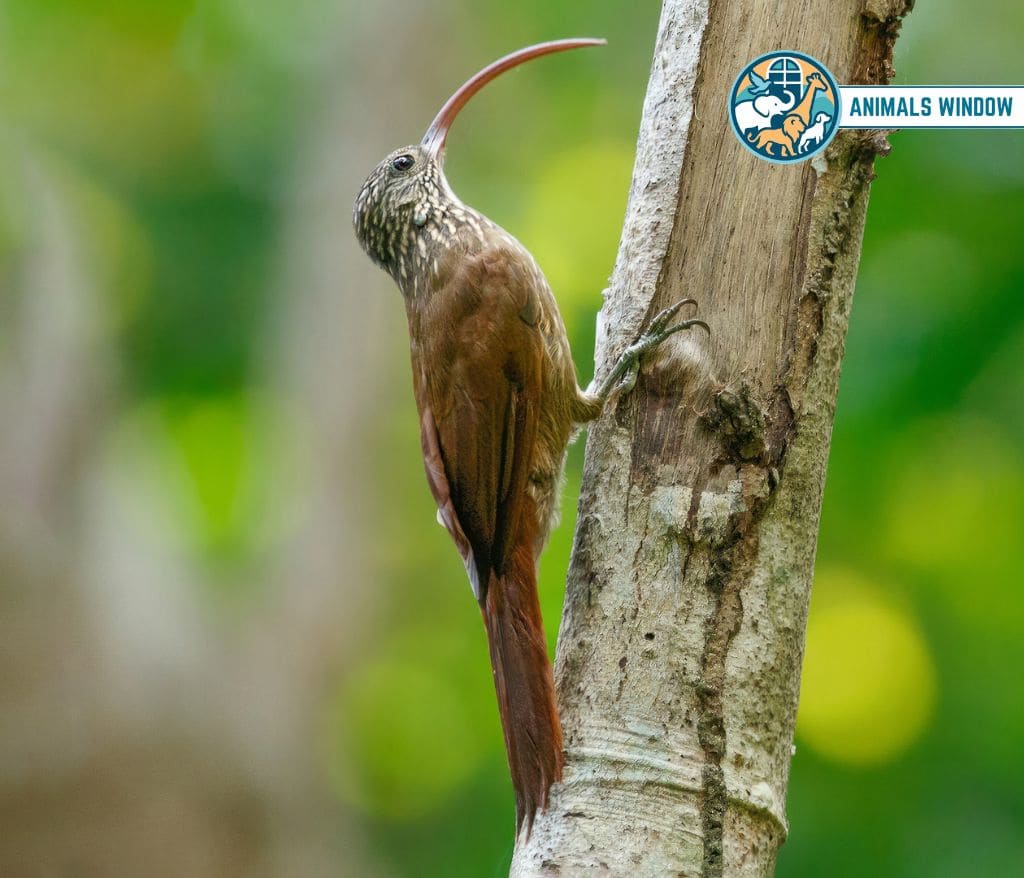
- Scientific Name: Campylorhamphus trochilirostris
- Size: 21–24 cm (8.3–9.4 in) long
- Weight: 38–48 g (1.3–1.7 oz)
- Diet: Insects and larvae hidden in bark, bromeliads, and wood crevices
- Habitat: Tropical forests from Panama to northern Argentina across South America
- Lifespan: Approximately 5–8 years
Most bark-foraging birds hammer or pick at surfaces. The Red-Billed Scythebill operates differently. Its bill curves in a near-semicircle — shaped like a sickle — and it uses this curve to reach inside fissures, tightly rolled bark, bromeliad bases, and wood tunnels that no straight-beaked competitor can enter.
It braces its body against the trunk using stiff tail feathers, the way woodpeckers do, then rotates its head at sharp angles so the bill’s curve works inside tight crevices rather than against them. This gives the Scythebill access to an entire layer of insect habitat that is functionally invisible to every other bird in the same forest. It’s not just eating insects — it’s eating insects that nobody else can reach.
🔥 Size Comparison: The Scythebill’s curved beak, if straightened, would be about the length of an adult thumb — on a bird the overall size of a large sparrow.
Dragonfly
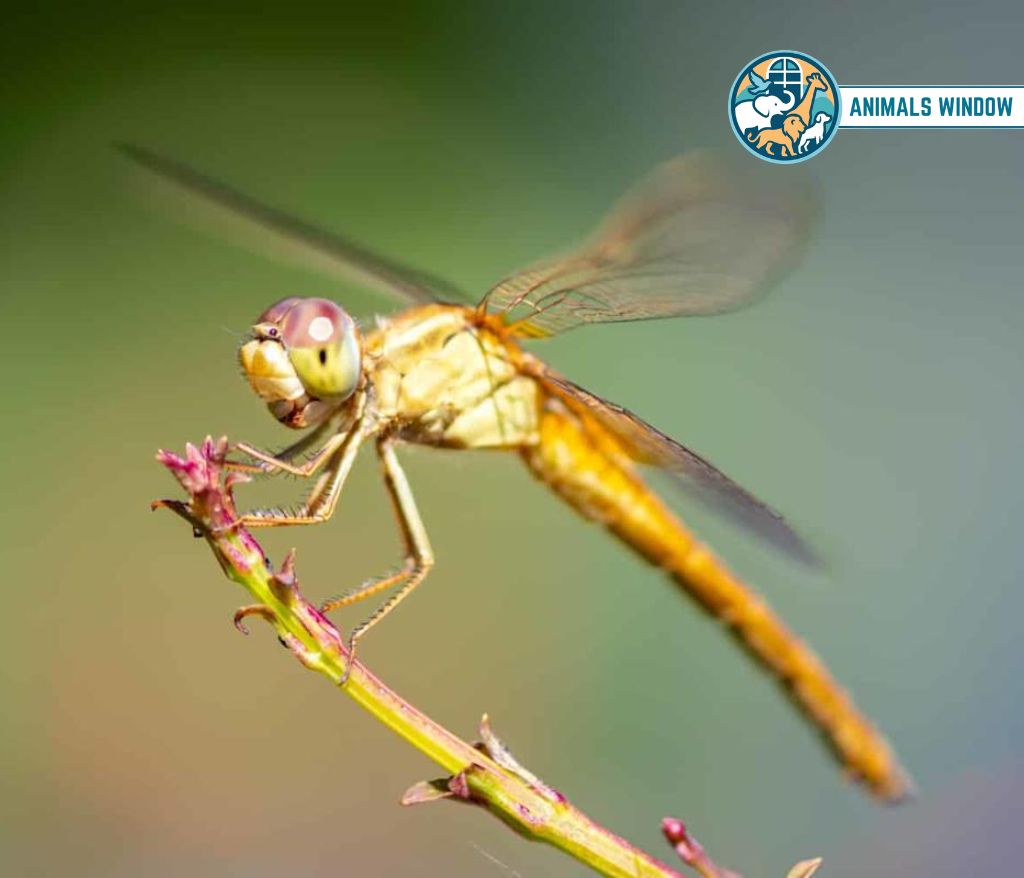
- Scientific Name: Order Odonata (multiple species)
- Size: 2.5–12 cm wingspan
- Weight: 0.3–1 g
- Diet: Flying insects (mosquitoes, gnats, flies, moths)
- Habitat: Every continent except Antarctica, near water
- Lifespan: Weeks to months as adults; up to 4 years as aquatic larvae
The Dragonfly is the most successful aerial hunter ever recorded — with a kill rate of approximately 95%. For context, lions succeed roughly 25% of the time. Great white sharks land around 55%. No large predator comes close.
The key is trajectory calculation. Dragonflies don’t chase prey. They compute where a moving insect will be and fly to that future point — a cognitive ability researchers long assumed required a much larger brain. Their compound eyes cover nearly 360 degrees of their head and contain up to 30 types of photoreceptors. Humans have 4. As larvae living underwater for up to four years, they’re equally lethal — ambushing aquatic insects and small fish from the riverbed.
🔥 Size Comparison: A Dragonfly’s entire body, wings included, weighs less than a single paper clip — and outperforms predators thousands of times heavier.
Philippine Tarsier
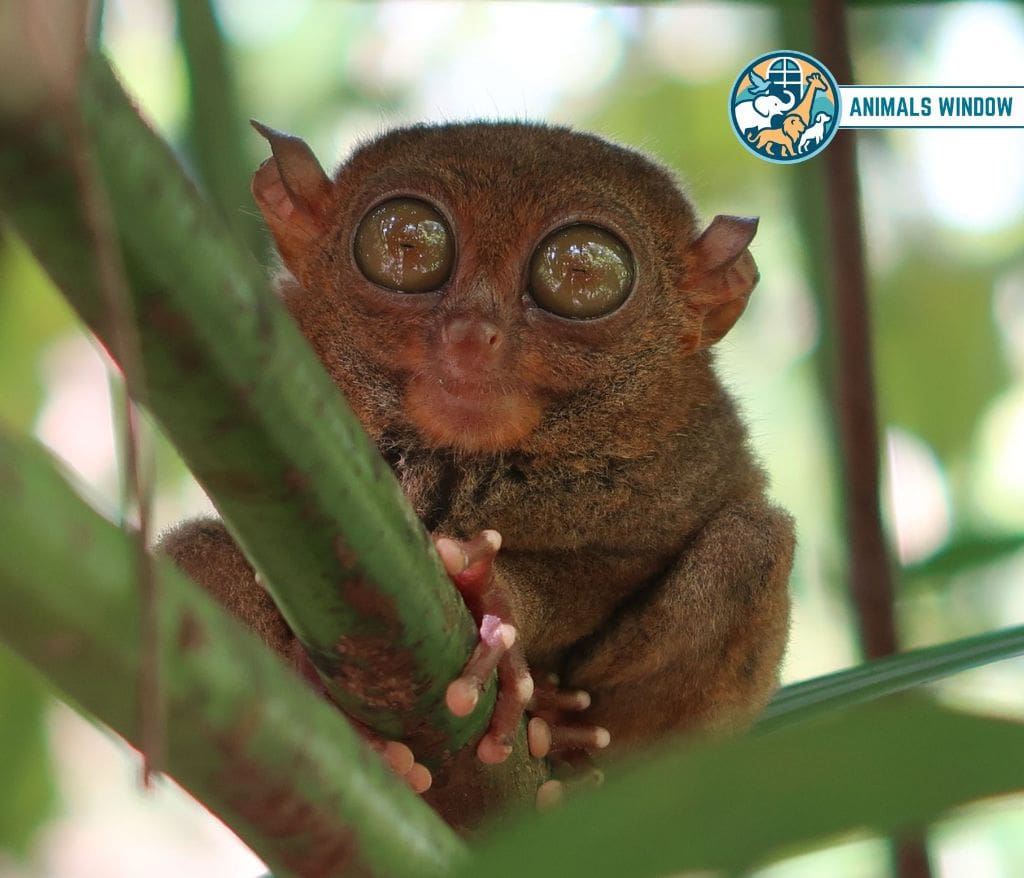
- Scientific Name: Carlito syrichta
- Size: 8.5–16 cm body length
- Weight: 80–160 g
- Diet: Live insects and small vertebrates — zero plant matter
- Habitat: Dense lowland forest of Bohol, Leyte, Samar, and Mindanao, Philippines
- Lifespan: Up to 24 years in captivity
The Philippine Tarsier is the only primate on Earth that eats no plant material whatsoever. No fruit, no leaves, no seeds. Every meal is a live animal caught at night. This makes it the sole obligate carnivore among all primates — a distinction that gets overlooked because the animal is tiny and looks deceptively gentle.
Its eyes are fixed in their sockets — they cannot move sideways at all. To look in any direction, the Tarsier rotates its entire head up to 180 degrees in either direction, like an owl. Its elongated ankle bones act as biological springs, launching it distances of up to 40 times its own body length in a single leap to intercept flying insects. And it communicates through ultrasonic calls above 90 kHz — completely inaudible to humans — making it the only primate known to use a dedicated ultrasonic communication channel.
🔥 Size Comparison: The Philippine Tarsier’s eyeballs are roughly the size of large grapes, sitting inside a head that’s about the size of a golf ball.
FAQ’s About Animals That Eat Insects
What are animals that feed on insects called?
They are called insectivores. The term applies to any animal whose diet is made up primarily of insects, larvae, termites, or similar small invertebrates. Examples range from tiny shrews to the meter-long Giant Anteater.
What eats insects in the garden?
Common garden insect-eaters include hedgehogs, toads, ground beetles, robins, and spiders. Dragonflies are especially effective near water, and predatory wasps target caterpillars and flies.
What is the most effective insect hunter?
The Dragonfly — with a documented success rate of around 95%, it outperforms every large predator on Earth by a wide margin.
Do all insectivores use their tongues to catch insects?
No. The Archerfish uses water. The Aye-Aye uses a finger. The Texas Horned Lizard uses a sticky tongue, but the Dragonfly uses speed and jaw strength. The Scythebill uses a curved beak as a probe. The method varies completely by species.
Can insectivorous animals be kept as pets?
A small number, like hedgehogs, are legal to keep in some countries. But most animals on this list — Pangolins, Tarsiers, Numbats, Echidnas, and others — are protected species. Their dietary needs are also highly specialized and nearly impossible to meet without expert facilities.
Five Myths About Insect-Eating Animals
Many websites label animals as insectivores simply. Here are five specific errors circulating online right now.
| Animal | The Myth Being Spread | What the Science Actually Shows | Correct Classification |
| Sloth | Listed as an insectivore | Sloths are folivores with multi-chambered stomachs built to ferment leaves over several days. Their digestive system cannot process meaningful amounts of animal protein. | Folivore (strict herbivore) |
| Mugger Crocodile | Called an insectivore | Adults are 13-foot apex predators that hunt deer, fish, and large mammals. Only hatchlings eat insects — out of immediate survival need, not dietary preference — and they outgrow it within weeks. | Carnivore / Apex Predator |
| Eurasian Eagle-Owl | Described as an insect-eater | These raptors have wingspans reaching 6 feet and hunt hares, rabbits, and mid-sized rodents as primary prey. Insects provide no meaningful nutrition for an animal this size. | Carnivore / Apex Raptor |
| Emu | Categorized as an insectivore | Emus are nomadic birds that live on seeds, fruits, and grass. They snap at insects occasionally during dry seasons when plant food is scarce. That’s opportunistic, not dietary. | Primary herbivore / Opportunistic omnivore |
| “NumbatShort-beaked Echidna” | Appears as a single animal name | Two completely separate Australian animals — the Numbat (Myrmecobius fasciatus) and the Short-Beaked Echidna (Tachyglossus aculeatus) — were fused into a single fake compound word. They have different taxonomy, anatomy, and biology. Both are covered as separate entries above. | Two distinct real species; one fabricated name |
Discover More Animals Guides:

I have loved animals since I was a kid. I enjoy reading about how animals live, eat, move, and survive. I started Animals Window to share what I learn in a simple and easy way. I write about animal body parts, size, behavior, diet, habitats, and species. My goal is to make animal facts clear and fun for everyone to understand.