Animals with big eyes have evolved oversized pupils and enlarged eye structures to survive — whether that means seeing in total darkness, spotting prey from above, or detecting movement across 360 degrees. From tiny primates that can’t move their eyeballs at all to birds with eyes heavier than their brains, big-eyed animals are among nature’s most extreme survivors.
Table of Contents
Quick List of Animals with Big Eyes
- Philippine Tarsier
- Aye-aye
- Gray Mouse Lemur
- Slow Loris
- Gray Slender Loris
- Senegal Bushbaby
- Colossal Squid
- Giant Squid
- Swordfish
- Bigeye Thresher Shark
- Panther Chameleon
- Tokay Gecko
- Red-eyed Tree Frog
- Asian Vine Snake
- Barred Owl
- Ostrich
- Japanese Dwarf Flying Squirrel
- Sphynx Cat
These aren’t just cute, wide-eyed animals. Each one carries a jaw-dropping survival story hiding behind those oversized pupils. Scroll down — you won’t want to skip a single one.
1. Philippine Tarsier
- Scientific Name: Carlito syrichta
- Size: 3.5–6 inches (body length)
- Weight: 2.8–5.7 oz
- Diet: Carnivorous — insects, lizards, small birds
- Habitat: Rainforests of the Philippines
- Lifespan: 12–20 years
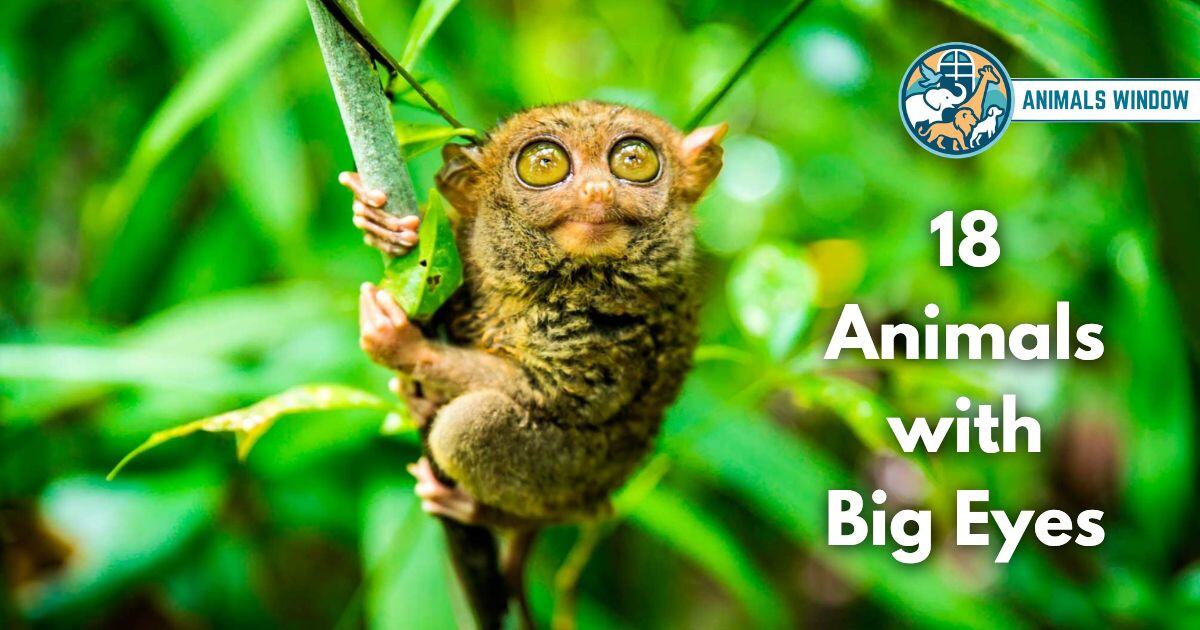
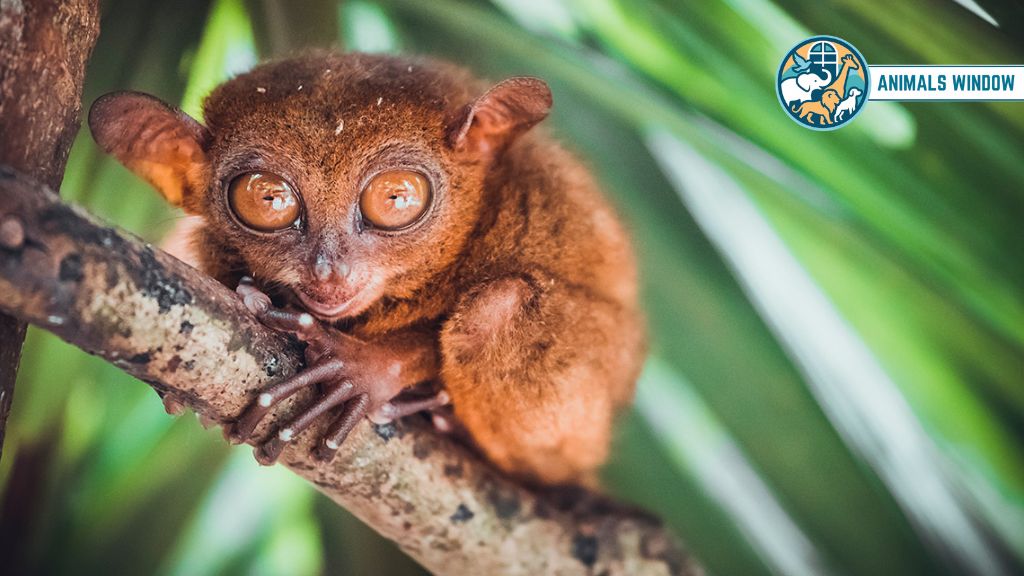
The Philippine Tarsier is one of the smallest primates alive, and it holds one of nature’s most extreme records. Each of its eyes is about 16mm in diameter — roughly the same size as its entire brain. For a creature this small, that’s a jaw-dropping proportion. No other mammal on Earth has eyes that large relative to body size.
What stands out is that these eyes are completely fixed. They cannot rotate even a millimeter in their sockets. To make up for it, tarsiers can rotate their head nearly 180 degrees in each direction — a full 360-degree view when combined. They hunt at night using this head-swiveling ability, snatching insects right out of the air with zero wasted movement.
🔥 Comparison Fact: Each tarsier eye is about the size of a marble — and if humans had eyes scaled to the same proportion, our eyes would be the size of grapefruits.
2. Aye-aye
- Scientific Name: Daubentonia madagascariensis
- Size: 14–17 inches (body); tail up to 22 inches
- Weight: 4–6.6 lbs
- Diet: Insect larvae, fruit, nectar, seeds
- Habitat: Forests of Madagascar
- Lifespan: Up to 23 years in captivity
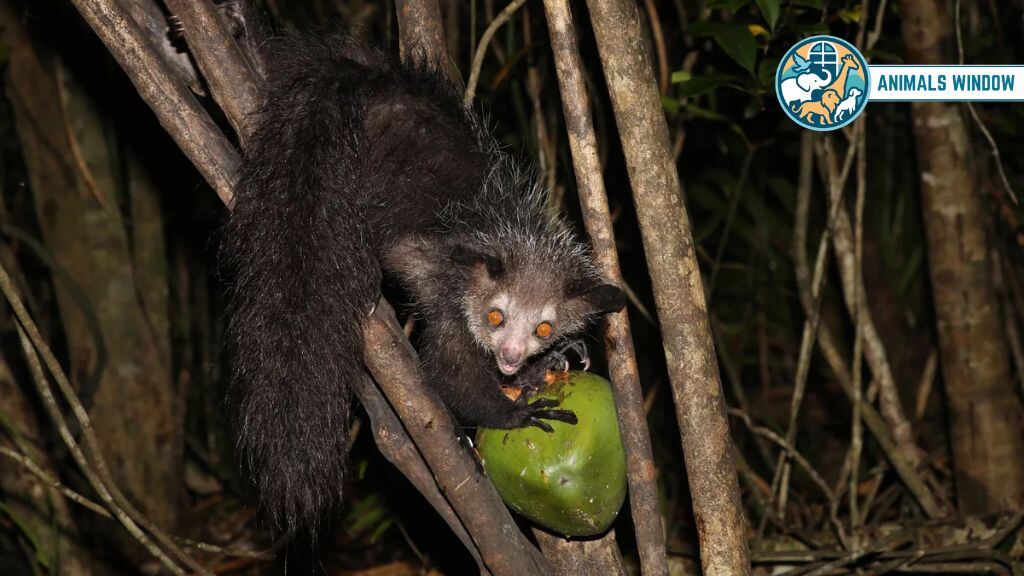
The Aye-aye looks like something out of a science fiction movie — and that’s not an accident. It’s Madagascar’s strangest primate, with enormous reflective eyes, bat-like ears, and one elongated skeletal middle finger used to dig larvae out of bark.
Its wide eyes aren’t just for nighttime vision. The aye-aye uses a technique called percussive foraging: it taps on wood rapidly with its bony finger and listens for hollow spaces where grubs hide. The eyes help it navigate dense forests at night while its ears and finger do the real hunting work. It’s the only primate known to use this strategy — the equivalent of a built-in stethoscope and headlamp combined.
🔥 Comparison Fact: The aye-aye’s body is roughly the size of a house cat, but those glowing yellow eyes look several sizes too large for its pointed face — like someone installed owl eyes on a squirrel.
3. Gray Mouse Lemur
- Scientific Name: Microcebus murinus
- Size: 4.7–5.5 inches
- Weight: 1.5–2.8 oz
- Diet: Insects, fruit, flowers, small vertebrates
- Habitat: Dry forests of Madagascar
- Lifespan: 6–8 years in the wild; up to 15 in captivity
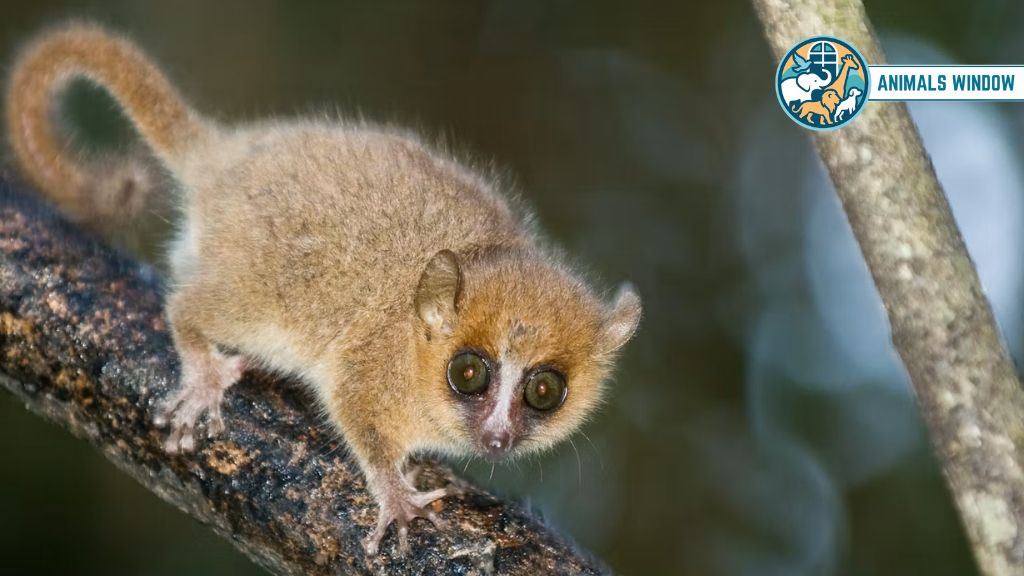
Don’t let the size fool you. The Gray Mouse Lemur is one of the smallest primates on the planet — small enough to curl up in a human palm — but it has disproportionately large, forward-facing eyes that give it sharp depth perception in near-total darkness.
During Madagascar’s dry season, this small furry animal with big eyes enters a state called torpor. It stores fat in its tail and can go dormant for weeks, surviving without food or water. Its eyes, though closed during torpor, help it make fast decisions the moment it wakes up — identifying predators, prey, and pathways before fully “booting up.”
🔥 Comparison Fact: The gray mouse lemur weighs about as much as five quarters stacked together. Its eyes, by comparison, look almost comically oversized on its round little face.
4. Slow Loris
- Scientific Name: Nycticebus coucang
- Size: 10–15 inches
- Weight: 1–4.6 lbs
- Diet: Tree sap, fruit, insects, small animals
- Habitat: Southeast Asian tropical forests
- Lifespan: Up to 20 years
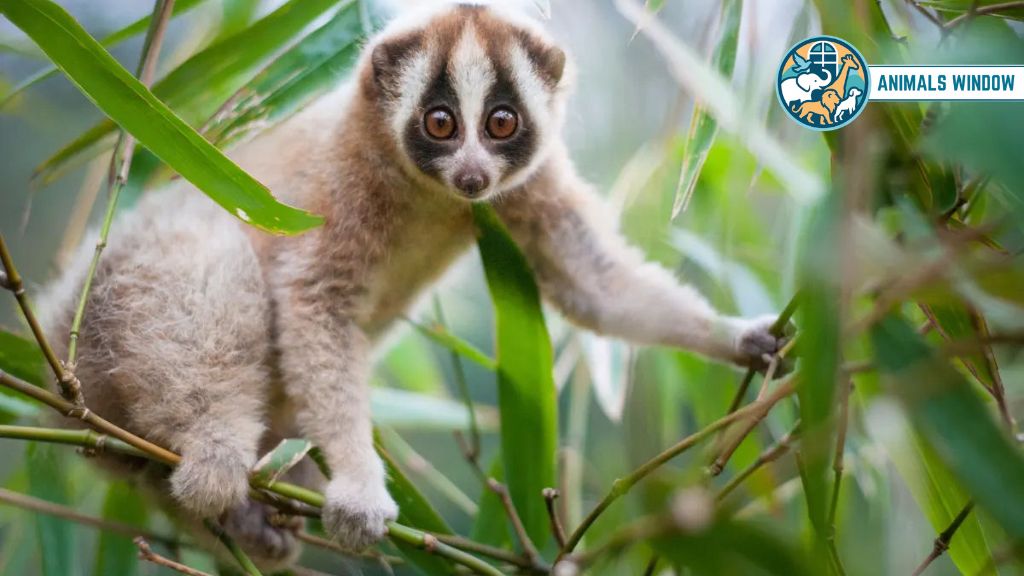
The Slow Loris is one of those wide-eyed animals that looks irresistibly cute in photos — which is exactly why it’s in danger. Its enormous eyes and round face make it a target for the illegal exotic pet trade. But here’s what those adorable eyes hide: it’s the only known venomous primate on Earth.
The slow loris produces a toxin by licking a gland near its armpit and mixing the secretion with saliva. That bite can cause anaphylactic shock in humans. The big eyes aren’t just for looking sweet — they help this animal navigate complex tree canopies at night while staying completely silent and deceptively slow. Predators often overlook it entirely.
🔥 Comparison Fact: The slow loris moves so deliberately it looks like it’s in slow motion — think of a stuffed animal that somehow came to life and decided to go for a midnight walk.
5. Gray Slender Loris
- Scientific Name: Loris lydekkerianus
- Size: 6–10 inches
- Weight: 3–11 oz
- Diet: Insects, small lizards, bird eggs, plant matter
- Habitat: Dry forests and scrublands of India and Sri Lanka
- Lifespan: 12–15 years
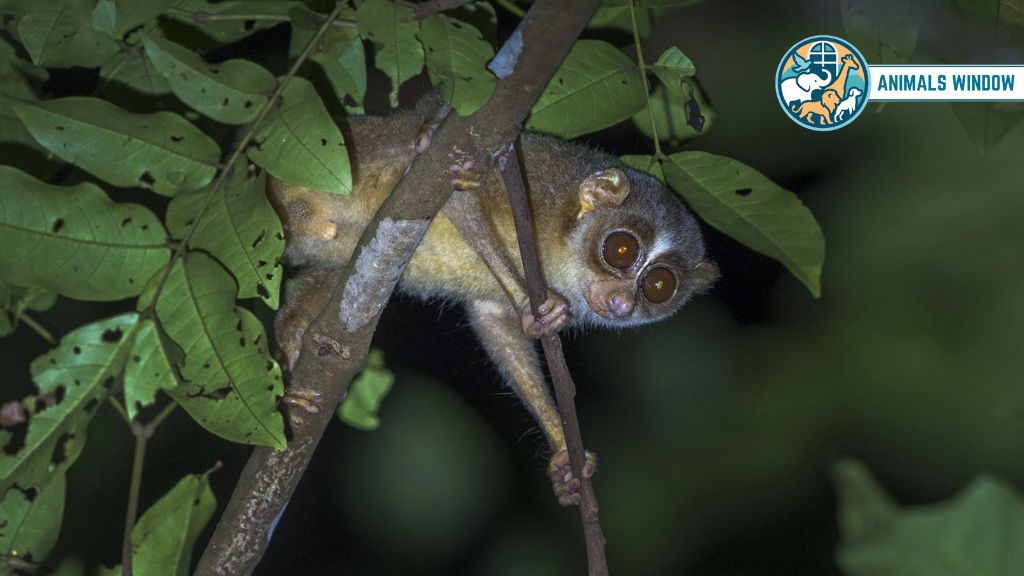
If the slow loris is the stocky cousin, the Gray Slender Loris is the athlete. This primate has an almost impossibly thin frame with long, spindly legs — and two enormous owl-like eyes mounted on a tiny round head. It looks like biology ran out of body and poured everything into the face.
What’s remarkable is how it uses those eyes for precision hunting. Slender lorises will stalk insects for several minutes before striking — staying completely still, tracking movement with wide, unblinking eyes before lunging with pinpoint accuracy. Locals in South India sometimes call it the “light of the forest” because its eyes catch moonlight and seem to glow.
🔥 Comparison Fact: Its body can be as thin as a human index finger — but the eyes are about as wide as a pencil eraser in diameter, creating a dramatic mismatch that makes it instantly recognizable.
6. Senegal Bushbaby
- Scientific Name: Galago senegalensis
- Size: 5–8 inches (body)
- Weight: 3.5–10.5 oz
- Diet: Insects, tree gum, fruit, small vertebrates
- Habitat: Woodlands and savannas of sub-Saharan Africa
- Lifespan: 10–16 years
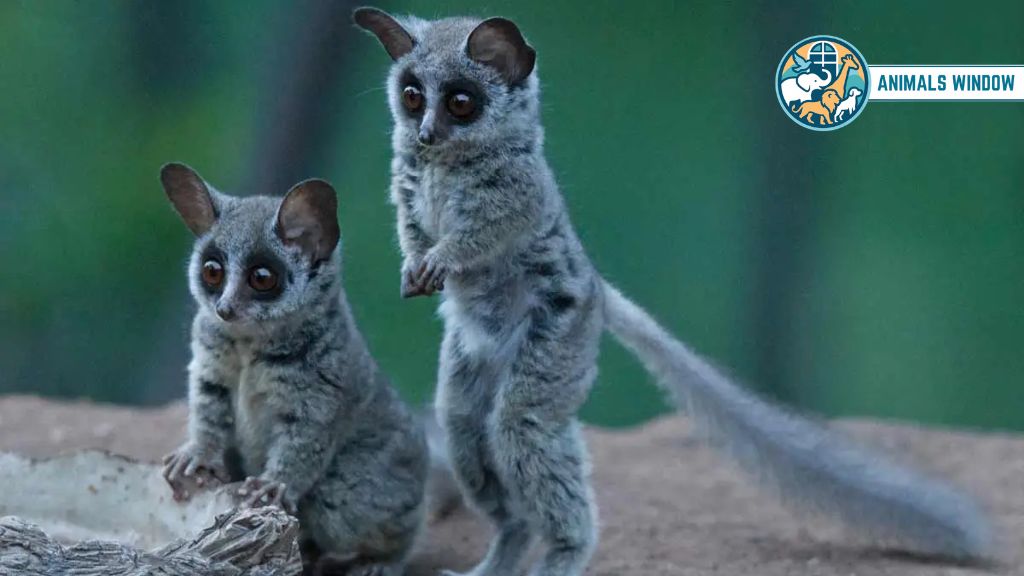
The Senegal Bushbaby earned its name from its haunting, child-like cry that echoes through African woodlands at night. But the real story is in those massive, forward-facing eyes — sized so large they fill almost the entire orbit of the skull, leaving no room to move them. Sound familiar? It’s the same solution as the tarsier: rotate the whole head.
But the bushbaby adds a twist. It folds its elaborate outer ears flat against its head when sleeping or jumping — like noise-canceling headphones going into sleep mode — and unfolds them to detect sound with surgical precision when hunting. Eyes and ears work together as one system. No other small primate uses this two-sensor combo quite as efficiently.
🔥 Comparison Fact: The bushbaby can leap up to 6.5 feet in a single jump. For context, that’s the equivalent of a human jumping across a standard parking space from a standing start.
7. Colossal Squid
- Scientific Name: Mesonychoteuthis hamiltoni
- Size: Up to 46 feet
- Weight: Up to 1,100 lbs
- Diet: Fish, other squid
- Habitat: Antarctic deep ocean
- Lifespan: Estimated 2–3 years
Here’s where the list takes a sharp turn into the deep. The Colossal Squid holds the undisputed title of the largest eyes of any living animal on Earth. Its eyes can reach 27–30 cm (about 11 inches) in diameter. That’s roughly the size of a soccer ball — and they come equipped with built-in photophores (light-producing organs) on the eyeball itself.
Scientists believe these massive eyes evolved not to see prey in complete darkness, but specifically to detect the bioluminescent glow left behind by large predators like sperm whales as they approach. It’s essentially a long-range predator detection system built into the eyeball. No other animal uses this strategy at this scale.
🔥 Comparison Fact: The colossal squid’s eye is roughly the diameter of a standard dinner plate — and you’re looking at something that evolved 65+ feet underwater where no sunlight reaches.
8. Giant Squid
- Scientific Name: Architeuthis dux
- Size: Up to 43 feet
- Weight: Up to 600 lbs
- Diet: Fish, shrimp, other squid
- Habitat: Deep oceans worldwide
- Lifespan: Estimated 3–5 years
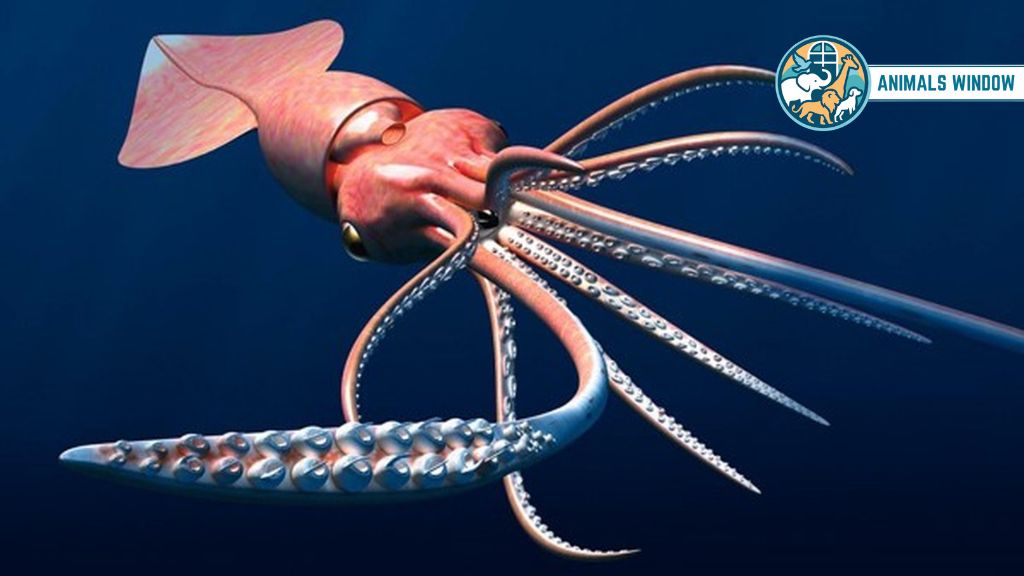
The Giant Squid is slightly smaller than the colossal squid but no less dramatic. Its eyes — reaching up to 25 cm (about 10 inches) across — are the second-largest of any known animal. What makes this animal’s vision unique is the pupil shape: it’s thought to be nearly spherical, an adaptation that helps gather maximum light in the crushing darkness of the mesopelagic zone.
Giant squid are rarely observed alive. But the evidence for their eye size comes from specimens found in sperm whale stomachs and rare deep-sea footage. And here’s a detail most lists skip: the giant squid’s eyes are set on the sides of the head, not the front, giving it a wide-angle view that helps detect movement from multiple directions simultaneously.
🔥 Comparison Fact: The giant squid’s eye is approximately the width of a volleyball. If you held one in your hand, it would cover your entire palm and fingers.
9. Swordfish
- Scientific Name: Xiphias gladius
- Size: Up to 14.9 feet
- Weight: Up to 1,400 lbs
- Diet: Fish, squid, crustaceans
- Habitat: Tropical, subtropical, and temperate ocean waters
- Lifespan: 9–15 years
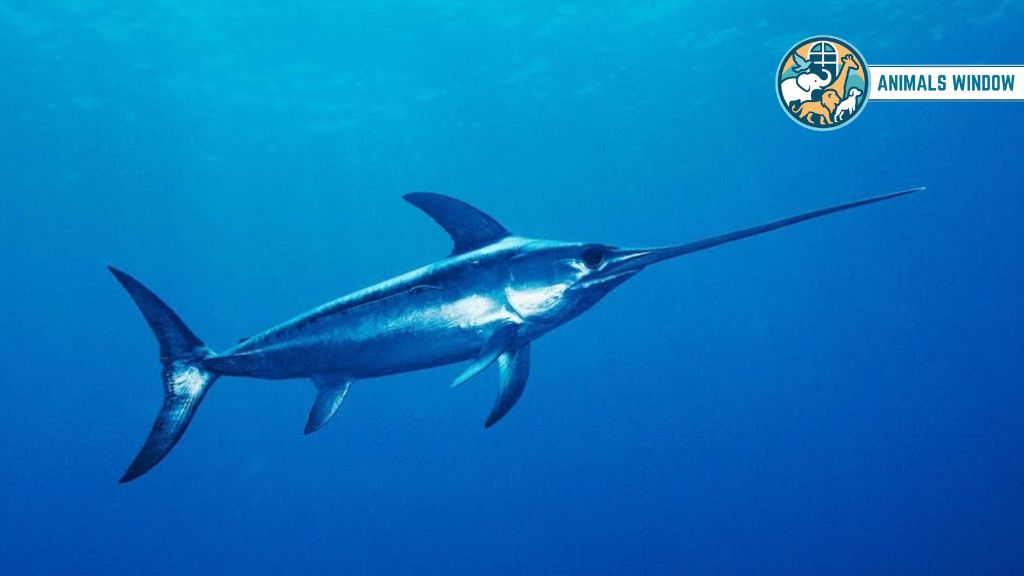
The Swordfish doesn’t look like a typical big-eyed animal — until you see a close-up. Its eyes can reach 9 cm in diameter, making them among the largest of any bony fish. But size alone isn’t the interesting part. Swordfish have a specialized heating organ located directly next to the eye that warms the retina and brain by up to 15°C (27°F) above surrounding water temperature.
Warmer eyes process visual information faster. In cold, deep water where light is limited and prey moves quickly, a heated retina gives the swordfish a serious competitive edge. It’s one of the few fish in the world that has essentially built a biological eye-heater — a feature closer to what warm-blooded animals use than anything else in the ocean.
🔥 Comparison Fact: The swordfish’s eye is about the size of a tennis ball — and it stays 15 degrees warmer than the freezing water around it at all times.
10. Bigeye Thresher Shark
- Scientific Name: Alopias superciliosus
- Size: Up to 15 feet
- Weight: Up to 800 lbs
- Diet: Fish, squid
- Habitat: Tropical and temperate oceans, deep waters
- Lifespan: 19–20 years
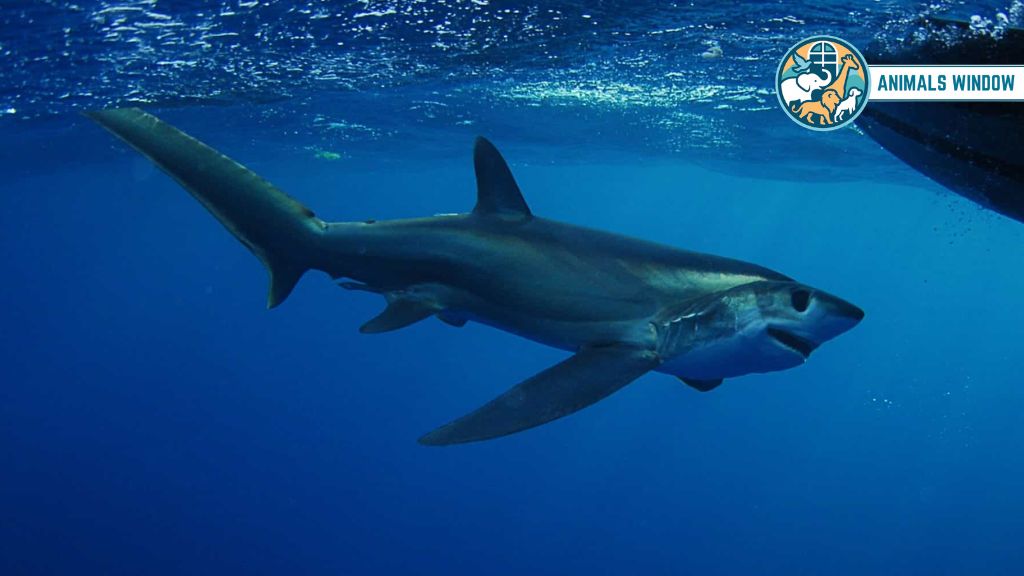
The Bigeye Thresher Shark earns its name honestly. Its eyes — which can be up to 10 cm across — are designed to rotate upward in the socket, a feature called dorsal rotation. This lets the shark look directly above itself without moving its body, which is critical for a hunting strategy that involves swimming below schooling fish and then whipping its enormous tail upward to stun them.
Most sharks have relatively small eyes. The bigeye thresher is the exception — a deep-water predator that descends past 1,600 feet during the day and uses its outsized vision to operate in near-darkness. The eyes are also adapted to function in both dim deep water and brighter shallow zones, making this shark a versatile ambush predator across multiple depths.
🔥 Comparison Fact: The bigeye thresher’s tail can be as long as its entire body — so when it attacks, it’s essentially weaponizing a 7-foot whip while looking upward with baseball-sized eyes.
11. Panther Chameleon
- Scientific Name: Furcifer pardalis
- Size: 12–20 inches
- Weight: 2.3–4.9 oz
- Diet: Insects, occasionally small vertebrates
- Habitat: Coastal forests of Madagascar
- Lifespan: 2–7 years
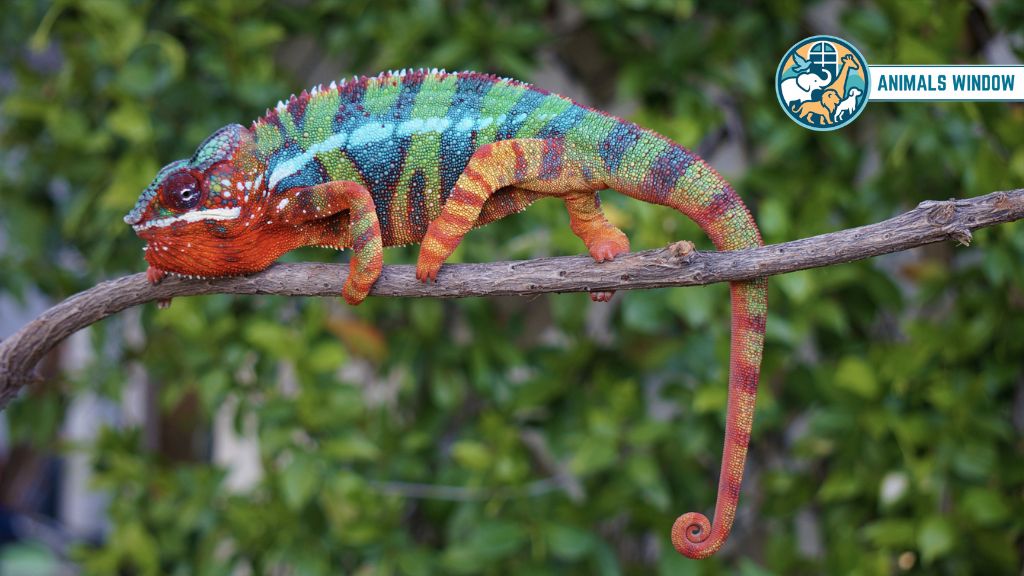
The Panther Chameleon may have the most unusual eyes of any land animal. Each eye is a complete, independent unit — a turret-shaped dome that rotates 360 degrees on its own axis. The two eyes can move in completely different directions at the same time, giving the chameleon a near-total field of view without moving a single muscle in its body.
But when it locks onto prey, both eyes swing forward together to create stereoscopic focus, allowing it to calculate the exact distance to an insect before firing its tongue. That tongue moves at 60 mph and reaches its target in under 0.07 seconds. The eyes do the math, the tongue does the work. The color-changing skin? That’s mostly for communication — not camouflage, despite what most sources claim.
🔥 Comparison Fact: The panther chameleon’s tongue is roughly 1.5 times the length of its body. At 0.07 seconds reaction time, it’s faster than a human blink.
12. Tokay Gecko
- Scientific Name: Gekko gecko
- Size: 7–14 inches
- Weight: 5–11 oz
- Diet: Insects, small rodents, birds, other lizards
- Habitat: Southeast Asian rainforests and rocky outcrops
- Lifespan: 10–20 years
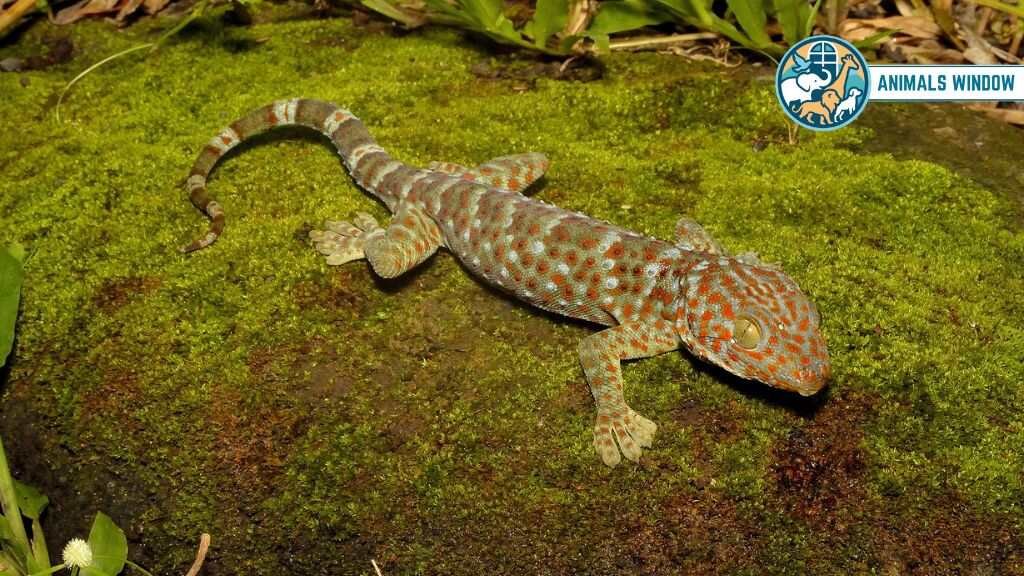
The Tokay Gecko is loud, territorial, and equipped with one of the most sophisticated eyes of any reptile. Its pupils are vertical slits in daylight — but at night they open into massive elliptical pupils that flood the retina with available light. Studies suggest the tokay gecko’s eyes are 350 times more sensitive to color at night than human eyes, meaning it can distinguish colors in conditions humans would perceive as total blackness.
It also has no eyelids. Instead, a transparent scale covers the eye permanently, and the gecko keeps it clean by licking it with a long, flat tongue. Named after the sound of its own call — a loud, two-syllable bark that sounds exactly like “to-KAY” — this gecko is one of the most distinctive wide-eyed animals in Southeast Asia.
🔥 Comparison Fact: The tokay gecko is about the length of a TV remote control. But those eyes, fully dilated at night, make it look like it’s wearing a permanent pair of night-vision goggles.
13. Red-eyed Tree Frog
- Scientific Name: Agalychnis callidryas
- Size: 1.5–2.7 inches
- Weight: 0.2–0.5 oz
- Diet: Insects, moths, small frogs
- Habitat: Central American and South American rainforests
- Lifespan: 5 years in the wild; up to 8 in captivity
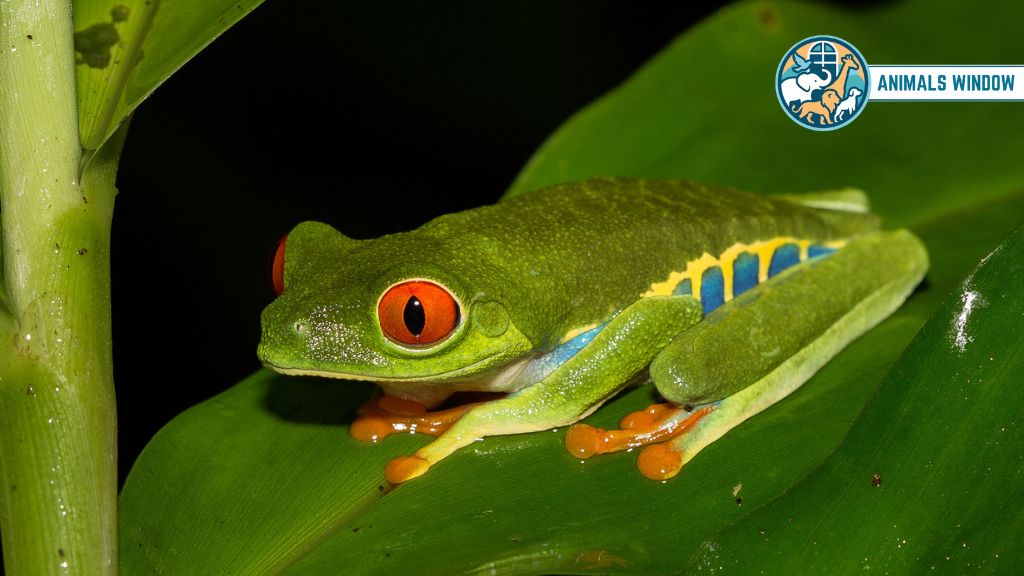
The Red-eyed Tree Frog is probably the most-photographed small animal with big eyes on the planet. And those fire-engine red eyes are not just for looks — they serve a specific defensive purpose. When a predator approaches and the sleeping frog opens its eyes suddenly, the flash of vivid red causes a momentary startle response called deimatic display. That split-second hesitation is enough for the frog to jump to safety.
This frog doesn’t rely on poison like many colorful frogs. It uses pure visual surprise. During the day, it folds up and closes its eyes to blend in with green leaves. At night, the eyes open fully, becoming massive light-gathering tools for navigating the dark canopy. The same eyes that hide it by day weaponize it by night.
🔥 Comparison Fact: The red-eyed tree frog’s body fits on a human thumb. Those red eyes take up nearly a third of its entire head width.
14. Asian Vine Snake
- Scientific Name: Ahaetulla prasina
- Size: 3.9–6.2 feet
- Weight: 1.7–3.5 oz
- Diet: Lizards, frogs, small birds
- Habitat: Southeast and South Asian tropical forests
- Lifespan: 8–12 years
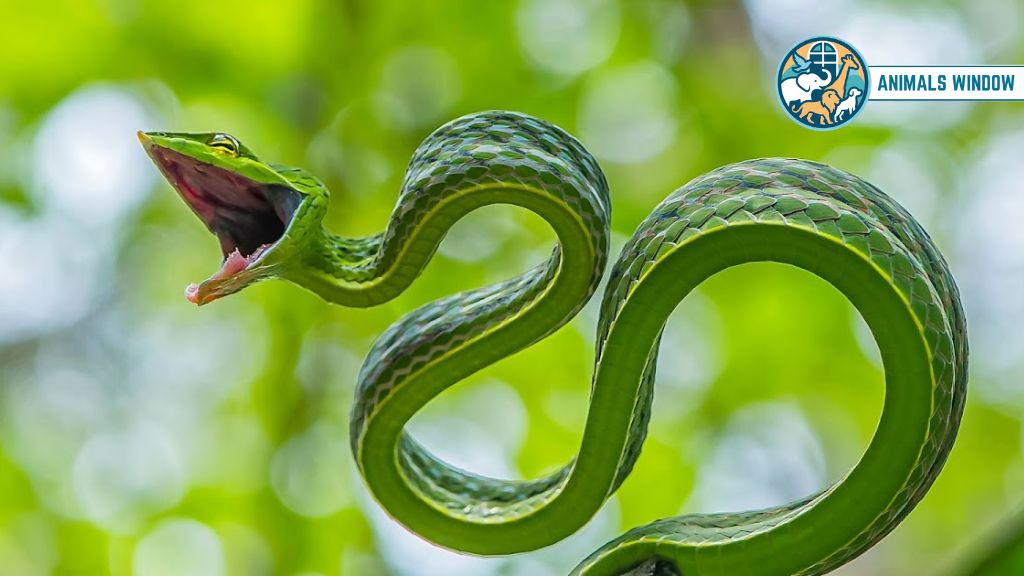
The Asian Vine Snake is the only animal on this list with a keyhole-shaped pupil — a horizontal groove that runs across the eye, giving it a horizontal band of extremely sharp focus. This unusual pupil shape creates a narrow but wide field of binocular vision, allowing the snake to judge distance with precision while its thin, twig-like body stays completely motionless among branches.
Most snakes are nearly blind by mammal standards. The vine snake is a dramatic exception. Its eyes are large, forward-facing, and adapted for daytime hunting in bright, dappled light. It doesn’t constrict prey — it uses rear-mounted fangs and a mild venom to immobilize small lizards spotted from meters away. The eyes find the target; the slow, deliberate stalk does the rest.
🔥 Comparison Fact: The Asian vine snake is about as thick as a pencil along most of its body. That slim profile makes those large, keyed eyes look absolutely enormous in comparison.
15. Barred Owl
- Scientific Name: Strix varia
- Size: 16–25 inches (body); 38–49 inch wingspan
- Weight: 1–2.75 lbs
- Diet: Small mammals, birds, amphibians, invertebrates
- Habitat: Mature forests of North America
- Lifespan: Up to 26 years in the wild
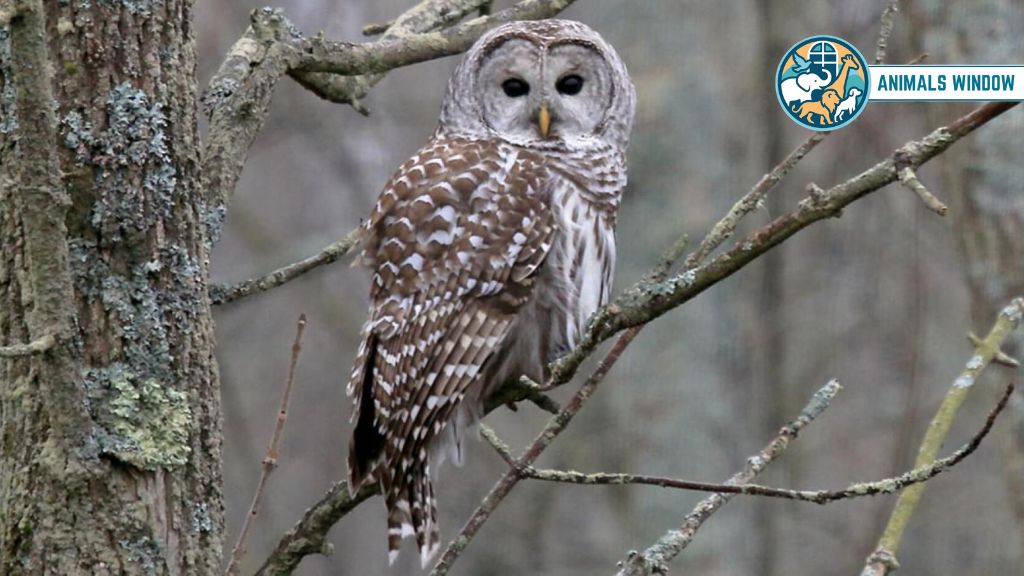
The Barred Owl has eyes that face directly forward — an arrangement that sacrifices side-angle vision for extraordinary depth perception. Each eye is a tube shape rather than a sphere, packed with a dense concentration of rod cells. This means the barred owl can detect motion in light conditions roughly 100 times dimmer than what a human eye requires.
But the eyes are fixed in the skull, just like tarsiers and bushbabies. So the owl rotates its entire head — up to 270 degrees — using a system of 14 cervical vertebrae (humans have 7) and specialized blood vessels that prevent blackout during rotation. The large facial disc of feathers acts as a parabolic dish, funneling sound directly toward the ears behind the eyes, so vision and hearing triangulate prey simultaneously.
🔥 Comparison Fact: A barred owl’s eyes are roughly the same size as a full-grown human’s eyes — inside a skull less than 4 inches long. If our skulls worked the same way, we’d have eyes the size of softballs.
16. Ostrich
- Scientific Name: Struthio camelus
- Size: 6.9–9 feet tall
- Weight: 140–320 lbs
- Diet: Plants, seeds, insects, small reptiles
- Habitat: African savannas and semi-arid regions
- Lifespan: 40–45 years
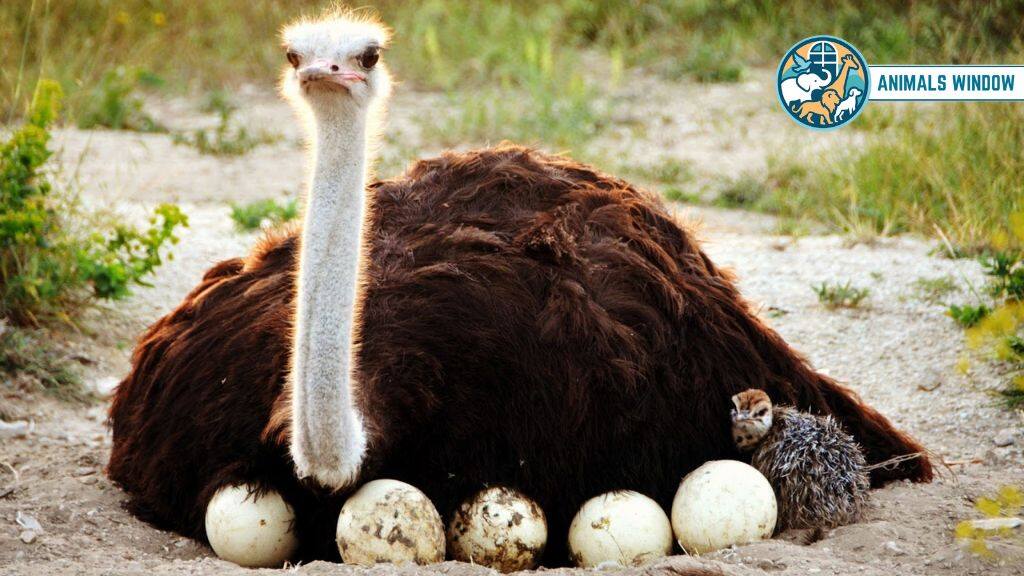
The Ostrich holds the title for the largest eye of any land animal on Earth. Each eye is about 5 cm (2 inches) in diameter — larger than the bird’s brain. They’re also positioned on the sides of the head, giving the ostrich a nearly 360-degree field of view to detect approaching predators from far across open terrain.
Here’s a fact most sources gloss over: the ostrich has three eyelids. The third, called a nictitating membrane, sweeps horizontally across the eye to clean and protect it from blowing sand. In a dry, dusty savanna environment, this built-in windshield wiper is critical. And despite the myth about burying its head in sand, ostriches actually press their necks flat to the ground — putting those enormous eyes at ground level to monitor threats from a wider angle.
🔥 Comparison Fact: An ostrich eyeball is the diameter of a billiard ball and larger than its own brain — making this the most extreme eye-to-brain ratio of any living land animal.
17. Japanese Dwarf Flying Squirrel
- Scientific Name: Pteromys momonga
- Size: 6–8 inches (body); tail adds 3.5–5 inches
- Weight: 4.2–6.5 oz
- Diet: Leaves, bark, buds, seeds, nuts
- Habitat: Subalpine forests of Japan
- Lifespan: 4–6 years in the wild
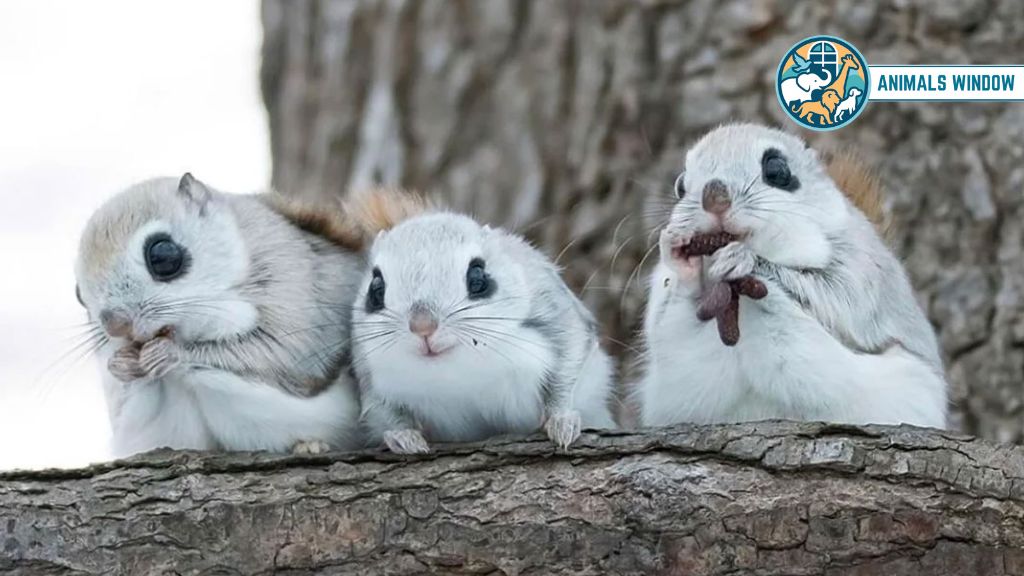
The Japanese Dwarf Flying Squirrel went viral for good reason. Its enormous, perfectly round, jet-black eyes set against a soft gray face make it look like a cartoon character come to life. But those eyes serve a hard-edged purpose: gliding through dense forest at night with no margin for error.
Unlike birds, this squirrel has no echolocation. It memorizes the spatial layout of its home forest and uses its wide eyes to navigate between trees in darkness using stored visual maps. When it spreads its gliding membrane and launches, it uses a pre-calculated trajectory based on what it saw before jumping. Each glide can cover up to 160 meters. The eyes provide the data; the brain stores the map.
🔥 Comparison Fact: This fluffy glider is about the length of a standard pen — and its eyes, proportionally, are roughly the same size as a deer’s eyes. On that tiny face, they look absolutely enormous.
18. Sphynx Cat
- Scientific Name: Felis catus (domestic)
- Size: 13–15 inches (body)
- Weight: 6–12 lbs
- Diet: Commercial cat food, high-protein diet
- Habitat: Domestic — human homes worldwide
- Lifespan: 8–14 years
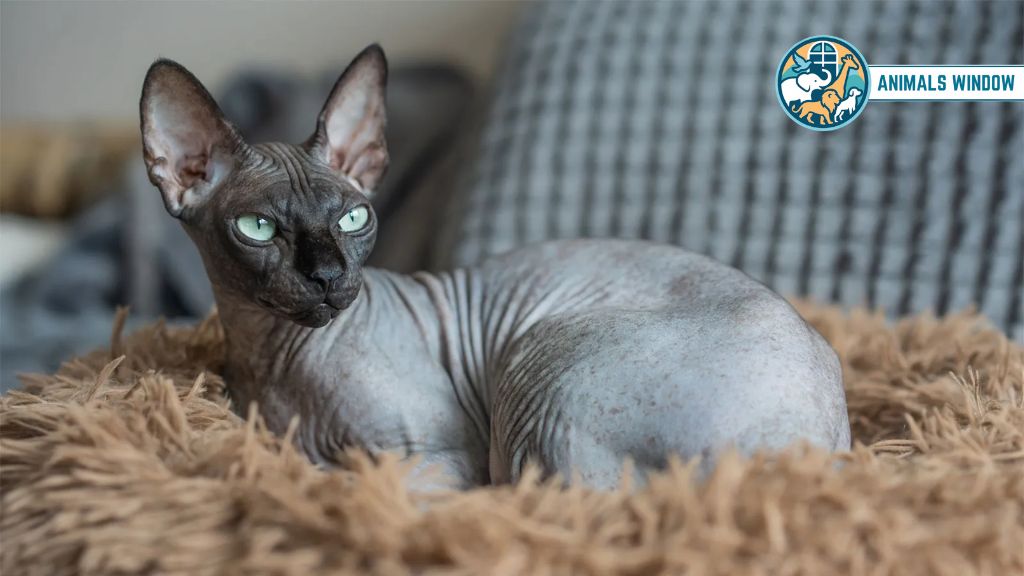
The Sphynx Cat is the only domestic animal on this list — and it earns its spot. Without fur to draw attention elsewhere, those large, lemon-shaped eyes are the first thing anyone notices. The Sphynx’s eyes appear dramatically oversized partly because the hairless face removes all visual distraction, creating an unusual intimacy when this cat looks at you.
But what’s genuinely surprising is how those eyes function in low light. Like all cats, the Sphynx has a tapetum lucidum — a reflective layer behind the retina that bounces light back through the photoreceptors twice. This doubles light efficiency. And because the Sphynx lacks insulating fur, it runs a slightly higher baseline body temperature — which may contribute to the intense, alert eye activity owners often describe. These cats stare with unusual focus, tracking movement with precision that most people find either endearing or unsettling.
🔥 Comparison Fact: The Sphynx’s eye is about the size of a large grape — and without fur, it fills roughly 15% of the visible face area, creating the wide-eyed effect that makes this breed so striking.
FAQs Animals with Big Eyes
Which land animal has the largest eyes?
The ostrich holds this title. Its eyes are about 5 cm (2 inches) in diameter — larger than its own brain — making them the biggest eyes of any land animal alive today.
What animal has the biggest eyes of all?
The colossal squid. Its eyes can reach 27–30 cm (about 11 inches) in diameter — roughly the size of a soccer ball or dinner plate.
Are animals with big eyes mostly nocturnal?
Most of them are. Large eyes collect more light, which is a major advantage in darkness. Tarsiers, bush babies, slow lorises, owls, and geckos are all active at night. But some big-eyed animals like the ostrich and panther chameleon are active during the day.
Why do some animals have big eyes but can’t move them?
Animals like tarsiers, owls, and bushbabies have tubular or rigidly set eyes that pack in more light-gathering cells. The trade-off is fixed movement. They compensate by rotating their heads dramatically instead.
Are cute big-eyed animals like the slow loris safe to keep as pets?
No. The slow loris is a protected species and its trade is illegal. Despite looking harmless, it’s also venomous. Many “cute” big-eyed animals suffer severely in captivity and should never be kept as pets.
Which small furry animal with big eyes is the most common in the wild?
The gray mouse lemur and Senegal bushbaby are among the most widespread small big-eyed mammals. Bushbabies are found across sub-Saharan Africa and are relatively common in woodland habitats.
Can animals with big eyes see better than humans?
In many conditions, yes. Nocturnal big-eyed animals often see 10–350 times better than humans in low light. But “better” depends on the situation — humans have sharper color vision in daylight than most of these species.
Related More Animals Guides:

I have loved animals since I was a kid. I enjoy reading about how animals live, eat, move, and survive. I started Animals Window to share what I learn in a simple and easy way. I write about animal body parts, size, behavior, diet, habitats, and species. My goal is to make animal facts clear and fun for everyone to understand.