Prairie animals are wildlife species adapted to survive in open, flat, or gently rolling grassland ecosystems across North America. These animals rely on grasses, wildflowers, and wide-open terrain for food, shelter, and reproduction. From massive bison to thumb-sized mice, prairie animals form a tightly connected web of predators, prey, and ecosystem engineers that keep grasslands alive.
Table of Contents
Quick List: Prairie Animals
- American Bison
- Pronghorn
- Mule Deer
- Coyote
- Cougar
- Swift Fox
- American Badger
- Black-tailed Prairie Dog
- Northern Grasshopper Mouse
- Black-footed Ferret
- Thirteen-lined Ground Squirrel
- Prairie Vole
- Greater Prairie-Chicken
- Burrowing Owl
- Western Meadowlark
- Prairie Rattlesnake
- Plains Leopard Frog
- Regal Fritillary Butterfly
1. American Bison

- Scientific name: Bison bison
- Size: 7–11.5 feet long
- Weight: 800–2,200 lbs
- Diet: Grasses, sedges, wildflowers
- Habitat: Open grasslands, prairies, river valleys
- Lifespan: 15–20 years
The American Bison is the largest land animal in North America and the national mammal of the United States. At its peak, roughly 30–60 million bison roamed the Great Plains. By 1889, fewer than 1,000 remained due to mass hunting. Today, conservation efforts have brought them back to around 500,000.
What makes bison remarkable as prairie animals is their role as ecosystem engineers. Their heavy hooves break up compacted soil, allowing rainwater to absorb more efficiently. Their wallowing — rolling and digging in dirt — creates shallow depressions that collect water and support amphibian habitats. A single bison wallow can support a dozen plant species that wouldn’t grow otherwise.
🔥 Comparison Fact: A full-grown male bison is roughly the size and weight of a small pickup truck.
2. Pronghorn
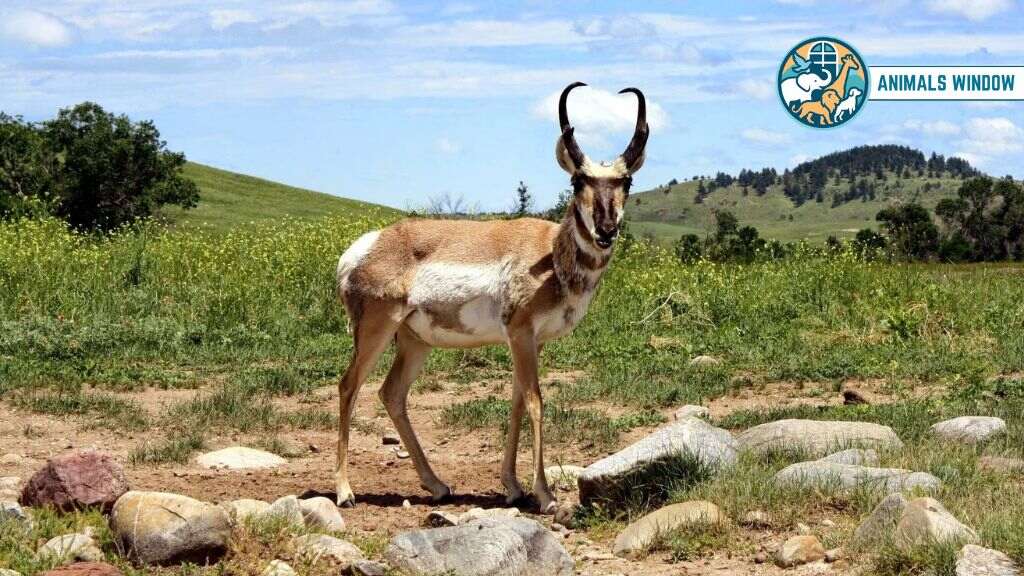
- Scientific name: Antilocapra americana
- Size: 4–5 feet long
- Weight: 90–150 lbs
- Diet: Grasses, shrubs, cacti, wildflowers
- Habitat: Open prairies, sagebrush plains, desert grasslands
- Lifespan: 7–10 years
The Pronghorn is the fastest land animal in the Western Hemisphere, capable of sustaining speeds of 55 mph for several miles — not just short bursts. Unlike cheetahs, which tire quickly, pronghorns are built for long-distance endurance. Scientists believe this speed evolved as a response to now-extinct predators like the American cheetah that lived alongside them thousands of years ago.
Pronghorns have eyes roughly the size of an elephant’s, giving them a 320-degree field of vision without turning their heads. They can spot movement from 4 miles away. And despite being incredible runners, they struggle to jump fences — making human-built barriers one of their biggest modern threats.
🔥 Comparison Fact: A pronghorn’s windpipe is roughly twice the diameter of a similarly sized deer, giving it the oxygen capacity of a much larger animal.
3. Mule Deer

- Scientific name: Odocoileus hemionus
- Size: 4–7 feet long
- Weight: 100–300 lbs
- Diet: Shrubs, grasses, cacti, forbs
- Habitat: Prairies, foothills, brushlands, open forests
- Lifespan: 9–11 years (wild)
Mule deer earned their name from their unusually large, mule-like ears that rotate independently — up to 180 degrees each — to detect sounds from multiple directions at once. They’re a common sight among animals of the prairie, particularly where grassland edges meet scrubby terrain.
What sets mule deer apart from whitetail deer is how they move when threatened. Instead of running in a straight line, they “stot” — bouncing stiffly on all four legs like a spring toy.
This bounding movement, called pronking, actually confuses predators because it signals that the deer has spotted them, making a chase seem pointless. It’s a psychological escape strategy, not just a physical one.
🔥 Comparison Fact: A mule deer’s ears span about as wide as a standard 12-inch ruler on each side.
4. Coyote

- Scientific name: Canis latrans
- Size: 3.5–4.5 feet long
- Weight: 20–50 lbs
- Diet: Rabbits, rodents, fruit, insects, carrion, deer
- Habitat: Prairies, forests, suburbs, deserts
- Lifespan: 6–8 years (wild)
The coyote might be the most adaptable animal on this entire list. Originally native to the Great Plains and North American prairie, it has now expanded its range across nearly all of North and Central America — including major cities like Los Angeles and Chicago. When humans removed wolves from ecosystems, coyotes filled the gap. And then some.
What stands out is how coyotes parent their young. Both parents raise pups together, and older siblings from previous litters often stay back to help babysit the new ones — a behavior called cooperative pup-rearing that’s more common in wolves than in wild dogs. Their famous howl isn’t random either. Coyotes use distinct vocalizations to communicate pack location, warn rivals, and reassemble family members after a hunt.
🔥 Comparison Fact: A coyote weighs about the same as a medium-sized dog — think a beagle or border collie.
5. Cougar

- Scientific name: Puma concolor
- Size: 5–9 feet long (including tail)
- Weight: 64–220 lbs
- Diet: Deer, elk, pronghorn, smaller mammals
- Habitat: Prairies, mountains, forests, swamps
- Lifespan: 8–13 years (wild)
The cougar — also called mountain lion, puma, or panther — holds the record for the most common names of any wild animal: over 40 names in English alone. It’s one of the top predators among North American prairie animals, silently stalking deer and pronghorn across open terrain. Cougars can leap 18 feet vertically and 40 feet horizontally from a standstill — no running start needed.
Unlike most big cats, cougars cannot roar. They communicate through whistles, chirps, and screams that sound startlingly human. Solitary by nature, a single cougar patrols a territory of up to 150 square miles, marking boundaries with scrapes of dirt and urine. When prey is scarce on prairie edges, they follow deer into foothills and forests, making them one of the most geographically flexible predators alive.
🔥 Comparison Fact: A cougar’s hind legs are noticeably longer than its front legs — the design of a natural spring-loaded launcher.
6. Swift Fox

- Scientific name: Vulpes velox
- Size: 12–16 inches tall; 2–3 feet long
- Weight: 4–7 lbs
- Diet: Insects, rodents, rabbits, berries, birds
- Habitat: Short-grass prairies, dry grasslands
- Lifespan: 3–6 years (wild)
The swift fox is the smallest wild canid in North America and one of the least studied prairie animals on this list. It’s about the size of a house cat and fast enough to outrun most domestic dogs.
Swift foxes were nearly wiped out by the 1930s from poisoning campaigns targeting wolves and coyotes — they died in the crossfire. Today, reintroduction programs across the Great Plains are slowly rebuilding their numbers.
Swift foxes are one of the few canids that shelter underground year-round, using burrows not just for breeding but for daily rest. They dig multiple den entrances — sometimes up to eight — so they can escape predators from multiple directions at once. That’s not just a hole in the ground. That’s a safety-engineered structure.
🔥 Comparison Fact: A swift fox weighs about as much as a half-gallon jug of milk — remarkably light for a predator.
7. American Badger

- Scientific name: Taxidea taxus
- Size: 20–35 inches long
- Weight: 9–26 lbs
- Diet: Ground squirrels, prairie dogs, mice, insects, reptiles
- Habitat: Dry open grasslands, prairies, farmlands
- Lifespan: 4–14 years
The American Badger is built like a digging machine. Its front claws can be over an inch long, and it can out-dig a person with a shovel. Badgers can excavate a ground squirrel’s burrow and catch it underground faster than the squirrel can escape — a hunt that plays out entirely beneath your feet, invisible from the surface.
What stands out about badgers is a documented hunting partnership with coyotes. Badgers dig prey out from underground while coyotes wait at the surface exits. Neither species was trained to do this. It’s a spontaneous cross-species collaboration that increases success rates for both animals. Scientists have filmed this behavior repeatedly across the Great Plains, and it remains one of the most striking examples of interspecies cooperation in the wild.
🔥 Comparison Fact: An American badger is roughly the length of a standard skateboard, and about as low to the ground.
8. Black-tailed Prairie Dog

- Scientific name: Cynomys ludovicianus
- Size: 11–13 inches long
- Weight: 1.5–3 lbs
- Diet: Grasses, seeds, roots, insects
- Habitat: Short-grass and mixed-grass prairies
- Lifespan: 3–5 years (wild)
Black-tailed prairie dogs are not actually dogs. They’re ground squirrels that got their name from the bark-like warning calls they make. But their social system is far more complex than a name suggests. Prairie dogs live in underground towns — some historical colonies covered over 25,000 square miles and housed an estimated 400 million animals. That’s not a typo.
What makes them extraordinary is their vocal language. Researcher Dr. Con Slobodikoff found that prairie dog calls encode specific information about predators: size, shape, color, and speed. They don’t just shout “danger.” They describe what kind of danger. One study found they could even communicate the difference between a person wearing a yellow shirt versus a blue one. No other non-human animal has demonstrated this level of descriptive communication.
🔥 Comparison Fact: A black-tailed prairie dog is about the length of a standard TV remote, but twice as thick.
9. Northern Grasshopper Mouse

- Scientific name: Onychomys leucogaster
- Size: 3.5–5 inches long
- Weight: 1–2 oz
- Diet: Scorpions, insects, other mice, centipedes
- Habitat: Dry grasslands, prairies, shrublands
- Lifespan: 2–5 years
The Northern Grasshopper Mouse looks like an ordinary house mouse. It is absolutely not. This small predator hunts scorpions, eats them alive, and is genetically resistant to scorpion venom — the same venom that sends adult humans to emergency rooms.
Researchers discovered that the same sodium channels that carry pain signals in other mammals actually block pain signals in the grasshopper mouse’s nervous system. The venom becomes a painkiller.
And there’s more. This mouse howls. Literally. It stands on its hind legs, points its nose at the sky, and releases a high-pitched howl to mark territory. It’s earned the nickname “the werewolf mouse” in scientific circles — and for once, a nickname seems completely earned.
🔥 Comparison Fact: The grasshopper mouse is roughly the size and weight of a large strawberry, making its predatory lifestyle all the more astonishing.
10. Black-footed Ferret

- Scientific name: Mustela nigripes
- Size: 18–24 inches long
- Weight: 1.5–2.5 lbs
- Diet: Almost exclusively black-tailed prairie dogs
- Habitat: Prairie dog colonies on short-grass prairies
- Lifespan: 3–4 years (wild)
The Black-footed Ferret is one of the rarest mammals in North America — and one of the most dramatic conservation comeback stories ever recorded. By 1987, only 18 individuals existed on Earth. All of them were captured and placed in a breeding program.
Today, over 300 live in the wild across reintroduction sites in the U.S., Mexico, and Canada. But their survival depends almost entirely on one animal: the prairie dog.
Black-footed ferrets get 90% of their calories from prairie dogs and live in the tunnels they dig. They hunt at night, using their slender bodies to slide through underground passages in pitch darkness.
A single ferret needs roughly 100 prairie dogs per year to survive. So when prairie dog populations collapse — from disease, habitat loss, or poisoning — ferret populations follow immediately. Their fate is biologically locked to one species.
🔥 Comparison Fact: A black-footed ferret is roughly the length of a standard men’s dress shoe, head to tail.
11. Thirteen-lined Ground Squirrel
- Scientific name: Ictidomys tridecemlineatus
- Size: 6.5–12 inches long
- Weight: 4–9 oz
- Diet: Seeds, insects, grass, bird eggs, mice
- Habitat: Short-grass prairies, lawns, golf courses, roadsides
- Lifespan: 2–4 years (wild)
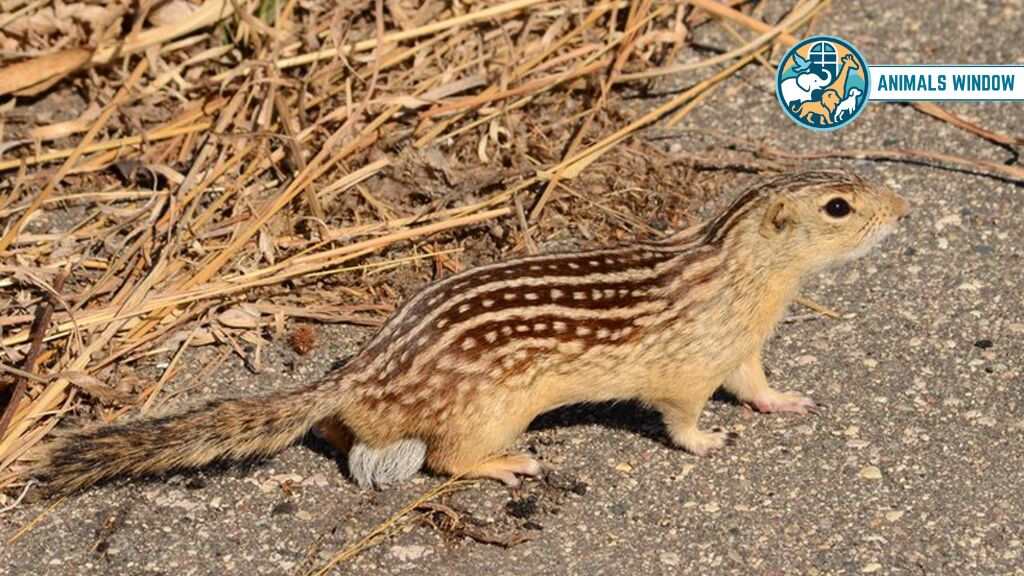
Count the stripes and spots on a thirteen-lined ground squirrel and you’ll find — if the animal holds still long enough — exactly thirteen alternating lines of spots and solid stripes running down its back. This is one of the few animals whose common name is a literal anatomical description.
But the real story is what happens inside its body every winter. Thirteen-lined ground squirrels are true hibernators. Their body temperature drops from 99°F to as low as 37°F. Their heart rate falls from 200 beats per minute to just 5. Their breathing slows to one breath every five minutes.
Medical researchers are actively studying this species because these squirrels survive extreme organ chilling without damage — something human organs cannot do. Understanding this mechanism could revolutionize organ preservation for transplants.
🔥 Comparison Fact: This squirrel is roughly the length of a dollar bill laid flat, stripes and all.
12. Prairie Vole

- Scientific name: Microtus ochrogaster
- Size: 4–6 inches long
- Weight: 1–2 oz
- Diet: Grasses, roots, seeds, tubers
- Habitat: Grasslands, prairies, weedy fields
- Lifespan: 1–2 years (wild)
The Prairie Vole is a plain-looking little rodent — brownish, small, easy to overlook. But it’s one of the most scientifically important animals in North America, and possibly in the world. Prairie voles are among the roughly 3–5% of mammal species that form monogamous pair bonds. They mate for life, share nesting duties, and show measurable distress when separated from their partner.
Neuroscientists have used prairie voles to identify how oxytocin and vasopressin — the brain chemicals linked to love, bonding, and trust — actually function. By studying the vole brain, researchers made connections to human attachment disorders, autism research, and the neuroscience of romantic love. This tiny, overlooked grassland rodent has helped shape modern understanding of the human emotional brain.
🔥 Comparison Fact: A prairie vole weighs about the same as four U.S. quarters stacked together — not much animal, enormous scientific impact.
13. Greater Prairie-Chicken

- Scientific name: Tympanuchus cupido
- Size: 16–18 inches long
- Weight: 1.5–2.5 lbs
- Diet: Seeds, insects, leaves, grain
- Habitat: Tallgrass and mixed-grass prairies
- Lifespan: 2–3 years (wild)
The Greater Prairie-Chicken is famous for one of the most theatrical mating displays in the bird world. Males gather at traditional dancing grounds called leks each spring, inflate bright orange neck sacs like balloons, stomp their feet at high speed, and produce a deep booming call that travels over a mile across open prairie. This performance happens before dawn, every day for weeks.
What’s often missed is how these leks function as cultural landmarks. Prairie-chickens return to the same lek sites year after year — sometimes for decades. The location is passed down through observation, not instinct. When development destroys a lek site, birds don’t automatically find a new one. The tradition simply ends. This makes prairie-chicken populations far more fragile than their numbers alone might suggest.
🔥 Comparison Fact: A Greater Prairie-Chicken is about the size and weight of a standard hardcover novel.
14. Burrowing Owl
- Scientific name: Athene cunicularia
- Size: 7.5–10 inches tall
- Weight: 4.9–8.5 oz
- Diet: Insects, small mammals, lizards, small birds
- Habitat: Open grasslands, prairies, deserts, airports
- Lifespan: 6–8 years
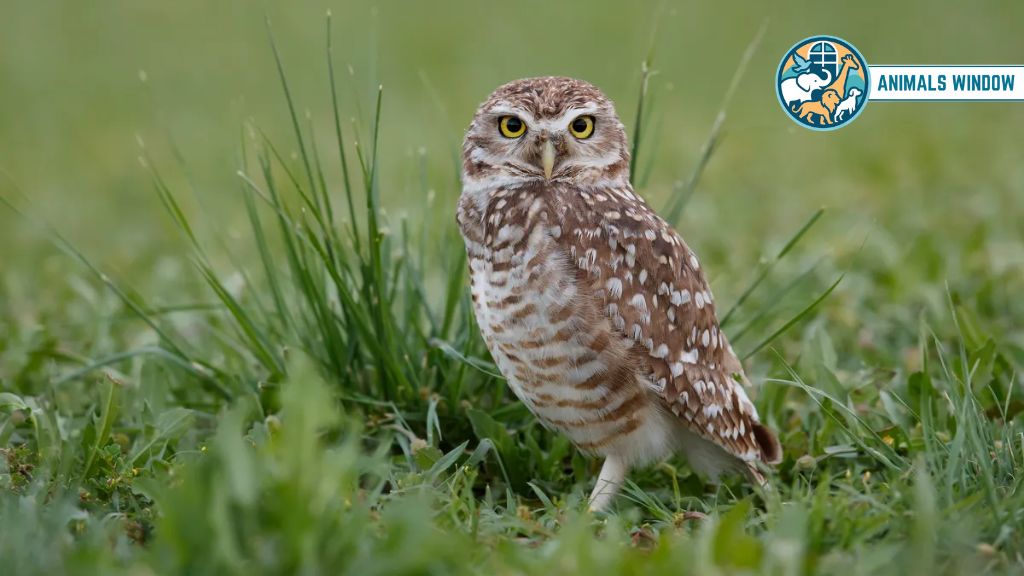
The Burrowing Owl is the only owl in North America that nests underground. It doesn’t dig its own burrow — it moves into abandoned prairie dog or ground squirrel tunnels. And then it does something strange: it collects animal dung, mostly from cattle or other grazers, and spreads it around its burrow entrance.
For years, scientists thought this was scent-masking behavior. But studies showed something cleverer. The dung attracts dung beetles. The beetles walk right to the burrow entrance. And the owls eat the beetles. It’s not just decoration — it’s a food lure. Burrowing owls essentially set a baited trap using other animals’ waste.
They’re also one of the few birds active during daytime, standing guard at burrow entrances with an alert, head-bobbing stance that makes them look like tiny, feathered security guards.
🔥 Comparison Fact: A Burrowing Owl stands about as tall as a standard soda can — compact, but fiercely efficient.
15. Western Meadowlark

- Scientific name: Sturnella neglecta
- Size: 6–10 inches long
- Weight: 2.7–4.5 oz
- Diet: Insects, seeds, grain, berries
- Habitat: Open grasslands, prairies, meadows, farm fields
- Lifespan: 6–9 years
The Western Meadowlark is the state bird of six U.S. states — more than any other bird. Its flute-like song is one of the most recognized sounds of the North American prairie, and for good reason. Males learn songs during their first year and build a repertoire of 8–12 distinct melodies, switching between them to hold the attention of females and confuse rival males.
What stands out is how the meadowlark uses song geography. Each male’s song dialect differs slightly by region — birds in Montana sound subtly different from birds in Kansas. These regional dialects are learned from neighbors, not inherited. Young males copy local adults during a critical developmental window. Cut a meadowlark off from other birds early, and it grows up singing in an incomplete accent. It’s essentially cultural language transmission in a bird’s body.
🔥 Comparison Fact: A Western Meadowlark weighs about the same as a deck of playing cards — light enough that a prairie wind will tilt it mid-perch.
16. Prairie Rattlesnake

- Scientific name: Crotalus viridis
- Size: 3–5 feet long
- Weight: 1–2 lbs
- Diet: Mice, prairie dogs, ground squirrels, rabbits
- Habitat: Prairies, grasslands, rocky outcrops, canyon edges
- Lifespan: 16–20 years
The Prairie Rattlesnake is the most widespread venomous snake on the Great Plains and one of the most misunderstood. Its rattle — made of interlocking segments of keratin that grow each time it sheds its skin — produces a sound that’s been described as rice shaking inside a gourd. This warning isn’t aggression. It’s a request: please move away so I don’t have to bite you.
Prairie rattlesnakes are pit vipers, meaning they have heat-sensing organs between their eyes and nostrils that detect temperature differences as small as 0.003°C. This lets them strike accurately in total darkness — they’re literally hunting by infrared.
In winter, dozens or even hundreds of rattlesnakes share communal hibernation dens called hibernacula, often alongside bullsnakes and gopher snakes that they’d normally avoid. Staying warm matters more than personal space.
🔥 Comparison Fact: A prairie rattlesnake stretched out is roughly the same length as a standard baseball bat — though considerably more flexible.
17. Plains Leopard Frog
- Scientific name: Lithobates blairi
- Size: 2–4 inches long
- Weight: Up to 1 oz
- Diet: Insects, spiders, worms, small invertebrates
- Habitat: Prairie ponds, streams, marshes, wet grasslands
- Lifespan: 2–5 years
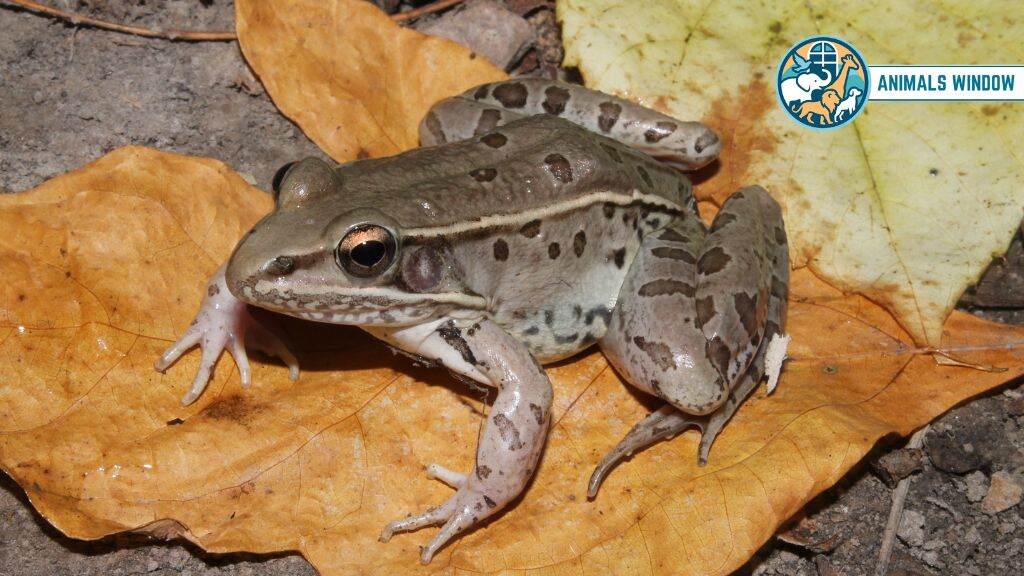
The Plains Leopard Frog is one of the prairie’s underrated animals. Spotted green and brown with a pattern that genuinely resembles a leopard’s coat, it lives near water sources scattered across grassland terrain — prairie potholes, creek edges, seasonal ponds. It’s one of the few amphibians that has adapted to survive in the semi-arid interior of North America.
What most people miss is the frog’s role as a biological indicator. Amphibians absorb water directly through their permeable skin, which means environmental toxins, pesticides, and temperature shifts hit them faster and harder than most other species.
When Plains Leopard Frog populations drop in a region, it’s often the first warning sign that something is wrong with the water or soil — before other animals show any effects at all. They’re living water quality sensors.
🔥 Comparison Fact: A fully grown Plains Leopard Frog fits comfortably in the palm of your hand — about the size of a golf ball stretched slightly oval.
18. Regal Fritillary Butterfly
- Scientific name: Speyeria idalia
- Size: 2.5–4 inch wingspan
- Weight: Less than 1 gram
- Diet (larva): Violet leaves only; Diet (adult): Flower nectar
- Habitat: Tallgrass prairies, native violet-rich grasslands
- Lifespan: Adults live 2–4 weeks; full cycle about 1 year
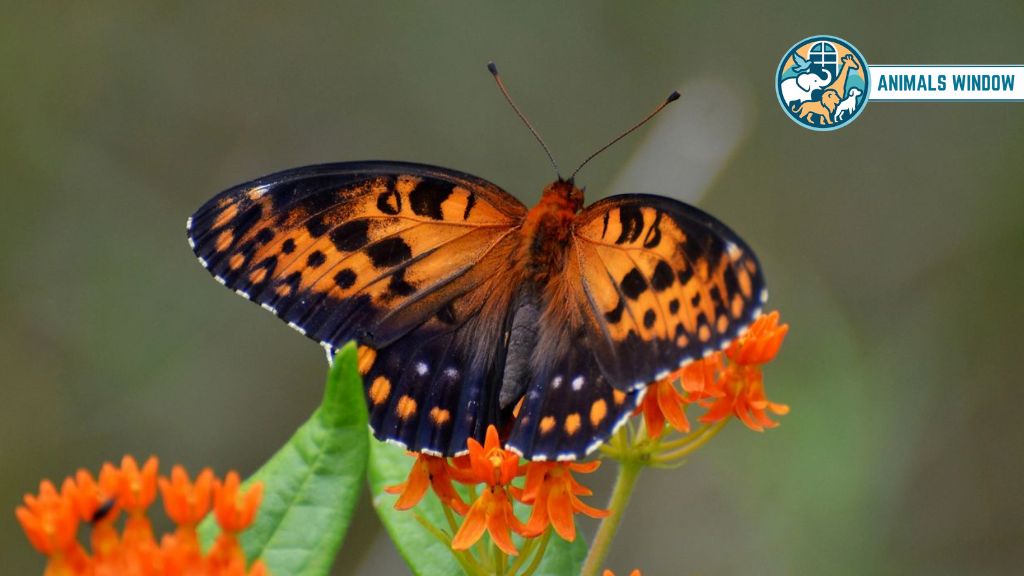
The Regal Fritillary Butterfly is one of the rarest butterflies in North America and a flagship species for tallgrass prairie conservation. Its wings are a striking deep orange-black on the upper side with creamy white spots below — unmistakable in flight. But spotting one is increasingly rare. As tallgrass prairie habitat has been reduced to less than 4% of its original range, regal fritillary populations have collapsed across most of the eastern U.S.
Here’s where it gets specific: the caterpillar of this butterfly eats only native violet leaves — no substitutes. If prairie violets disappear from a site, the regal fritillary disappears with them. Adults must also nectar from specific native prairie flowers in a narrow summer window.
This is what scientists call a specialist species: it’s so tightly tied to native prairie conditions that it cannot adapt to disturbed land. Its presence or absence in a grassland tells conservationists immediately whether that prairie is truly native — or just a field of grass.
🔥 Comparison Fact: A Regal Fritillary’s wingspan is roughly the width of a standard credit card — a fragile, beautiful inch of living prairie history.
FAQs About Prairie Animals
Q: What is the prairie animals meaning?
Prairie animals are species that live in, depend on, or are native to grassland ecosystems — particularly the open plains and prairies of North America. They are adapted to survive wide temperature swings, limited tree cover, and seasonal drought.
Q: What animals live in the prairie?
Common animals in the prairie include bison, pronghorn, coyotes, prairie dogs, badgers, rattlesnakes, burrowing owls, meadowlarks, and black-footed ferrets. The list covers mammals, birds, reptiles, amphibians, and insects.
Q: What is the most dangerous prairie animal?
The prairie rattlesnake is the most dangerous to humans due to its venom. But cougars and bison cause more documented injuries — bison especially, since many people underestimate them in national parks.
Q: Are prairie animals endangered?
Several are critically threatened. The black-footed ferret nearly went extinct. The regal fritillary butterfly has lost most of its habitat. Greater prairie-chickens have vanished from large parts of their historical range.
Q: What birds live on the North American prairie?
Key prairie birds include the Western Meadowlark, Greater Prairie-Chicken, Burrowing Owl, and various hawks and shorebirds. Many migratory species also use prairie wetlands as stopovers during spring and fall.
Q: Why are prairie animals important?
Each species plays a role in keeping the ecosystem balanced. Prairie dogs aerate soil. Bison create wallows. Rattlesnakes control rodent populations. Remove one, and others are affected almost immediately.
Q: Can prairie animals survive outside the prairie?
Some, like coyotes, thrive almost anywhere. Others, like the regal fritillary butterfly and black-footed ferret, cannot survive without very specific prairie conditions. Habitat specialists are at far greater risk as grasslands shrink.
Related More Animals Guides:

I have loved animals since I was a kid. I enjoy reading about how animals live, eat, move, and survive. I started Animals Window to share what I learn in a simple and easy way. I write about animal body parts, size, behavior, diet, habitats, and species. My goal is to make animal facts clear and fun for everyone to understand.