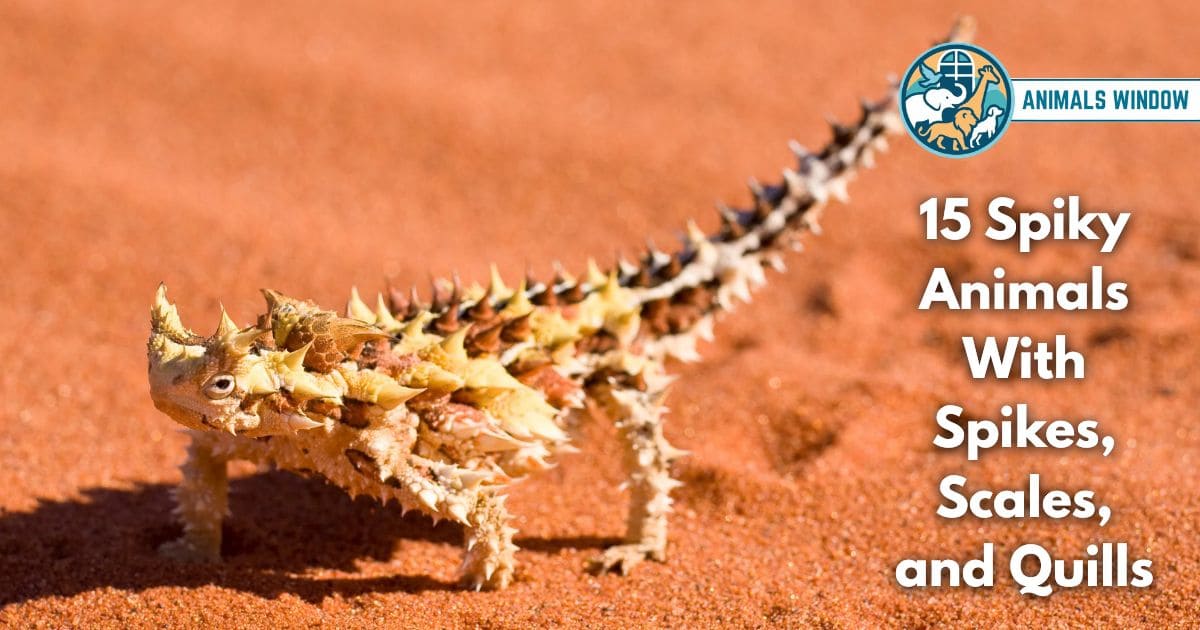
Spiky animals are creatures that have evolved sharp external structures — quills, spines, scales, or spiky skin — as defense, camouflage, or hunting tools. These animals live across every major habitat on Earth, from deep oceans to hot deserts. They include mammals like porcupines and hedgehogs, reptiles like the thorny devil, fish like the lionfish, and even birds with spiky crests.
Table of Contents
Quick Table of Animals With Quills, Spikes, and Scales
| Animal Name | Scientific Name | Key Trait |
| Porcupine | Erethizon dorsatum | Barbed quills up to 30 cm long |
| Hedgehog | Erinaceus europaeus | 5,000–7,000 hollow spines |
| Echidna | Tachyglossus aculeatus | Egg-laying mammal with spines |
| Tenrec | Tenrec ecaudatus | Quills that vibrate to communicate |
| Thorny Devil | Moloch horridus | Drinks water through its skin |
| Bearded Dragon | Pogona vitticeps | Throat spines puff and darken |
| Black Spiny-Tailed Iguana | Ctenosaura similis | Fastest lizard on Earth |
| Sea Urchin | Strongylocentrotus purpuratus | Spines regrow after damage |
| Crown of Thorns Starfish | Acanthaster planci | Eats coral reefs alive |
| Lionfish | Pterois volitans | Venomous spines, zero natural predators |
| Porcupinefish | Diodon hystrix | Inflates into a spiky ball |
| Greater Sage-Grouse | Centrocercus urophasianus | Uses spiked chest feathers in mating |
| Gray Crowned Crane | Balearica regulorum | Golden spiky crown of feathers |
| Hoopoe | Upupa epops | Fan-shaped crest opens like a flower |
| Thorn Bug | Umbonia crassicornis | Thorn-shaped body fools predators |
One animal drinks water through its feet. Another turns itself into a floating spike ball. And one tiny bug has spent millions of years pretending to be a plant thorn — so convincingly that even experienced hikers walk right past it.
Spiky animals are everywhere, and they’ve solved the problem of survival in some of the most creative ways on the planet. Some use their spines purely to scare. Others inject venom. A few use their spiky crests to attract mates rather than scare away predators. Scroll down, and you’ll see exactly which animals do what — and why no two of them do it the same way.
1. Porcupine
- Scientific name: Erethizon dorsatum (North American) / Hystrix cristata (Crested)
- Size: 60–90 cm body length
- Weight: 5–14 kg
- Diet: Bark, leaves, fruit, stems
- Habitat: Forests and shrublands across North America, Africa, and Asia
- Lifespan: 5–10 years in the wild; up to 27 in captivity
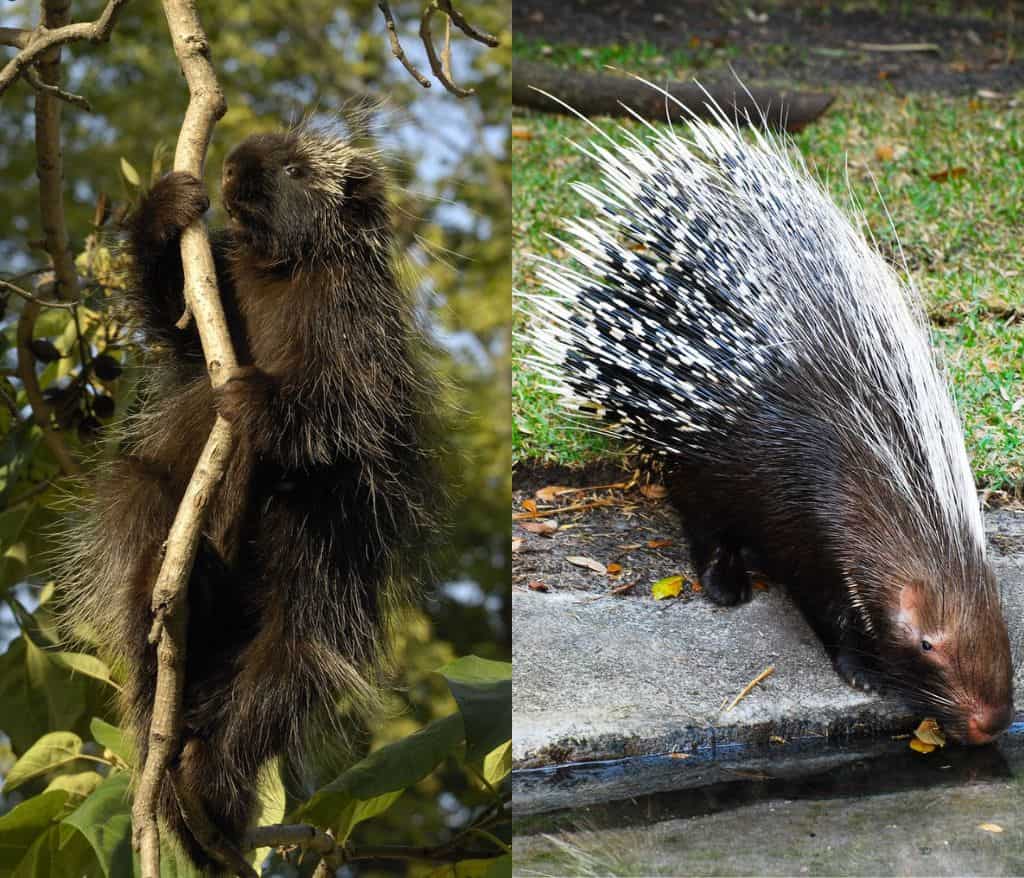
The porcupine is probably the most well-known spiky animal in the world. North American porcupines spend much of their time in trees, gnawing on bark even in winter when other food is scarce. The crested porcupine from Africa is the largest rodent on the continent and is far more aggressive — it charges backward into threats.
Here’s the part most people get wrong: porcupines cannot shoot their quills. But they don’t need to. The barbed quills detach on contact, embedding deeply into a predator’s skin. Each quill has backward-facing barbs, similar to a fishhook, that make removal painful and difficult. A single porcupine carries around 30,000 quills.
🔥 Comparison Fact: A full-grown North American porcupine weighs about the same as a bag of potatoes — but with 30,000 tiny daggers attached.
2. Hedgehog
- Scientific name: Erinaceus europaeus (European) / Atelerix albiventris (Four-toed)
- Size: 15–30 cm
- Weight: 400–900 g
- Diet: Insects, worms, frogs, berries
- Habitat: Gardens, woodlands, grasslands across Europe, Asia, and Africa
- Lifespan: 3–7 years
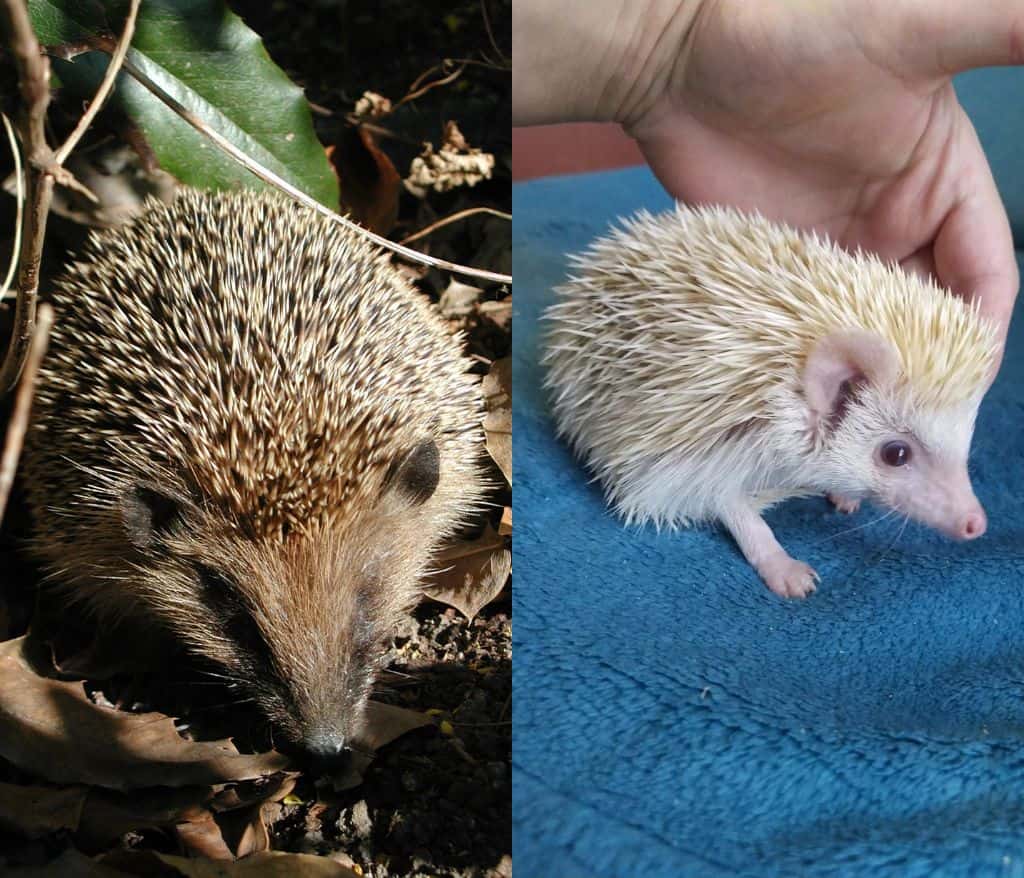
Hedgehogs are insectivores, not rodents — a fact that surprises a lot of people. The European hedgehog is a familiar garden visitor across the UK and much of Europe. The four-toed hedgehog from Africa is the one most commonly kept as a pet. Desert hedgehogs and long-eared hedgehogs survive in dry, arid zones where food is hard to find.
What makes hedgehogs uniquely tough is something called anointing. When they encounter a strange smell — like a toad’s skin toxin — they lick it, foam at the mouth, then smear the foamy saliva all over their spines. Scientists believe this may help camouflage their scent or even transfer mild toxins to their spines as an extra layer of defense.
🔥 Comparison Fact: A hedgehog’s 7,000 spines, laid end to end, would stretch roughly the length of a tennis court.
3. Echidna
- Scientific name: Tachyglossus aculeatus (Short-beaked) / Zaglossus bruijni (Western Long-beaked)
- Size: 30–45 cm (short-beaked); up to 77 cm (long-beaked)
- Weight: 2–7 kg
- Diet: Ants, termites, worms
- Habitat: Australian forests, grasslands, and scrubland; New Guinea highlands (long-beaked species)
- Lifespan: 16–40+ years
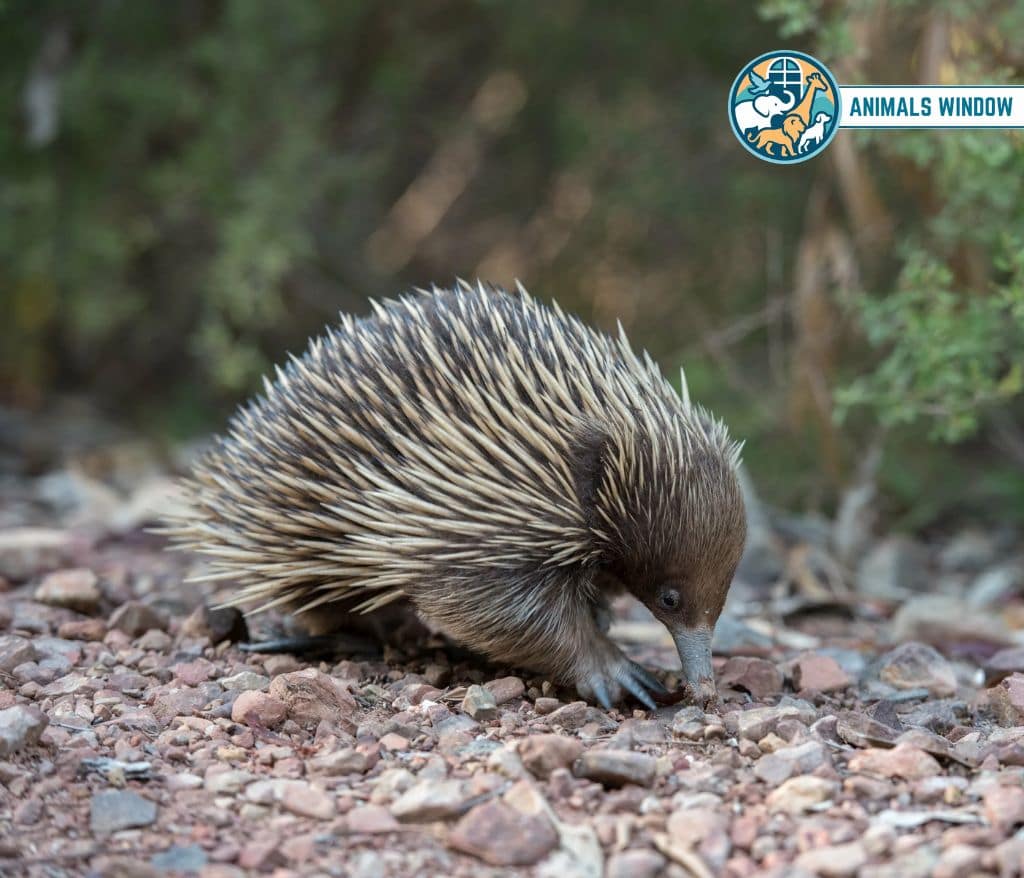
The echidna is one of only five species of monotremes — mammals that lay eggs instead of giving birth to live young. It looks like a mix between a porcupine and an anteater, but it’s related to neither. Its spines are made of keratin, the same material as human fingernails, and grow out of a dense layer of fur.
What stands out is the echidna’s brain. It has an unusually large prefrontal cortex for its body size — larger, proportionally, than most other mammals. Researchers have found it can solve maze problems and remember the location of food. When threatened, it doesn’t curl up like a hedgehog. Instead, it digs straight down into the soil until only its spines stick up.
🔥 Comparison Fact: A short-beaked echidna is roughly the size of a football — and digs fast enough to disappear into loose soil in under a minute.
4. Tenrec
- Scientific name: Tenrec ecaudatus (Tailless Tenrec) / Echinops telfairi (Lesser Hedgehog Tenrec)
- Size: 15–39 cm
- Weight: 80–2,000 g (varies widely by species)
- Diet: Insects, worms, small amphibians, fruit
- Habitat: Madagascar; tropical forests and grasslands
- Lifespan: 2–6 years
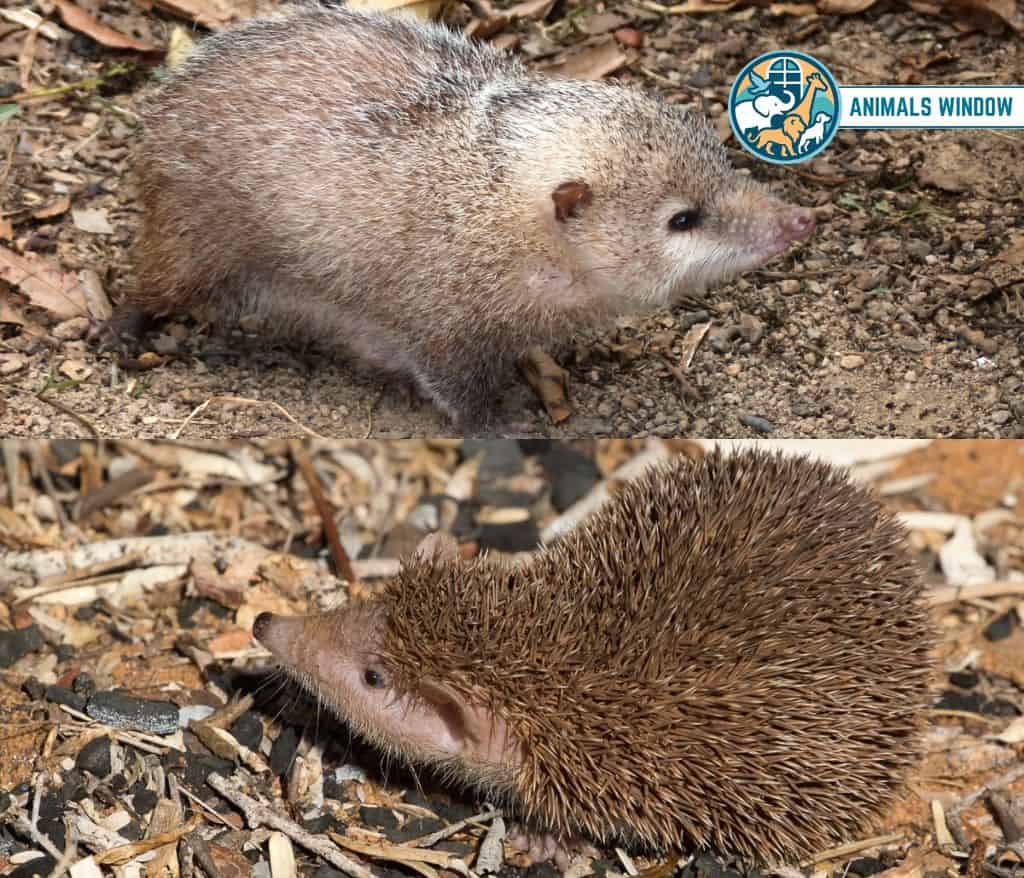
Tenrecs are only found in Madagascar and a few parts of central Africa. They look like a cross between a hedgehog and a shrew, but they evolved completely separately from both. The spiny tenrec and the lesser Madagascar hedgehog tenrec are the most visually striking, covered in sharp quills on their backs.
The most unusual thing about tenrecs? Some species stridulate — they rub their quills together to produce ultrasonic sounds, similar to how some insects make noise. This is used for communication between mothers and their young when foraging. No other spiny mammal does this. It’s a behavior more common in insects than in mammals, making the tenrec genuinely one of a kind.
🔥 Comparison Fact: The tailless tenrec can weigh as much as a small apple when young — and up to a large bag of rice when fully grown, depending on the species.
5. Thorny Devil
- Scientific name: Moloch horridus
- Size: 15–20 cm
- Weight: 50–90 g
- Diet: Ants only
- Habitat: Australian desert scrubland and sandy plains
- Lifespan: Up to 20 years
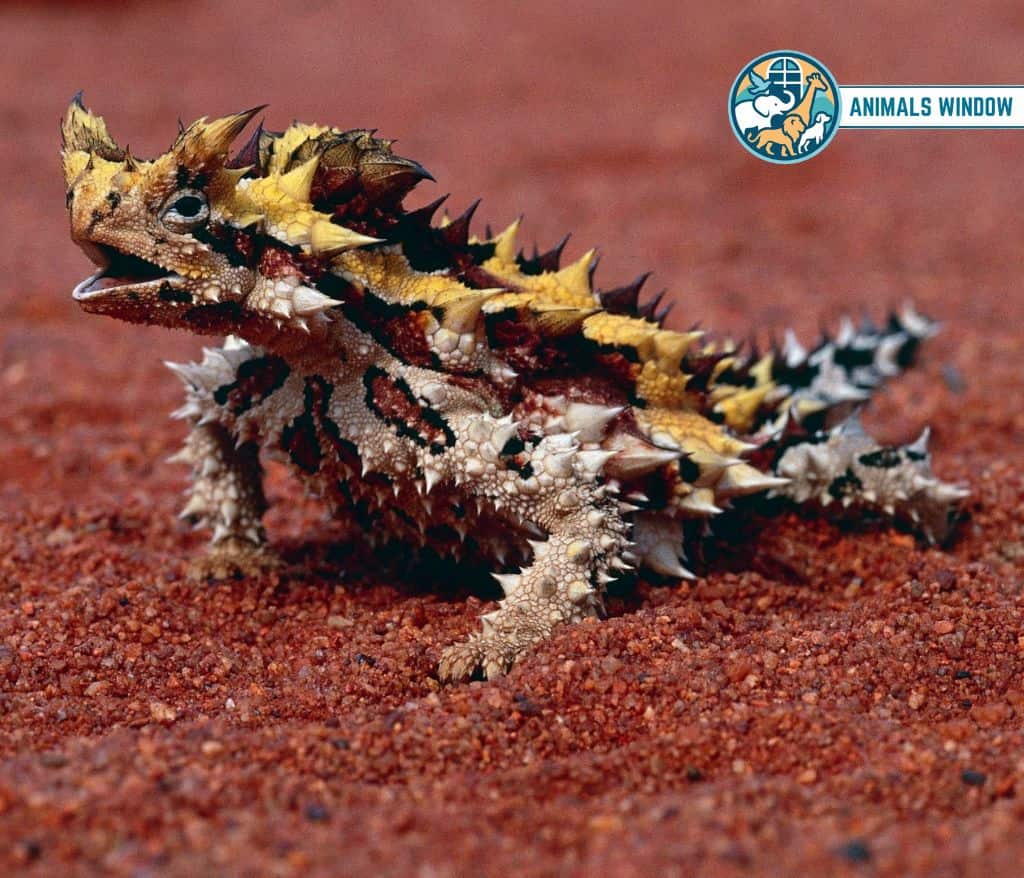
The thorny devil is one of Australia’s most recognizable reptiles, covered in pointed spines from snout to tail. It lives in the hot, dry central deserts where water is extremely rare. But somehow it never needs to drink from a puddle or stream.
Its entire body acts as a water-collection system. Tiny grooves between its scales draw moisture from the ground, from dew, or even from damp sand via capillary action — the same physics that pulls water up through a paper towel. That water travels along the skin’s channels straight to the corner of its mouth. On top of that, it also has a false head — a spiny lump on the back of its neck — that it tucks toward predators while hiding its real head underneath.
🔥 Comparison Fact: The thorny devil’s body is about as long as a smartphone — yet it can consume up to 45 ants per minute.
6. Bearded Dragon
- Scientific name: Pogona vitticeps
- Size: 45–60 cm total length
- Weight: 300–500 g
- Diet: Insects, vegetables, fruit
- Habitat: Australian desert and woodland
- Lifespan: 8–15 years
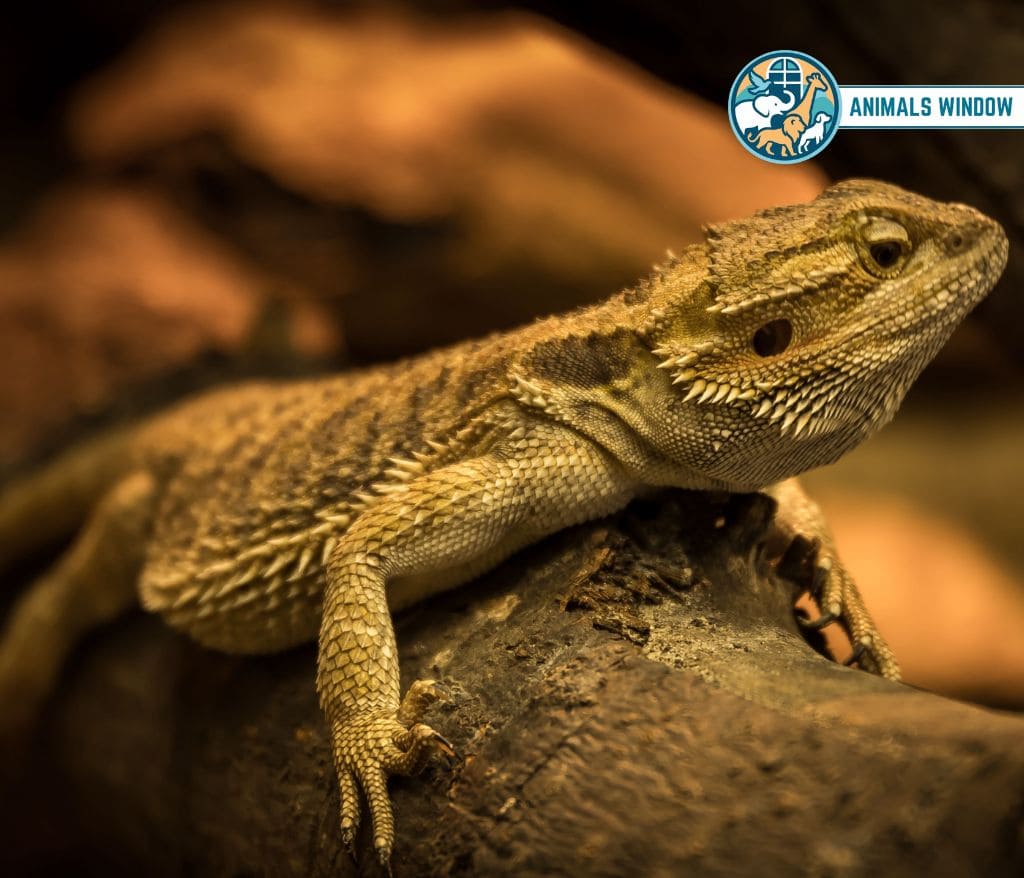
Bearded dragons are named for the ring of spines around their throat that fans out and darkens when they feel threatened or excited. The “beard” turns jet black as blood rushes into the area — an impressive visual warning signal that can be seen from a distance.
What’s remarkable about bearded dragons is their arm-waving behavior. They slowly wave one foreleg in a wide circle, a gesture used to signal submission to a dominant male or to communicate between individuals. Juveniles do it frequently. Scientists think it evolved as a way to avoid conflict — essentially saying “I know you’re in charge” without risking a fight. No other spiky lizard species is known to use this behavior as a primary communication tool.
🔥 Comparison Fact: A bearded dragon stretches to about the length of a standard ruler — from nose tip to tail tip.
7. Black Spiny-Tailed Iguana
- Scientific name: Ctenosaura similis
- Size: 100–140 cm
- Weight: Up to 2 kg
- Diet: Plants, insects, small vertebrates
- Habitat: Rocky areas and dry forests of Central America
- Lifespan: Up to 60 years
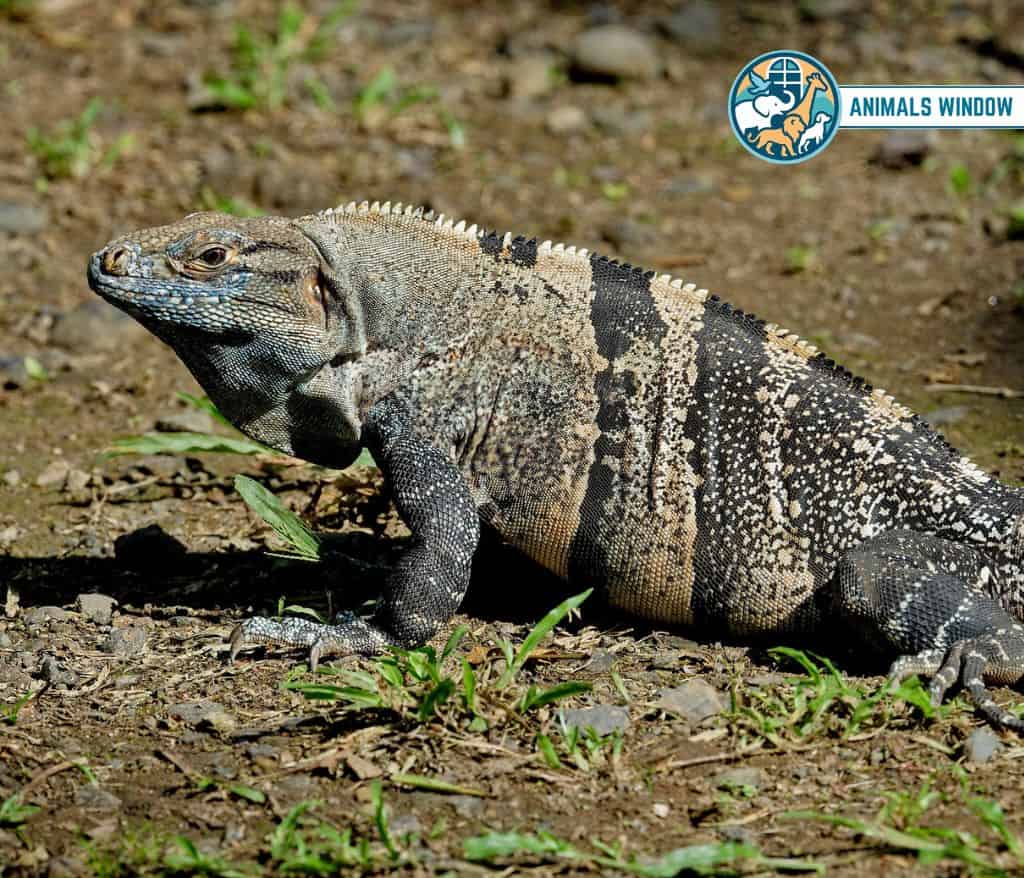
The black spiny-tailed iguana holds the world record for the fastest lizard on Earth, clocked at 34.6 km/h. Despite its impressive turn of speed, it’s primarily a plant-eater — one of the few large lizards that is mostly herbivorous. The rows of sharp spines along its tail aren’t just for show; it uses the tail like a whip when cornered.
What separates this iguana from the marine iguana or mountain horned lizard is its lifespan. At up to 60 years, it outlives most reptiles its size. Older males develop a distinctly black coloration — hence the name — while juveniles are bright green, a camouflage that helps them hide in vegetation before they’re large enough to defend themselves.
🔥 Comparison Fact: A full-grown black spiny-tailed iguana is about as long as a guitar — and fast enough to outrun a human sprinting at full speed.
8. Sea Urchin
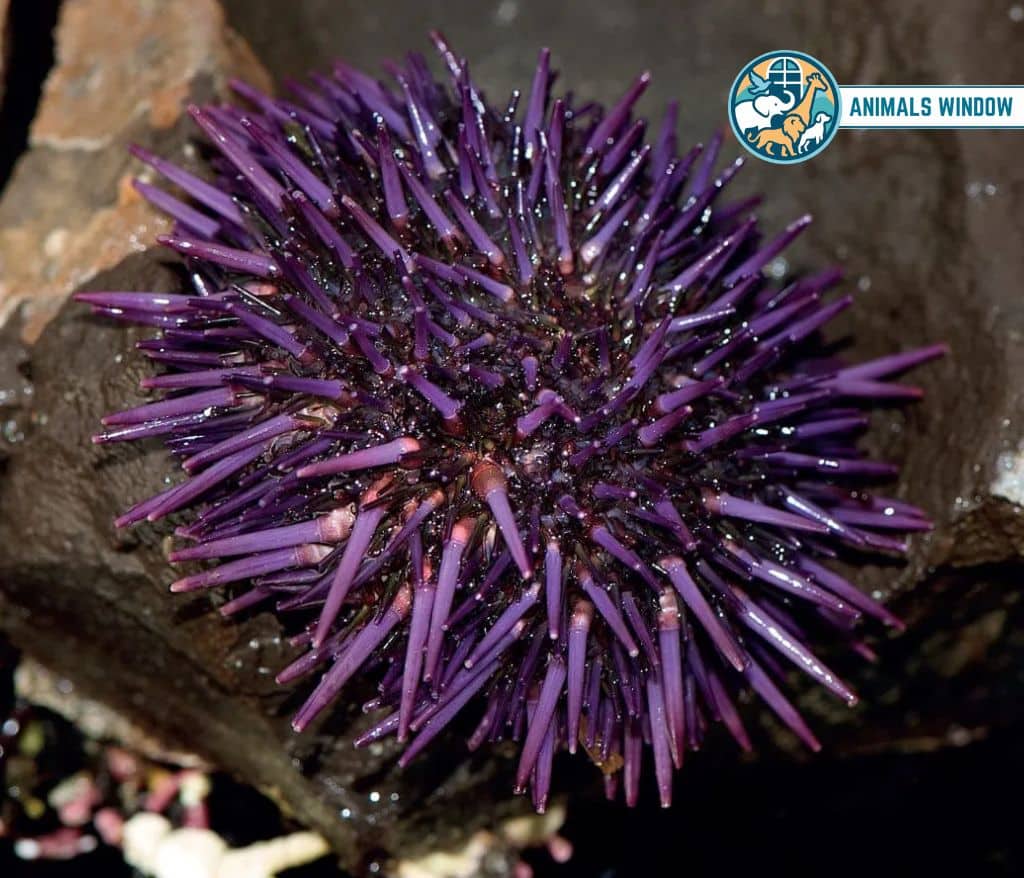
- Scientific name: Strongylocentrotus purpuratus (Purple Sea Urchin)
- Size: 5–10 cm across (some species up to 36 cm)
- Weight: 50–200 g
- Diet: Algae, plankton, kelp
- Habitat: Ocean floors worldwide, especially rocky coastal areas
- Lifespan: 5–100+ years depending on species
Sea urchins are echinoderms — ancient ocean animals with a five-part radial body. They move using tiny tube feet hidden beneath their spines, walking slowly across the seafloor. Their spines serve double duty: defense against predators and locomotion. Some species also use their spines to wedge themselves into rock crevices so tightly that waves can’t dislodge them.
What most people don’t know is that sea urchins are living barometers. They bunch together before storms, presumably sensing changes in water pressure. They also have remarkable regeneration — a broken spine grows back fully within days. Some deep-sea species are believed to live for over a century, making them among the longest-lived invertebrates on Earth.
🔥 Comparison Fact: A sea urchin shell is roughly the size of a tennis ball — but its spines extend outward, making the whole animal look more like a spiky baseball.
9. Crown of Thorns Starfish
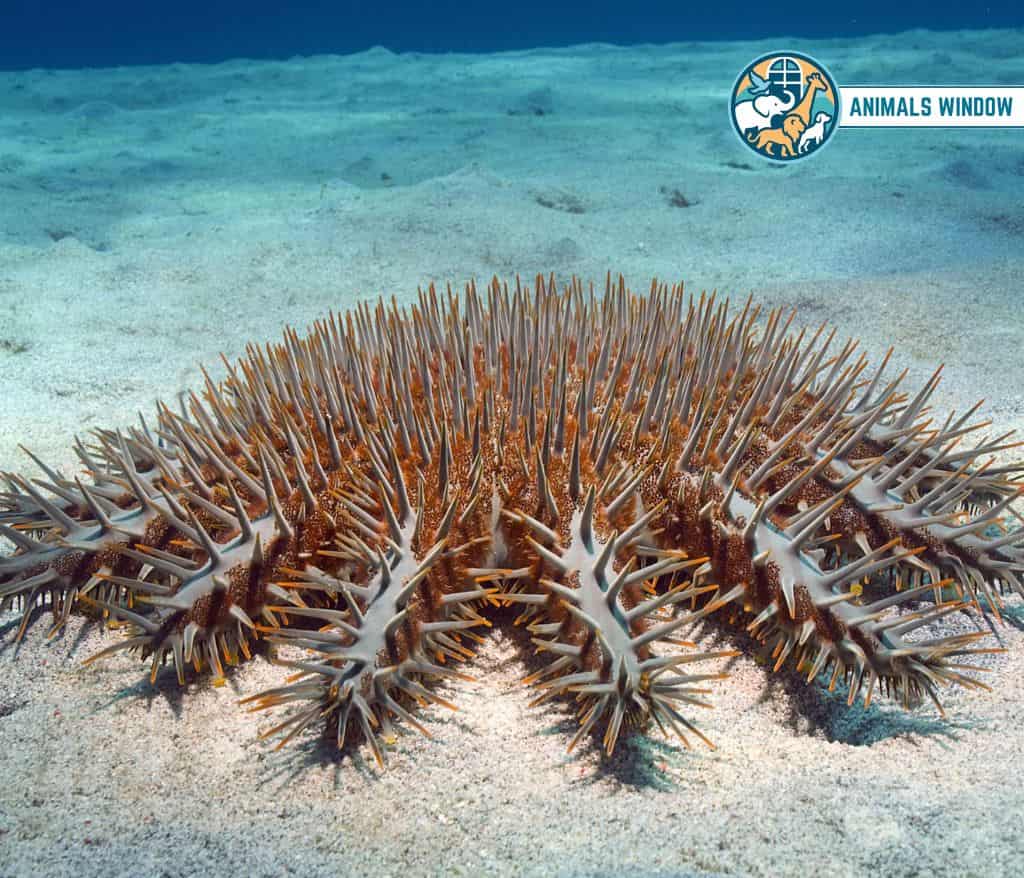
- Scientific name: Acanthaster planci
- Size: 25–35 cm across; up to 80 cm
- Weight: Up to 3 kg
- Diet: Coral polyps
- Habitat: Indo-Pacific coral reefs
- Lifespan: 8–16 years
Named after its dramatic ring of venomous spines, the crown of thorns starfish is one of the largest starfish in the world. It is also one of the most destructive creatures on coral reefs. A single starfish can eat up to 6 square meters of coral per year by climbing over it, everting its stomach onto the coral surface, and digesting it externally.
Population explosions of these animals — sometimes called “outbreaks” — can devastate entire reef sections faster than bleaching events. Divers have documented swarms of thousands covering reef sections in a matter of weeks. The Great Barrier Reef has experienced multiple major outbreaks since the 1960s, with scientists debating whether agricultural runoff fuels their population surges.
🔥 Comparison Fact: The crown of thorns starfish can reach the size of a dinner plate — and one hungry individual can strip a coral patch the size of a parking space in a single year.
10. Lionfish
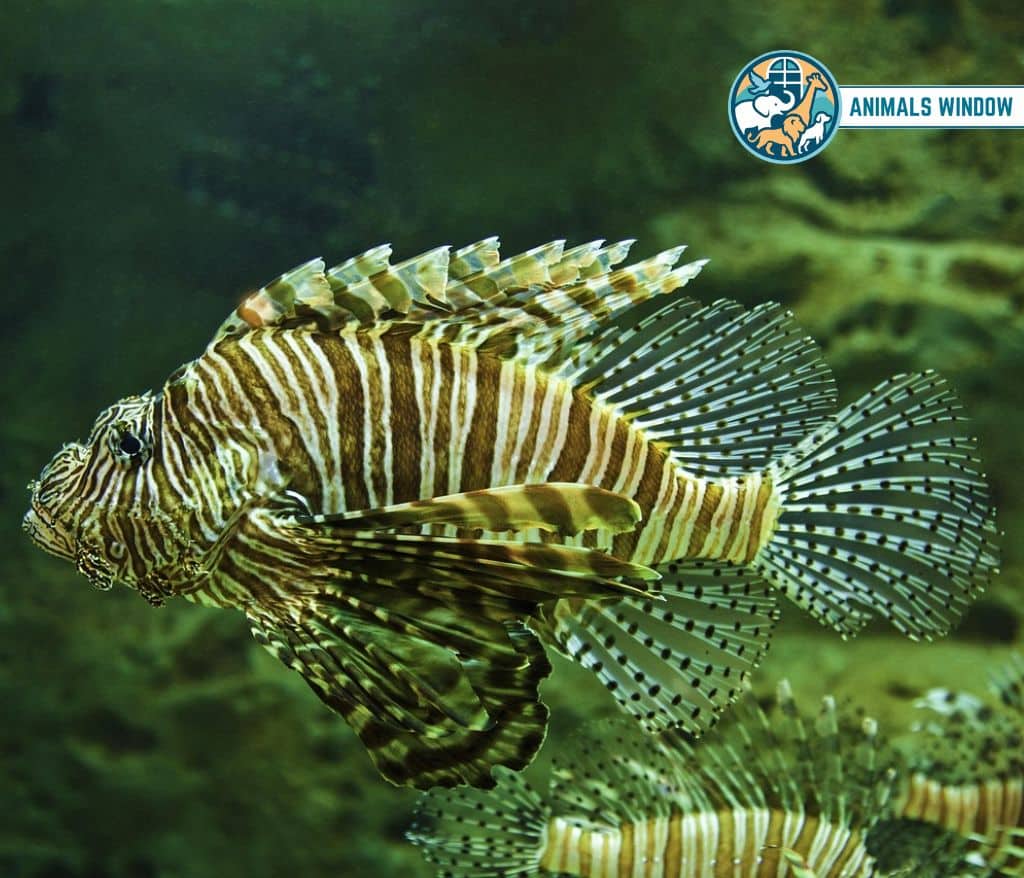
- Scientific name: Pterois volitans
- Size: 30–40 cm
- Weight: Up to 1.2 kg
- Diet: Small fish, shrimp, crabs
- Habitat: Coral reefs of the Indo-Pacific; invasive in the Atlantic and Caribbean
- Lifespan: 10–15 years
The lionfish is one of the most visually stunning fish in the ocean, with bold red and white stripes and long, feathery spines radiating outward. Each dorsal spine is connected to a venom gland. When a spine breaks skin, it delivers a toxin that causes intense pain, swelling, and in rare cases, heart problems.
In its native Pacific range, the lionfish is kept in check by large predators. But in the Atlantic and Caribbean, where it was introduced accidentally in the 1980s, it has no natural enemies. It reproduces every four days and eats up to 90% of juvenile fish on the reefs it invades. A single lionfish can reduce juvenile fish populations on a reef section by 79% within five weeks — a figure that shocked marine biologists when first measured.
🔥 Comparison Fact: A lionfish is roughly the length of a 30 cm ruler — but spreads its fins to look twice as wide as it actually is.
11. Porcupinefish
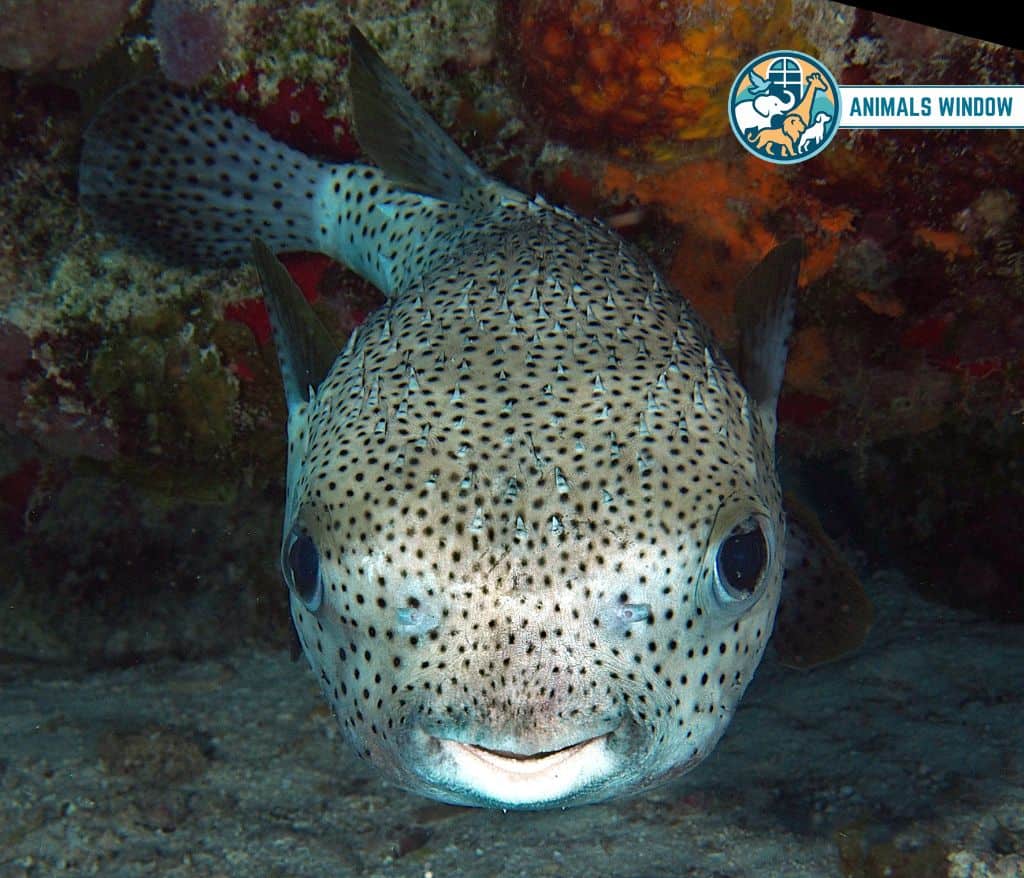
- Scientific name: Diodon hystrix
- Size: 50–90 cm
- Weight: Up to 2.5 kg
- Diet: Mollusks, crustaceans, sea urchins
- Habitat: Tropical and subtropical oceans worldwide
- Lifespan: Up to 15 years
The porcupinefish is closely related to the pufferfish, but while pufferfish mostly puff and rely on tetrodotoxin, the porcupinefish adds a physical layer: sharp rigid spines that normally lie flat against its body. When threatened, it gulps water rapidly, inflating its body to two or three times its normal size, causing all its spines to stand at 90-degree angles.
What’s lesser known is that porcupinefish use their beak-like fused teeth to crush sea urchins whole — one of the few animals tough enough to eat them routinely. It hunts at night and uses its large eyes to navigate in low light. The inflated, spiky version of this fish can jam a predator’s jaw, buying itself time to escape — but inflation is energetically costly, so it only does it when truly alarmed.
🔥 Comparison Fact: A deflated porcupinefish is about the size of a large shoe. Fully inflated, it’s closer to the size of a volleyball — covered in spines.
12. Greater Sage-Grouse
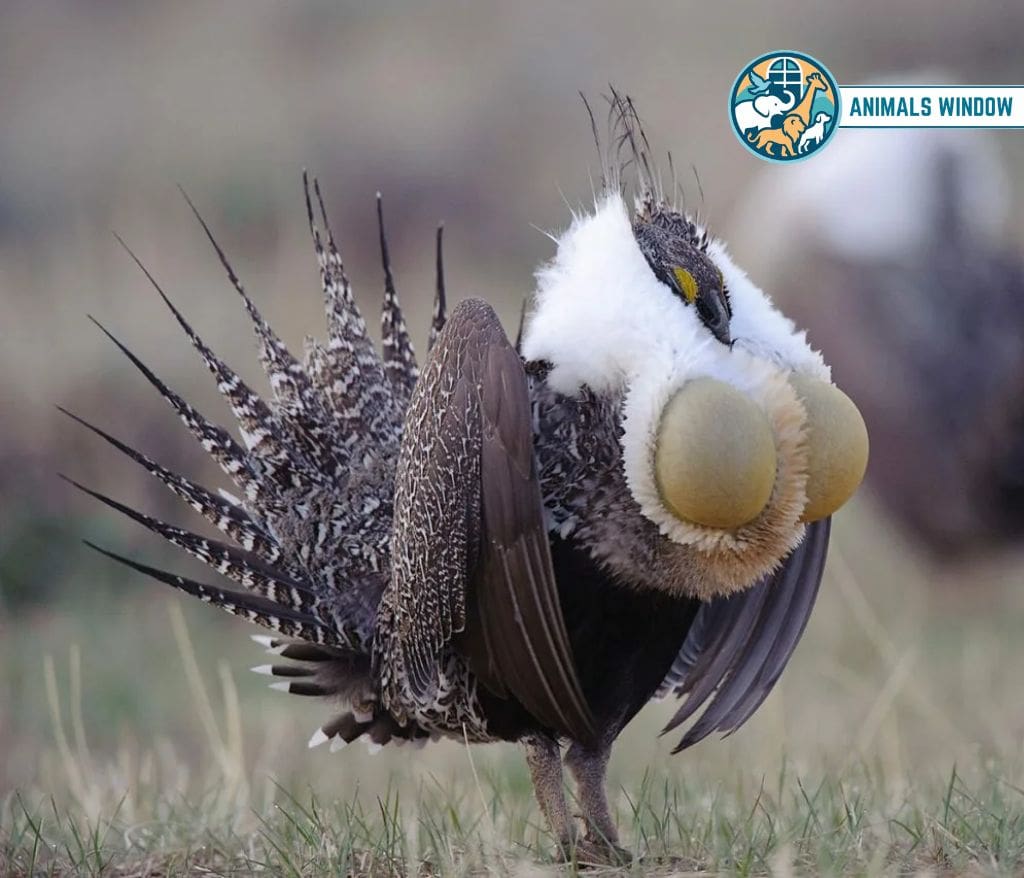
- Scientific name: Centrocercus urophasianus
- Size: 65–76 cm (female); up to 90 cm (male)
- Weight: 1.5–3 kg
- Diet: Sagebrush leaves, insects
- Habitat: Sagebrush plains of western North America
- Lifespan: 3–6 years
The greater sage-grouse is a quill bird in the loosest sense — the males have stiff, sharp-tipped filoplume feathers on their chests that fan out during elaborate mating displays called “lekking.” On lekking grounds each spring, dozens of males gather before dawn and compete to impress females by inflating twin yellowish air sacs on their chests and rapidly deflating them to produce a loud popping sound.
What makes this bird unusual is that it is almost entirely dependent on sagebrush — not just for cover but for food. In winter, its diet is nearly 100% sagebrush leaves. This extreme dietary specialization makes it a perfect indicator species: where sage-grouse numbers drop, it signals that sagebrush ecosystems are in serious decline. Wildlife managers use population data to track habitat health across millions of acres.
🔥 Comparison Fact: A male greater sage-grouse’s tail fan, spread fully open, is about as wide as a laptop screen.
13. Gray Crowned Crane
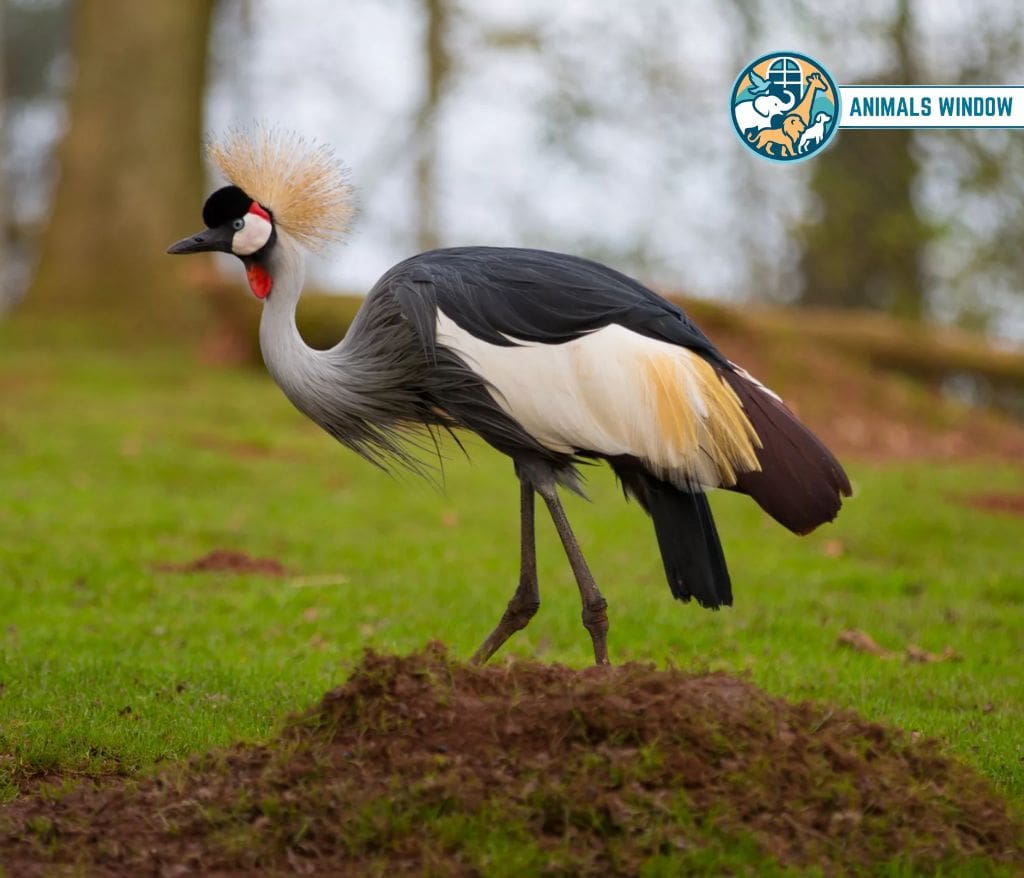
- Scientific name: Balearica regulorum
- Size: 100–110 cm tall
- Weight: 3–4 kg
- Diet: Seeds, insects, small vertebrates
- Habitat: East African wetlands and grasslands
- Lifespan: Up to 22 years in the wild
The gray crowned crane is one of the most visually dramatic birds on the African continent. Its golden spiky crown — a halo of stiff, bright yellow feathers — is the feature that everyone notices first. But those golden spikes aren’t display feathers in the typical sense. They’re bristle-like filoplume feathers that grow permanently and cannot be retracted or fanned out.
What separates this crane from the hoopoe or sage-grouse is its ancient lineage. Fossil evidence suggests crowned cranes have looked essentially the same for at least 37 million years, making them among the most morphologically unchanged bird families on Earth. They are also the only cranes that roost in trees — most crane species sleep on the ground or in shallow water.
🔥 Comparison Fact: A gray crowned crane stands about as tall as a standard kitchen countertop — with a golden spike crown that adds another 10–15 cm on top.
14. Hoopoe
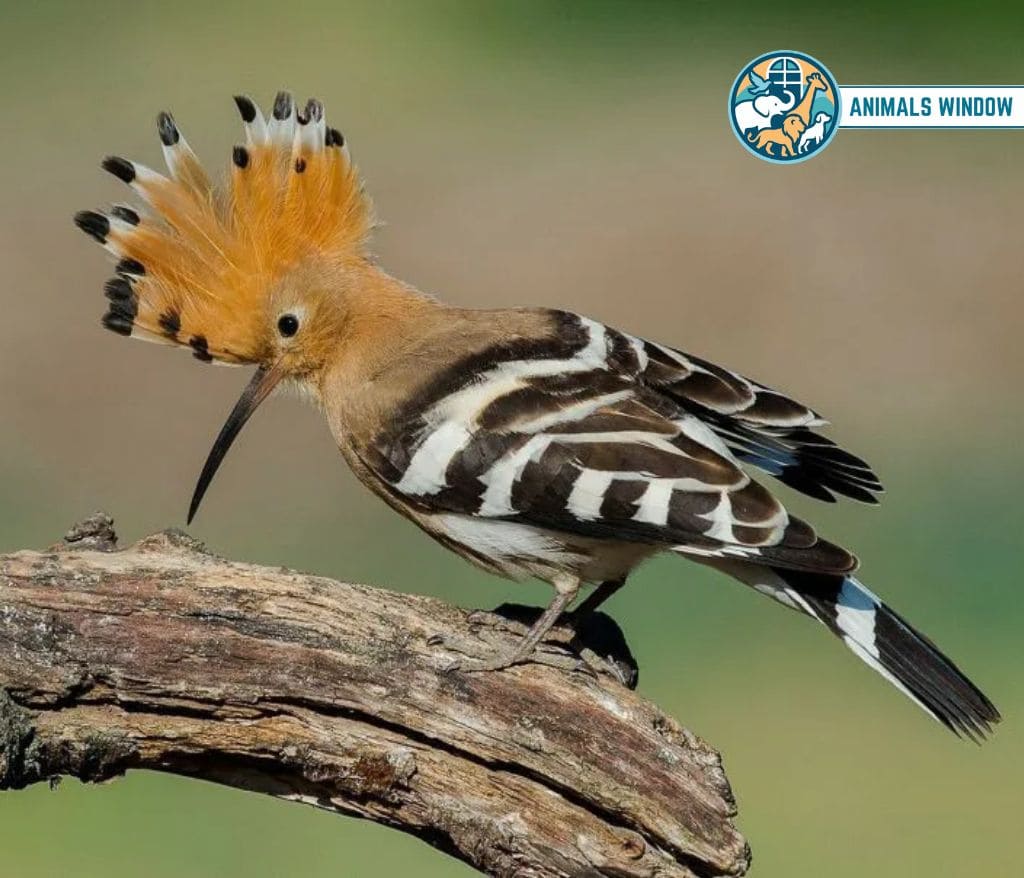
- Scientific name: Upupa epops
- Size: 25–32 cm
- Weight: 46–89 g
- Diet: Insects, larvae, small reptiles
- Habitat: Open woodlands and farmland across Europe, Asia, and Africa
- Lifespan: 5–10 years
The hoopoe is instantly recognizable by its fan-shaped crest — a row of cinnamon-colored feathers tipped in black and white, which normally lies flat along the head and springs open like a sunburst when the bird lands or becomes excited. It’s the national bird of Israel and appears in ancient Egyptian tomb paintings dating back 3,500 years.
But the hoopoe’s most unusual survival strategy has nothing to do with its crest. Nesting females and chicks produce a foul-smelling liquid from a gland near the base of the tail. The smell — described as rotting meat — is so strong it deters predators from approaching the nest. Chicks can also aim and squirt feces at intruders. It’s about as unglamorous as it gets for such a beautiful bird.
🔥 Comparison Fact: A hoopoe’s body is about the size of a large mango — but its striped crest, when fully open, doubles its apparent head size.
15. Thorn Bug
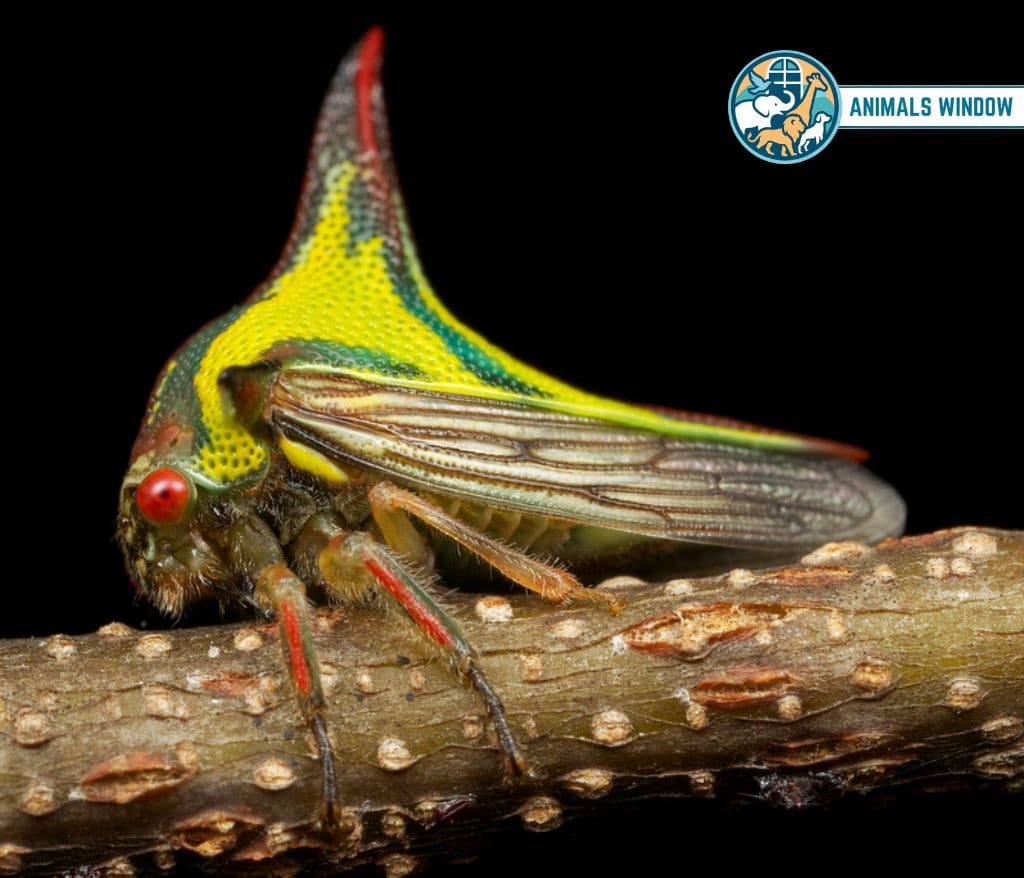
- Scientific name: Umbonia crassicornis
- Size: 1–1.5 cm
- Weight: Less than 1 g
- Diet: Plant sap
- Habitat: Tropical and subtropical regions of the Americas
- Lifespan: Several months
The thorn bug is one of the most astonishing examples of mimicry in the entire insect world. Its back carries a single large, sharply pointed green protrusion that makes the bug look exactly like a plant thorn. When several of them sit in a row on a twig — which they often do — a bird sees only a thorny branch, not a colony of insects feeding on sap.
What’s even more surprising is their social parenting behavior. Female thorn bugs stand guard over their egg masses and newly hatched nymphs, vibrating the stem with low-frequency signals to keep the group together and warn them of danger. This kind of extended parental care is extremely rare in insects, and combined with their extraordinary camouflage, makes the thorn bug one of the most complete survival packages in the invertebrate world.
🔥 Comparison Fact: A single thorn bug is about the size of a watermelon seed — yet it can fool animals with far better eyesight than ours.
FAQ’s About Spiky and Pointy Animals
What animal has the sharpest spines in the world?
The North American porcupine’s quills are widely considered the most effective, with backward-facing barbs that make removal difficult and painful. The lionfish’s dorsal spines are the most dangerous, as they inject venom directly into the skin.
Can any animal eat a sea urchin safely?
Yes. Sea otters crack them open using rocks. Porcupinefish crush them with their beak-like teeth. Triggerfish and some species of wolf eel also eat sea urchins regularly, biting through the spines to reach the soft interior.
Are animals with quills the same as animals with spines?
Not exactly. Quills are modified hairs found in mammals like porcupines, hedgehogs, and echidnas. Spines in fish and reptiles are modified scales or bony structures. Both serve defensive purposes but evolved completely independently.
Which spiky animal is most dangerous to humans?
The crown of thorns starfish and lionfish pose significant risks to divers and coastal communities. The stonefish — a relative of the scorpionfish and lionfish — is considered the most venomous fish on Earth, though the lionfish causes more encounters due to its invasive spread.
Do any spiky animals use their spines for hunting rather than defense?
Yes. The lionfish uses its dramatic spiny appearance to herd small fish into corners before striking. The crown of thorns starfish uses its spines both defensively and to anchor itself while feeding. Most spiky mammals, though, use spines exclusively for protection.
Trait Comparison: Quills vs Spines vs Crests
| Feature | Quills (Mammals) | Spines (Fish/Reptiles) | Crests (Birds) |
| Material | Modified keratin hairs | Modified scales or bone | Modified feathers |
| Detachable? | Yes (porcupines) | No | No |
| Venomous? | No | Sometimes (lionfish, stonefish) | No |
| Regrowable? | Yes | Varies (sea urchin yes; fish no) | Yes |
| Primary use | Defense only | Defense + sometimes hunting | Mating displays + defense |
| Examples | Porcupine, hedgehog, echidna | Lionfish, sea urchin, thorny devil | Hoopoe, sage-grouse, crowned crane |
| Found in | Mammals only | Fish, reptiles, echinoderms | Birds only |
| Sharpness | Very sharp, barbed | Razor sharp | Soft to moderately stiff |
The biggest distinction is function. Bird crests are primarily about communication — signaling status, attracting mates, or warning rivals. Mammal quills are almost purely defensive, evolved over millions of years to make predators regret their lunch choice. Fish and reptile spines sit in the middle: some carry venom, some assist in movement, and a few do both.
Related More Animals Guides:

I have loved animals since I was a kid. I enjoy reading about how animals live, eat, move, and survive. I started Animals Window to share what I learn in a simple and easy way. I write about animal body parts, size, behavior, diet, habitats, and species. My goal is to make animal facts clear and fun for everyone to understand.