Several real animals carry one horn — or a structure that functions like one. The most well-known are the Indian Rhinoceros, Javan Rhinoceros, and Narwhal. Others include the Rhinoceros Beetle, Cassowary, Unicornfish, Rhinoceros-horned Lizard, and the extinct Elasmotherium. The Unicorn completes the list as mythology’s most iconic single-horned creature.
Table of Contents
Quick List of Animals With One Horn
- Indian Rhinoceros (Greater One-Horned Rhino)
- Javan Rhinoceros (Lesser One-Horned Rhino)
- Narwhal
- Rhinoceros Beetle
- Cassowary
- Unicornfish
- Rhinoceros-horned Lizard
- Elasmotherium (Extinct / Siberian Unicorn)
- Unicorn (Mythical)
1. Indian Rhinoceros

- Scientific Name: Rhinoceros unicornis
- Size: 5.5–6.5 ft tall at the shoulder
- Weight: 4,000–6,000 lbs
- Diet: Grasses, leaves, shrubs, and fruit
- Habitat: Floodplain grasslands of Nepal and northeastern India
- Lifespan: 35–45 years
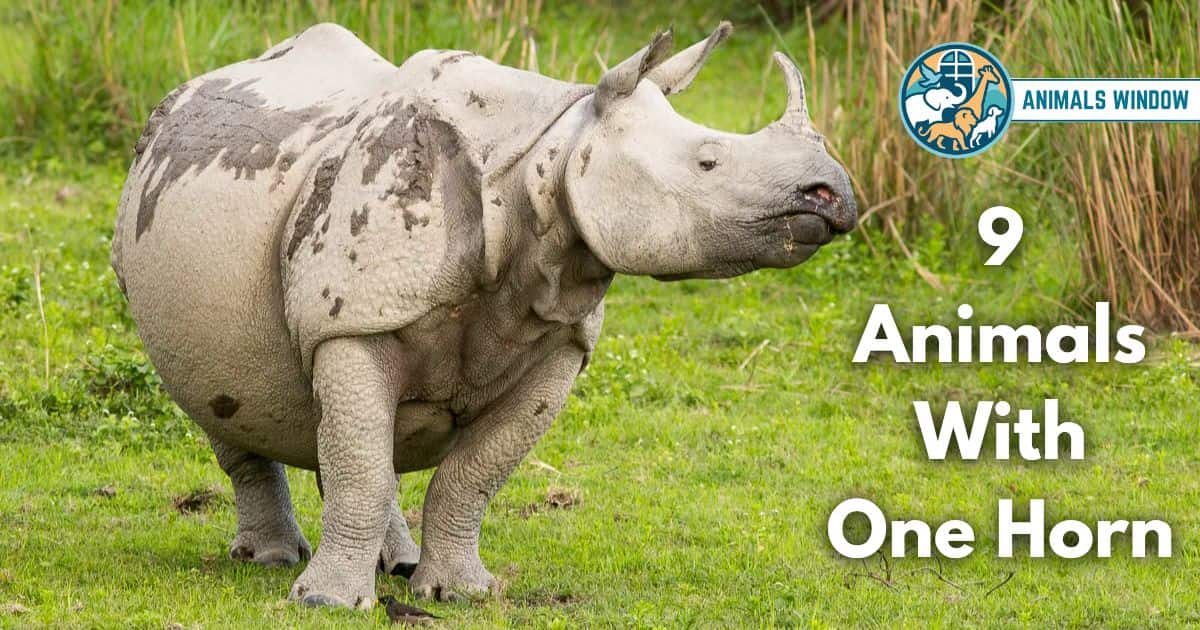
The Indian Rhinoceros — the greater one-horned rhino — is the largest rhino in Asia. It lives along river floodplains where tall grass grows thick enough to hide its bulk. Its skin folds into plate-like sections around the shoulders and legs, giving it an armored look that earned early European travelers’ descriptions of a “natural fortress on legs.”
The single horn is compressed keratin — the same protein in human fingernails — not bone. Damage it, and it regrows. In younger animals it grows close to an inch per year, which is exactly why poachers target juveniles. An adult horn reaches 24 inches and sits on a nose so muscular the rhino can twist it sideways to grip food like a partial trunk.
🔥 Comparison Fact: Its horn, laid flat, matches the length of a standard 30 cm school ruler — but weighs as much as a thick hardcover encyclopedia.
2. Javan Rhinoceros
- Scientific Name: Rhinoceros sondaicus
- Size: 4.6–5.8 ft tall at the shoulder
- Weight: 2,200–5,000 lbs
- Diet: Fallen fruit, leaves, twigs, and bark
- Habitat: Ujung Kulon National Park, western Java, Indonesia
- Lifespan: 30–45 years
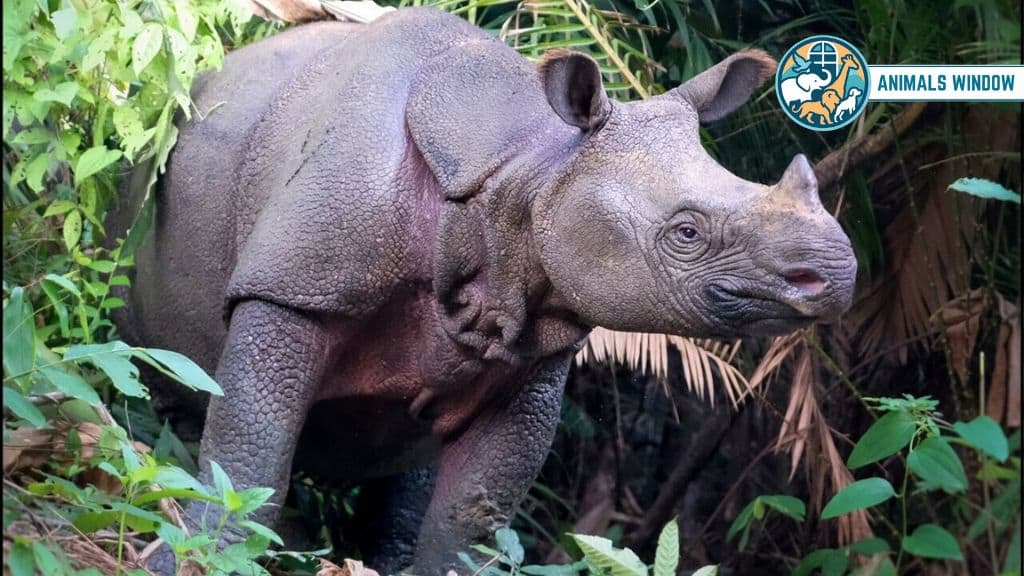
Fewer than 70 Javan rhinos exist — all inside one national park. There are none in captivity. Every individual is accounted for by camera trap, not by direct observation. Researchers can’t move through the dense rainforest habitat without disturbing the animals, so the entire conservation program runs on motion-triggered footage.
Its horn rarely exceeds 10 inches, making it the shortest horn of any rhino species. But what makes this animal scientifically unique isn’t the horn — it’s the diet. Unlike the Indian rhino, which grazes on grass, the Javan rhino is a browser. It knocks over young trees with its body weight to reach leaves and fruit at height. Camera trap footage from 2023 confirmed calves feeding alongside mothers — a rare recorded behavior for a species this elusive.
🔥 Comparison Fact: The Javan rhino’s horn is roughly the length of a standard TV remote — on an animal the size of a small car.
3. Narwhal

- Scientific Name: Monodon monoceros
- Size: 13–18 ft long
- Weight: 1,760–3,500 lbs
- Diet: Arctic cod, squid, shrimp, flounder
- Habitat: Arctic Ocean, Hudson Bay, Baffin Bay
- Lifespan: 50+ years
The narwhal’s tusk isn’t a horn. It’s a tooth — specifically the upper left canine, which erupts through the lip and spirals counter-clockwise for up to 10 feet. The right canine stays embedded in the jaw in almost every individual. Occasionally both erupt, producing the rare two-tusked narwhal, but the single left tusk is the biological norm.
High-speed underwater cameras solved a long-standing mystery about what the tusk is for. Narwhals were filmed tapping Arctic cod with quick, precise strikes that stunned the fish before eating them. The tusk is also packed with millions of nerve endings connected to the surface, letting the narwhal read changes in water salinity, pressure, and temperature in real time. Male narwhals also cross tusks at the surface in a behavior called “tusking” — likely a social dominance ritual rather than actual combat.
🔥 Comparison Fact: A full-grown narwhal tusk runs about as long as a standard canoe paddle — but it’s hollow and flexible enough to bend several inches at the tip without snapping.
4. Rhinoceros Beetle

- Scientific Name: Dynastes hercules
- Size (Body): 2.4–4.5 inches
- Horn Length: Up to 3 inches
- Diet: Rotting wood, tree sap, fermenting fruit
- Habitat: Tropical rainforests of Central and South America
- Lifespan: 3–6 months (adult)
Only male rhinoceros beetles carry the horn — and it sometimes grows longer than the beetle’s entire body. Females have none, which tells you everything about its purpose: it’s a combat tool, not a survival tool. Two males will square off on a branch, lock horns, and attempt to pry each other loose. The one that falls loses mating access.
The engineering behind the horn is genuinely clever. It’s made of chitin — the same material as the rest of the exoskeleton — but shaped into a hollow tube rather than solid material. This keeps it light enough for flight while still rigid enough to lever a rival off a surface. These beetles can carry up to 850 times their own body weight, making them one of the strongest animals on Earth relative to size. The horn is the showpiece, but the whole body is overbuilt.
🔥 Comparison Fact: A full-grown rhinoceros beetle body is about the length of a USB thumb drive — and the horn extends roughly that same distance again in front of it.
5. Cassowary
- Scientific Name: Casuarius casuarius
- Size: 4.9–5.9 ft (1.5–1.8 m) tall
- Weight: 130–167 lbs (59–76 kg)
- Diet: Fallen fruit, fungi, snails, and small vertebrates
- Habitat: Tropical rainforests of Papua New Guinea and northeastern Australia
- Lifespan: 18–25 years in the wild
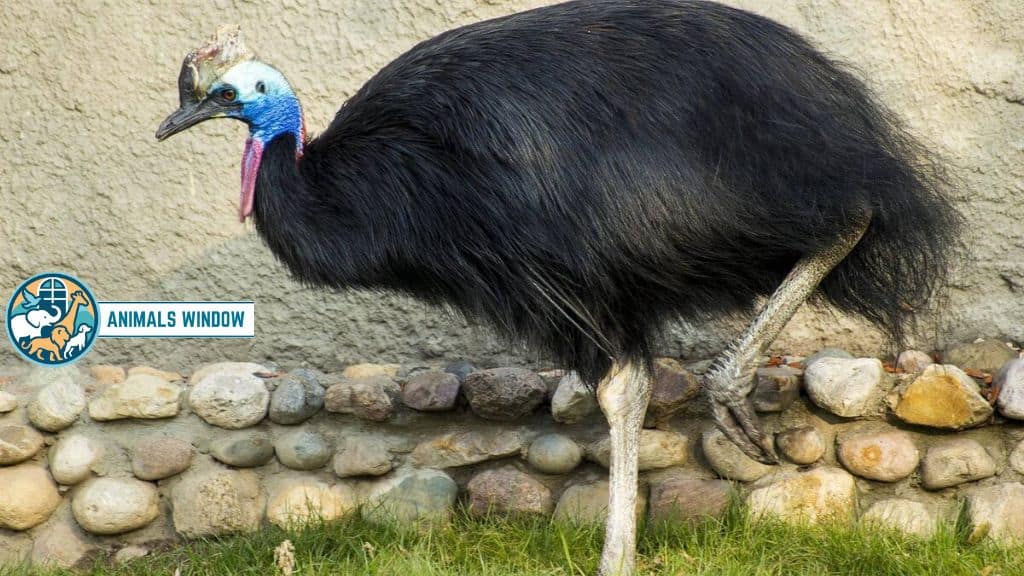
The cassowary’s casque — the rigid blade-like structure rising from its skull — can reach over 6 inches tall and is made of a spongy bone core covered in keratin. It looks like a crown designed by something that lived 65 million years ago, which isn’t far off. Cassowaries are one of the most morphologically dinosaur-like birds alive.
The casque’s function was long assumed to be physical — pushing through dense undergrowth. But acoustic research shifted that theory. The cassowary produces calls at frequencies below 20 Hz, below the threshold of human hearing, and the casque’s internal structure may amplify and direct these infrasound calls through the forest floor. Beyond the casque, each foot carries a 4-inch dagger-like inner claw capable of disemboweling a predator. The casque is the visual centerpiece. The feet are the actual weapon.
🔥 Comparison Fact: The cassowary casque is roughly the height of a standard soda can — but made of material that doesn’t compress under pressure the way a can does.
6. Unicornfish
- Scientific Name: Naso unicornis
- Size: 18–27 inches long
- Weight: Up to 13 lbs
- Diet: Brown algae (primarily Sargassum species)
- Habitat: Coral reefs across the Indo-Pacific
- Lifespan: Up to 25 years
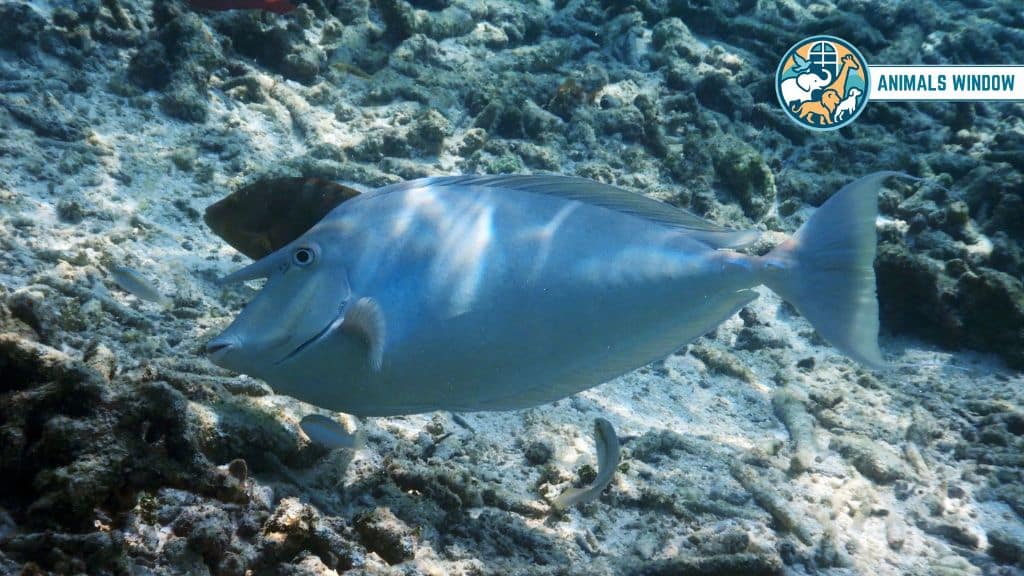
Unlike rhino horns that grow from tissue, the unicornfish’s forehead protrusion is a direct extension of the skull bone. It’s there from birth, grows with the fish, and cannot regenerate if broken. The spike points forward from just above the mouth — giving this reef fish its unmistakable profile.
What earns it a place in any ecology discussion is its diet. Unicornfish graze almost exclusively on coarse brown algae that most reef fish skip entirely. These algae, including multiple Sargassum species, grow fast enough to smother coral if left unchecked. By targeting them specifically, unicornfish act as a natural pruning system for the reef. Studies on Indo-Pacific reefs showed algae coverage expanding measurably within months of unicornfish population decline — a direct link between one skull spike and reef survival.
🔥 Comparison Fact: The unicornfish body reaches about the length of a standard 30 cm ruler plus an extra hand-width — and the bony horn adds another inch or two beyond the mouth.
7. Rhinoceros-Horned Lizard
- Scientific Name: Phrynosoma asio
- Size: 4–6 inches long
- Weight: 1–3 oz
- Diet: Ants, beetles, and small insects
- Habitat: Dry scrublands and rocky slopes of Mexico and Central America
- Lifespan: 5–8 years
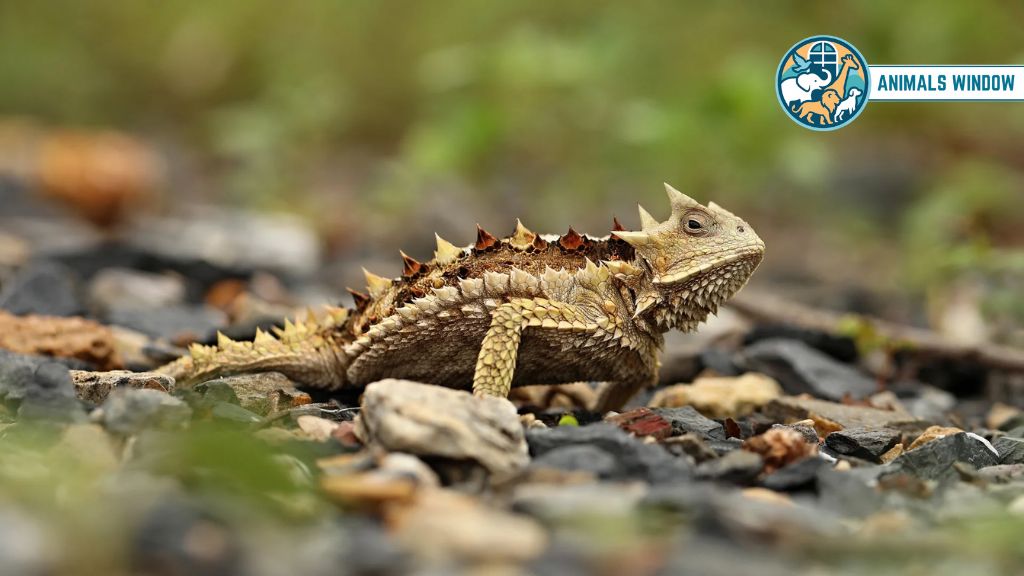
The rhinoceros-horned lizard carries a ring of spines around its skull, with one larger horn projecting from the center above the snout. The horn works as a first deterrent — it makes the lizard uncomfortable to swallow whole. But if a predator ignores it, the lizard activates something else entirely.
It squirts blood from its eyes. This is ocular autohemorrhaging: the lizard restricts venous blood flow from the head, builds up pressure in its ocular sinuses, and ruptures small vessels to shoot a thin stream of blood up to 5 feet. The blood contains chemical compounds absorbed from the ants it eats — compounds that taste repellent to canine predators like coyotes and foxes, but have no effect on birds. The defense is chemically selective. It works on one predator class and not the other, suggesting a level of evolutionary precision that the horn alone doesn’t hint at.
🔥 Comparison Fact: The entire lizard fits on a deck of playing cards — and can shoot blood almost the full length of an adult’s arm span from its eye sockets.
8. Elasmotherium

- Scientific Name: Elasmotherium sibiricum
- Size: 6.5–8 ft tall at the shoulder
- Weight: Up to 10,000 lbs
- Diet: Tough steppe grasses
- Habitat: Eurasian steppe (extinct; formerly ranged across Russia and Central Asia)
- Lifespan: Estimated 40–50 years
Elasmotherium died out roughly 26,000 years ago — well within the timeline of anatomically modern humans. Cave paintings across Eurasia show a large single-horned animal that doesn’t match any modern species, and some paleontologists believe those images depict Elasmotherium, not a mythical creature.
Its skull has a massive raised dome on the forehead — not the nose — where the horn attached. Estimates from that dome size put the horn between 5 and 7 feet long. Unlike modern rhinos, Elasmotherium had hypsodont teeth: tall, ridged, and built for grinding the coarsest steppe grasses available. The forward position of the horn base on the skull (versus the nose placement in modern rhinos) suggests the horn may have been angled low — possibly used to scrape snow off frozen ground to reach winter grass, the way some modern reindeer use their antlers.
🔥 Comparison Fact: Elasmotherium’s horn rivaled the height of a standard interior door. The animal carrying it weighed as much as a loaded moving truck.
9. Unicorn
- Scientific Name: Mythological
- Size: Horse-sized in most traditions
- Weight: N/A
- Diet: Herbivorous in most accounts
- Origin: Greek, Persian, medieval European, and East Asian sources
- Status: No physical evidence
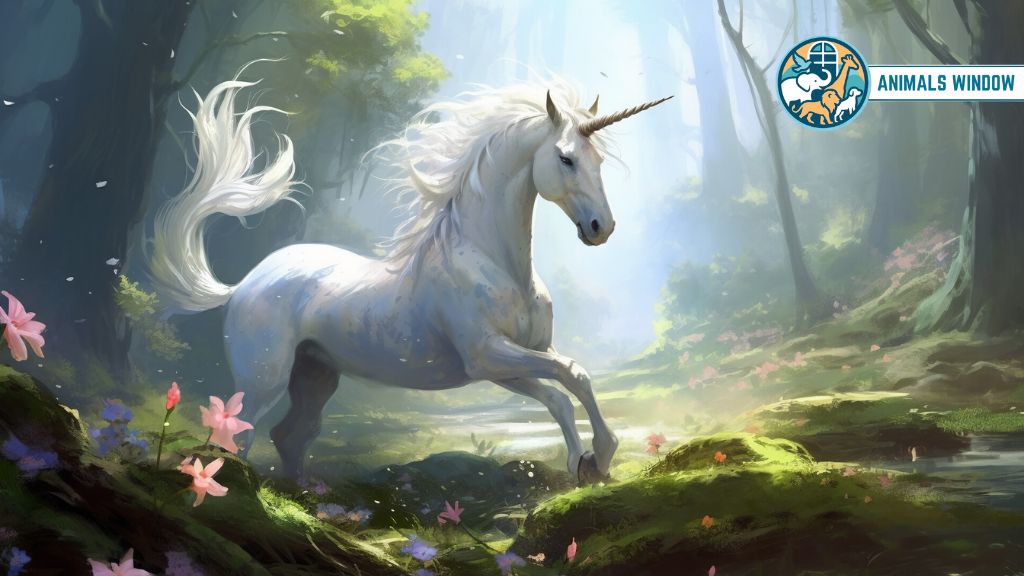
The unicorn’s written history starts with Ctesias, a Greek physician writing around 400 BCE, who described a wild Indian animal with a white body, dark red head, and a single two-foot horn. He treated it as a real species. Most historians now believe his source was a secondhand account of the Indian rhinoceros filtered through Persian intermediaries — the one horn is there, the size roughly matches, and the geographic origin is the same.
The horn itself — called an alicorn in Western tradition — was believed to neutralize poison and cure disease. Demand was so high that narwhal tusks were sold across medieval Europe as genuine alicorn at prices many times their weight in gold. Buyers had no reference point. They had never seen a narwhal. A spiraling tooth from the Arctic and a spiraling horn from a magical horse were indistinguishable in a marketplace. The unicorn myth and the narwhal’s biology became commercially fused for centuries.
🔥 Comparison Fact: In 16th-century Europe, a single narwhal tusk sold as alicorn could cost roughly ten times its weight in gold — the equivalent of a luxury vehicle purchased with one tooth.
The Anatomy of a Single Horn: True Horns vs. Evolutionary Imitations
Not every “horn” on this list is built the same way. Here’s how each one actually forms — grouped by biology.
| Evolutionary Category | How the “Horn” Forms | Animals on This List |
| True mammalian horns | Keratin grows over a bony dermal base fused to the skull; permanent, never shed | Indian Rhinoceros, Javan Rhinoceros, Elasmotherium |
| Modified skeletal tooth | Upper left canine erupts through the lip and spirals outward; nerve-packed and partially hollow | Narwhal |
| Keratinous casque | Spongy bone core covered in keratin; fused to the skull roof; possible infrasound function | Cassowary |
| Exoskeleton weaponry | Chitin shaped into a hollow tube during the pupal stage; regrows if damaged before adulthood | Rhinoceros Beetle |
| Bony skull protrusions | Direct extensions of cranial bone or fused cranial spines; fixed at maturity, non-regenerating | Unicornfish, Rhinoceros-horned Lizard |
| Mythological construct | No biological basis; described as a spiraling alicorn; likely composite of real one-horned animals misidentified across cultures | Unicorn |
FAQ’s About Animals with One Horn
Q: Which animal has one horn on its head in real life?
The Indian Rhinoceros is the most recognized. The Narwhal carries a tusk that functions similarly. The Cassowary has a bony casque. Each “horn” forms through a different biological process — none of them are identical structures.
Q: What is the rarest one-horned animal in the world?
The Javan Rhinoceros. Fewer than 70 individuals survive, all in a single national park in Indonesia. Zero exist in captivity — making it the only large mammal with a single horn that has never been successfully kept in a zoo.
Q: Is there a sea animal with one horn?
Two, from completely different animal groups. The Narwhal is a whale with a canine tooth that grows into a 10-foot spiral tusk. The Unicornfish is a reef fish with a fixed bone spike fused to its skull. One is a mammal; the other is a bony fish — the similarity ends at the shape.
Q: What is the biggest animal with one horn that ever lived?
Elasmotherium. It weighed up to 10,000 lbs and carried a horn estimated at 5–7 feet long. The living record-holder is the Indian Rhinoceros at up to 6,000 lbs — significantly smaller by comparison.
Q: Can you see a one-horned animal at a zoo?
The Indian Rhinoceros is held in major zoos worldwide and is the most accessible. The Javan Rhinoceros has never survived captivity. Narwhals don’t adapt to enclosed environments and have no established captive population. For zoo animals with one horn, the greater one-horned rhino is the only reliable option.
Read More Animals Guides:

I have loved animals since I was a kid. I enjoy reading about how animals live, eat, move, and survive. I started Animals Window to share what I learn in a simple and easy way. I write about animal body parts, size, behavior, diet, habitats, and species. My goal is to make animal facts clear and fun for everyone to understand.