Animals with flippers are mostly aquatic or semi-aquatic creatures that evolved flat, paddle-shaped limbs for swimming. These flippered species include marine mammals like seals, whales, and dolphins, plus sea turtles, penguins, and even the ancient plesiosaur. Their flippers replace or modify standard limbs, making them powerful swimmers built for ocean life.
Table of Contents
Quick List of Animals with Flippers
- California Sea Lion
- Harbor Seal
- Leopard Seal
- Northern Elephant Seal
- Walrus
- Humpback Whale
- Blue Whale
- Orca / Killer Whale
- Bottlenose Dolphin
- Dall’s Porpoise
- Leatherback Sea Turtle
- Green Sea Turtle
- Emperor Penguin
- Galápagos Penguin
- West Indian Manatee
- Dugong
- Sea Otter
- Plesiosaur
In this article, you’ll meet 18 flippered animals — from the deepest ocean trenches to frozen Antarctic ice. Some of these creatures use their flippers to slap rivals, others to “fly” underwater, and one extinct species had four massive flippers that made it one of the most terrifying predators to ever live beneath the waves.
You’ll also find out which flippered mammal sleeps floating on its back, which one can hold its breath for two hours, and which tiny ocean animal uses its flippers to sprint — not swim.
Let’s dive in.
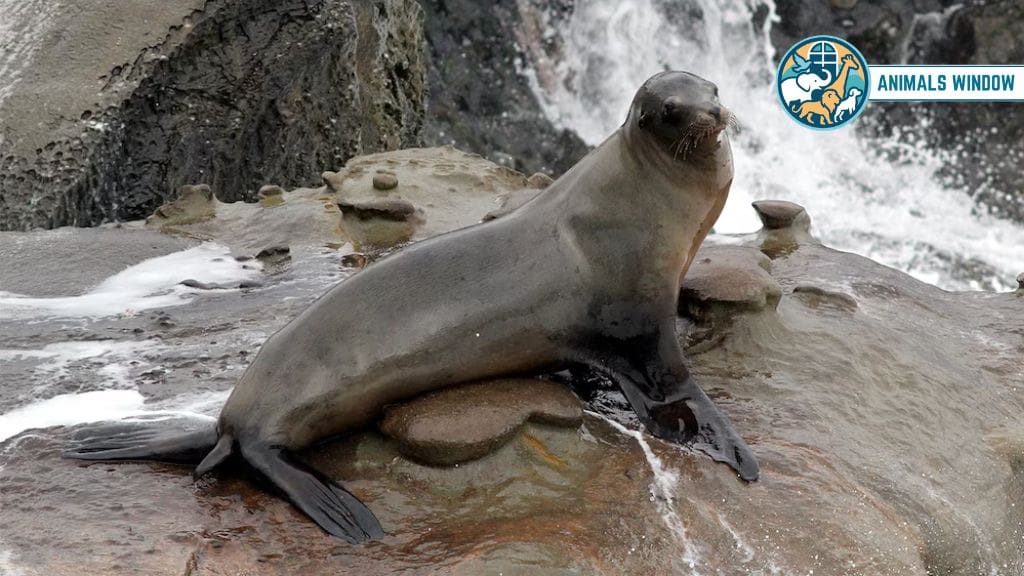
1. California Sea Lion
- Scientific name: Zalophus californianus
- Size: 5.5–7.5 ft (males)
- Weight: 440–860 lbs (males)
- Diet: Fish, squid, octopus
- Habitat: Pacific Coast of North America
- Lifespan: 20–30 years
The California Sea Lion is probably the flippered mammal most people picture first. They crowd harbors, boat docks, and rocky coastlines along the U.S. Pacific Coast with impressive noise and personality. Males are much larger than females and carry a raised bony bump on their forehead called a sagittal crest — a feature that grows bigger as they age.
What truly sets this ocean animal with flippers apart is raw athletic ability. Their front flippers are long and powerful, almost like wings. Underwater, they don’t paddle — they fly. Sea lions can twist, loop, and sprint at up to 25 mph, making them among the most agile of all flippered mammal species. They’ve even been trained by the U.S. Navy for underwater search missions because of their precision in murky water.
🔥 Comparison Fact: A male California Sea Lion is about as long as a standard park bench — but weighs nearly as much as a grand piano.
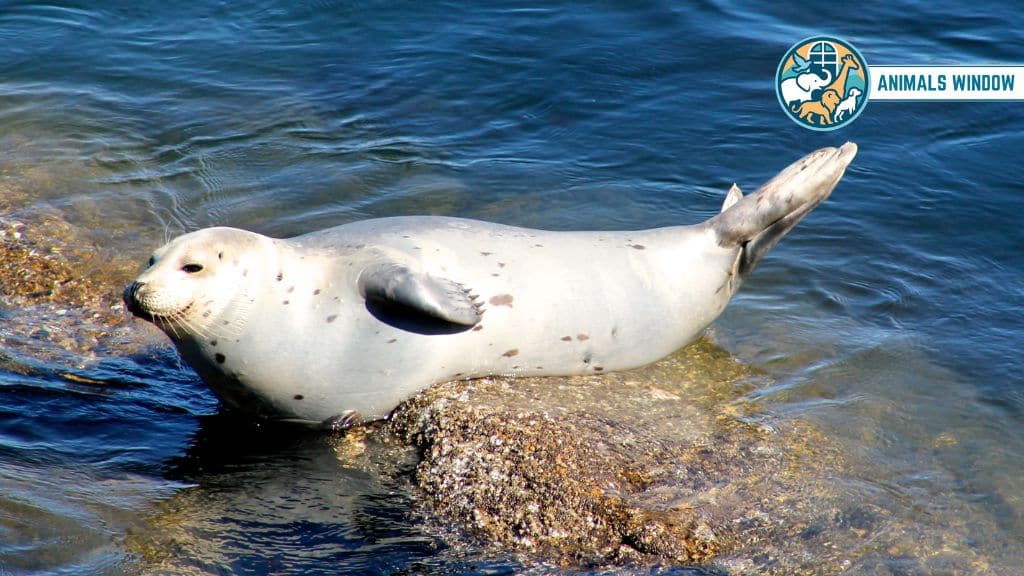
2. Harbor Seal
- Scientific name: Phoca vitulina
- Size: 4.9–5.6 ft
- Weight: 110–370 lbs
- Diet: Fish, crustaceans, mollusks
- Habitat: Coastal waters of North Atlantic and Pacific
- Lifespan: 25–35 years
The Harbor Seal is one of the most widespread whiskered marine animals with flippers in the world. Unlike sea lions, they can’t rotate their hind flippers forward. So on land, they move by flopping and wriggling in a caterpillar-like motion — which looks awkward but works perfectly well on slippery rocks.
What makes Harbor Seals genuinely remarkable is their sleep strategy. They can sleep underwater in a posture scientists call “bottling” — staying vertically still with just their nose above the surface. They’ve also been observed sleeping on the seafloor for short stretches. Their brain handles this by letting one hemisphere sleep while the other stays alert for predators.
🔥 Comparison Fact: A Harbor Seal weighs about the same as a large motorcycle — but fits neatly on a car-sized rock.
3. Leopard Seal
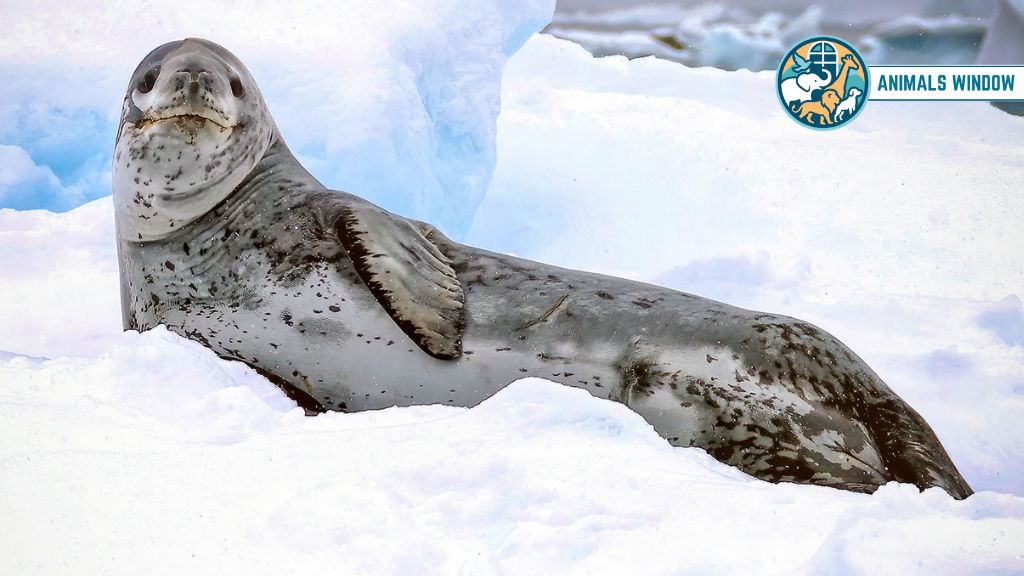
- Scientific name: Hydrurga leptonyx
- Size: 8–11.5 ft
- Weight: 440–1,320 lbs
- Diet: Penguins, fish, krill, seals
- Habitat: Antarctic pack ice
- Lifespan: 26 years
The Leopard Seal doesn’t look like a typical cute, whiskered marine animal with flippers. It looks like a threat. Its head is massive and reptilian, its jaws stretch wide enough to swallow a penguin whole, and its spotted coat gives it the name. It is one of the top predators in Antarctica — second only to the Orca.
Here’s the behavior that surprises most people: Leopard Seals have been documented bringing live penguins to human divers and researchers — almost like offering a gift. Scientists believe this is a teaching behavior, similar to how cats bring prey home. Whether it’s genuinely instructive or just play is still debated. Either way, it shows a level of social complexity nobody expected from this apex predator.
🔥 Comparison Fact: A large female Leopard Seal stretches about as long as a compact car and outweighs most adult male humans by more than 10 times.
4. Northern Elephant Seal
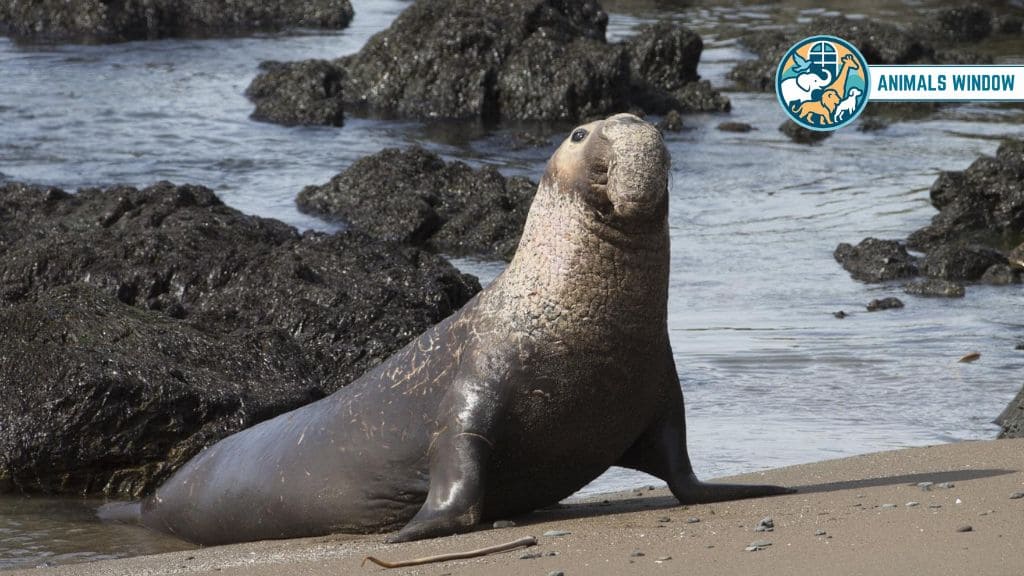
- Scientific name: Mirounga angustirostris
- Size: Up to 14 ft (males)
- Weight: Up to 5,000 lbs (males)
- Diet: Squid, fish, rays, sharks
- Habitat: Pacific Coast of North America
- Lifespan: 9 years (males), 22 years (females)
The Northern Elephant Seal is the largest of all flippered mammal animals in the Northern Hemisphere. Males grow an inflatable, trunk-like nose — the “elephant” in the name — which amplifies their roaring calls during mating battles. These fights look brutal because they are. Males crash into each other with full body weight, leaving deep scars.
But their diving behavior is what earns real scientific attention. Northern Elephant Seals can dive to 5,000 feet and hold their breath for two hours. During these dives, their heartbeat drops from 100 beats per minute to just 4–15 beats. Their blood physically changes — it becomes richer in oxygen-carrying red blood cells to survive the depth.
🔥 Comparison Fact: A full-grown male Northern Elephant Seal weighs about the same as a full-size pickup truck.
5. Walrus

- Scientific name: Odobenus rosmarus
- Size: 7.25–11.5 ft
- Weight: 1,320–3,700 lbs
- Diet: Clams, mussels, worms, sea cucumbers
- Habitat: Arctic Ocean and sub-Arctic seas
- Lifespan: 40 years
The Walrus is instantly recognizable. Those two long ivory tusks — which can reach 3 feet in length — aren’t just for show. They’re used to haul the animal’s enormous body out of icy water, to chip breathing holes through sea ice, and to establish dominance in crowded colonies. Both males and females have them.
What many people overlook is how the Walrus feeds. It doesn’t bite or chew clams directly. Instead, it presses its thick lips against the seafloor and creates a powerful suction — like an industrial vacuum — to pop shellfish right out of their shells. Each walrus has around 400–700 whiskers called vibrissae, which are sensitive enough to locate clams in complete darkness on the ocean floor.
🔥 Comparison Fact: A large male Walrus weighs about as much as a mid-sized family car, making it the heaviest of all pinniped species.
6. Humpback Whale
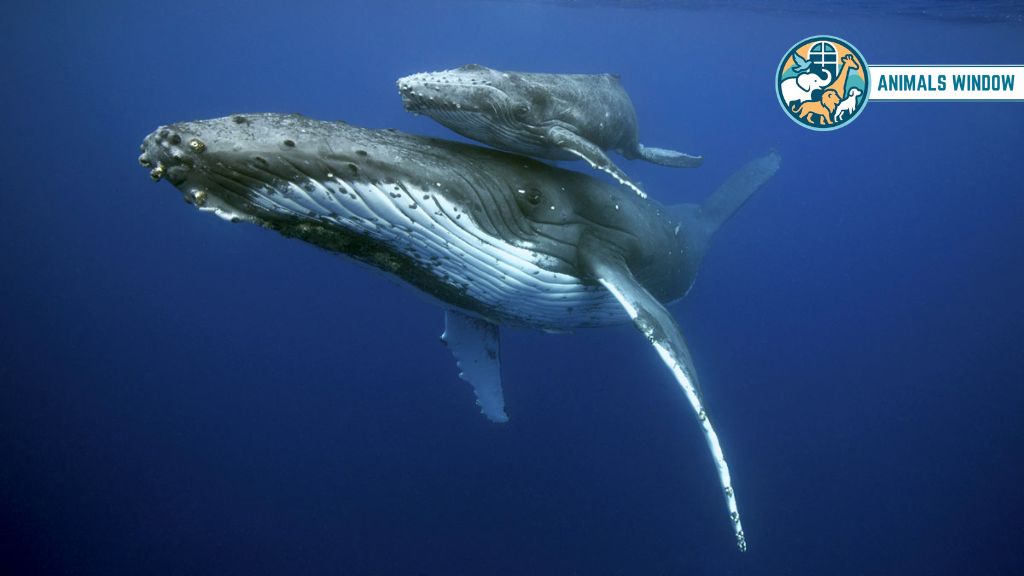
- Scientific name: Megaptera novaeangliae
- Size: 48–62.5 ft
- Weight: 25–30 tons
- Diet: Krill, small fish
- Habitat: All major oceans
- Lifespan: 80–90 years
The Humpback Whale is one of the most dramatic ocean animals with flippers — not just because of its size, but because of its pectoral fins. Those fins stretch up to 16 feet long, making them the longest appendages of any animal alive today. The bumps along the leading edge (called tubercles) aren’t decorative — they function like the serrated edge of a knife, reducing drag and improving maneuverability at slow speeds.
Humpback Whales also invented bubble-net feeding. A group works together, spiraling below a school of fish while exhaling air. The rising bubbles form a cylindrical wall the fish won’t cross. Then the whales lunge upward through the center, mouths wide open. It’s a coordinated hunting strategy that requires communication, timing, and memory — skills not commonly associated with whales.
🔥 Comparison Fact: A Humpback’s pectoral flipper alone is longer than a standard sedan.
7. Blue Whale
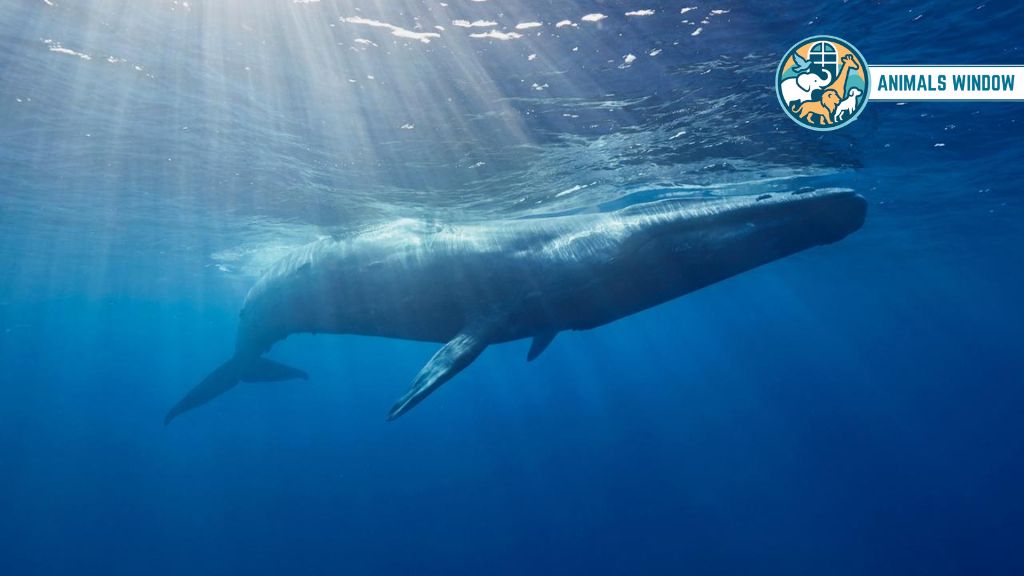
- Scientific name: Balaenoptera musculus
- Size: 80–100 ft
- Weight: Up to 200 tons
- Diet: Krill
- Habitat: All major oceans
- Lifespan: 80–110 years
The Blue Whale is the largest animal ever known to have lived on Earth — bigger than any dinosaur. Its heart alone is the size of a small car. Its tongue weighs as much as an elephant. And yet, this enormous mammal with flippers feeds almost exclusively on krill — tiny shrimp-like creatures no bigger than a paperclip.
During feeding season, a Blue Whale eats up to 4 tons of krill per day. It does this through baleen plates — hundreds of stiff, comb-like structures that hang from the upper jaw. The whale lunges forward, takes in a massive gulp, then pushes the water out with its tongue while the krill get trapped. What’s surprising is that their pectoral flippers play a precise role in steering these lunges — acting as rudders that allow split-second turns despite the animal’s massive size.
🔥 Comparison Fact: A Blue Whale is roughly as long as two school buses parked end-to-end — and heavier than 30 adult African elephants.
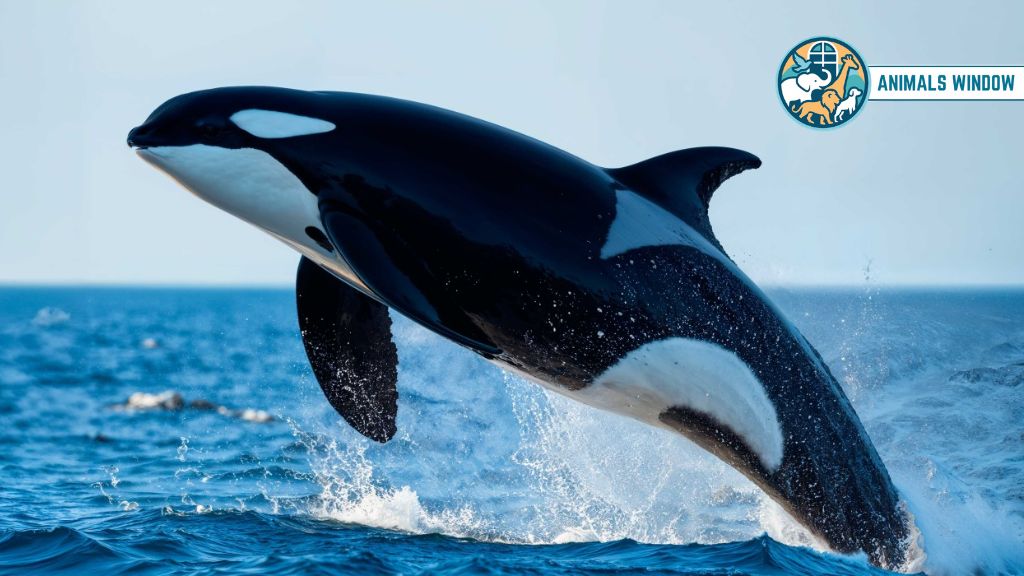
8. Orca / Killer Whale
- Scientific name: Orcinus orca
- Size: 20–26 ft
- Weight: 6–8 tons
- Diet: Fish, seals, sharks, whales
- Habitat: All oceans
- Lifespan: 50–80 years
The Orca is the ocean’s most effective apex predator. It sits at the very top of the marine food chain — no natural enemies. Its black-and-white body is built for power and precision, and its large, paddle-shaped flippers help it cut through water at speeds up to 34 mph. Orcas are true flippered mammal athletes.
What makes Orcas different from nearly every other sea animal with flippers is cultural behavior. Different Orca pods have different hunting techniques, different calls, and different prey preferences — passed from mothers to calves over generations. In one documented case, a pod learned to intentionally beach itself to catch sea lions on shore — a risky and learned tactic, not instinct. That kind of cultural transmission was once considered a purely human trait.
🔥 Comparison Fact: A full-grown male Orca is about as long as a moving truck — and its dorsal fin alone can reach 6 feet tall.
9. Bottlenose Dolphin

- Scientific name: Tursiops truncatus
- Size: 6–13 ft
- Weight: 330–1,430 lbs
- Diet: Fish, squid, shrimp
- Habitat: Tropical and temperate coastal waters worldwide
- Lifespan: 40–60 years
The Bottlenose Dolphin is perhaps the most studied of all flippered mammal species. Their curved, sickle-shaped flippers are perfectly designed for agility — they can accelerate, brake, and turn in fractions of a second. Most people know dolphins are smart. But the depth of that intelligence is still surprising.
Bottlenose Dolphins have been recorded using sea sponges as tools — placing them over their snouts while foraging along rough seafloor to protect their sensitive skin. This behavior is taught from mother to calf and is specific to certain populations. They also have individual signature whistles — unique sounds each dolphin uses to identify itself, functioning similarly to a name. No other non-human animal has been found to use individually assigned calls this way.
🔥 Comparison Fact: A Bottlenose Dolphin is roughly the length of a queen-size bed and as heavy as a riding lawn mower.
10. Dall’s Porpoise

- Scientific name: Phocoenoides dalli
- Size: 5.5–7.5 ft
- Weight: 130–440 lbs
- Diet: Fish, squid, crustaceans
- Habitat: North Pacific Ocean
- Lifespan: 15–22 years
The Dall’s Porpoise looks like a miniature Orca — black body, white patches — and it is the fastest cetacean in the world, reaching speeds of up to 34 mph in short bursts. For reference, most dolphins max out around 20 mph. The Dall’s Porpoise achieves this through sheer muscular power and a uniquely stiff body that reduces drag.
What’s distinctive about this ocean animal with flippers is how it creates a “rooster tail” — a spray of water that shoots up around it when it swims at high speed near the surface. Unlike dolphins that leap out of the water playfully, Dall’s Porpoises stay at the surface, barely breaking it, while shooting forward at explosive speed. They’re also unusual among porpoises for actively bow-riding alongside ships, sometimes for hours.
🔥 Comparison Fact: A Dall’s Porpoise is about the length of a standard office desk but packs enough muscle to outrun most ocean predators in a straight sprint.
11. Leatherback Sea Turtle

- Scientific name: Dermochelys coriacea
- Size: 4–8 ft
- Weight: 550–2,000 lbs
- Diet: Jellyfish
- Habitat: All major oceans, tropical to sub-Arctic waters
- Lifespan: 45–100 years
The Leatherback Sea Turtle is unlike every other sea turtle alive. Instead of a hard shell, it has a rubbery, leathery carapace — a mosaic of tiny bone fragments embedded in thick skin. This flexible structure lets it dive to depths of 4,000 feet, making it the deepest-diving reptile on Earth. It can also survive in near-freezing water — something no other sea turtle can do.
Its front flippers can span up to 9 feet from tip to tip — the widest of any sea animal with flippers proportional to body width. These massive paddles generate extraordinary thrust and allow the Leatherback to migrate up to 10,000 miles between nesting beaches and jellyfish feeding grounds. And since jellyfish have almost no caloric value, the Leatherback must consume hundreds every single day just to fuel those flippers.
🔥 Comparison Fact: A large Leatherback’s flipper span nearly matches the wingspan of a hang glider.
12. Green Sea Turtle

- Scientific name: Chelonia mydas
- Size: 3–4 ft
- Weight: 240–420 lbs
- Diet: Seagrass, algae (adults); jellyfish, invertebrates (juveniles)
- Habitat: Tropical and subtropical oceans worldwide
- Lifespan: 70–80 years
The Green Sea Turtle is named for the color of its fat — not its shell. The green tint comes from its diet of seagrass and algae, which pigment the fat beneath its skin. Adults are strict herbivores, but juveniles eat small animals before transitioning entirely to plants. That dietary switch is one of the most dramatic life-stage changes in any ocean animal with flippers.
What gives the Green Sea Turtle a special ecological role is grazing behavior. By cropping seagrass short, it keeps seagrass beds healthy and fast-growing — much like how mowing a lawn promotes new growth. Without Green Sea Turtles, seagrass meadows grow too tall, collapse, and die. Their flippers, long and wing-like, allow them to glide slowly and precisely along shallow meadows in a way no other turtle can replicate.
🔥 Comparison Fact: A Green Sea Turtle’s shell is roughly the size of a large pizza box, but its front flippers stretch nearly as wide as a car door.
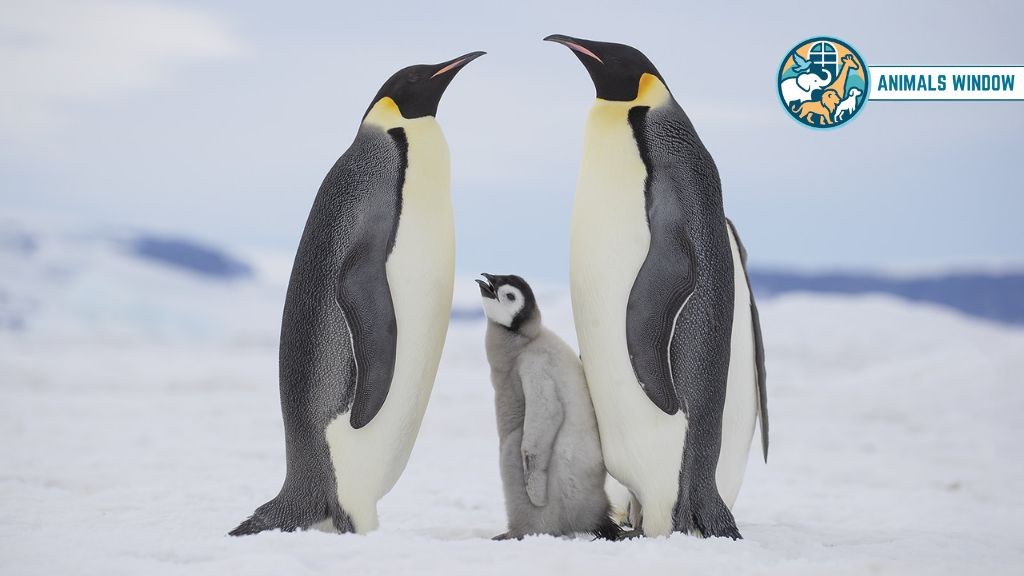
13. Emperor Penguin
- Scientific name: Aptenodytes forsteri
- Size: 3.5–4 ft
- Weight: 49–99 lbs
- Diet: Fish, squid, krill
- Habitat: Antarctic ice
- Lifespan: 20–25 years
The Emperor Penguin is the largest living penguin and one of the most extreme animals on the planet. It breeds in the middle of the Antarctic winter, in temperatures that drop to -76°F with winds reaching 125 mph. No other bird does this. Females lay a single egg, transfer it to the male, and head to sea. The male stands on ice, egg balanced on his feet, for up to 65 days — fasting through blizzards.
But it’s their flippers — called wings in penguins — that deserve attention. These stiff, flat limbs cannot fold like bird wings. They’re permanently extended and dense with muscle and bone. Underwater, an Emperor Penguin essentially flies — reaching speeds of 15 mph and diving to 1,850 feet. They are the deepest-diving bird alive. On land, those same flippers help them huddle tightly in rotating groups to stay warm, each bird moving slowly inward from the cold outer edge.
🔥 Comparison Fact: An Emperor Penguin is about as tall as a five-year-old child — but its flippers are as rigid and powerful as wooden paddles.
14. Galápagos Penguin

- Scientific name: Spheniscus mendiculus
- Size: 19–20 inches
- Weight: 4.4–8.8 lbs
- Diet: Small fish, crustaceans
- Habitat: Galápagos Islands, Ecuador
- Lifespan: 15–20 years
The Galápagos Penguin is the only penguin that lives north of the equator — and it survives in a place most people associate with desert heat, not ice. It does this by relying on cold ocean currents (the Humboldt and Cromwell currents) that bring cold, fish-rich water up to the islands. When the currents weaken during El Niño years, the penguin population can crash by 70%.
This flippered mammal has developed clever heat management behaviors. It holds its flippers away from its body to radiate heat, stands in the shade during midday, and pants like a dog. Some pairs nest in the same rock crevice year after year with the same partner. With only around 1,200 individuals remaining, it is the rarest penguin species in the world — and one of the most endangered of all flippered animals.
🔥 Comparison Fact: A Galápagos Penguin is roughly the size of a large house cat and weighs about as much as a bag of flour.
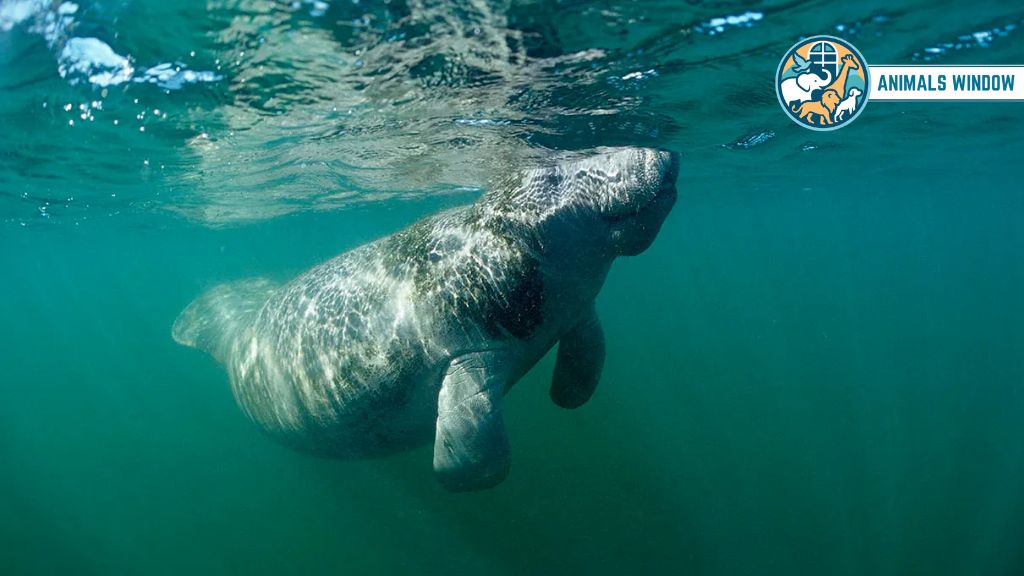
15. West Indian Manatee
- Scientific name: Trichechus manatus
- Size: 8–13 ft
- Weight: 440–1,300 lbs
- Diet: Seagrass, algae, water hyacinth
- Habitat: Coastal waters, rivers of Florida, Caribbean, Gulf of Mexico
- Lifespan: 60+ years
The West Indian Manatee is one of the most unusual flippered mammal species in existence. Its closest living relatives are elephants and hyraxes — not dolphins or seals. It moves through warm, shallow water at a gentle 3–5 mph, grazing on seagrass for up to 8 hours a day. Its rounded paddle-like flippers still contain the bone structure of a five-fingered hand — a clear sign of its land-dwelling ancestors.
Here’s what most people don’t know: Manatees replace their teeth continuously throughout their life in a conveyor-belt system. New teeth grow in at the back and slowly move forward as old ones wear out — perfect for a lifetime of grinding rough aquatic vegetation. They also use their flippers to “walk” along the bottom of shallow rivers, pushing themselves slowly forward with surprising control.
🔥 Comparison Fact: A West Indian Manatee is about the length of a standard kayak and can weigh nearly as much as a golf cart.
16. Dugong

- Scientific name: Dugong dugon
- Size: 8–13 ft
- Weight: 510–1,100 lbs
- Diet: Seagrass
- Habitat: Coastal Indo-Pacific, Red Sea, East Africa to Australia
- Lifespan: 70+ years
The Dugong is the Manatee’s quieter cousin — and the only surviving member of the family Dugongidae. Its tail is forked like a whale’s (the Manatee’s tail is rounded like a paddle), which is one of the easiest ways to tell them apart. Dugongs are the only large marine herbivores that depend almost entirely on seagrass — they cannot switch to other food sources the way manatees can.
When Dugongs feed, they leave distinctive feeding trails — long, snaking trenches in the seafloor where they’ve uprooted entire seagrass patches with their snouts. These trails are visible from the surface and are used by researchers to track population movements. Dugongs can consume up to 88 lbs of seagrass per day, and some individuals have been observed returning to the same feeding site every single day for decades.
🔥 Comparison Fact: A Dugong is roughly the size and weight of a large refrigerator lying on its side — but significantly more graceful in water.
17. Sea Otter

- Scientific name: Enhydra lutris
- Size: 3.9–4.9 ft
- Weight: 31–99 lbs
- Diet: Sea urchins, clams, crabs, mussels
- Habitat: Coastal North Pacific — Alaska to California
- Lifespan: 10–23 years
The Sea Otter is the smallest marine mammal in North America — and the only one that uses tools regularly. It cracks open shellfish by placing a flat rock on its chest while floating on its back, then slamming the shell against the rock until it breaks. Some individuals carry a favorite rock tucked under their armpit between dives. That’s a long-term tool relationship — rare in the animal kingdom.
Unlike every other marine mammal, Sea Otters have no blubber for insulation. Instead, they stay warm through the densest fur of any animal on Earth — up to 1 million hairs per square inch. Their small hind flippers are wide and flat, and they use them to steer while floating. On land, they’re surprisingly clumsy. But floating on the surface, wrapped in kelp to keep from drifting, they are perfectly at home — and they’ll hold hands with another otter while sleeping so they don’t drift apart.
🔥 Comparison Fact: A Sea Otter is about the length of a baseball bat and weighs roughly as much as a medium-sized dog.
18. Plesiosaur (Extinct)
- Scientific name: Plesiosaurus dolichodeirus (type species)
- Size: 11–46 ft (varies by species)
- Weight: Estimated 2–15 tons
- Diet: Fish, cephalopods, other marine animals
- Habitat: Ancient oceans — Jurassic to Cretaceous period (200–66 million years ago)
- Lifespan: Unknown
The Plesiosaur is the most extraordinary entry on this list — because it’s been gone for 66 million years and still makes scientists argue. It was not a dinosaur. It was a separate group of marine reptiles with a body plan unlike anything alive today: a round body, a very long neck (in some species), a small head, and four massive flippers arranged almost identically to the four limbs of land animals.
Those four flippers are the real scientific puzzle. Research published in the last decade suggests Plesiosaurs used a underwater flying motion — similar to sea turtles and penguins — where all four flippers stroked in a coordinated pattern to generate thrust and lift simultaneously. That’s a completely different swimming style than whales or fish. No living animal swims this way with four limbs. The Plesiosaur’s flippered anatomy represents an evolutionary solution that evolved once and never appeared again after the mass extinction 66 million years ago. It is the ghost of an entirely different way to move through water.
🔥 Comparison Fact: A large Plesiosaur like Elasmosaurus stretched up to 46 feet — about the length of a city bus — with flippers each as wide as a dining table.
FAQs About Animals with Flippers
What are animals with flippers called?
Animals with flippers don’t share a single scientific name. Depending on the group, they’re called pinnipeds (seals, sea lions, walrus), cetaceans (whales, dolphins), sirenians (manatees, dugongs), or simply marine reptiles (sea turtles). What they share is the flipper — a flat, paddle-shaped limb adapted for swimming.
Do all animals with flippers live in the ocean?
Most do, but not all. Manatees live in rivers and coastal waters. Sea otters stick to kelp forest coastlines. The Galápagos Penguin nests on tropical islands. And some seals split time between land and sea.
Which animal has the largest flippers?
The Humpback Whale holds this record. Its pectoral flippers reach up to 16 feet in length — the longest of any animal alive today.
Are flippers the same as fins?
Not exactly. Flippers are modified limbs with internal bone structure (like fingers or arm bones). Fins — found on fish — are made of rays or spines and don’t contain those limb bones. A dolphin’s flipper has the same bones as a human hand. A fish’s fin does not.
Which flippered animal is most endangered?
The Galápagos Penguin is critically threatened, with fewer than 1,200 individuals. Among sea turtles, the Leatherback and Hawksbill are also severely endangered. The Dugong is listed as vulnerable across most of its range.
Can flippered mammals breathe underwater?
No. All flippered mammals — seals, dolphins, whales, manatees — breathe air. They hold their breath during dives, sometimes for extraordinary durations. The Northern Elephant Seal holds the mammal record at nearly two hours.
Which animals with flippers are the fastest swimmers?
The Orca and Dall’s Porpoise both reach around 34 mph. Among sea turtles, the Leatherback is fastest at up to 22 mph. Emperor Penguins hit 15 mph — fast enough to launch fully out of the water onto ice ledges.
Discover More Animals Guides:

I have loved animals since I was a kid. I enjoy reading about how animals live, eat, move, and survive. I started Animals Window to share what I learn in a simple and easy way. I write about animal body parts, size, behavior, diet, habitats, and species. My goal is to make animal facts clear and fun for everyone to understand.