Animals with shells include mollusks like clams and snails, crustaceans like crabs, reptiles like turtles and tortoises, and even insects and mammals. These hard or tough outer coverings are made from calcium carbonate, chitin, or keratin. Shells serve as armor, homes, and camouflage. Over 100,000 known species carry some form of protective shell.
Table of Contents
Quick List of Animals with Shells
- Giant Clam
- Garden Snail
- Queen Conch
- Chambered Nautilus
- Chitons (Green Chiton)
- King Crab
- Horseshoe Crab
- Sally Lightfoot Crab
- Hermit Crab
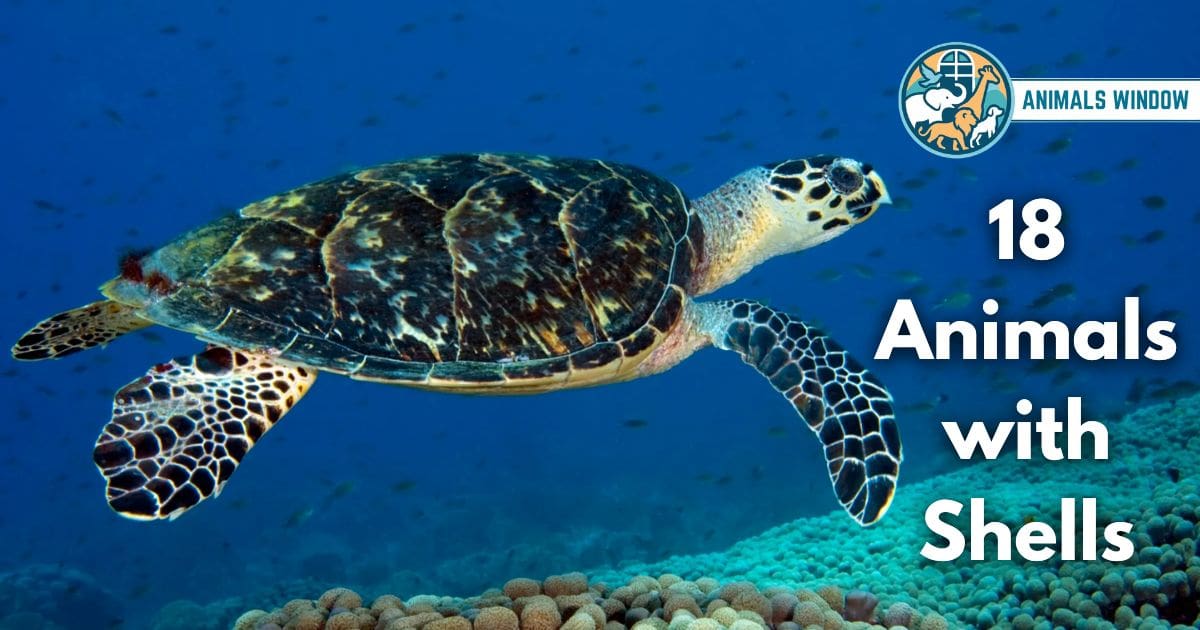
- Hawksbill Sea Turtle
- Common Snapping Turtle
- Gopher Tortoise
- Sea Urchin
- Longhorn Cowfish
- Nine-Banded Armadillo
- Texas Ironclad Beetle
- American Dog Tick
- Brachiopods (Lamp Shells)
This list covers sea animals with shells, land animals with shells, and a few surprising in-between cases. Some of these animals have been alive since before the dinosaurs. Others look like they belong in a science fiction movie.
Let’s get into it.
1. Giant Clam

- Scientific name: Tridacna gigas
- Size: Up to 4.5 feet (137 cm)
- Weight: Up to 500 lbs (227 kg)
- Diet: Algae (via photosynthesis from symbiotic algae in its tissue)
- Habitat: Shallow coral reefs in the Indo-Pacific Ocean
- Lifespan: Over 100 years
The giant clam is the largest bivalve mollusk on Earth. It lives anchored to coral reefs in warm, clear, shallow water — never moving once it settles as a juvenile. Its two massive shells can open wide enough to fit a human torso, but it poses no danger. The “man-eating clam” story is pure myth.
What makes this animal truly unusual is its food source. Giant clams don’t hunt. Instead, they host millions of photosynthetic algae called zooxanthellae in their colorful mantle tissue. Those algae produce sugar using sunlight, and the clam absorbs that sugar directly. It’s essentially a living solar panel. The vivid blues, greens, and purples you see on its mantle aren’t just pretty — they help control how much light reaches the algae.
🔥 Comparison Fact: A fully grown giant clam weighs about as much as three adult male lions combined.
2. Garden Snail

- Scientific name: Cornu aspersum
- Size: Shell up to 1.3 inches (3.3 cm)
- Weight: 0.07–0.35 oz (2–10 g)
- Diet: Leaves, stems, fruits, fungi
- Habitat: Gardens, woodlands, fields across Europe and beyond
- Lifespan: 2–5 years in the wild; up to 10 in captivity
The garden snail is one of the most common land animals with shells in the world. It carries its shell from birth — the shell is not a separate home it moves into but a living part of its body, fused to its internal organs. Damage to the shell isn’t just cosmetic. It’s life-threatening unless the snail can repair it with calcium.
Here’s what most people don’t know: snails are simultaneous hermaphrodites, meaning every individual has both male and female reproductive organs. When two snails mate, both can become pregnant. And before mating, they engage in a ritual that can last hours — shooting small calcium darts at each other called “love darts” that increase fertilization success by changing the partner’s hormonal response. That’s not romantic. That’s biological warfare dressed as courtship.
🔥 Comparison Fact: A garden snail’s shell is roughly the size of a grape — but it’s strong enough to support up to 100 times the snail’s own body weight.
3. Queen Conch
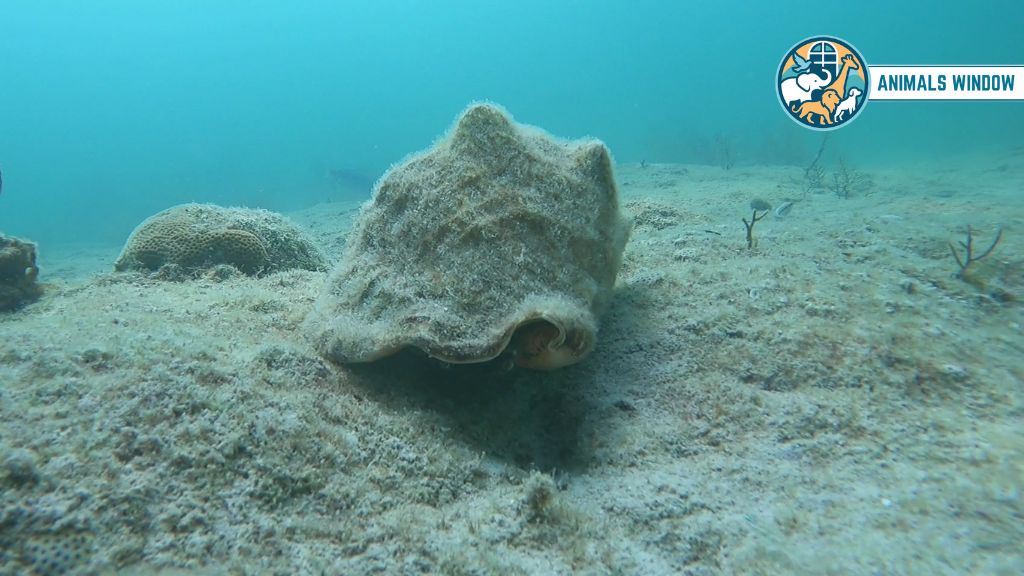
- Scientific name: Aliger gigas
- Size: Shell up to 12 inches (30 cm)
- Weight: Up to 5 lbs (2.3 kg)
- Diet: Algae, seagrass
- Habitat: Shallow Caribbean and Gulf of Mexico seabeds
- Lifespan: Up to 30 years
The queen conch is one of the most recognizable sea animals with shells in the world. Its spiral shell flares out into a wide, orange-pink lip at maturity — that flared lip is how you know an adult from a juvenile. Juveniles don’t have it yet. Fishers who only harvest adults help protect the population because juveniles get left behind to reproduce.
But here’s what few people realize: the conch doesn’t glide smoothly. It leaps. Using a muscular foot with a claw-like operculum, it pushes off the seafloor in a jerky, lunging movement — almost like a tiny pogo stick. It’s genuinely strange to watch. And those eyes? They sit on long stalks and have corneas, lenses, and retinas — surprisingly complex for a snail-like creature.
🔥 Comparison Fact: A queen conch shell is roughly the length of a standard ruler — 12 inches — and thick enough that hurricane-force waves rarely crack it.
4. Chambered Nautilus

- Scientific name: Nautilus pompilius
- Size: Shell up to 10 inches (25 cm) in diameter
- Weight: Up to 2.8 lbs (1.3 kg)
- Diet: Shrimp, fish, carrion
- Habitat: Deep tropical Pacific and Indian Ocean slopes
- Lifespan: Up to 20 years
The chambered nautilus is a living fossil — its basic design has barely changed in 500 million years. It predates dinosaurs, the first trees, and even most fish. The shell it lives in isn’t just decoration. It’s a buoyancy engine. Inside the coiled shell are up to 30 sealed chambers. As the nautilus grows, it builds new chambers and fills the old ones with gas — adjusting how much gas is in each chamber lets it rise or sink without swimming. Nature invented the submarine long before we did.
Unlike its cephalopod relatives — octopuses, squid — the nautilus has up to 90 simple tentacles with no suckers. It hunts by smell more than sight, using primitive eyes that work like a pinhole camera. It’s the only living cephalopod with a true external shell.
🔥 Comparison Fact: The cross-section of a nautilus shell follows the golden ratio so precisely that it’s used in architecture and design textbooks worldwide.
5. Chitons (Green Chiton)
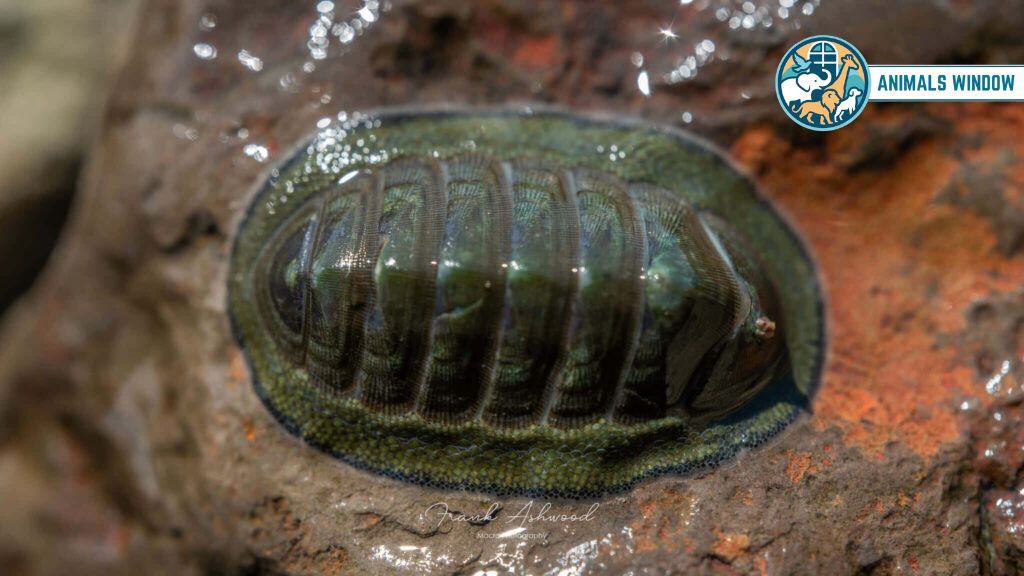
- Scientific name: Chiton olivaceus
- Size: 1–5 inches (2.5–12 cm)
- Weight: A few grams
- Diet: Algae, biofilm on rocks
- Habitat: Rocky intertidal zones in the Mediterranean and Atlantic
- Lifespan: Up to 20 years
Chitons are one of the oldest mollusks alive. And their shell is unlike anything else on this list — it’s not one piece. It’s eight overlapping plates arranged in a row, held together by a tough muscular girdle. That segmented design gives chitons remarkable flexibility. When dislodged from a rock, they can roll into a tight ball, protecting their soft underside completely.
What stands out most about chitons is their magnetite teeth — literally teeth made of iron. They use a feeding structure called a radula to scrape algae off rock surfaces, and those teeth are the hardest biological material ever recorded. Harder than human enamel. Harder than most metals. Scientists are studying magnetite tooth structure for use in advanced materials engineering.
🔥 Comparison Fact: A chiton’s eight-plated shell looks remarkably like a tiny armored caterpillar — about the length of a thumb.
6. King Crab
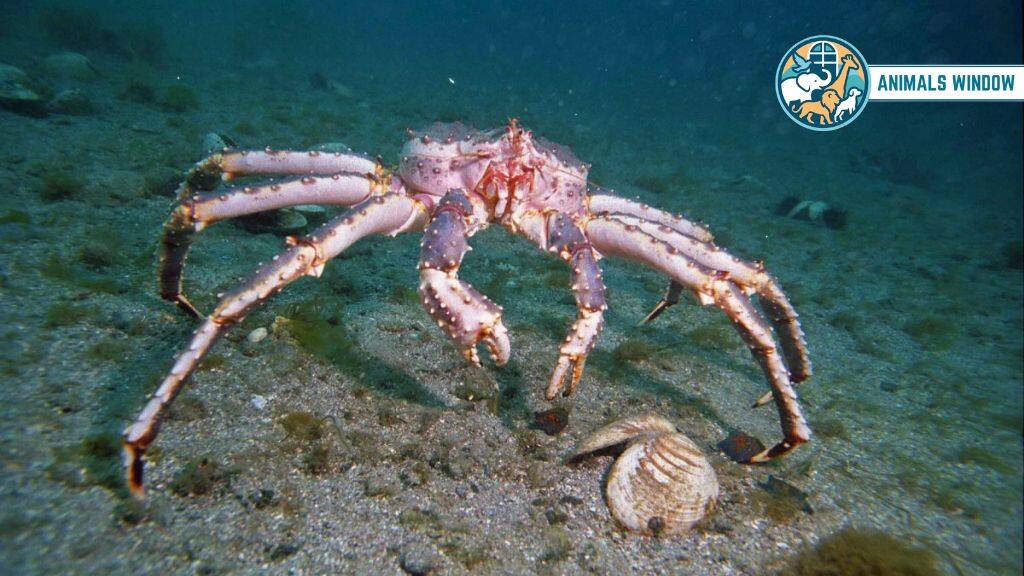
- Scientific name: Paralithodes camtschaticus
- Size: Leg span up to 5 feet (1.5 m)
- Weight: Up to 28 lbs (12.7 kg)
- Diet: Worms, clams, mussels, sea stars, fish
- Habitat: Cold waters of the Bering Sea and North Pacific
- Lifespan: 20–30 years
The red king crab is one of the most commercially valuable crustaceans on Earth and one of the most dramatic-looking hard-shell animals in the ocean. Its body is covered in a spiny exoskeleton called a carapace, which it sheds periodically as it grows — a process called molting. During molting, the crab is completely soft and highly vulnerable. It hides for weeks until the new shell hardens.
King crabs walk on four pairs of legs but technically have a fifth pair — reduced, tucked under the shell — used by females to carry eggs. And despite looking symmetrical, king crabs are actually asymmetrical internally, with organs shifted to one side. No one is entirely sure why.
🔥 Comparison Fact: A large king crab stretches about as wide as a bicycle wheel from leg tip to leg tip.
7. Horseshoe Crab
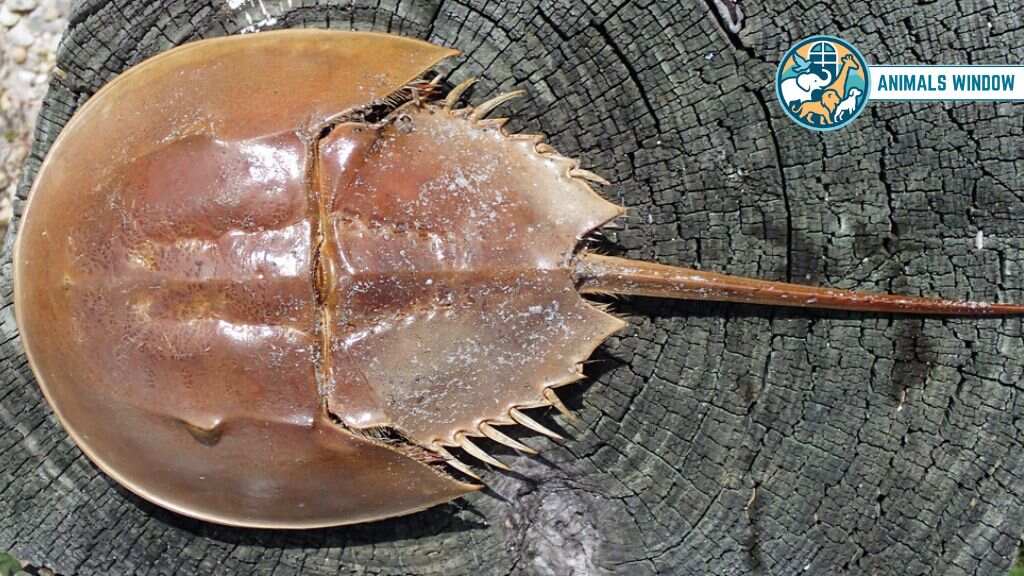
- Scientific name: Limulus polyphemus
- Size: Up to 24 inches (60 cm) long
- Weight: Up to 10 lbs (4.5 kg)
- Diet: Worms, mollusks, algae
- Habitat: Atlantic coast of North America, Gulf of Mexico
- Lifespan: Up to 40 years
Despite the name, horseshoe crabs are not true crabs. They’re more closely related to spiders and scorpions. Their hard, dome-shaped shell — the prosoma — is a single hinged piece of armor that covers their entire front body. Underneath is a mess of book gills, legs, and a long spike-like tail called a telson.
These animals are medically irreplaceable. Their blue blood contains a compound called Limulus amebocyte lysate (LAL), which clots instantly around bacterial toxins. Every injectable drug, vaccine, and medical device approved in the U.S. must pass an LAL test. Without horseshoe crabs, modern pharmaceutical safety testing would collapse. They’ve been patrolling coastlines for over 450 million years — and they’re doing us a critical favor every time we get a vaccine.
🔥 Comparison Fact: A horseshoe crab’s shell is roughly the size and shape of an army combat helmet.
8. Sally Lightfoot Crab

- Scientific name: Grapsus grapsus
- Size: Shell up to 5 inches (12.7 cm)
- Weight: Up to 1.5 lbs (0.7 kg)
- Diet: Algae, sea lion feces, carrion, small invertebrates
- Habitat: Rocky shorelines of the Galápagos Islands and Pacific coast
- Lifespan: Up to 8 years
Sally Lightfoot crabs are the color-riot members of this shell animals list. Adults are electric red and orange with blue undersides. Juveniles are completely black — nearly invisible against dark volcanic rock. The color change as they mature isn’t just cosmetic. It signals sexual maturity and signals to predators that they’re now fast enough to escape.
And fast they are. Sally Lightfoots are built for speed on wet rock. They run sideways at remarkable speed, can skip across water briefly, and are almost impossible to catch by hand. Charles Darwin tried and failed repeatedly on his famous Galápagos visit. Their four pairs of legs are long and widely splayed for maximum stability on slippery surfaces.
🔥 Comparison Fact: A Sally Lightfoot crab’s shell is about the width of a large hamburger bun — but it moves across rocks at speeds that would embarrass most joggers.
9. Hermit Crab
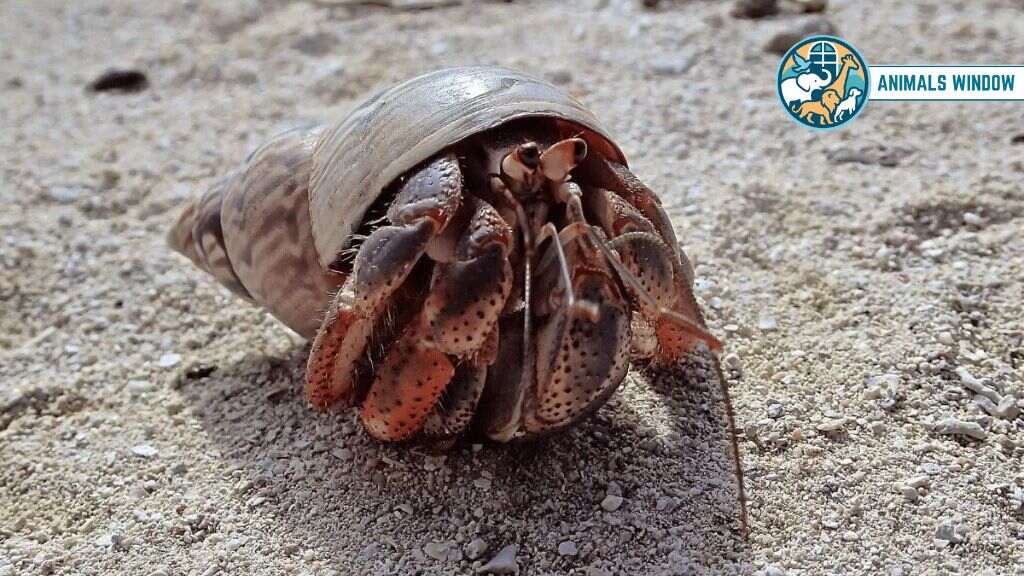
- Scientific name: Pagurus bernhardus (common species)
- Size: 0.5–6 inches (1.2–15 cm) depending on species
- Weight: A few grams to a few ounces
- Diet: Algae, plankton, worms, organic debris
- Habitat: Intertidal zones, shallow ocean floors worldwide
- Lifespan: 10–30 years in the wild
The hermit crab is the only animal on this list that borrows its shell rather than growing one. Its abdomen is soft and curled — shaped perfectly to fit inside a gastropod shell. As the crab grows, it finds a new, larger shell to move into. And they’re picky about it. Studies show hermit crabs will physically inspect a shell, tap it, measure the opening with their claws, and then make a decision.
They also trade shells. When a larger shell shows up, a chain reaction can form. One crab takes the new shell, leaves its old one, another crab claims that, and so on — a coordinated shell vacancy chain involving dozens of crabs happening in minutes. It’s one of the most complex social behaviors in crustaceans.
🔥 Comparison Fact: The shell a hermit crab lives in typically belonged to a dead whelk or periwinkle — the crab is essentially squatting in another creature’s former home.
10. Hawksbill Sea Turtle
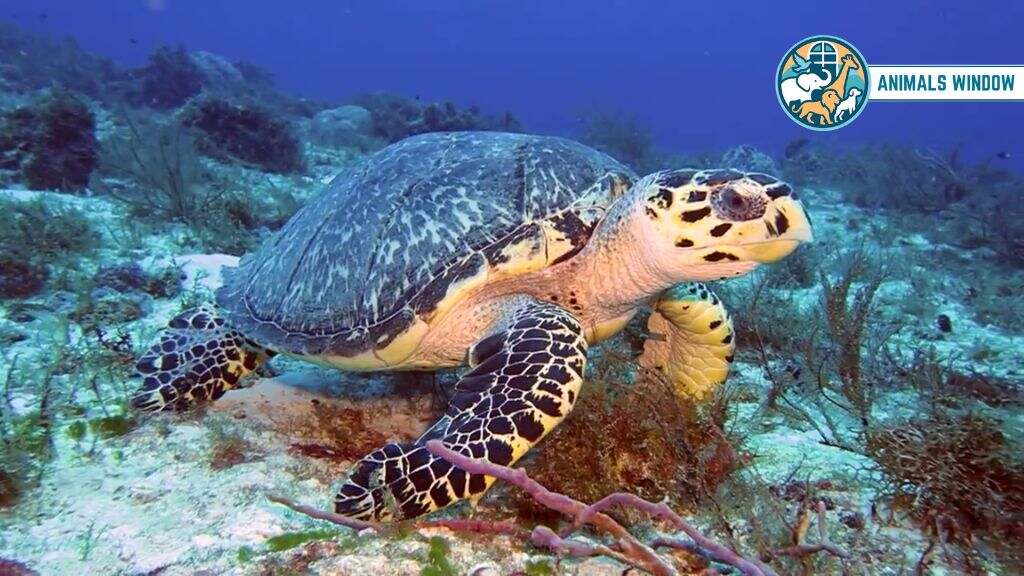
- Scientific name: Eretmochelys imbricata
- Size: Up to 45 inches (114 cm)
- Weight: Up to 180 lbs (82 kg)
- Diet: Almost exclusively sea sponges
- Habitat: Tropical coral reefs worldwide
- Lifespan: Up to 50 years
The hawksbill sea turtle gets its name from its narrow, pointed beak — shaped exactly like a hawk’s. That beak lets it reach into tight crevices in coral reefs to extract sea sponges, which make up the vast majority of its diet. Sea sponges are toxic to most animals. Hawksbills have evolved a resistance to sponge toxins that researchers still don’t fully understand.
Its shell — called a carapace — is made of overlapping scutes (plate-like scales) in striking amber and brown patterns. This made it the primary target of the tortoiseshell trade for centuries. The shell was used in jewelry, combs, and eyeglass frames. That exploitation drove the species to critically endangered status, and it hasn’t fully recovered.
🔥 Comparison Fact: A hawksbill’s carapace is about the size of a large serving tray, with scute patterns as unique as a human fingerprint.
11. Common Snapping Turtle
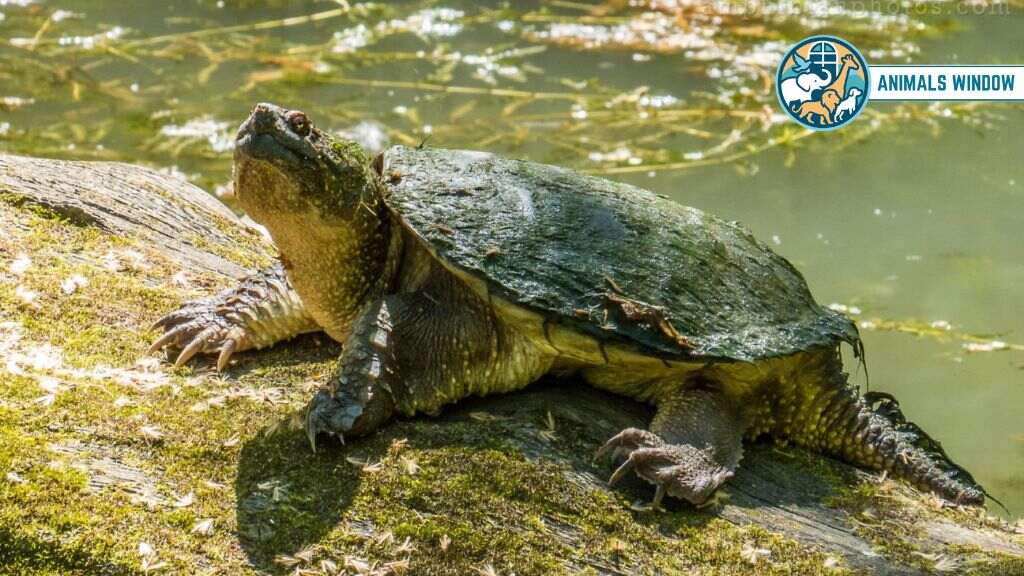
- Scientific name: Chelydra serpentina
- Size: Shell up to 20 inches (50 cm)
- Weight: 10–35 lbs (4.5–16 kg)
- Diet: Fish, frogs, birds, small mammals, plants, carrion
- Habitat: Freshwater lakes, rivers, ponds across North America
- Lifespan: 30–40 years in the wild
The common snapping turtle has a shell that looks barely functional — rough, ridged, and too small to fully retract into. Unlike most turtles, it cannot pull its head and legs completely inside. Instead, it evolved a different defense: attitude. On land, it snaps with explosive speed and force. In water, it’s calm and rarely bites unless provoked.
Its bite force is substantial — around 208 Newtons — but the more impressive stat is its strike speed. A snapper can lunge and bite faster than a human eye can track it. The jaw closes in under 70 milliseconds. And it can strike while facing in almost any direction because of its long, flexible neck.
🔥 Comparison Fact: A snapping turtle’s shell is about the size and shape of a dinner plate — but the animal attached to it is far more aggressive than anything you’d put on one.
12. Gopher Tortoise
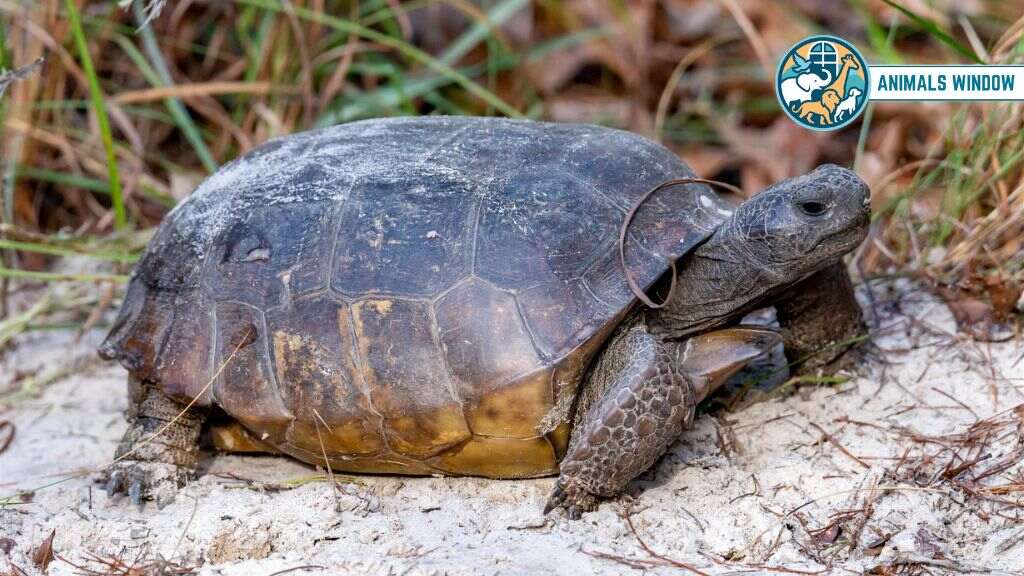
- Scientific name: Gopherus polyphemus
- Size: Shell 9–15 inches (23–38 cm)
- Weight: 8–15 lbs (3.6–6.8 kg)
- Diet: Grasses, fruit, berries, flowers
- Habitat: Dry, sandy upland habitats in the southeastern United States
- Lifespan: Up to 80 years
Gopher tortoises are the original ecosystem engineers of the American Southeast. They dig burrows up to 40 feet long and 10 feet deep. Those burrows don’t just benefit the tortoise — over 360 other species have been documented using gopher tortoise burrows, including rabbits, snakes, foxes, frogs, and insects. That’s why it’s classified as a keystone species. Without it, entire local ecosystems change.
The tortoise’s thick, dome-shaped shell is built for underground work. The front legs are flat and shovel-like, almost elephantine. The shell is tough enough to withstand a vehicle rolling over it. And when a wildfire burns through the scrubland, the tortoise retreats underground while many other animals perish on the surface.
🔥 Comparison Fact: A gopher tortoise burrow can be longer than a school bus — and shelters more species than many animal refuges.
13. Sea Urchin

- Scientific name: Strongylocentrotus purpuratus (purple sea urchin)
- Size: Test (shell) up to 4 inches (10 cm)
- Weight: Up to 1.5 lbs (0.7 kg)
- Diet: Algae, kelp
- Habitat: Rocky ocean floors worldwide, intertidal zones
- Lifespan: Some species live over 200 years
The sea urchin’s “shell” isn’t called a shell — it’s called a test. It’s a rigid, spherical structure made of interlocking calcium carbonate plates. The spines attached to it can rotate in all directions via ball-and-socket joints. But the spines aren’t just for defense. Sea urchins use them as a second set of legs, walking along the seafloor on their tips.
What’s remarkable is their tooth structure. Sea urchins have five curved, fused teeth arranged in a structure called Aristotle’s Lantern, named by the philosopher who first described it. Those teeth can drill into solid rock. Purple sea urchins carve hollows into sandstone reefs and live inside them — the rock cavity they carve is their second shell.
🔥 Comparison Fact: A sea urchin’s spherical test is roughly the size of a tennis ball, but the creature inside can outlive a human by a century.
14. Longhorn Cowfish

- Scientific name: Lactoria cornuta
- Size: Up to 18 inches (46 cm)
- Weight: Up to 2 lbs (0.9 kg)
- Diet: Algae, small invertebrates, worms, sponges
- Habitat: Tropical Indo-Pacific reefs and seagrass beds
- Lifespan: Up to 10 years
The longhorn cowfish is one of the most unusual animals on this list — and the only fish. Its body is encased in a bony box called an ostracodermal carapace, made of fused hexagonal plates. This is not a shell in the traditional sense — it’s bone that has replaced scales and grown into a rigid external box. The fish literally cannot bend its body. All swimming comes from the fins.
The cowfish has two long horn-like projections above its eyes — hence “longhorn” — and two more near the tail. It moves slowly and deliberately, like a tiny submarine. But when threatened, it releases a toxic slime called ostracitoxin from its skin, which can kill nearby fish in an enclosed tank. You can’t eat it out of anger — it poisons you back.
🔥 Comparison Fact: A longhorn cowfish is roughly the size of a large mango — but its bony box body makes it feel more like a carved wooden toy than a living fish.
15. Nine-Banded Armadillo
- Scientific name: Dasypus novemcinctus
- Size: 15–17 inches (38–43 cm) body, plus tail
- Weight: 8–17 lbs (3.6–7.7 kg)
- Diet: Insects, grubs, worms, small vertebrates
- Habitat: Grasslands, forests, and scrubland from the southern U.S. to South America
- Lifespan: 7–20 years
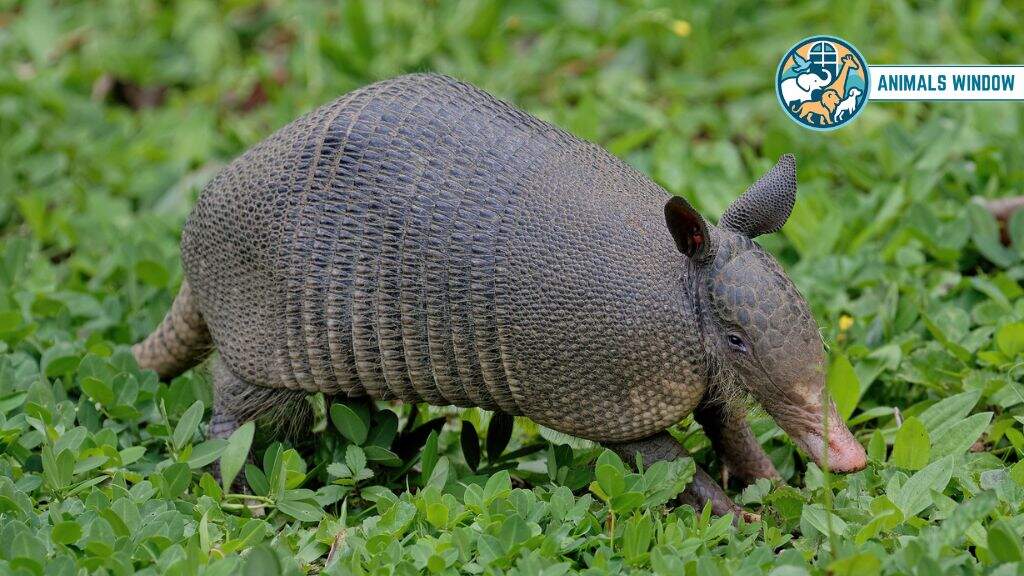
The nine-banded armadillo is the only mammal on this shell animals list. Its shell — called a carapace — is made of overlapping bony plates covered in keratin. Unlike most armadillo species, the nine-banded cannot roll into a complete ball. But it doesn’t need to. When threatened, it leaps straight up into the air — sometimes 3–4 feet — startling predators long enough to escape.
Armadillos are the only known non-human animals to naturally carry leprosy (Hansen’s disease). Because their body temperature runs slightly cooler than most mammals, Mycobacterium leprae thrives in their tissues. They played a pivotal role in developing the first leprosy vaccine because they were the only animal model scientists could use for the bacterium.
🔥 Comparison Fact: An armadillo’s carapace is roughly the size of a football — and surprisingly, it’s the only shelled mammal found naturally in the United States.
16. Texas Ironclad Beetle

- Scientific name: Zopherus nodulosus haldemani
- Size: Up to 1.5 inches (3.8 cm)
- Weight: Fractions of a gram
- Diet: Fungus growing inside dead oak trees
- Habitat: Oak woodlands of Texas and northern Mexico
- Lifespan: Several years as larvae; 1–3 years as adults
The Texas ironclad beetle has one of the hardest exoskeletons of any insect on Earth. Engineers at UC Irvine studied this beetle after it survived being run over by a vehicle. Its exoskeleton is interlocking in a jigsaw-like pattern that distributes crushing force across the entire body rather than concentrating it at a single point.
The design is now being applied to aerospace engineering — specifically, how aircraft fuselage panels connect. The beetle can’t fly (its wing covers are fused shut) and moves slowly, so its armor is its entire survival strategy. It simply outlasts whatever tries to eat or crush it. Even birds give up. Even mantises give up.
🔥 Comparison Fact: This beetle is about the length of a paper clip — yet its body can withstand being compressed to forces nearly 39,000 times its own weight.
17. American Dog Tick

- Scientific name: Dermacentor variabilis
- Size: 0.06–0.6 inches (1.5–15 mm) depending on feeding stage
- Weight: Less than 1 gram unfed; up to 0.5 g fully engorged
- Diet: Blood of mammals (deer, dogs, humans)
- Habitat: Grasslands, shrublands, woodland edges across North America
- Lifespan: Up to 2 years
The American dog tick has a sclerotized exoskeleton — a hard, plate-like shield called a scutum on its back. In females, this scutum covers only part of the back, allowing the abdomen to expand massively during blood feeding. A fully fed female can swell to over 100 times her unfed body size without her shell cracking. That level of elastic expansion is extraordinary for a hard-shelled creature.
Ticks are slow-motion predators in the most literal sense. A single feeding can take 5 to 7 days. During that time, the American dog tick can transmit Rocky Mountain spotted fever and tularemia. It detects hosts using a sensory organ called Haller’s organ, which detects heat, humidity, carbon dioxide, and even shadows — a remarkably complex detection system for something the size of a sesame seed.
🔥 Comparison Fact: An unfed American dog tick is about the size of a watermelon seed. Fully fed, it bloats to the size of a small grape.
18. Brachiopods (Lamp Shells)
- Scientific name: Lingula anatina (most primitive living species)
- Size: Shell up to 2 inches (5 cm)
- Weight: A few grams
- Diet: Plankton filtered from water
- Habitat: Shallow marine sediments worldwide
- Lifespan: Up to 30 years
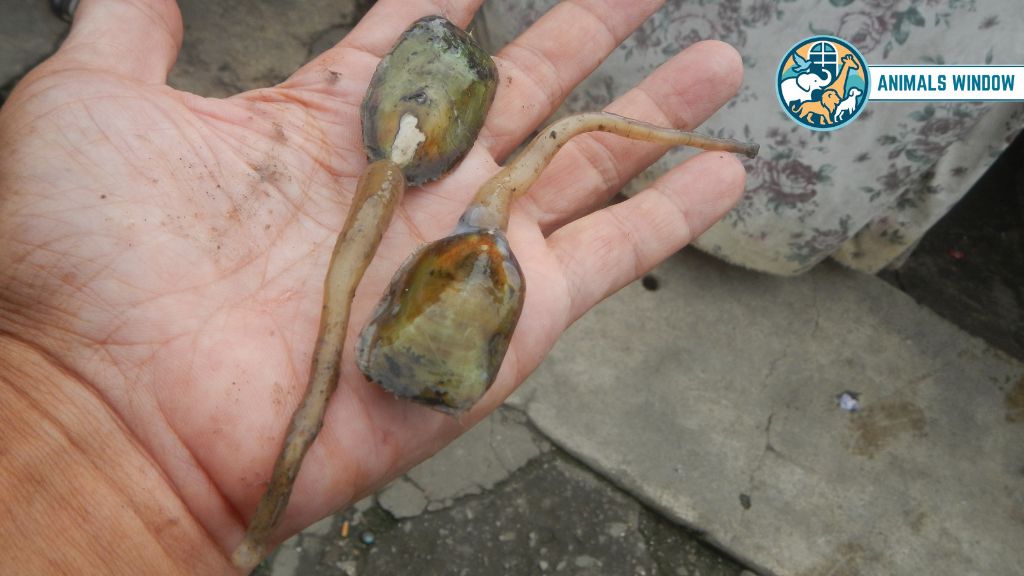
Brachiopods look like clams but are not clams. They’re in a completely separate phylum — Brachiopoda — and their two shells (called valves) are positioned top-and-bottom rather than left-and-right like bivalves. That’s a small difference that reveals a massive evolutionary split going back over 500 million years.
Lingula is one of the most striking cases of evolutionary stasis in biology. The fossil record shows it has remained virtually unchanged for over 500 million years — making it one of the longest-surviving animal genera ever documented. It survived all five major mass extinction events. While dinosaurs rose and fell, while oceans changed temperature and chemistry, Lingula sat in its burrow and filtered plankton without missing a beat.
🔥 Comparison Fact: A lamp shell is roughly the size of a large thumbnail — and the animal inside has existed in essentially the same form since before animals developed eyes.
FAQs About Animals with Shell
What animals have shells?
Many types of animals have shells, including mollusks (snails, clams, nautiluses), crustaceans (crabs), reptiles (turtles and tortoises), some fish (cowfish), mammals (armadillos), and insects (beetles). Sea and land animals across dozens of species carry hard shells for protection, buoyancy, or structure.
What is the largest animal with a shell?
The giant clam is the largest shelled animal, reaching up to 4.5 feet wide and 500 lbs. Among land animals with shells, the Galápagos tortoise holds that title.
Do all turtles and tortoises have shells?
Yes. Every species of turtle and tortoise has a shell. The shell is not separate from their body — it’s fused to their spine and ribcage. They cannot leave it.
Are hermit crabs born without shells?
Yes. Hermit crabs have soft, unprotected abdomens and must find empty gastropod shells to live in. They are not born with their own shells and must find larger ones throughout their lives.
What is the hardest shell of any animal?
The Texas ironclad beetle has one of the hardest exoskeletons ever recorded in biology, capable of withstanding compressive forces nearly 39,000 times its body weight. Its interlocking plate structure inspired real aerospace engineering research.
Can shell animals regrow their shells?
Some can partially repair their shells. Snails, turtles, and crabs can repair cracks with calcium if the damage is not catastrophic. Hermit crabs simply switch shells. Full regrowth of a destroyed shell is not possible for most species.
What is the difference between a shell and an exoskeleton?
A shell is typically a rigid external structure produced by mollusks, made mostly of calcium carbonate. An exoskeleton (like that of crabs, beetles, and ticks) is a structural covering made primarily of chitin that supports and protects the entire body. Both serve as armor, but they’re built from different materials and by different biological processes.
Related More Animals Guides:

I have loved animals since I was a kid. I enjoy reading about how animals live, eat, move, and survive. I started Animals Window to share what I learn in a simple and easy way. I write about animal body parts, size, behavior, diet, habitats, and species. My goal is to make animal facts clear and fun for everyone to understand.