
Animals with whiskers include mammals like cats, dogs, walruses, otters, and seals — plus a few surprising ones like elephants, manatees, and even a seabird. Whiskers are thick, stiff hairs rooted deep in the skin and packed with nerve endings. They act as a sixth sense, helping animals detect movement, pressure, texture, and nearby objects in the dark or underwater.
Table of Contents
Quick Animals with Whiskers List
- Domestic Cat
- Dog
- Mountain Lion (Cougar)
- Otter (Sea Otter / River Otter)
- Raccoon
- Walrus
- Harbor Seal
- Sea Lion
- Manatee
- Etruscan Shrew
- Rat
- Beaver
- European Rabbit
- Horse
- Elephant
- Catfish
- Whiskered Auklet
- Mouse Lemur
Whiskers aren’t just decorative facial hair. They’re precision sensors. Scroll down and you’ll find animals using them to hunt in pitch darkness, feel underwater currents, and even pick up ground vibrations through their lips.
You’ll also meet the tiniest mammal on Earth — whose whiskers are longer than its own face — and a seabird that wears whisker-like plumes as mating decorations. This is not the usual list.
1. Domestic Cat

- Scientific name: Felis catus
- Size: 18–25 inches (body length)
- Weight: 8–10 lbs (average)
- Diet: Carnivore — mice, birds, insects
- Habitat: Human homes, urban/rural environments worldwide
- Lifespan: 12–18 years
The domestic cat is probably the animal most people picture when they think about whiskers. Cats have 24 whiskers arranged in four rows on each side of the face. But here’s what most people don’t know: these whiskers are exactly as wide as the cat’s body. That’s not a coincidence. A cat uses them to judge whether it can squeeze through a gap — like a built-in measuring tape.
What makes cat whiskers genuinely different from most other animals is that they connect to a blood-filled sac called a follicle sinus complex — a structure so sensitive it can detect tiny air pressure shifts. When a cat stalks prey, it fans its whiskers forward to map the shape and movement of an animal even before making contact. In near-total darkness, this matters more than eyesight.
🔥 Comparison Fact: A cat’s whisker pad is roughly the size of a postage stamp, yet it processes more sensory data per second than most animals’ entire faces.
2. Dog

- Scientific name: Canis lupus familiaris
- Size: Varies widely by breed (6 inches to 3 feet tall)
- Weight: 3–200+ lbs
- Diet: Omnivore — meat, vegetables, grains
- Habitat: Domesticated worldwide
- Lifespan: 10–13 years (average)
Dogs have whiskers too — though most people barely notice them. They sit above the eyes, on the muzzle, and under the chin. These are called vibrissae, and unlike regular fur, they don’t shed seasonally. Dogs use chin whiskers particularly well: they help detect objects directly below the snout, which is a blind spot for most dogs since their eyes sit on the sides of their heads.
Dog whiskers are tied directly to the blink reflex. Touch the whiskers above a dog’s eye and it blinks instantly — every time. This is a protective reflex, not a trained behavior. It works even in sleeping dogs. Groomers who shave whiskers off dogs are actually removing a critical sensory tool, which can leave dogs confused about spatial boundaries.
🔥 Comparison Fact: A dog’s whisker is about as thick as a pencil lead — but its root goes three times deeper into the skin than regular fur.
3. Mountain Lion (Cougar)

- Scientific name: Puma concolor
- Size: 5–9 feet (including tail)
- Weight: 64–220 lbs
- Diet: Carnivore — deer, elk, smaller mammals
- Habitat: North and South America — forests, mountains, deserts
- Lifespan: 8–13 years in the wild
The mountain lion is one of the largest wild cats in the Western Hemisphere, and its whiskers are built for ambush hunting. Unlike domestic cats that hunt in structured environments, cougars chase prey across open terrain and into dense brush. Their whiskers help them make split-second adjustments mid-chase — detecting branches, rocks, and uneven ground through air disturbance alone.
What’s striking about mountain lion whiskers specifically is their role in the killing bite. After catching prey, a cougar uses facial whiskers to locate the exact position of the spine on its prey’s neck before biting. It doesn’t guess. This precision is why the cougar’s attack is fast and usually lethal on the first attempt — even in low light.
🔥 Comparison Fact: Mountain lion whiskers can grow up to 4 inches long — about the length of a standard crayon.
4. Otter (Sea Otter / River Otter)

- Scientific name: Enhydra lutris (Sea Otter) / Lontra canadensis (River Otter)
- Size: 3.5–5 feet
- Weight: 11–99 lbs
- Diet: Carnivore — fish, crustaceans, mollusks, sea urchins
- Habitat: Coastal Pacific waters and freshwater rivers across North America
- Lifespan: 10–23 years
Otters have some of the most studied whiskers in the animal kingdom — and for good reason. Sea otters hunt in murky, cold water where visibility is nearly zero. Their whiskers, called mystacial vibrissae, pick up the tiny pressure waves that fish create as they swim. The otter doesn’t need to see its meal. It just follows the current.
River otters add another layer: they can independently move each whisker like an antenna. This gives them three-dimensional detection of prey movement. Scientists have clocked river otters catching fish in under a second in completely dark water tanks. What’s more, sea otters use their whiskers to sort through rocky seafloor debris to find hidden crabs and urchins — a behavior that works purely through touch discrimination, not sight.
🔥 Comparison Fact: An otter’s whisker field spans roughly the width of a dinner plate across its muzzle.
5. Raccoon

- Scientific name: Procyon lotor
- Size: 16–28 inches (body)
- Weight: 8–20 lbs
- Diet: Omnivore — fruit, insects, fish, garbage
- Habitat: North America — forests, wetlands, urban areas
- Lifespan: 2–3 years in the wild, up to 20 in captivity
Raccoons are famous for “washing” their food in water, but here’s the real story: they’re not cleaning it. They’re enhancing sensory data through their paws and whiskers simultaneously. Wetting the food activates more nerve endings, and the combination of paw touch plus whisker vibration near the muzzle gives raccoons an incredibly detailed picture of what they’re about to eat.
Raccoons have facial whiskers and also small vibrissae-like hairs on their paws. But the muzzle whiskers are what matter most for food selection. They can distinguish between a pebble and a berry in their paws underwater, in the dark, in under a second. This is why raccoons raid trash cans so efficiently — they identify edible items by touch before they even bring the item to their mouth.
🔥 Comparison Fact: A raccoon’s snout whisker zone is about the size of a guitar pick but contains more sensory nerve endings per square centimeter than a human fingertip.
6. Walrus
- Scientific name: Odobenus rosmarus
- Size: 7.25–11.5 feet
- Weight: 1,320–3,750 lbs
- Diet: Carnivore — clams, mussels, sea cucumbers, worms
- Habitat: Arctic and sub-Arctic oceans
- Lifespan: 30–40 years
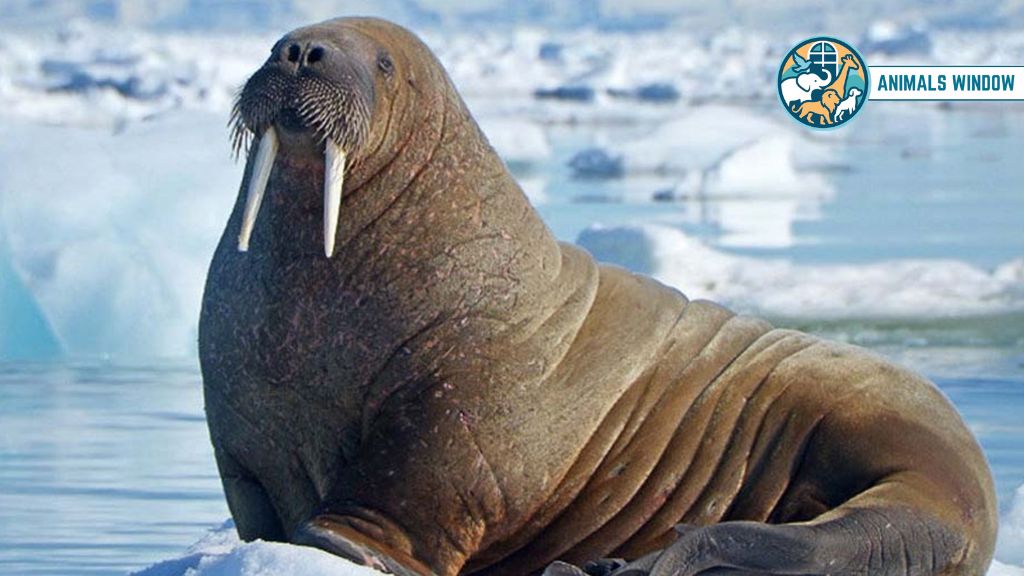
The walrus has the most dramatic whisker display of any animal on this list. A single adult walrus can have up to 700 individual whiskers, called mystacial vibrissae, arranged in a thick pad that covers most of its upper lip. These aren’t soft hairs — each one is stiff, flat, and sensitive enough to detect the shape of a single clam buried six inches under Arctic seafloor sediment.
What’s extraordinary is how the walrus feeds. It doesn’t dig with its tusks. It jets water from its mouth to blast sediment away, then uses its whisker pad to sweep the seafloor and identify prey purely by shape and texture. Each whisker transmits a different tactile signal. The walrus brain then assembles these into a complete picture of what’s below. This is equivalent to reading Braille with your face — at the bottom of the ocean.
🔥 Comparison Fact: A walrus’s whisker pad is roughly the size of a paperback book, yet it holds more tactile receptors than a human hand.
7. Harbor Seal
- Scientific name: Phoca vitulina
- Size: 4.25–6.1 feet
- Weight: 110–374 lbs
- Diet: Carnivore — fish, squid, crustaceans
- Habitat: Coastal North Atlantic and Pacific waters
- Lifespan: 20–35 years
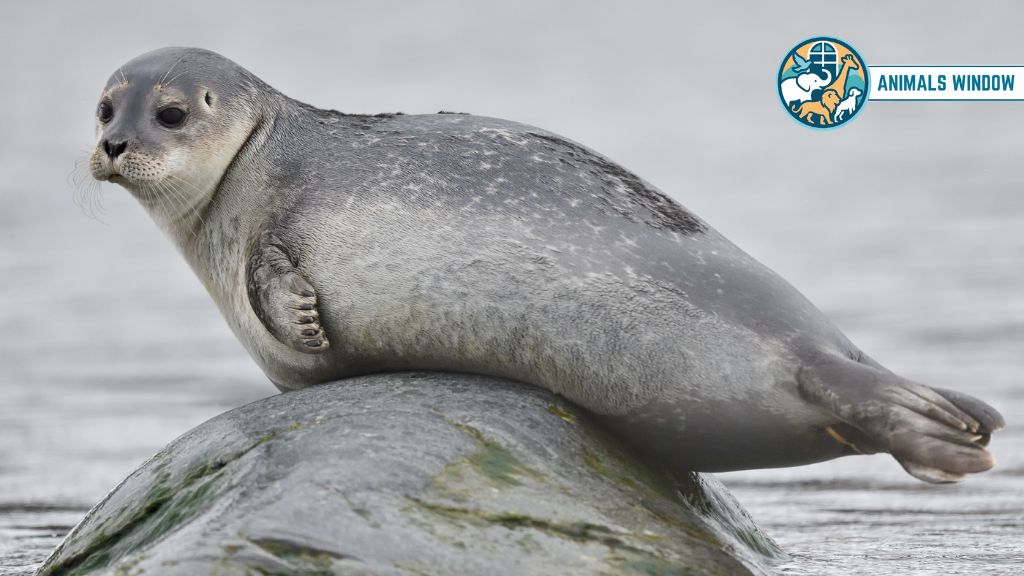
Harbor seals have undulating whiskers — shaped in a wave-like pattern rather than straight — and this shape is key. When water flows over a wavy whisker, it creates less vibration “noise” than a straight hair would. This means the seal’s brain receives cleaner, more precise signals from external water movements, filtering out the seal’s own swimming motion entirely.
Researchers at the University of Rostock confirmed that harbor seals can track the hydrodynamic trail left by a fish up to 35 seconds after it swam past — and follow that trail accurately in total darkness. The whiskers essentially “read” the wake signature like a fingerprint. Different fish species create different wake patterns, and experienced seals appear to recognize prey species by wake shape alone.
🔥 Comparison Fact: A harbor seal’s whisker, laid flat, is about the length and width of a large paper clip — yet it outperforms sonar equipment in murky water detection.
8. Sea Lion

- Scientific name: Zalophus californianus (California Sea Lion)
- Size: 5–7 feet
- Weight: 220–860 lbs
- Diet: Carnivore — fish, squid, shellfish
- Habitat: Pacific coastlines from Alaska to Mexico
- Lifespan: 20–30 years
Sea lions share some whisker biology with seals, but they use them differently. Sea lions are active pursuit hunters — they chase fish at speeds up to 25 mph. At that speed, whiskers need to work in real time, processing water pressure changes millisecond by millisecond to track erratically moving prey.
What makes sea lion whiskers unique on this list is their role in trained sensory tasks. In research settings, sea lions have been trained to detect differences in object shape using only their whiskers — identifying squares from circles while blindfolded and wearing acoustic earmuffs. Their discrimination accuracy reached over 95%. This makes them among the best tactile navigators in the ocean, outperforming even some robotic sensors modeled on their whiskers.
🔥 Comparison Fact: A sea lion’s whisker field spans about 10 inches across — roughly the width of a standard sheet of printer paper.
9. Manatee

- Scientific name: Trichechus manatus
- Size: 8–13 feet
- Weight: 440–1,300 lbs
- Diet: Herbivore — seagrass, aquatic plants
- Habitat: Shallow coastal waters of the Caribbean and southeastern U.S.
- Lifespan: 40–60 years
Manatees are the only large herbivores on this list, and their whiskers work nothing like a predator’s. Instead of hunting, they use them to navigate seagrass beds and select which plants to eat. Manatees have facial vibrissae spread not just on the muzzle but across the entire upper lip — over 2,000 individual hairs in total.
Manatees also have tactile hairs across their entire body, not just the face. These body hairs detect water movement much like a fish’s lateral line — a system usually associated with fish, not mammals. So a manatee is essentially a mammal that evolved a fish-sensing system. Scientists call this “distant touch,” and it allows manatees to navigate around boat hulls and shallow sandbars without seeing them.
🔥 Comparison Fact: If you spread out a manatee’s facial whisker zone, it would cover roughly the surface area of an open laptop keyboard.
10. Etruscan Shrew

- Scientific name: Suncus etruscus
- Size: 1.4–2 inches (body)
- Weight: 0.04–0.1 oz
- Diet: Insectivore — insects, worms, small invertebrates
- Habitat: Mediterranean Europe, South Asia — scrubland, forests
- Lifespan: 1–2 years
The Etruscan shrew is the world’s smallest mammal by mass — lighter than a paperclip. But its whiskers are nearly as long as its entire body. This is not decorative. Because the shrew’s eyes are almost useless (they’re tiny and barely functional), the whiskers are its primary navigation tool, sweeping ahead like two antennae as it races through leaf litter at up to 18 body lengths per second.
What’s remarkable is the shrew’s heartbeat relative to body size: up to 1,500 beats per minute — the fastest of any mammal. This hyperactive metabolism means the shrew must eat constantly, every few hours, or it dies. Its whiskers allow it to locate and catch insects fast enough to keep up. No whiskers, no food fast enough, no survival. It’s that simple.
🔥 Comparison Fact: The Etruscan shrew’s body is roughly the size of a large grape. Its whiskers are nearly the length of a standard matchstick.
11. Rat

- Scientific name: Rattus norvegicus (Norway Rat)
- Size: 7–9 inches (body)
- Weight: 4.9–17.6 oz
- Diet: Omnivore — grains, meat, fruit, garbage
- Habitat: Every continent except Antarctica
- Lifespan: 2–3 years
Rats are one of the most whisker-dependent mammals ever studied, partly because their whisker system is used as a scientific model for understanding the mammalian brain. Rats have large whiskers on their snout (macrovibrissae) and tiny whiskers near their mouth (microvibrissae). The large ones scan the environment; the small ones identify texture up close.
The rat brain dedicates a disproportionately large section of the cortex to processing whisker input — a region called the “barrel cortex” because of its barrel-shaped neural columns, each mapped to a single whisker. Scientists discovered that if one whisker is removed, the corresponding brain column actually shrinks. This makes rats one of the clearest natural demonstrations that sensory experience shapes brain structure, not the other way around.
🔥 Comparison Fact: A rat’s longest whisker reaches about 1.5 inches — nearly a quarter of its total body length.
12. Beaver

- Scientific name: Castor canadensis
- Size: 35–46 inches (including tail)
- Weight: 35–70 lbs
- Diet: Herbivore — tree bark, aquatic plants, roots
- Habitat: Freshwater rivers and lakes across North America and Europe
- Lifespan: 10–15 years in the wild
Beavers are master engineers, and their whiskers are tools that make the engineering possible. When a beaver dives underwater to collect branches for dam construction, it works in murky, low-visibility water. Its whiskers detect the texture and resistance of wood as it strips bark and positions logs — an essential sensory function that sight can’t replace underwater.
Beavers also use their whiskers for social communication. Beaver families, called colonies, groom each other’s facial areas including whisker zones. This isn’t just hygiene — grooming of the whisker pad appears to be a bonding behavior tied to stress reduction. A beaver that’s been groomed shows lower levels of stress hormones. That’s a level of social behavior most people wouldn’t associate with a rodent that spends most of its time chewing trees.
🔥 Comparison Fact: A beaver’s whisker can span up to 3 inches — about the length of a AA battery.
13. European Rabbit

- Scientific name: Oryctolagus cuniculus
- Size: 13–20 inches
- Weight: 3.3–11 lbs
- Diet: Herbivore — grass, clover, leafy plants
- Habitat: Western Europe — grasslands, meadows, woodland edges
- Lifespan: 1–2 years in the wild
Rabbits have whiskers above their eyes, on their cheeks, and around their mouth — and this placement is deeply functional. Rabbits graze low to the ground in open fields where predators can appear from any direction. The whiskers around the mouth tell the rabbit exactly what it’s eating without the animal having to look down. Eyes stay up, scanning for hawks. Mouth keeps eating. Whiskers handle the food quality check.
European rabbits also use their cheek whiskers to navigate burrow systems underground. Their warrens can be complex tunnel mazes several meters deep. In complete darkness, rabbits move through these tunnels at surprising speed, guided almost entirely by whisker-wall contact. Remove the ability to use whiskers and a rabbit in its own burrow becomes disoriented — a finding confirmed in research on vision-impaired domestic rabbits.
🔥 Comparison Fact: A European rabbit’s longest cheek whisker is about as long as a standard USB drive — around 2.5 inches — but positioned with exact precision relative to the tunnel wall.
14. Horse
- Scientific name: Equus ferus caballus
- Size: 4.7–6 feet (at shoulder)
- Weight: 900–2,200 lbs
- Diet: Herbivore — grass, hay, grains
- Habitat: Domesticated worldwide; wild in grasslands and plains
- Lifespan: 25–30 years
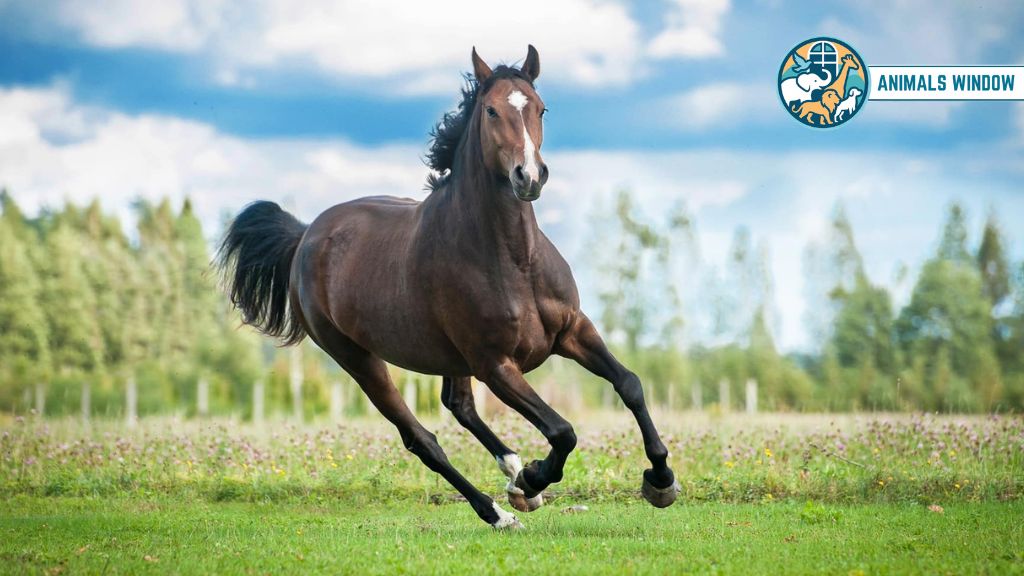
Horses have whiskers around the muzzle and eyes, and these serve a critical safety purpose that most horse owners don’t realize they’re eliminating when they trim them. A horse’s eyes are positioned on the sides of its head, creating a large blind spot directly in front of its nose. The muzzle whiskers fill this gap — they detect objects within a few inches of the horse’s face before the horse can see them.
This matters most when a horse is grazing near fences, water troughs, or in low-light conditions. The whiskers detect obstacles and surface edges that the eyes simply can’t see. The European Union actually banned the trimming of horse whiskers for competition horses in 2021 on animal welfare grounds — recognizing that removing whiskers removes a sense. That’s not a cosmetic issue. It’s a welfare issue.
🔥 Comparison Fact: A horse’s muzzle whisker can reach 3–4 inches long — about the same as the diameter of a tennis ball.
15. Elephant

- Scientific name: Loxodonta africana (African) / Elephas maximus (Asian)
- Size: Up to 13 feet tall
- Weight: Up to 14,000 lbs
- Diet: Herbivore — grasses, fruit, bark, roots
- Habitat: Africa and South Asia — savannas, forests, grasslands
- Lifespan: 60–70 years
Yes — elephants have whiskers. They’re scattered sparsely across the trunk and chin, and for an animal this size, the whiskers are surprisingly fine and short. But they’re not useless. Elephant trunks are packed with over 40,000 muscles and are one of the most sensitive touch organs on Earth. The whiskers at the tip of the trunk supplement this sensitivity, especially for detecting fine texture and ground vibration in dusty, low-contrast terrain.
What’s surprising is that elephant trunk-tip whiskers appear to help detect thermal changes — warmth from underground water sources, heat from another animal’s body nearby. This heat-sensing whisker function is rare among land mammals and more commonly associated with snakes or certain insects. Whether elephants consciously use this ability or whether it’s passive detection is still being studied, but field researchers have noted elephants directing their trunks toward buried water before any visible sign of moisture appeared.
🔥 Comparison Fact: Each whisker on an elephant’s trunk tip is about half an inch long — shorter than a grain of rice — yet connected to one of the densest nerve networks in the animal kingdom.
16. Catfish

- Scientific name: Siluriformes (order — thousands of species)
- Size: 4 inches to 9 feet depending on species
- Weight: A few ounces to 660 lbs (Mekong giant catfish)
- Diet: Omnivore — algae, invertebrates, smaller fish, organic debris
- Habitat: Freshwater rivers, lakes, and brackish waters worldwide
- Lifespan: 8–20+ years depending on species
Catfish are the only fish on this list — and they redefine what whiskers can do. Their “whiskers” are called barbels, and they’re not just sensors. They’re also taste organs. A catfish’s barbels are covered in taste buds — the same kind humans have on their tongues. So when a catfish sweeps its barbels across a muddy riverbed, it’s simultaneously feeling and tasting whatever it touches.
A large catfish has taste buds not just on its barbels but across its entire body surface — over 100,000 individual taste receptors in some species. This means the whole fish is essentially one giant tongue that also has whiskers. In the muddy, near-zero-visibility rivers where catfish live, this sensory system completely replaces the need for sight. Catfish have been filmed locating and eating prey buried 4 inches deep in mud, guided purely by taste-touch whisker detection.
🔥 Comparison Fact: The barbels of a large channel catfish average about 3–4 inches — roughly the length of your index finger — and are dense enough with receptors to taste a single amino acid dissolved in a billion parts of water.
17. Whiskered Auklet
- Scientific name: Aethia pygmaea
- Size: 7.5 inches
- Weight: 3–5.6 oz
- Diet: Carnivore — zooplankton, small crustaceans
- Habitat: North Pacific Ocean — Aleutian Islands, Kuril Islands
- Lifespan: Up to 10 years
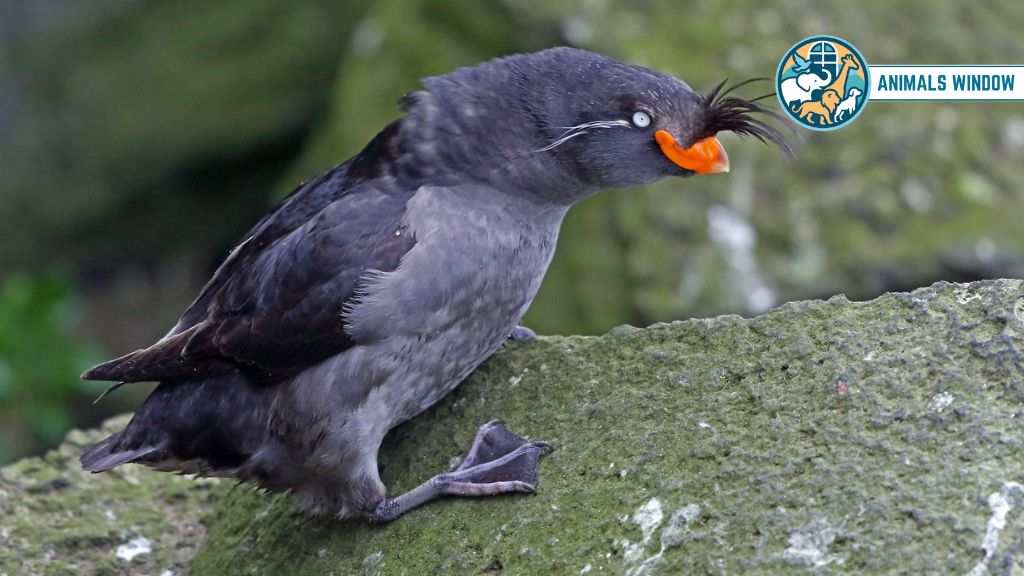
The Whiskered Auklet is the only bird on this list, and its “whiskers” are actually specialized facial plumes — thin, curved feathers that extend from the face like cat whiskers. They’re not sensory in the mammalian sense, but they appear to serve a navigation function. Research suggests these feathers help the auklet detect air currents around rocks and sea cliffs during nighttime landings in pitch darkness.
The longer and more elaborate a male auklet’s plumes, the more attractive it is to females. This makes the whisker-like feathers a dual-function structure — navigation tool and sexual display. And the auklet actually knows this. Males with longer plumes perform more elaborate landing displays. Scientists believe the plumes evolved first as a navigation aid in dark rocky crevices and were secondarily co-opted for mate selection — a rare evolutionary sequence observed in very few birds.
🔥 Comparison Fact: The Whiskered Auklet’s entire body is about the size of a tennis ball, yet its facial plumes extend up to 1.5 inches — long enough to brush your thumbnail.
18. Mouse Lemur

- Scientific name: Microcebus murinus (Gray Mouse Lemur)
- Size: 2.4–4.7 inches (body)
- Weight: 1.4–2.8 oz
- Diet: Omnivore — insects, small vertebrates, fruit, nectar
- Habitat: Madagascar — dry deciduous and rainforest
- Lifespan: 6–8 years in the wild, up to 15 in captivity
The mouse lemur is the world’s smallest primate, and its whiskers are proportionally enormous — nearly as long as its head. This matters because mouse lemurs are mostly nocturnal and hunt in dense, tangled forest undergrowth where there’s almost no light. Their whiskers sweep ahead as they move through branches, detecting gaps, surfaces, and insects before making contact.
What separates mouse lemurs from the other nocturnal animals on this list is their use of torpor — a short-term hibernation-like state. During Madagascar’s dry season, food disappears and temperatures drop. Mouse lemurs store fat in their tails and enter torpor for days or weeks. When they emerge, their whiskers are among the first sensory systems to “come back online” — the follicle nerves reactivate before the eyes fully adjust, giving the lemur immediate spatial awareness as it re-enters the world after weeks of sleep.
🔥 Comparison Fact: A mouse lemur’s body is roughly the size of a ping-pong ball, but its whiskers reach nearly 1.2 inches — almost a third of its body length.
FAQ’s About Animals with Whiskers
Q: What animals have whiskers?
Most mammals have some form of whiskers (vibrissae), including cats, dogs, seals, otters, rats, rabbits, horses, and even elephants. A few non-mammals, like catfish (barbels) and the Whiskered Auklet (facial plumes), have whisker-like structures too.
Q: What are whiskers made of?
Whiskers are made of keratin — the same protein as human fingernails — but they’re much thicker than regular hair and rooted three times deeper in the skin, inside a blood-filled follicle packed with nerve endings.
Q: Do giraffes have whiskers?
Giraffes don’t have prominent vibrissae the way cats or seals do. They have coarse facial hairs and some stiff hairs around the muzzle, but these don’t function as true whiskers with deep sensory follicles. So while the short answer is technically no, giraffes aren’t on the animals with whiskers list in any meaningful sensory way.
Q: Why do animals have whiskers?
Whiskers serve as precision sensors. They detect nearby movement, air pressure shifts, object texture, temperature, and spatial information. Many animals use them to navigate in darkness or murky water where eyes are useless.
Q: Do all mammals have whiskers?
Almost all mammals have some form of vibrissae, at least during development. In humans, these regress before birth. In most other mammals — from shrews to elephants — they remain functional throughout life.
Q: Can an animal survive without whiskers?
Yes, but with real difficulty. Animals that rely heavily on whiskers — like rats, seals, and cats — show significant behavioral disruption when whiskers are removed. They become cautious, disoriented in familiar spaces, and slower to catch prey. Whiskers grow back, but the gap in sensory ability is measurable.
Q: Which animal has the most whiskers?
The walrus wins this one. A single adult walrus can have up to 700 individual mystacial vibrissae more than any other known animal used for detecting prey buried under Arctic seafloor sediment.

I have loved animals since I was a kid. I enjoy reading about how animals live, eat, move, and survive. I started Animals Window to share what I learn in a simple and easy way. I write about animal body parts, size, behavior, diet, habitats, and species. My goal is to make animal facts clear and fun for everyone to understand.