Animals like mongoose belong to small-to-medium carnivore families that share traits such as slender bodies, sharp reflexes, and predatory instincts. These include members of the Herpestidae, Viverridae, Mustelidae, and Eupleridae families. Most are agile hunters with low-slung bodies, short legs, and highly developed senses built to chase, ambush, or outlast their prey.
Table of Contents
Quick List: Animals Like Mongoose
- Meerkat
- African Civet
- Asian Palm Civet
- Common Genet
- Fossa
- Malagasy Civet
- Falanouc
- Asiatic Linsang
- Weasel
- Ferret
- Stoat (Ermine)
- Pine Marten
- American Mink
- European Mink
- Tayra
- Fisher
- Polecat
- Grison
1. Meerkat
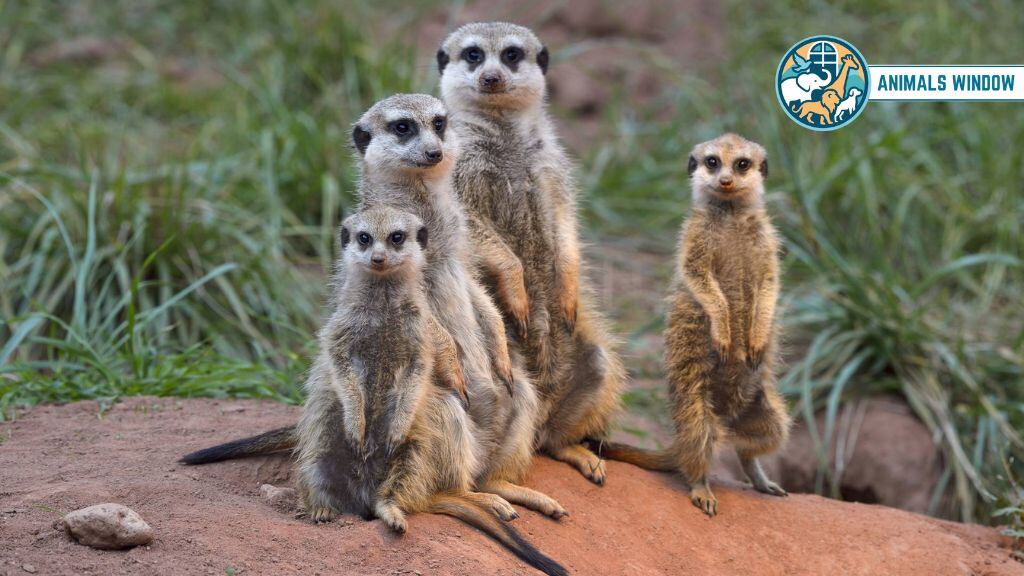
- Scientific Name: Suricata suricatta
- Size: 25–35 cm (body length)
- Weight: 620–970 g
- Diet: Insects, scorpions, lizards, snakes
- Habitat: Kalahari Desert, southern Africa
- Lifespan: 12–14 years in the wild
The meerkat is probably the most socially complex animal on this entire list. It lives in groups called mobs or gangs, sometimes 30 members strong, and runs on a system of assigned roles that would make a military unit look disorganized.
What makes it stand out isn’t just its social life — it’s the sentinel system. One meerkat stands upright on a high point and watches for predators while the rest forage below. That guard uses different alarm calls for aerial threats versus ground threats, and the mob responds differently to each one. It’s a communication system, not just noise.
🔥 Comparison Fact: A meerkat weighs about as much as a medium-sized apple — but that tiny body can withstand venom from scorpions that would hospitalize a human child.
2. African Civet
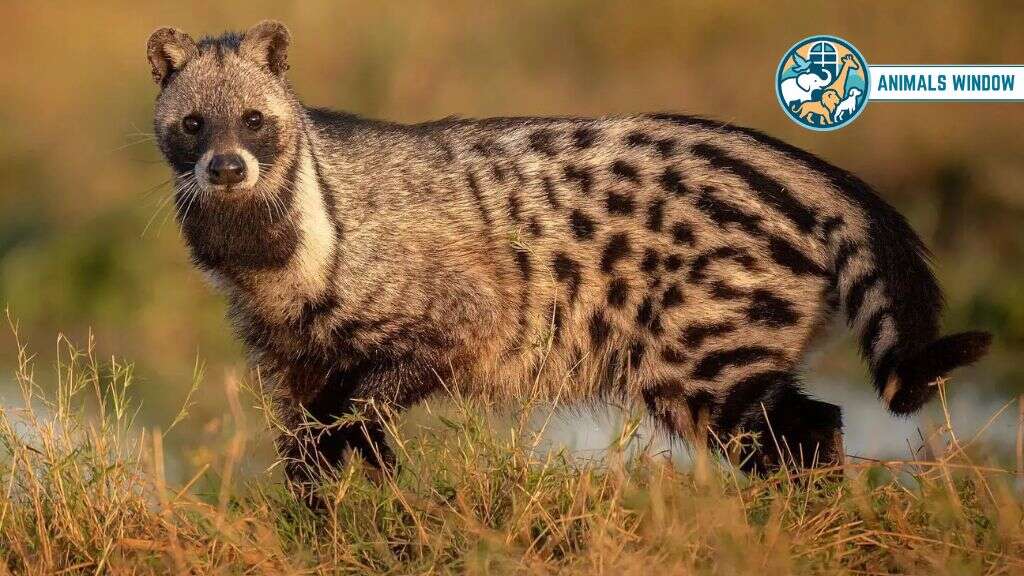
- Scientific Name: Civettictis civetta
- Size: 67–84 cm (body length)
- Weight: 7–20 kg
- Diet: Fruit, insects, small mammals, carrion
- Habitat: Sub-Saharan Africa, forests and savannas
- Lifespan: 15–20 years
The African Civet looks like a cross between a raccoon and a hyena. It’s stocky, boldly patterned in black and white, and one of Africa’s most important seed dispersers. But what most people don’t know is what it produces: a waxy secretion called civetone from perineal glands, which has been used in perfume manufacturing for centuries.
Unlike most animals on this list, the civet eats almost anything — including toxic millipedes that other predators avoid. Its digestive system is that adaptable. It’s not picky. It thrives because it eats what others won’t.
🔥 Comparison Fact: An African Civet’s body length is close to that of a standard electric guitar — heavy enough that you’d definitely notice if you picked one up.
3. Asian Palm Civet
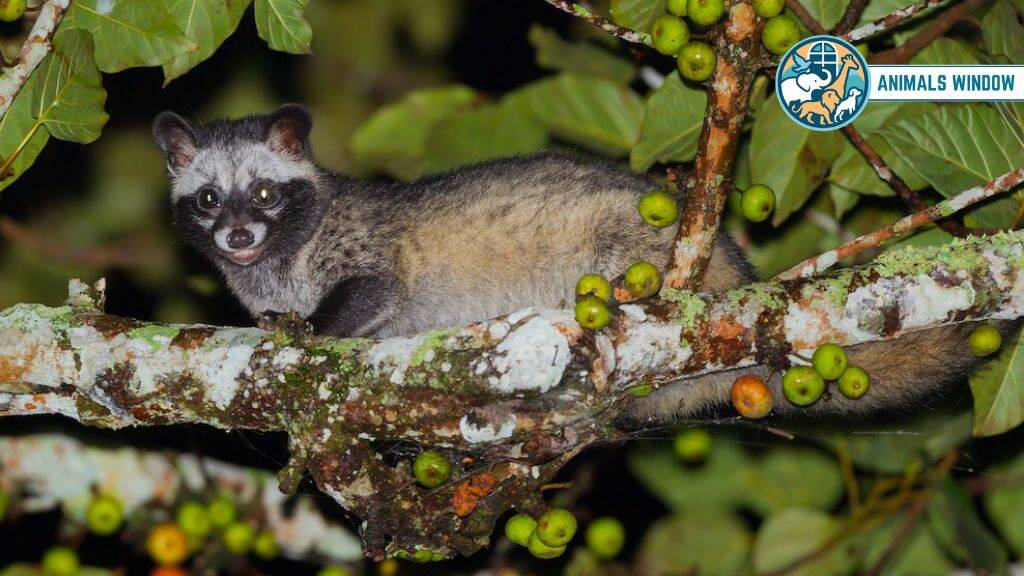
- Scientific Name: Paradoxurus hermaphroditus
- Size: 43–53 cm (body length)
- Weight: 2–5 kg
- Diet: Fruit, small vertebrates, insects
- Habitat: South and Southeast Asia, tropical forests
- Lifespan: 15–20 years
The Asian Palm Civet is famous for something unusual even by wildlife standards: it produces the world’s most expensive coffee. Coffee cherries it eats pass through its digestive system, and the fermented beans — collected from its droppings — become kopi luwak, which sells for up to $700 per kilogram.
But beyond that quirky claim to fame, it’s an expert climber. It navigates dense forest canopies at night using scent markings to claim routes, and it moves silently enough to be almost invisible to prey below. It’s more civet than palm — meaning it spends more time on branches than on the ground.
🔥 Comparison Fact: An Asian Palm Civet weighs roughly the same as a half-gallon jug of milk — light enough to move through tree branches without snapping them.
4. Common Genet

- Scientific Name: Genetta genetta
- Size: 43–55 cm (body length)
- Weight: 1–2.2 kg
- Diet: Rodents, birds, insects, lizards
- Habitat: Africa, southwestern Europe
- Lifespan: 8–13 years in the wild
The Common Genet moves like liquid. Its spine is so flexible it can squeeze through gaps barely wider than its skull — useful for navigating dense brush or rocky crevices at night. Medieval Europeans actually kept genets as housepets before cats became popular, and some historians believe the cat’s domestic role was partly taken from the genet first.
Its hunting method is pure patience. It can stay still for long stretches, then explode into a burst of speed. That contrast — frozen then fast — is what makes it such an effective ambush predator.
🔥 Comparison Fact: A Common Genet’s body is roughly the length of a standard school ruler — but its tail adds another 40–50 cm, doubling its total length.
5. Fossa

- Scientific Name: Cryptoprocta ferox
- Size: 70–80 cm (body length)
- Weight: 5.5–8.6 kg
- Diet: Lemurs, birds, reptiles, small mammals
- Habitat: Madagascar rainforests
- Lifespan: 15–20 years
The Fossa is Madagascar’s apex land predator. It looks like a cat, moves like a weasel, and climbs like a monkey — and it’s the only large predator capable of hunting lemurs through the treetops.
Its ankle joints can rotate almost 180 degrees, which lets it descend trees headfirst, a rare ability even among highly adapted climbers.
Scientists spent a long time unsure where the fossa belonged taxonomically. It was classified as a cat, then a viverrid, before finally landing in the Eupleridae family — a group of carnivores unique to Madagascar that evolved in total isolation.
🔥 Comparison Fact: A Fossa’s body length is close to that of a standard skateboard — but it’s dense with muscle, and far more dangerous than it looks.
6. Malagasy Civet
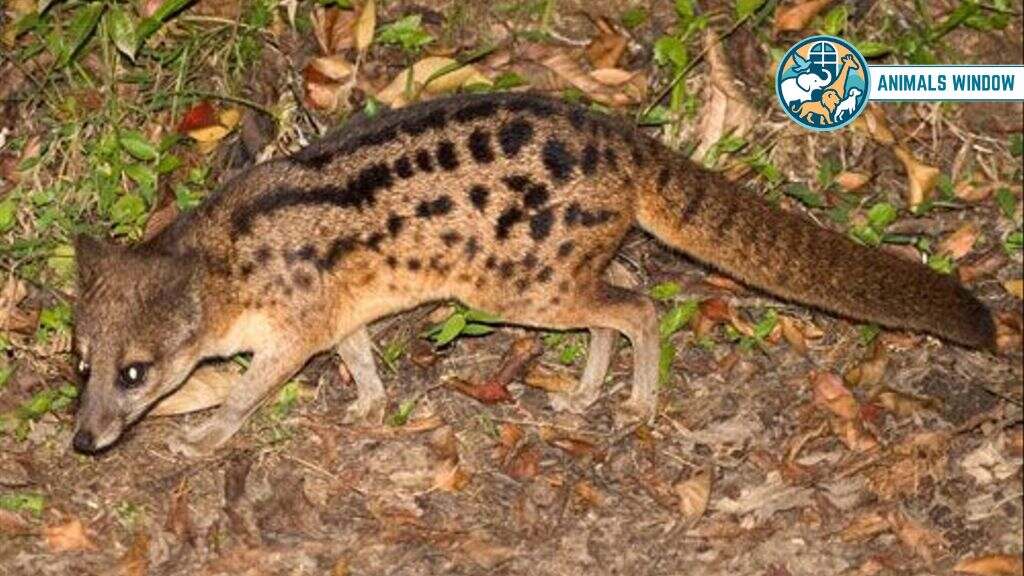
- Scientific Name: Fossa fossana
- Size: 40–45 cm (body length)
- Weight: 1.5–2 kg
- Diet: Small vertebrates, invertebrates, fruit
- Habitat: Eastern Madagascar rainforests
- Lifespan: Around 10–11 years
Despite its name, the Malagasy Civet (also called the Malagasy spotted civet or fanaloka) isn’t closely related to African or Asian civets. It’s part of the unique Eupleridae family, isolated on Madagascar for millions of years.
And it has a trait almost no other small carnivore has: it stores fat in its tail during the wet season to survive food scarcity in the dry season — the same strategy a camel uses with its hump, scaled way down.
It’s shy, nocturnal, and rarely seen. Most of what we know about it comes from camera trap footage. It’s one of the least-studied carnivores in the world.
🔥 Comparison Fact: A Malagasy Civet’s body is about as long as a standard sheet of paper — but its fat-packed tail in peak season adds noticeable width and weight.
7. Falanouc

- Scientific Name: Eupleres goudotii
- Size: 45–65 cm (body length)
- Weight: 2–4 kg
- Diet: Earthworms, snails, frogs, small invertebrates
- Habitat: Eastern Madagascar wet forests
- Lifespan: 10–12 years
The Falanouc is unlike any other carnivore on this list. While most mongoose-like animals eat vertebrates or insects, the falanouc specializes in earthworms and soft invertebrates. Its teeth are completely different because of this — they’re cone-shaped and close-set, designed not for crushing bones but for gripping slippery, soft prey.
It has no carnassial teeth (the shearing molars most carnivores use to slice meat), which makes it one of the most anatomically specialized animals in its order. It’s carnivoran by classification but eats things that most carnivores would ignore entirely.
🔥 Comparison Fact: A Falanouc is roughly the length of a men’s dress shoe — but its specialized jaw makes it a completely different tool from what that size would suggest.
8. Asiatic Linsang

- Scientific Name: Prionodon pardicolor / P. linsang
- Size: 33–43 cm (body length)
- Weight: 0.6–0.8 kg
- Diet: Small birds, lizards, insects, small mammals
- Habitat: South and Southeast Asia, dense forests
- Lifespan: Around 10 years
The Asiatic Linsang is built for stealth. It might be the most visually striking animal on this list — its coat is covered in bold dark spots and bands on a pale background, designed to break up its outline in dappled forest light. Scientists believe it’s more closely related to the Felidae (cat) family than to true civets, though it looks like a civet and hunts like a mongoose.
It moves through the forest canopy with almost no sound. Locals in parts of Southeast Asia rarely see it despite it being present in their forests for their entire lives. That level of invisibility takes serious evolutionary engineering.
🔥 Comparison Fact: An Asiatic Linsang weighs about as much as a can of soda — making it one of the lightest predators on this entire list.
9. Weasel

- Scientific Name: Mustela nivalis
- Size: 16–23 cm (body length)
- Weight: 25–250 g
- Diet: Voles, mice, rabbits, birds, eggs
- Habitat: Europe, North America, Asia, North Africa
- Lifespan: 1–3 years in the wild
The Weasel is the smallest carnivore in the world, and pound for pound, one of the most aggressive. It regularly kills prey many times its own body weight — rabbits, for example, can outweigh a weasel by 10 to 1. The weasel wins by biting through the back of the skull: fast, precise, and fatal.
Its long, thin body — evolved to chase prey into burrows — gives it a terrible surface-area-to-volume ratio for heat retention, which is why it must eat up to 40% of its body weight daily just to maintain temperature. It’s essentially a heat-losing machine that hunts nonstop to compensate.
🔥 Comparison Fact: A weasel’s body is about the length of a standard pencil. That’s the size of the animal killing rabbits ten times its weight.
10. Ferret

- Scientific Name: Mustela putorius furo
- Size: 33–40 cm (body length)
- Weight: 0.7–2 kg
- Diet: Meat-based diet (domesticated), wild ancestors eat rabbits, rodents
- Habitat: Domesticated globally; wild ancestor from Europe
- Lifespan: 6–10 years
The Ferret is a domesticated animal, but its biology is still built for the wild. It’s a hypercarnivore — meaning at least 70% of its diet must come from animal protein to survive.
Its digestive tract is so short (roughly 182 cm) that food passes through in about 3 hours, which means it needs to eat frequently throughout the day.
Ferrets have been used for centuries in a practice called ferreting — sending them into rabbit warrens to flush prey out for hunters. That instinct to pursue prey through tight tunnels is still fully intact in domestic ferrets today.
🔥 Comparison Fact: A ferret’s body is about as long as a standard 12-inch ruler, but flexible enough to twist its body nearly in half while moving through pipes.
11. Stoat (Ermine)

- Scientific Name: Mustela erminea
- Size: 17–32 cm (body length)
- Weight: 67–445 g
- Diet: Rabbits, voles, birds, eggs
- Habitat: North America, Europe, Asia, New Zealand
- Lifespan: 4–6 years in the wild
The Stoat does something almost no other land mammal does: it changes color completely with the seasons. In summer, it’s brown with a cream belly. In winter, in cold regions, its fur turns pure white — except for a black tail tip. This winter coat has a name: ermine, and it was once reserved exclusively for royalty and judges in Europe.
But the coat isn’t the most unusual thing about it. Stoats practice something called embryonic diapause — females can delay implantation of a fertilized egg for up to 10 months, timing the birth of pups to match spring prey availability. That’s a level of reproductive control most mammals don’t have.
🔥 Comparison Fact: A stoat’s body is roughly the length of a TV remote — a small package for an animal that regularly kills rabbits four times its own size.
12. Pine Marten

- Scientific Name: Martes martes
- Size: 45–58 cm (body length)
- Weight: 0.9–2.2 kg
- Diet: Rodents, birds, berries, eggs, squirrels
- Habitat: European and Asian forests
- Lifespan: 8–11 years in the wild
The Pine Marten is the most agile tree-runner on this list. Its semi-retractable claws and large hind feet let it move through forest canopies at speeds that squirrels — its main prey — can barely match. In Ireland, pine marten reintroduction has actually helped red squirrel populations recover, because grey squirrels (an invasive species) are more vulnerable to marten predation and are being pushed back.
That’s a rare case where a predator’s return actively helped a prey species. It shows how deeply connected predator-prey dynamics really are.
🔥 Comparison Fact: A pine marten is roughly the length of a standard laptop — but it can reach and sprint through branches 15 meters off the ground with ease.
13. American Mink
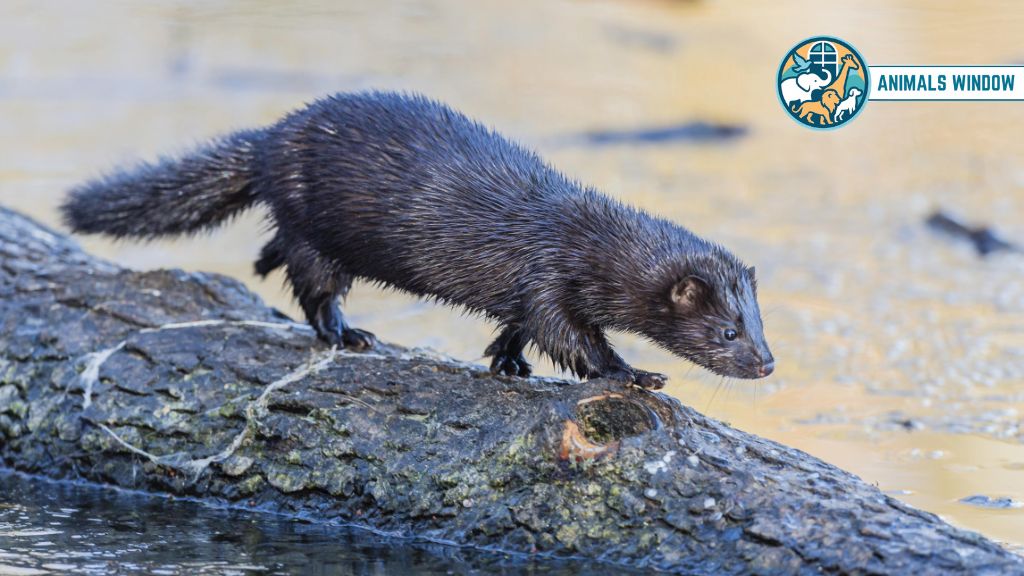
- Scientific Name: Neovison vison
- Size: 30–45 cm (body length)
- Weight: 0.5–1.6 kg
- Diet: Fish, muskrats, rabbits, birds, amphibians
- Habitat: North America near waterways
- Lifespan: 3–6 years in the wild
The American Mink is semi-aquatic and one of the most effective small aquatic predators in North America. Its fur is naturally water-resistant, its feet are partially webbed, and it can dive up to 5 meters deep to catch fish. On land, it can run, climb, and fit through holes barely wider than a golf ball.
Farmed mink that escaped or were released in Europe became one of the continent’s most damaging invasive species, pushing native water voles and European mink toward local extinction in many regions.
🔥 Comparison Fact: An American Mink weighs about the same as a standard can of soup — light enough to launch itself into water from a branch without hesitation.
14. European Mink

- Scientific Name: Mustela lutreola
- Size: 28–43 cm (body length)
- Weight: 0.44–0.74 kg
- Diet: Fish, amphibians, crayfish, voles
- Habitat: Parts of Europe, primarily near rivers and wetlands
- Lifespan: 5–7 years in the wild
The European Mink is critically endangered — one of the rarest carnivores in Europe. Unlike the American Mink, which is robust and invasive, the European Mink has been driven out of most of its historic range by habitat loss, trapping, and competition from its American cousin. Its survival now depends on island conservation programs, particularly on Hiiumaa Island in Estonia.
What makes it biologically distinct is its white patch on both the upper and lower lip — the American Mink only has white on the lower lip. That’s how you tell them apart in the field, if you’re lucky enough to see one.
🔥 Comparison Fact: A European Mink weighs less than a standard 12-pack of crayons — a fragile body for an animal fighting extinction against serious odds.
15. Tayra

- Scientific Name: Eira barbara
- Size: 56–71 cm (body length)
- Weight: 2.7–7 kg
- Diet: Fruit, rodents, birds, honey, reptiles
- Habitat: Central and South America, Trinidad
- Lifespan: 18 years in captivity
The Tayra is one of the smartest animals on this list, and it has the food storage behavior to prove it. Researchers observed tayras in Costa Rica collecting unripe plantains and storing them in hidden spots — then returning days later when the fruit had ripened. That’s planning ahead. It’s a behavior associated with much larger-brained animals like ravens or primates.
It’s also one of the few mustelids with a truly omnivorous diet. It eats fruit, hunts prey, and raids beehives — switching strategies based on what’s seasonally available.
🔥 Comparison Fact: A tayra’s body length is close to that of a standard electric keyboard — long, muscular, and built to cover large forest territories every day.
16. Fisher

- Scientific Name: Pekania pennanti
- Size: 47–75 cm (body length)
- Weight: 1.4–6 kg
- Diet: Porcupines, hares, squirrels, carrion, fruit
- Habitat: North American boreal forests
- Lifespan: 7–10 years in the wild
The Fisher is famous for one thing above all: it’s the only predator that regularly and successfully hunts North American porcupines. It does this by circling the porcupine and repeatedly biting its unprotected face, wearing it down before flipping it to access the soft belly — a hunt that can take 30 minutes or longer.
Despite the name, fishers rarely eat fish. The name likely came from early European settlers confusing the word with a Dutch term for a European polecat (fisse). It’s a linguistically inherited misnomer that stuck.
🔥 Comparison Fact: A fisher is roughly the length of a standard baseball bat — dense and powerful for a forest animal that routinely takes on porcupines.
17. Polecat
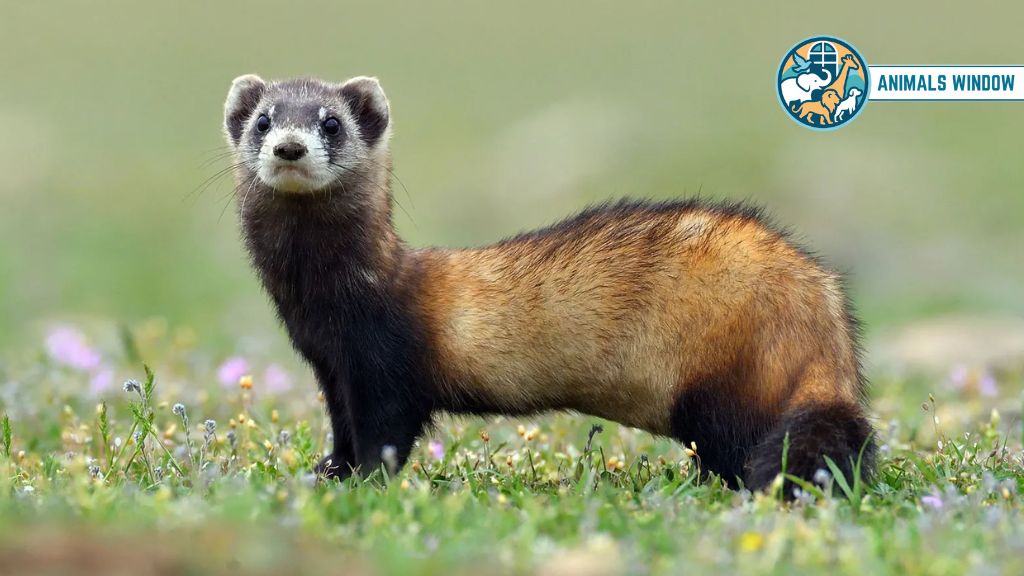
- Scientific Name: Mustela putorius
- Size: 32–45 cm (body length)
- Weight: 0.5–1.7 kg
- Diet: Rodents, frogs, rabbits, birds
- Habitat: Europe, from Britain to western Russia
- Lifespan: 5–7 years in the wild
The Polecat is the wild ancestor of the domestic ferret — and unlike its domesticated descendant, it’s built to survive harsh European winters. It’s also the source of the ferret’s scientific name (Mustela putorius furo), since they’re the same species. What separates them is behavior and centuries of selective breeding, not deep genetics.
The polecat’s defense is chemical. It releases a powerful musk from anal scent glands when threatened — strong enough that the Old French word polcat may literally mean “smelly cat.” That reputation is well-earned.
🔥 Comparison Fact: A polecat is roughly the length of a standard hardback book — but the smell it produces when threatened carries across distances that seem disproportionate to that size.
18. Grison
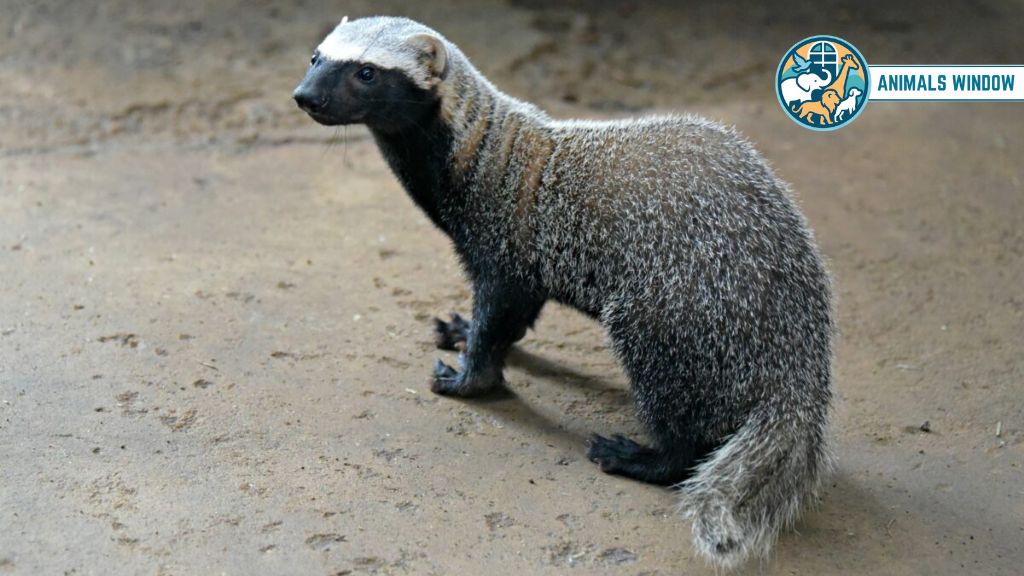
- Scientific Name: Galictis vittata (Greater Grison)
- Size: 45–55 cm (body length)
- Weight: 1.4–3.3 kg
- Diet: Small mammals, birds, reptiles, amphibians, fruit
- Habitat: Central and South America, from Mexico to Brazil
- Lifespan: Around 10 years in captivity
The Grison is probably the least-known animal on this entire list — and that’s what makes it worth ending on. It’s a medium-sized mustelid from Central and South America that has been documented hunting in coordinated pairs, which is unusual for mustelids. Two grisons will work together to flush prey from hiding spots, taking turns chasing and cutting off escape routes.
It also has a bold, two-tone coat — gray on top, black on the face and underparts — with a white stripe running across the forehead. That stripe might be a visual signal between individuals during cooperative hunts. Researchers aren’t entirely sure yet. There’s still a lot to learn about this one.
🔥 Comparison Fact: A grison’s body is about the length of a men’s size-10 shoe — compact but surprisingly effective when two of them are hunting together.
FAQs About Animals Like Mongoose
What animals are most like a mongoose?
Meerkats, weasels, stoats, and ferrets are the most similar. They share the same slender build, sharp hunting instincts, and short legs. Most belong to either the Herpestidae or Mustelidae families.
Are mongoose animals related to weasels?
Not directly. Mongooses belong to the family Herpestidae, while weasels belong to Mustelidae. But they share a common ancestor and evolved similar body shapes through convergent evolution.
What is the most dangerous animal on the mongoose animals list?
The Fossa is the most powerful. It’s Madagascar’s top land predator and can take down lemurs larger than itself while moving through tree canopies.
Which animal on this list is closest to extinction?
The European Mink is critically endangered. It’s been displaced from most of its range and now survives mainly in small protected island populations.
Do any of these animals share the mongoose’s venom resistance?
The Meerkat, like the mongoose, has partial resistance to certain venoms — including scorpion toxin — due to mutations in their acetylcholine receptors.
Which of these animals is the smartest?
The Tayra shows the strongest documented evidence of planning behavior, including storing unripe fruit and returning for it when it ripens — a sign of future thinking.
Can any of these animals be kept as pets?
Ferrets are widely kept as legal pets in many countries. Some others, like the grison or tayra, have been kept in captivity but are wild animals and not suitable as household pets.
Related More Animals Guides:

I have loved animals since I was a kid. I enjoy reading about how animals live, eat, move, and survive. I started Animals Window to share what I learn in a simple and easy way. I write about animal body parts, size, behavior, diet, habitats, and species. My goal is to make animal facts clear and fun for everyone to understand.