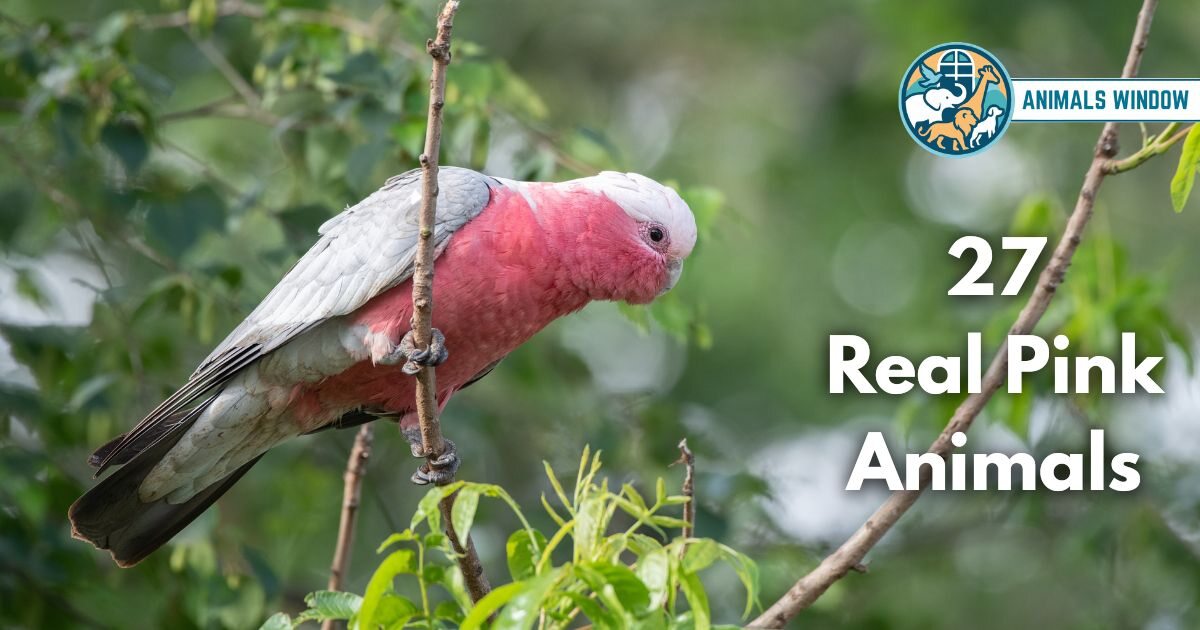
Pink animals exist across every habitat on Earth — from deep oceans to tropical rainforests. Their pink coloration comes from pigments, diet, blood vessels showing through pale skin, or structural light reflection. Some are born pink, others turn pink over time. Right now, scientists have identified dozens of naturally pink animal species across mammals, birds, marine life, reptiles, and insects.
Table of Contents
Quick List of Animals That Are Pink
- Amazon River Dolphin (Boto)
- Domestic Pig
- Naked Mole-Rat
- Pink Fairy Armadillo
- American Flamingo
- Greater Flamingo
- Galah (Rose-Breasted Cockatoo)
- Major Mitchell’s Cockatoo
- Pine Grosbeak
- Pink Robin
- Pink-Headed Warbler
- Roseate Spoonbill
- Bargibant’s Pygmy Seahorse
- Hopkins’ Rose Nudibranch
- Pink Hairy Squat Lobster
- Pink Manta Ray
- Pink Sea Anemone
- Pink Sea Star
- Axolotl (Leucistic Morph)
- Galápagos Pink Land Iguana
- Sonoran Coachwhip Snake
- Web-Footed Gecko
- Elephant Hawk-Moth
- Orchid Mantis
- Pink Dragon Millipede
- Pink Katydid
- Primrose Moth
Why Pink Animals Are Weirder Than You Think
Most people assume pink is just a soft, pretty color. But in the animal kingdom, pink is strategic. It can be a warning, a disguise, a love signal, or a side effect of what an animal eats.
Here’s the thing — not all pink animals are born that way. One bird on this list turns more pink the older it gets. One ocean creature is so perfectly pink it was hidden from scientists for decades. And one insect smells like cherry blossoms to lure prey.
You’ll also meet a dragon that makes poison gas, a dolphin that turns redder when it blushes, and a mantis so beautiful that bees willingly fly into its arms. These aren’t just cute pink animals — they’re some of the most clever survivors on the planet.
So whether you’re searching for pink animals in the ocean, rare pink animals in forests, or just building a solid pink animals list — this guide covers all of them with facts you won’t find anywhere else.
Pink Mammals
1. Amazon River Dolphin (Boto)
- Scientific name: Inia geoffrensis
- Size: 6–8 feet long
- Weight: 185–355 lbs
- Diet: Fish, crabs, turtles
- Habitat: Amazon and Orinoco river basins, South America
- Lifespan: Up to 30 years
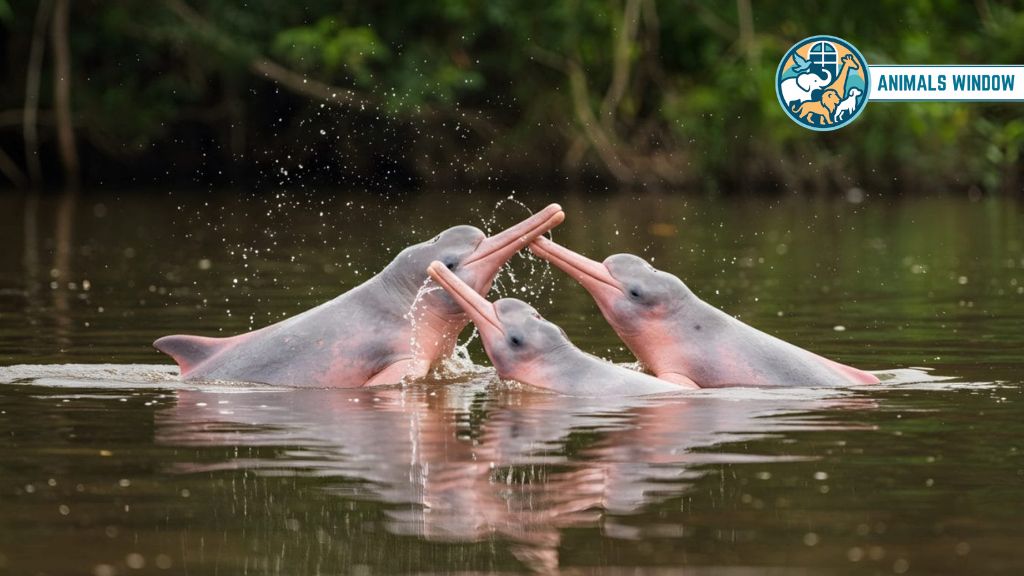
The Amazon River Dolphin is the largest freshwater dolphin in the world — and the pinkest. Young botos are gray, but their skin fades to pink as they age. Males turn a brighter shade than females, and when a boto gets excited or active, its skin flushes even deeper pink, almost like blushing.
What makes this animal truly stand out is why it’s pink. The pink color comes from scar tissue — males fight each other constantly, and those healed wounds show through their nearly transparent skin. So the pinkest boto in the river is often the most battle-tested one.
🔥 Comparison Fact: An adult boto is roughly as long as a standard dining table — about 7 feet — but weighs close to two large car tires stacked together.
2. Domestic Pig

- Scientific name: Sus scrofa domesticus
- Size: 4–6 feet long
- Weight: 110–770 lbs
- Diet: Omnivore — grains, vegetables, insects
- Habitat: Farms worldwide
- Lifespan: 10–15 years
The domestic pig is probably the first pink animal that pops into most people’s heads. But here’s what most people miss: pigs are pink because they lack heavy skin pigmentation, so their blood vessels show through the skin, giving them that soft rosy tone. Wild boars are brown or black — domestication changed their look.
Pigs are also far smarter than their reputation suggests. They can learn their own names in two weeks, solve mirror puzzles, and even play basic video games with a joystick. That’s a level of cognitive flexibility you’d expect from primates, not farm animals.
🔥 Comparison Fact: A fully grown domestic pig weighs about as much as a full-size motorcycle — sometimes more.
3. Naked Mole-Rat

- Scientific name: Heterocephalus glaber
- Size: 3–4 inches long
- Weight: 1–1.5 oz
- Diet: Tubers, plant roots
- Habitat: Underground tunnels, East Africa
- Lifespan: Up to 30 years (extraordinary for its size)
The naked mole-rat looks like a wrinkled piece of pink bubble gum with teeth. Its hairless, translucent skin has almost no melanin, so the pinkish hue of underlying tissue shows right through. They live in pitch-dark tunnels, so color doesn’t matter much down there.
But here’s the real story: naked mole-rats are biologically immune to cancer. Scientists have studied them for decades trying to understand why. They also feel almost no pain in their skin and can survive up to 18 minutes without oxygen — which no other mammal can do. For an animal the size of a thumb drive, that’s astonishing.
🔥 Comparison Fact: A naked mole-rat is roughly the size and weight of a AA battery — but it outlives most animals ten times its size.
4. Pink Fairy Armadillo
- Scientific name: Chlamyphorus truncatus
- Size: 3–4.5 inches long
- Weight: 3–5 oz
- Diet: Ants, worms, plant matter
- Habitat: Sandy plains of central Argentina
- Lifespan: Unknown in the wild (rarely survives in captivity)
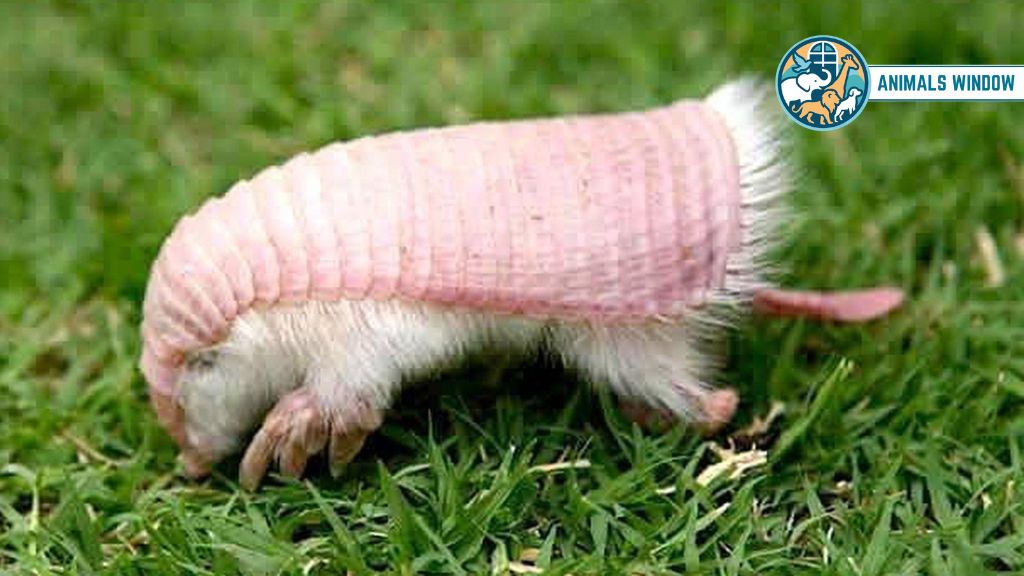
The Pink Fairy Armadillo is one of the rarest pink animals in nature — and one of the strangest things you’ll ever see. Its shell is a soft, rosy-pink color because it’s paper-thin, and the blood vessels underneath glow right through it. That shell also acts like a thermostat, allowing the armadillo to release or absorb heat as needed.
It’s the world’s smallest armadillo. Most people never see one in the wild because it tunnels underground with impressive speed, almost “swimming” through sand. When it senses danger, it plugs the tunnel entrance with its flat, armored back like a living cork.
🔥 Comparison Fact: The Pink Fairy Armadillo is about the size and length of a standard highlighter marker. It fits easily in a child’s palm.
Pink Birds & Avian Species
5. American Flamingo

- Scientific name: Phoenicopterus ruber
- Size: 3.9–4.6 feet tall
- Weight: 4–8 lbs
- Diet: Algae, brine shrimp, small invertebrates
- Habitat: Caribbean, Yucatán Peninsula, Galápagos Islands
- Lifespan: 40–60 years
The American Flamingo is the brightest of all flamingo species — a bold, almost neon pink that looks almost artificial in photos. That color comes entirely from carotenoid pigments in the shrimp and algae they eat. A flamingo raised without those foods would turn white within a year.
What most people don’t know: flamingos feed with their heads upside down, using a specialized beak that filters water like a whale filters krill. Their tongue pumps back and forth up to four times per second to push water out and trap food. It’s one of the most unusual feeding systems of any bird on Earth.
🔥 Comparison Fact: An American Flamingo stands about as tall as a five-year-old child, but its legs make up more than half that height.
6. Greater Flamingo
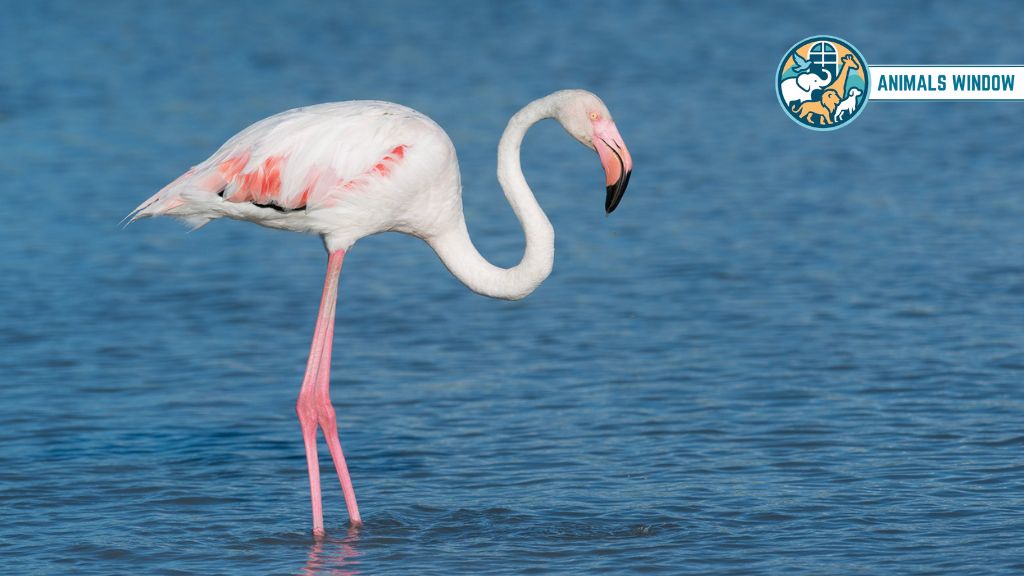
- Scientific name: Phoenicopterus roseus
- Size: 3.9–4.7 feet tall
- Weight: 4.4–9.9 lbs
- Diet: Brine shrimp, blue-green algae, small mollusks
- Habitat: Africa, Southern Europe, Middle East, South Asia
- Lifespan: 30–40 years in the wild
The Greater Flamingo is the most widespread flamingo species on the planet — and the palest. Unlike the vivid American Flamingo, its coloring is a soft, washed-out pink with white-tinged wings and bright red wing patches that only show in flight.
These birds are famously social. Some colonies contain over one million individuals. But within that enormous crowd, flamingo parents locate their single chick using only its voice — not sight. A parent can identify its own chick’s call among a million others. That acoustic precision rivals what scientists use in voice-recognition software.
🔥 Comparison Fact: The Greater Flamingo weighs about as much as a large house cat — usually between 5 and 8 pounds.
7. Galah (Rose-Breasted Cockatoo)
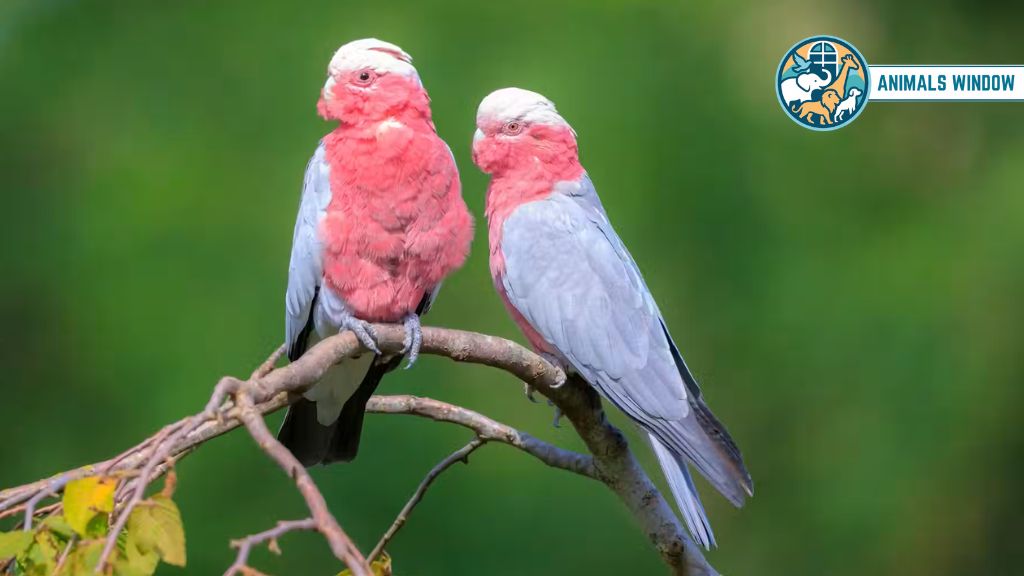
- Scientific name: Eolophus roseicapilla
- Size: 13–15 inches long
- Weight: 10–13 oz
- Diet: Seeds, berries, insects
- Habitat: Open woodlands and farmland across Australia
- Lifespan: Up to 80 years in captivity
The Galah is Australia’s most recognizable pink bird — a vivid bubblegum-pink chest and face set against a silver-grey back and wings. “Galah” is also Australian slang for a fool, because these birds are loud, clownish, and love performing aerial tricks that seem pointless. But that playfulness is actually a sign of high intelligence.
Galahs mate for life. If one partner dies, the surviving bird may grieve for months and sometimes never re-pairs. They also have a memory precise enough to return to the exact same nesting hollow year after year, sometimes across decades.
🔥 Comparison Fact: A Galah is roughly the length of a standard ruler — about 14 inches — and weighs about as much as a baseball.
8. Major Mitchell’s Cockatoo
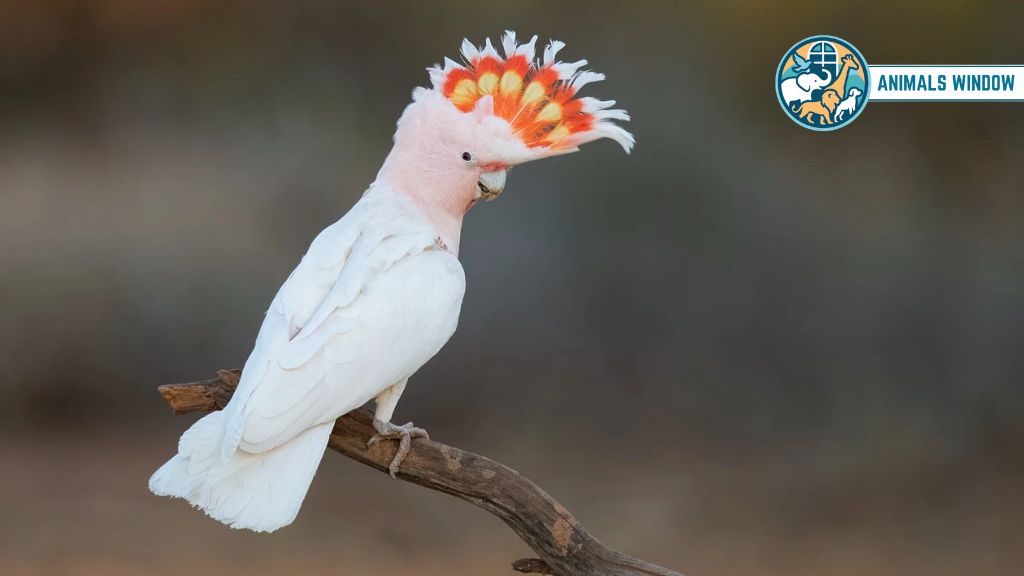
- Scientific name: Lophochroa leadbeateri
- Size: 13–15 inches long
- Weight: 10–14 oz
- Diet: Seeds, nuts, berries, roots
- Habitat: Inland Australia, semi-arid scrublands
- Lifespan: 40–60 years (up to 83 recorded in captivity)
The Major Mitchell’s Cockatoo might be the most elegant bird on this list. Its crest is a layered explosion of white, red, and pink — fanned out like a painted fan — and its body is a soft salmon-pink that fades toward white on the wings. It’s named after Major Sir Thomas Mitchell, a 19th-century explorer who described it as “the most beautiful of all the parrots.”
These birds have massive territorial ranges — a single pair may need hundreds of acres to themselves. Their low population density means they’re rarely seen in flocks. Each pair is essentially on its own island of space, which makes overpopulation or crowding nearly impossible in the wild.
🔥 Comparison Fact: Major Mitchell’s Cockatoo is about the size of a sheet of standard printer paper — roughly 14 inches — but its crest doubles its visual height when raised.
9. Pine Grosbeak
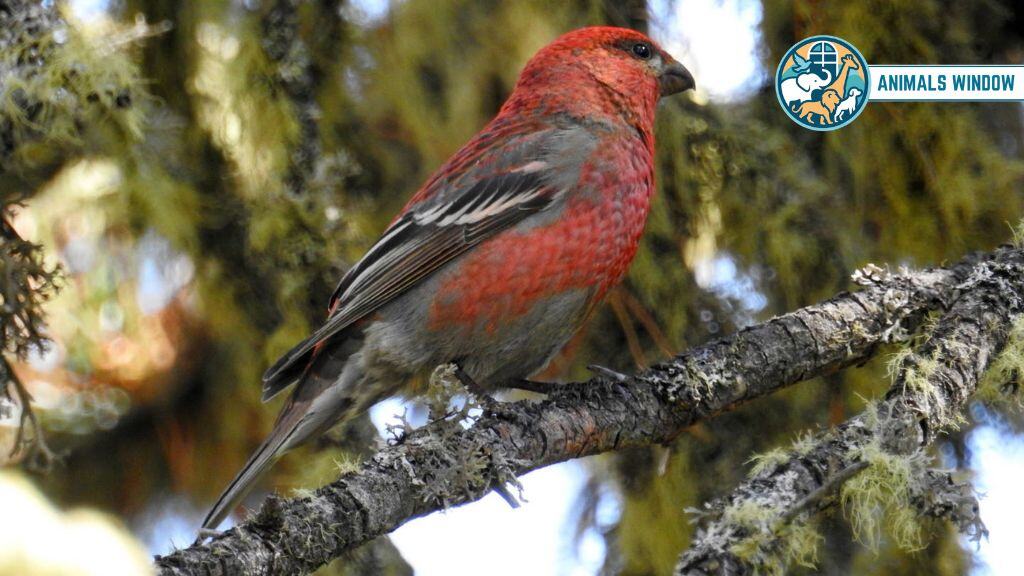
- Scientific name: Pinicola enucleator
- Size: 7.9–9.8 inches long
- Weight: 2–2.8 oz
- Diet: Seeds, berries, buds, insects
- Habitat: Boreal forests of North America, Europe, Asia
- Lifespan: 4–7 years
The male Pine Grosbeak is a chunky, slow-moving bird wearing a deep raspberry-pink coat — unusual for a finch. Most small birds are fast and nervous, but the Pine Grosbeak moves at a relaxed pace through conifer branches, almost like it knows nothing wants to eat it.
Its thick, curved beak is built for cracking hard seeds in freezing temperatures. What’s surprising is that this bird has a dedicated sublingual pouch — a small pocket under its tongue — that it uses to store partially crushed seeds while it keeps feeding. It’s essentially carrying a snack bag in its mouth.
🔥 Comparison Fact: A Pine Grosbeak is about the length of a standard pen — roughly 8 to 9 inches — but noticeably heavier and stockier than most birds that size.
10. Pink Robin
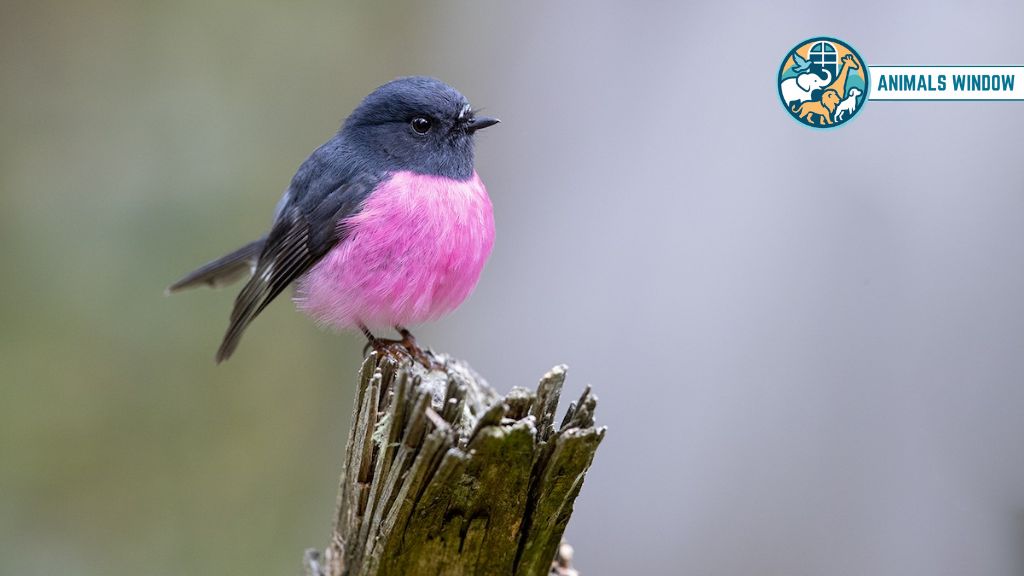
- Scientific name: Petroica rodinogaster
- Size: 4.3–4.7 inches long
- Weight: 0.28–0.42 oz
- Diet: Insects, spiders
- Habitat: Wet forests of southeastern Australia and Tasmania
- Lifespan: 4–6 years
The Pink Robin is tiny, secretive, and stunning. The male has a coal-black head and back with a vivid pink chest that looks almost artificially bright — like someone painted it with neon watercolor. Females are plain brown, which helps them stay hidden on the nest.
This bird hunts from a low-perch strategy — sitting perfectly still just a foot or two above the ground, then darting down to grab an insect before returning to the same branch. It rarely moves through the forest actively. Instead, it waits, watches, and strikes in a fraction of a second. Patience is its entire hunting system.
🔥 Comparison Fact: A Pink Robin weighs less than four paper clips — under half an ounce — making it one of the lightest pink animals on this entire list.
11. Pink-Headed Warbler
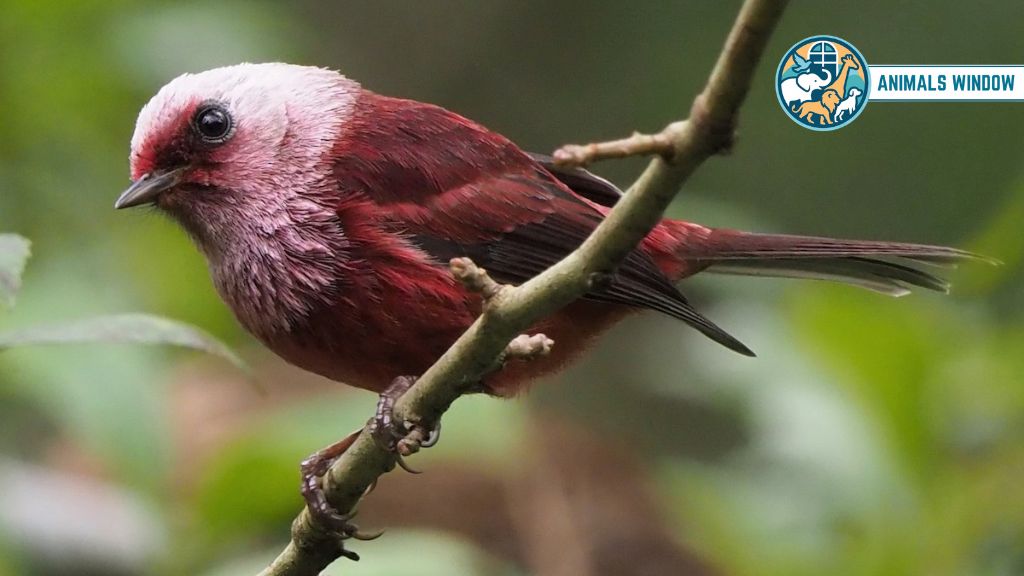
- Scientific name: Cardellina versicolor
- Size: 4.7–5.1 inches long
- Weight: 0.28–0.35 oz
- Diet: Insects, small invertebrates
- Habitat: Highland pine-oak forests of southern Mexico and Guatemala
- Lifespan: 3–5 years estimated
The Pink-Headed Warbler is a cloud-forest specialist — it lives at elevations between 6,000 and 10,500 feet, where mist rolls through pine-oak trees most of the day. Its body is a deep red-pink, and its head is a pale rose-silver, almost glowing against the dark forest. Very few people have ever seen one in the wild.
What makes it unusual among warblers is that both the male and female share nearly identical coloration — rare in birds where males are usually the flashier ones. Scientists believe this equal display may be tied to their cooperative nesting habits, where both parents are equally involved in raising young.
🔥 Comparison Fact: The Pink-Headed Warbler is roughly the length of a standard lip balm tube — about 5 inches — and weighs less than a single grape.
12. Roseate Spoonbill
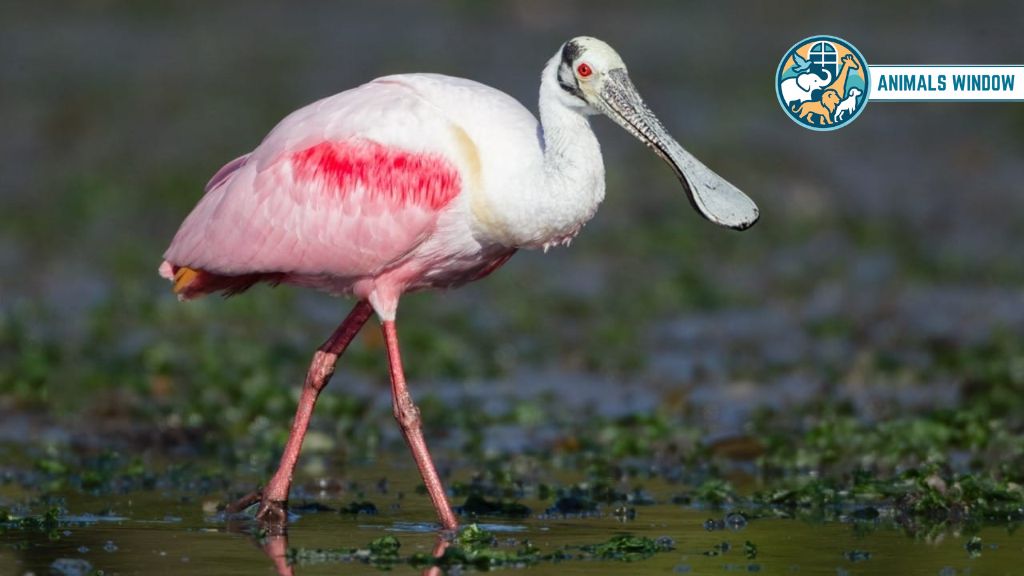
- Scientific name: Platalea ajaja
- Size: 28–34 inches tall
- Weight: 2.6–4 lbs
- Diet: Small fish, crustaceans, aquatic insects
- Habitat: Coastal wetlands of the Americas
- Lifespan: 10–15 years
The Roseate Spoonbill gets its pink the same way flamingos do — from carotenoids in the shrimp and crustaceans it eats. But its feeding method is completely different. That flat, spoon-shaped bill swings side to side through shallow water, snapping shut the instant it touches anything small and edible. It can sweep through sediment up to 30 times per minute.
Here’s the part that catches people off guard: spoonbill chicks are born white. They don’t start showing pink until they begin eating crustacean-rich diets on their own. A pale spoonbill is a young or poorly fed one — the depth of color is a direct indicator of diet quality.
🔥 Comparison Fact: A Roseate Spoonbill stands about as tall as a typical office chair — roughly 32 inches — and its wingspan can reach nearly 4 feet.
Pink Marine & Aquatic Life
13. Bargibant’s Pygmy Seahorse
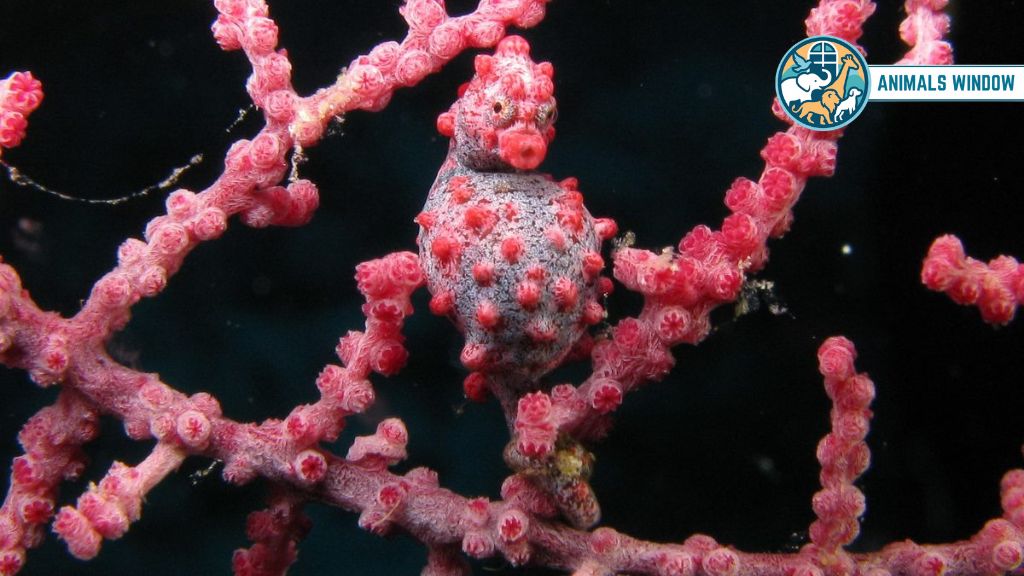
- Scientific name: Hippocampus bargibanti
- Size: 0.5–1 inch long
- Weight: Less than 0.01 oz
- Diet: Tiny crustaceans, plankton
- Habitat: Coral reefs of the Indo-Pacific
- Lifespan: 1–5 years
Bargibant’s Pygmy Seahorse wasn’t discovered until 1969 — and only because a scientist accidentally brought a piece of gorgonian coral to a lab and later noticed the seahorse clinging to it. It is that well hidden. Its body is covered in round pink and purple bumps that match the coral polyps it lives on so precisely that even experts struggle to spot it.
This animal never leaves its host coral — not once in its adult life. It grips with its prehensile tail and eats whatever tiny crustaceans drift past. It doesn’t need to move because camouflage handles everything. The coral is its entire world.
🔥 Comparison Fact: Bargibant’s Pygmy Seahorse is smaller than a standard staple — less than an inch long. It’s one of the tiniest vertebrates that exists.
14. Hopkins’ Rose Nudibranch
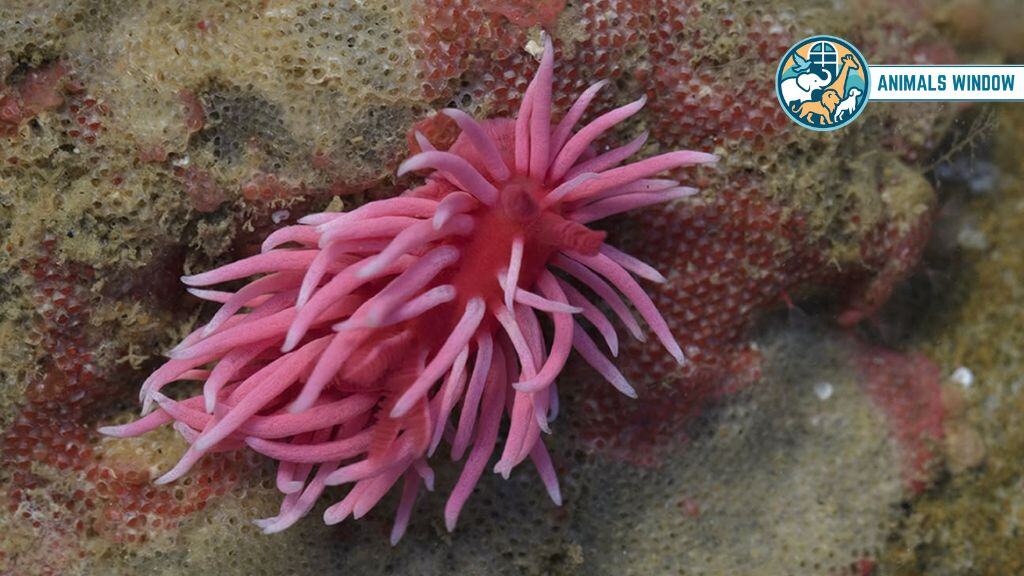
- Scientific name: Okenia rosacea
- Size: 0.4–1.5 inches long
- Weight: Negligible
- Diet: Bryozoans (small aquatic invertebrates)
- Habitat: Pacific coast of North America (California to Mexico)
- Lifespan: Under 1 year
The Hopkins’ Rose Nudibranch is one of the most electric pink sea creatures on the Pacific coast — a small, ruffled sea slug that looks like a coral reef wore a tutu. Its intense magenta-pink isn’t just pretty. That color is actually a chemical warning signal to predators: this animal absorbs toxic compounds from the bryozoans it eats and stores them in its skin.
Nudibranchs have no shell and no hard protection — they gave all that up millions of years ago. Instead, they went full chemical warfare. Some species can even biosynthesize their own toxins, independent of diet. Hopkins’ Rose is the showiest example on the U.S. coastline.
🔥 Comparison Fact: Hopkins’ Rose Nudibranch is about as long as a thumbnail — sometimes barely half an inch. But it’s one of the most photographed marine animals among divers along the California coast.
15. Pink Hairy Squat Lobster
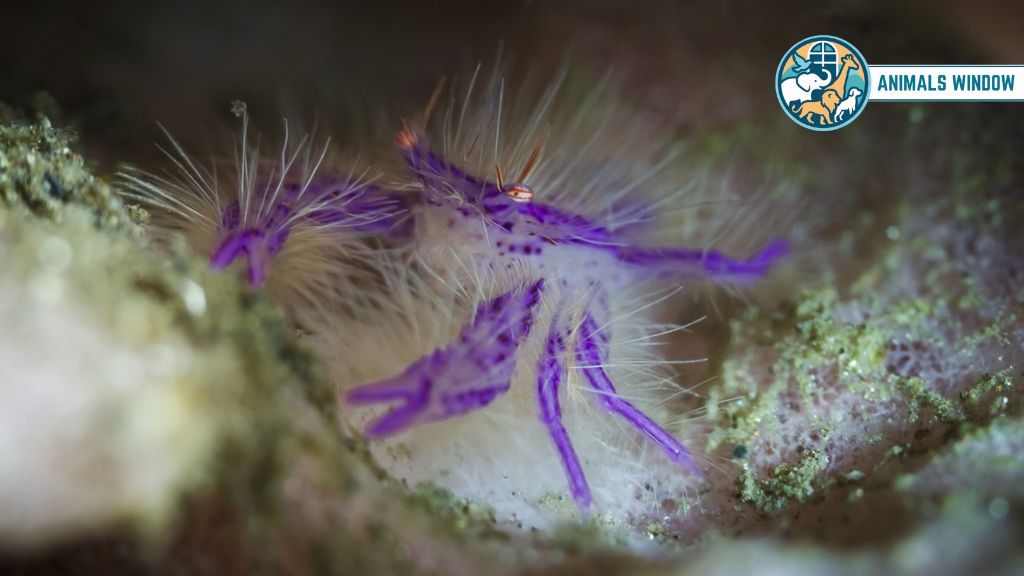
- Scientific name: Lauriea siagiani
- Size: 0.5–1 inch (body only)
- Weight: Negligible
- Diet: Barrel sponge tissue and mucus
- Habitat: Barrel sponges in tropical Indo-Pacific reefs
- Lifespan: Unknown
The Pink Hairy Squat Lobster sounds like something from a cartoon, but it’s completely real — and completely strange. It lives exclusively inside massive barrel sponges, feeding on the sponge’s mucus and tissue. Its entire body is covered in fine pink hairs (called setae), which help it feel microscopic water currents inside the dark sponge interior.
It’s not a true lobster — it’s a squat lobster, which is more closely related to hermit crabs and porcelain crabs. The pink-on-pink environment it lives in (inside a pink sponge, covered in pink hairs) makes it almost impossible to photograph unless you know exactly where to look.
🔥 Comparison Fact: The Pink Hairy Squat Lobster’s body is barely the size of a raspberry, yet it manages to carve out its entire life inside the walls of a sponge larger than a trash can.
16. Pink Manta Ray
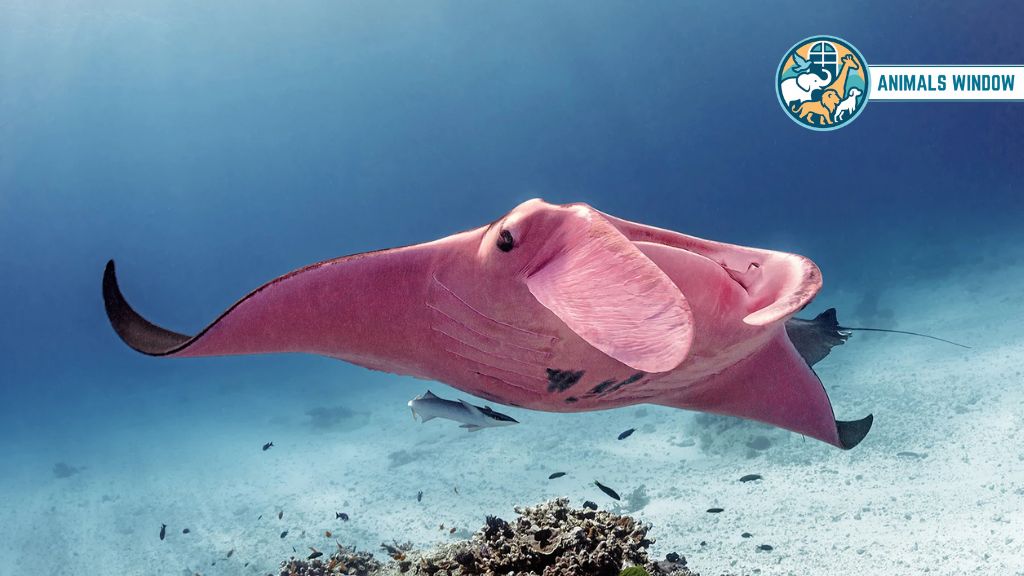
- Scientific name: Mobula birostris (color variant)
- Size: Up to 23 feet wide (wingspan)
- Weight: Up to 5,300 lbs
- Diet: Zooplankton, small fish, krill
- Habitat: Open ocean; regularly spotted near Lady Elliot Island, Australia
- Lifespan: Up to 40 years
There is only one confirmed pink manta ray in the world — a male named “Inspector Clouseau,” first documented at Lady Elliot Island in 2015. His belly, which is normally white in giant mantas, is a consistent bubblegum pink. Researchers originally thought it was an infection or injury. But testing showed it’s caused by a genetic mutation affecting how his skin cells express pigment.
He’s been photographed over 10 times across multiple years in the same reef system, always healthy, always pink. There’s no other documented case of this coloration in the species — making him, technically, one of the rarest pink animals on Earth.
🔥 Comparison Fact: Inspector Clouseau’s wingspan is roughly as wide as a full-size moving truck is long — nearly 23 feet across.
17. Pink Sea Anemone

- Scientific name: Condylactis gigantea (giant Caribbean anemone, among others)
- Size: Up to 12 inches in diameter
- Weight: Negligible
- Diet: Small fish, zooplankton, shrimp
- Habitat: Coral reefs of the Caribbean and Atlantic
- Lifespan: Decades (some anemones are considered biologically immortal)
Pink Sea Anemones look like flowers but they’re pure predators. Those waving pink tentacles are covered in nematocysts — microscopic harpoons that fire toxins into prey at speeds faster than a bullet (relative to scale). Fish that brush against them get stunned and pulled in before they even know what happened.
What’s unexpected: some sea anemones never age in the traditional sense. Their cells continuously regenerate, and some individuals have lived for over 100 years. The pink color in many species comes from symbiotic zooxanthellae algae living inside their tissue — the same pigment system used by coral reefs.
🔥 Comparison Fact: A fully expanded pink sea anemone can be as wide as a dinner plate — 12 inches across — while its base is no wider than a soda can.
18. Pink Sea Star

- Scientific name: Pisaster brevispinus
- Size: Up to 25 inches across
- Weight: Up to 2 lbs
- Diet: Clams, sand dollars, sea cucumbers, snails
- Habitat: Pacific coast of North America, sandy seafloors
- Lifespan: 20+ years
The Pink Sea Star is one of the largest sea stars on the Pacific coast — soft pink to pale lavender, with a rough, spiny surface that feels like stiff sandpaper. It moves slowly across the seafloor on thousands of tiny tube feet, each one capable of suctioning onto hard surfaces.
Its feeding method is something out of a horror film (if you’re a clam). The Pink Sea Star pushes its stomach out of its body, wraps it around a closed clamshell, and digests the clam from the outside. Then it pulls its stomach back in. It doesn’t even need the shell to open — it just dissolves what it needs right through the gap.
🔥 Comparison Fact: A large Pink Sea Star can stretch as wide as a standard dinner plate — over 24 inches — and weigh about as much as a large apple.
Pink Reptiles & Amphibians
19. Axolotl (Leucistic Morph)
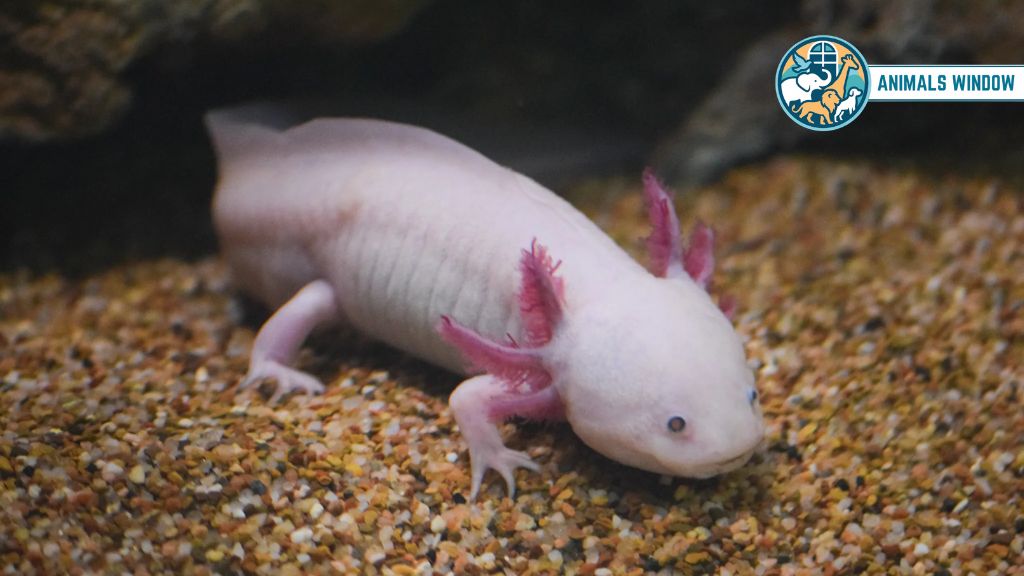
- Scientific name: Ambystoma mexicanum
- Size: 6–18 inches long
- Weight: 2–8 oz
- Diet: Worms, insects, small fish
- Habitat: Lake Xochimilco, Mexico (nearly extinct in the wild)
- Lifespan: 10–15 years
The leucistic Axolotl — the pale pink one with bright red gills most people picture — isn’t albino. It’s leucistic, meaning it has reduced pigmentation but functional eyes, unlike a true albino. That pink-white skin and those feathery red external gills are what made it one of the internet’s most-loved exotic pets.
But the axolotl’s real superpower is regeneration. It can regrow a lost leg, part of its heart, sections of its spinal cord, and even portions of its brain — all without scarring. Scientists are actively using axolotl biology to study human wound healing, nerve repair, and cardiac tissue regrowth. The pink axolotl everyone finds cute might be the key to future medical breakthroughs.
🔥 Comparison Fact: A full-grown axolotl is about as long as a standard ruler — sometimes up to 18 inches — and weighs roughly as much as a deck of playing cards.
20. Galápagos Pink Land Iguana
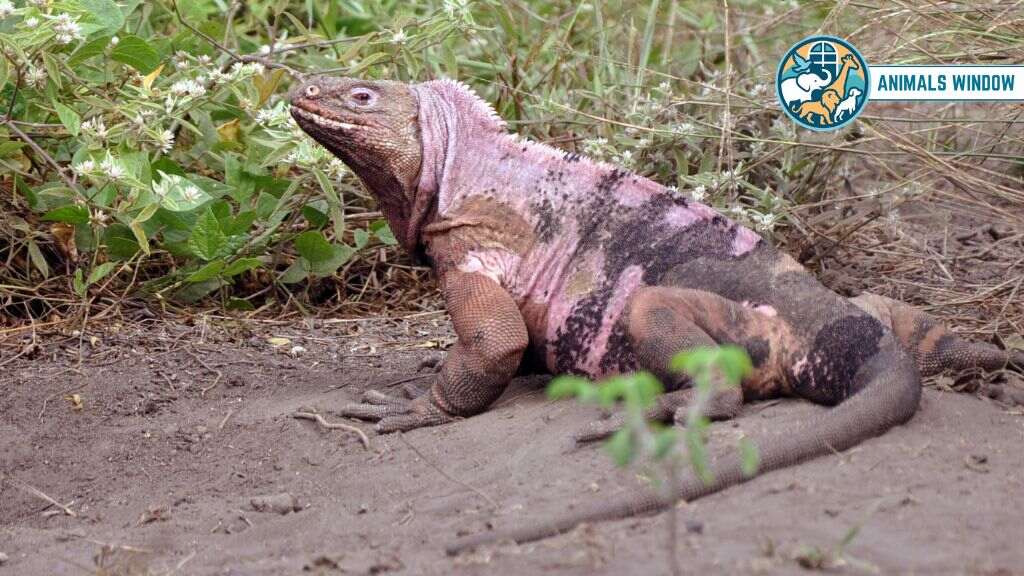
- Scientific name: Conolophus marthae
- Size: 3–5 feet long
- Weight: Up to 25 lbs
- Diet: Cactus pads, flowers, fruits
- Habitat: Wolf Volcano slopes, Isabela Island, Galápagos
- Lifespan: Estimated 60+ years
The Galápagos Pink Land Iguana wasn’t officially described as a distinct species until 2009, despite being known to local park rangers since 1986. It lives only on the slopes of Wolf Volcano — one of the most active volcanoes in the Galápagos — and nowhere else on Earth. Fewer than 250 individuals are thought to exist, making it one of the most endangered reptiles alive.
Its pink and black striped coloration isn’t fully understood, but scientists believe it’s a relic trait — a feature from an ancient ancestor that diverged from other land iguanas over 5 million years ago, long before the Galápagos were colonized by most life. It’s essentially a living time capsule.
🔥 Comparison Fact: A Galápagos Pink Land Iguana can reach the length of a standard car door — about 4 feet — and weigh roughly as much as a medium-sized dog.
21. Sonoran Coachwhip Snake
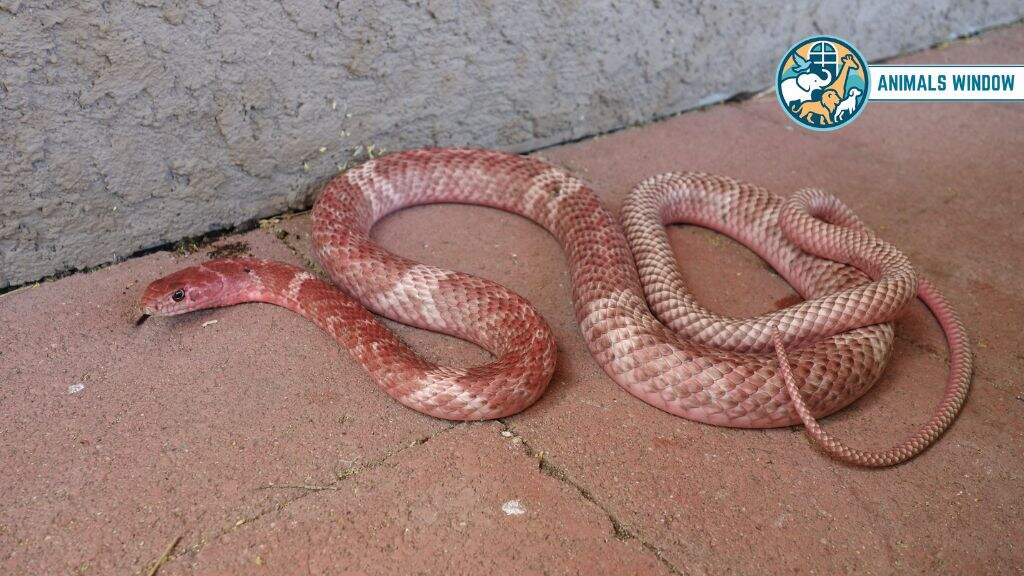
- Scientific name: Masticophis flagellum cingulum
- Size: 4–8 feet long
- Weight: Up to 6 oz
- Diet: Lizards, small rodents, birds, insects
- Habitat: Sonoran Desert, southwestern United States and Mexico
- Lifespan: 10–20 years
The Sonoran Coachwhip is one of the fastest snakes in North America — capable of moving at up to 4 mph on open ground. That may not sound fast, but for a snake covering ground in a desert, it’s enough to run down a lizard, strike, and disappear before most predators react. Its slender pink-to-red body blends with the red sandstone of the Sonoran Desert almost perfectly.
Unlike most snakes that rely on ambush, coachwhips actively hunt — lifting their heads above grass or scrub to spot prey, then chasing it down. They rely on speed and sight rather than venom or constriction. That’s a hunting strategy more common in hawks than in snakes.
🔥 Comparison Fact: A large Sonoran Coachwhip can reach 7–8 feet — nearly as long as a standard door — but weighs only about as much as a handful of loose change.
22. Web-Footed Gecko (Namib Sand Gecko)
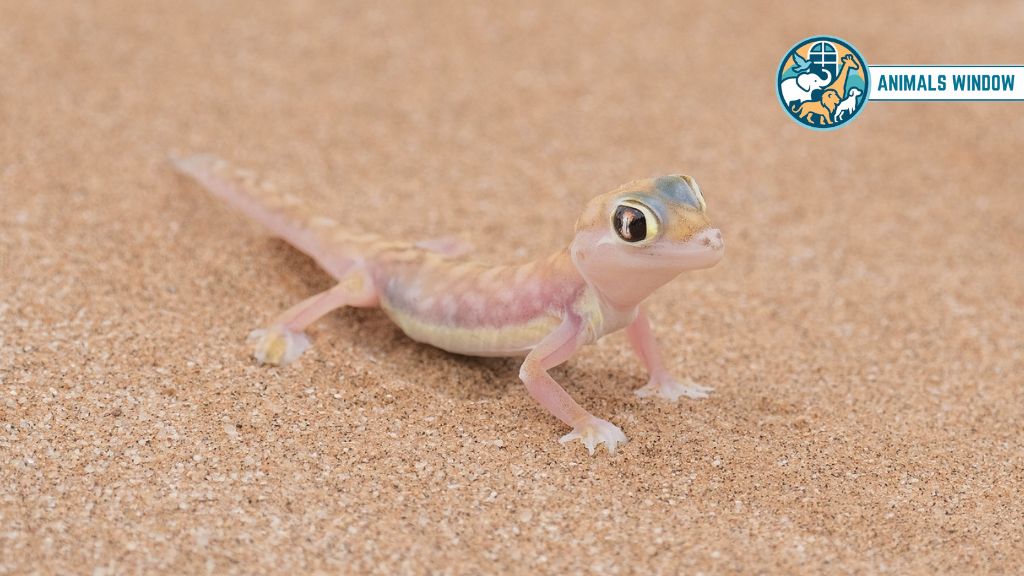
- Scientific name: Pachydactylus rangei
- Size: 4–5 inches long
- Weight: 0.35–0.5 oz
- Diet: Insects, small spiders
- Habitat: Coastal Namib Desert, southern Africa
- Lifespan: 5–10 years
The Web-Footed Gecko has translucent skin — nearly see-through pink — with large, lidless eyes the color of burnished copper. Its webbed feet work like snowshoes on the desert sand, letting it run across loose dunes without sinking.
But its real trick is fog drinking. The Namib Desert receives almost no rain, but thick Atlantic fog rolls in from the coast most nights. This gecko runs to the top of sand dunes, faces into the wind, and lets condensed fog droplets collect on its body. Then it licks the moisture off its own eyes and skin. It survives largely on water that never technically fell as rain.
🔥 Comparison Fact: A Web-Footed Gecko is about the length of a medium-sized shrimp — around 4 inches — and weighs less than two quarters stacked together.
Pink Insects & Arthropods
23. Elephant Hawk-Moth
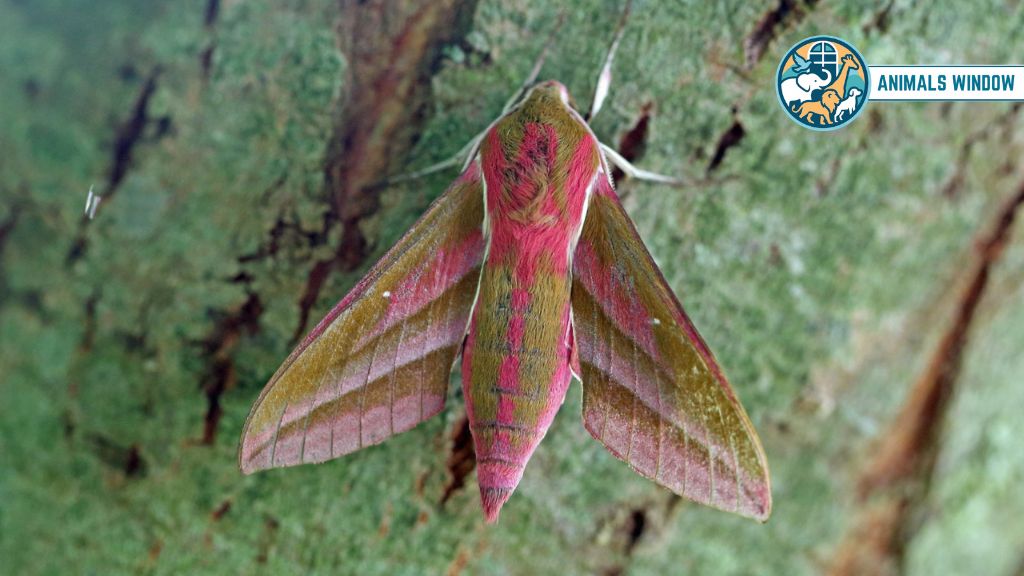
- Scientific name: Deilephila elpenor
- Size: Wingspan 2–2.75 inches
- Weight: 0.05–0.09 oz
- Diet: (Adults) Nectar; (caterpillars) willowherb, bedstraw
- Habitat: Gardens, meadows, woodland edges across Europe and Asia
- Lifespan: A few weeks as an adult; up to a year as a caterpillar
The Elephant Hawk-Moth is one of the most visually striking pink insects in nature — its wings and body are striped in deep olive green and shocking pink, giving it the look of something that belongs on a fashion runway rather than a garden hedge. The name comes from its caterpillar, which has a trunk-like snout it pulls in when threatened, making it look like a tiny elephant head.
What’s remarkable: this moth can see in full color at night. Most animals lose color vision in low light, but the Elephant Hawk-Moth’s eyes remain color-sensitive even in moonlight — allowing it to identify pink and white flowers after dark. It’s one of the only animals confirmed to have true nocturnal color vision.
🔥 Comparison Fact: An Elephant Hawk-Moth has a wingspan roughly equal to the width of a credit card — about 2.5 inches — and weighs less than a paperclip.
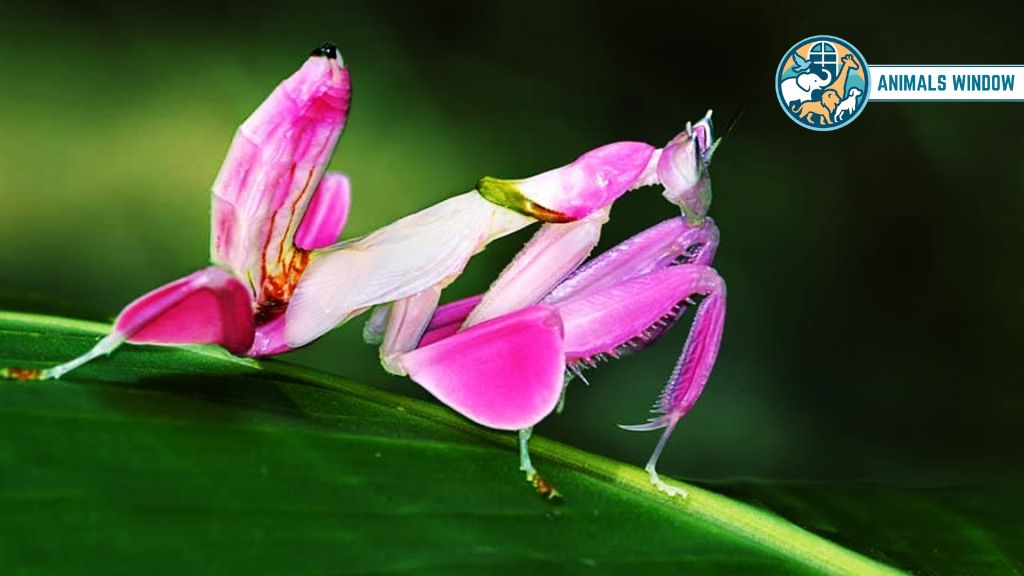
24. Orchid Mantis
- Scientific name: Hymenopus coronatus
- Size: 1.5–2.5 inches long (females larger)
- Weight: 0.05–0.1 oz
- Diet: Bees, butterflies, small insects
- Habitat: Tropical rainforests of Southeast Asia
- Lifespan: 6–8 months
The Orchid Mantis doesn’t hide in a flower — it is the flower. Its white and pink body, petal-shaped legs, and gentle swaying motion mimic an orchid so precisely that bees and butterflies actively approach it as if it were a real bloom. Most camouflage is about hiding from predators. The orchid mantis uses its pink disguise offensively — to attract prey.
Studies show that pollinators visit orchid mantises more often than they visit actual orchid flowers in the same area. The mantis is, essentially, a better flower than flowers. That’s an evolutionary achievement that took millions of years to perfect.
🔥 Comparison Fact: A female Orchid Mantis is about as long as a standard USB drive — roughly 2.5 inches — but she commands the attention of insects three times her size.
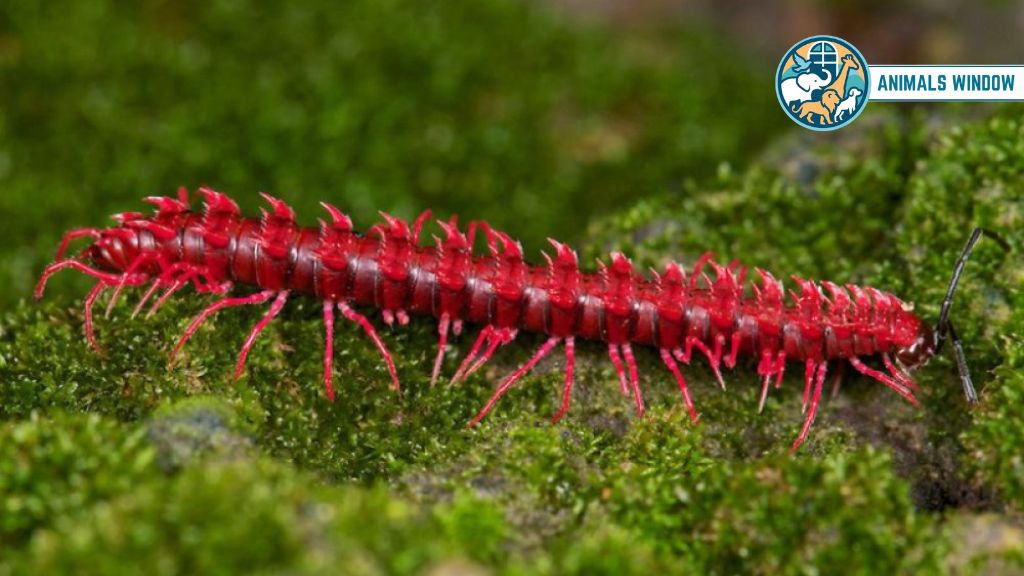
25. Pink Dragon Millipede
- Scientific name: Desmoxytes purpurosea
- Size: 1.2–1.6 inches long
- Weight: Negligible
- Diet: Decaying plant matter
- Habitat: Caves and rocky outcrops of Thailand and southern China
- Lifespan: 1–2 years estimated
The Pink Dragon Millipede was only discovered in 2007, and it’s exactly as wild as the name sounds. It’s a vivid, almost glowing hot pink — with spiky lateral projections along its body that give it a dragon-like silhouette. That color is a textbook case of aposematism — the use of bright color as a poison warning.
And it backs that warning up. The Pink Dragon Millipede produces hydrogen cyanide gas from glands along its sides. Anything that touches or tries to eat it gets a chemical burn. The pink is essentially a billboard that reads: don’t even try. For a millipede not much bigger than a coin, that’s a seriously effective defense.
🔥 Comparison Fact: The Pink Dragon Millipede is about the length of a large paperclip — just over an inch — but its chemical defense outperforms animals hundreds of times its size.
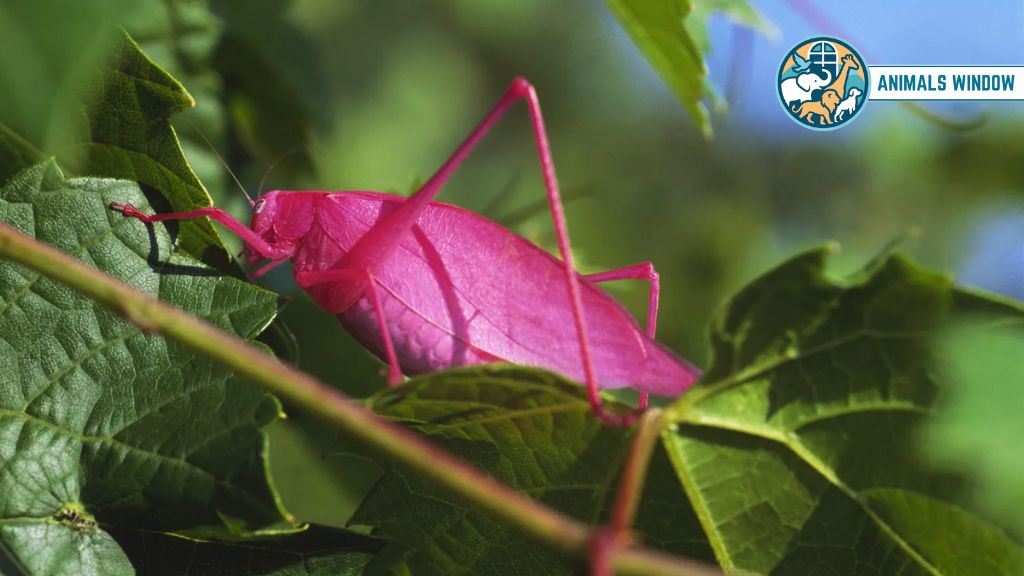
26. Pink Katydid (Oblong-Winged Katydid)
- Scientific name: Amblycorypha oblongifolia
- Size: 1.5–2.5 inches long
- Weight: Negligible
- Diet: Leaves, flowers, plant tissue
- Habitat: Eastern North America, open meadows and forest edges
- Lifespan: 3–6 months
Most katydids are leaf-green for obvious camouflage reasons. But roughly 1 in 500 Oblong-Winged Katydids is born bright pink — a rare genetic condition called erythrism. Instead of the normal green pigment, these individuals produce excess red-pink pigment and almost no green. The result is a vivid, candy-pink insect that looks completely out of place on a green leaf.
In the wild, pink katydids are easy targets — birds spot them immediately on green foliage. They survive best in autumn, when pink and red-tinged dead leaves provide better cover. The fact that this color trait persists in the population at all is a genetic puzzle scientists haven’t fully solved.
🔥 Comparison Fact: A Pink Katydid is roughly the length of a standard thumb — about 2 inches — and weighs less than a single raisin.
Related Post: 20 Animals with Claws (With Pictures and Unique Facts)
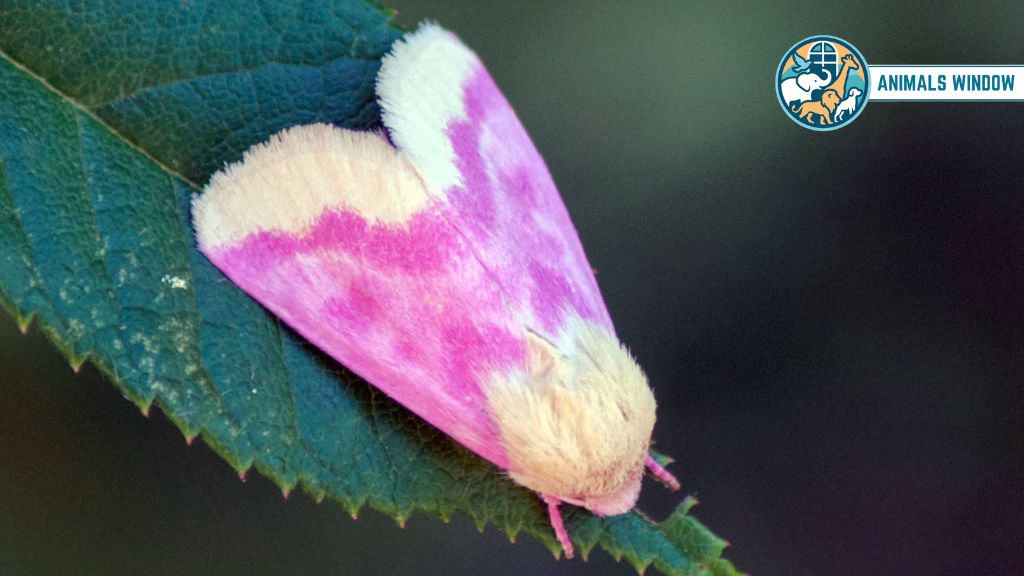
27. Primrose Moth
- Scientific name: Schinia florida
- Size: Wingspan 0.75–1 inch
- Weight: Negligible
- Diet: (Adults) Nectar from evening primrose; (caterpillars) primrose flowers and seeds
- Habitat: Eastern North America, open sandy fields and meadows
- Lifespan: A few weeks as an adult
The Primrose Moth is so specifically camouflaged to one plant that it spends almost its entire life on or in evening primrose flowers — the yellow ones with pink-streaked petals. The moth’s wings are a near-perfect copy of those petals: pale yellow in the center, edged with bright pink bands. When it lands on the flower, it disappears completely.
This is one of the most extreme cases of floral mimicry in North American insects. The caterpillar even eats only primrose seeds and flowers — never leaving the plant. From egg to adult, the Primrose Moth’s biology is entirely locked to one flower species. If evening primrose declined, the moth would vanish with it.
🔥 Comparison Fact: The Primrose Moth’s wingspan is barely the width of a quarter — under one inch — making it the smallest pink animal on this entire list by wingspan.
FAQs About Animals That Are Pink
How many pink animals are there?
There’s no exact official count, but scientists have documented dozens of naturally pink animal species across mammals, birds, marine life, reptiles, and insects. The number grows as new species are discovered, particularly in deep oceans and tropical regions.
Why are some animals pink?
Animals are pink for several different reasons. Some produce carotenoid pigments from their diet (like flamingos). Others have little skin pigmentation, so blood vessels show through (like pigs). Some use pink as a camouflage or a warning signal, and others carry genetic mutations that affect their coloring.
What is the rarest pink animal?
The Galápagos Pink Land Iguana is likely the rarest, with fewer than 250 individuals known to exist. The world’s only confirmed pink manta ray (Inspector Clouseau) is also an extreme rarity — a one-of-a-kind individual in the entire ocean.
Are there pink animals in the ocean?
Yes — quite a few. The Pink Manta Ray, Hopkins’ Rose Nudibranch, Pink Sea Star, Pink Sea Anemone, Bargibant’s Pygmy Seahorse, and Pink Hairy Squat Lobster are all genuine pink sea creatures found in real ocean environments.
What is the smallest pink animal?
Bargibant’s Pygmy Seahorse holds the record on this list — under one inch long, it’s smaller than a staple and can sit comfortably on your fingernail.
Do pink animals survive well in the wild?
It depends on the species. For some, like the Orchid Mantis, pink is a hunting advantage. For others, like the Pink Katydid, it’s a disadvantage on green foliage. Pink is rarely neutral — it either helps or hurts, depending on the habitat.
Can animals change their pink color?
Yes. Flamingos lose their pink if their diet lacks carotenoids. Amazon River Dolphins flush deeper pink when active or excited. And axolotls in the leucistic morph can appear more or less pink depending on their age and light conditions.
Related More Animals Guides:

I have loved animals since I was a kid. I enjoy reading about how animals live, eat, move, and survive. I started Animals Window to share what I learn in a simple and easy way. I write about animal body parts, size, behavior, diet, habitats, and species. My goal is to make animal facts clear and fun for everyone to understand.