
Animals with long necks span every corner of the animal kingdom — from towering African giraffes to ancient dinosaurs like Brachiosaurus. These creatures evolved long necks to reach food, spot predators, or dominate rivals. The list includes mammals, birds, reptiles, insects, and even prehistoric marine creatures. Some neck facts will genuinely surprise you.
Table of Contents
Quick Long Neck Animals List
- Giraffe
- Dromedary Camel
- Gerenuk
- Llama
- Alpaca
- Vicuña
- Common Ostrich
- Emu
- Greater Flamingo
- Anhinga
- Trumpeter Swan
- Great Blue Heron
- Jabiru
- Black-necked Stork
- Scarlet Ibis
- Turkey Vulture
- Eastern Snake-necked Turtle
- Monitor Lizard
- Giraffe Weevil
- Mamenchisaurus
- Brachiosaurus
- Diplodocus
- Elasmosaurus
- Arambourgiania
- Tanystropheus
1. Giraffe
- Scientific name: Giraffa camelopardalis
- Size: Up to 19 feet tall (neck alone: ~6 feet)
- Weight: 1,750–3,000 lbs
- Diet: Leaves, flowers, fruits (mostly acacia)
- Habitat: African savannas and woodlands
- Lifespan: 20–25 years
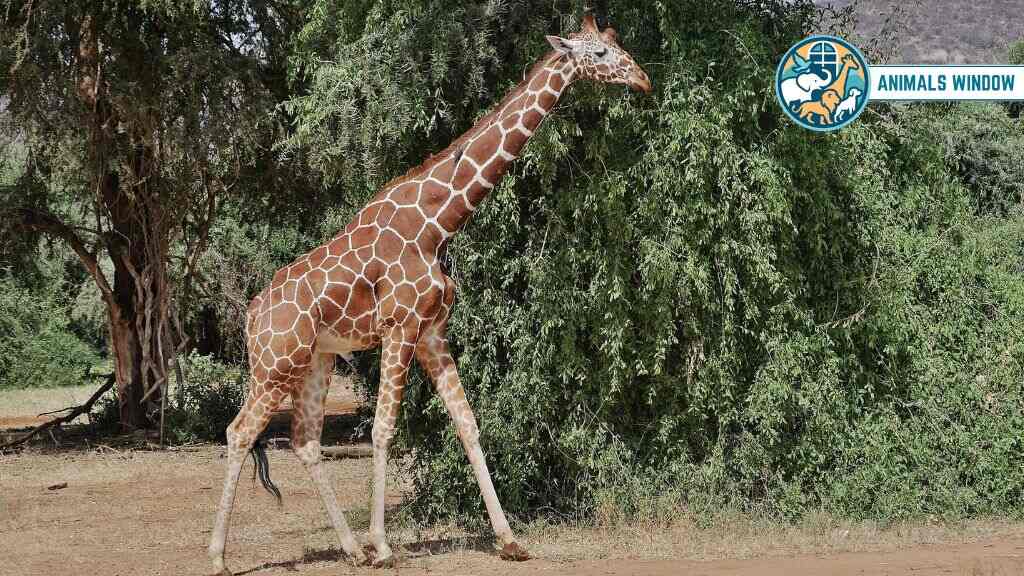
The giraffe holds the title for the longest neck of any living animal — stretching up to 6 feet. That neck is built from just 7 vertebrae, the same number as yours and mine, but each bone can measure over 10 inches long. It lives across sub-Saharan Africa, using height to reach acacia treetops no other land animal can access.
What most people don’t know is that male giraffes fight using their necks in a behavior called “necking.” Two bulls swing their heads like wrecking balls, slamming their thick, ossicone-topped skulls into each other’s bodies. The bigger-necked male almost always wins — and wins the females too. So the long neck isn’t just a feeding tool. It’s a genetic weapon.
🔥 Comparison Fact: A giraffe’s neck alone is about as long as a standard park bench standing upright.
2. Dromedary Camel
- Scientific name: Camelus dromedarius
- Size: 7–11.5 feet tall at the hump
- Weight: 880–1,320 lbs
- Diet: Grasses, shrubs, thorny desert plants
- Habitat: Arabian Peninsula, North Africa, Middle East
- Lifespan: 40–50 years
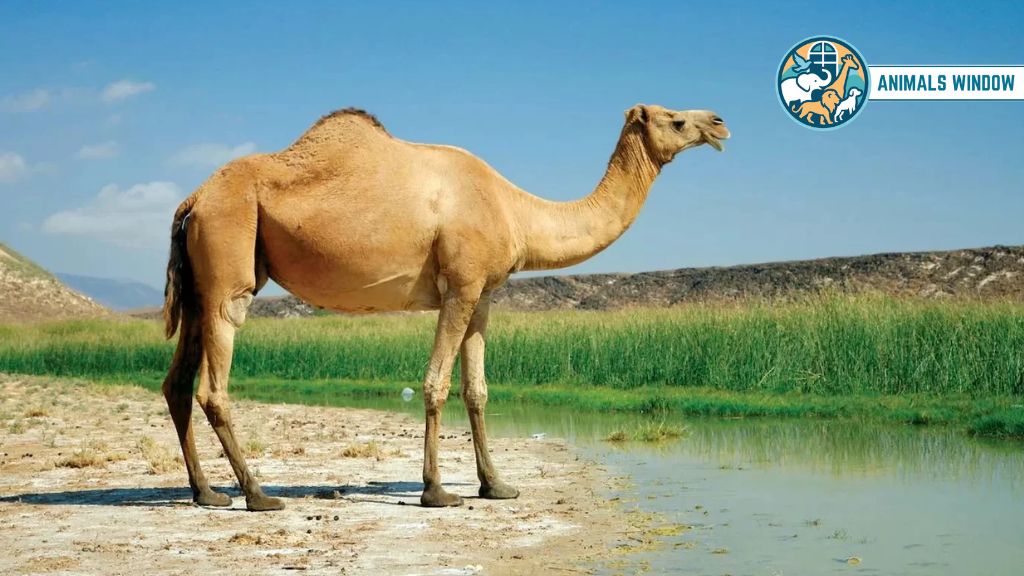
The dromedary camel has a neck that curves in a distinctive S-shape, often measuring 3 feet long. It’s built for the desert — one hump (not two, that’s the Bactrian), and a neck long enough to graze on sparse scrub while keeping the body upright to minimize sun exposure.
A camel can rotate its neck nearly 180 degrees to the side without moving its body. This lets it spot predators from almost any direction without lifting its feet from the sand — a real survival advantage when every calorie counts in a harsh desert environment.
🔥 Comparison Fact: The neck of a dromedary camel is roughly as long as a standard acoustic guitar.
3. Gerenuk
- Scientific name: Litocranius walleri
- Size: 4.6–5.2 feet tall when standing upright
- Weight: 62–115 lbs
- Diet: Leaves, flowers, buds, shoots from tall bushes
- Habitat: Horn of Africa, East Africa drylands
- Lifespan: 8–12 years
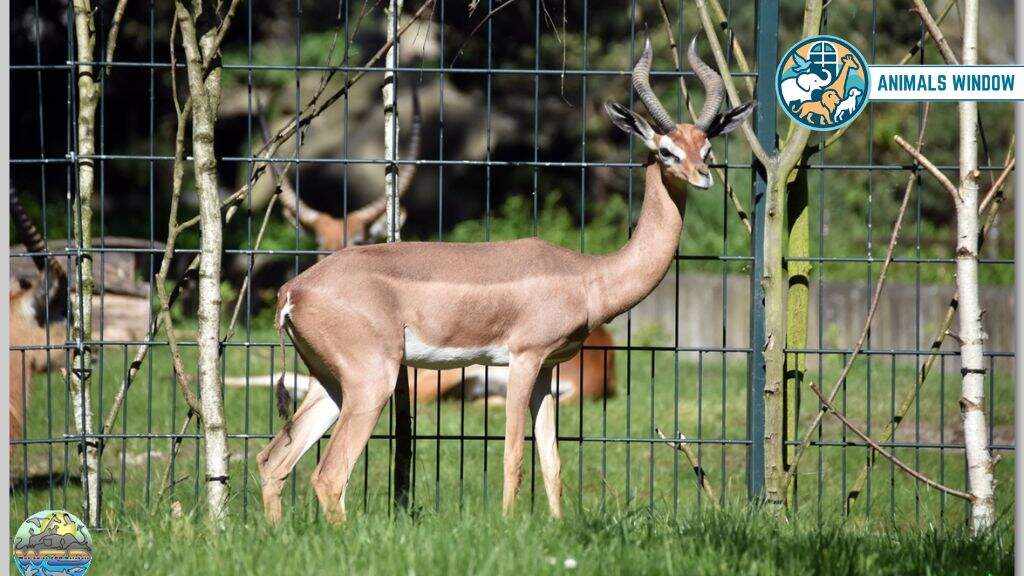
The gerenuk is sometimes called the “giraffe-gazelle” — and once you see it, you’ll understand why. It has an extraordinarily elongated neck relative to its small body, and it’s the only antelope that regularly stands completely upright on its hind legs to feed, pushing its neck skyward to browse branches up to 8 feet high.
What makes gerenuks genuinely different from other antelopes is that they never need to drink water. Their entire moisture intake comes from leaves. That means they can survive in arid scrublands where other browsers go thirsty, giving them exclusive access to food sources no competitor can reach.
🔥 Comparison Fact: A standing gerenuk reaches roughly the height of a standard refrigerator, but its neck makes up nearly a third of that.
4. Llama
- Scientific name: Lama glama
- Size: 5.5–6 feet tall at the head
- Weight: 290–440 lbs
- Diet: Grasses, shrubs, hay
- Habitat: Andean highlands of South America
- Lifespan: 15–25 years
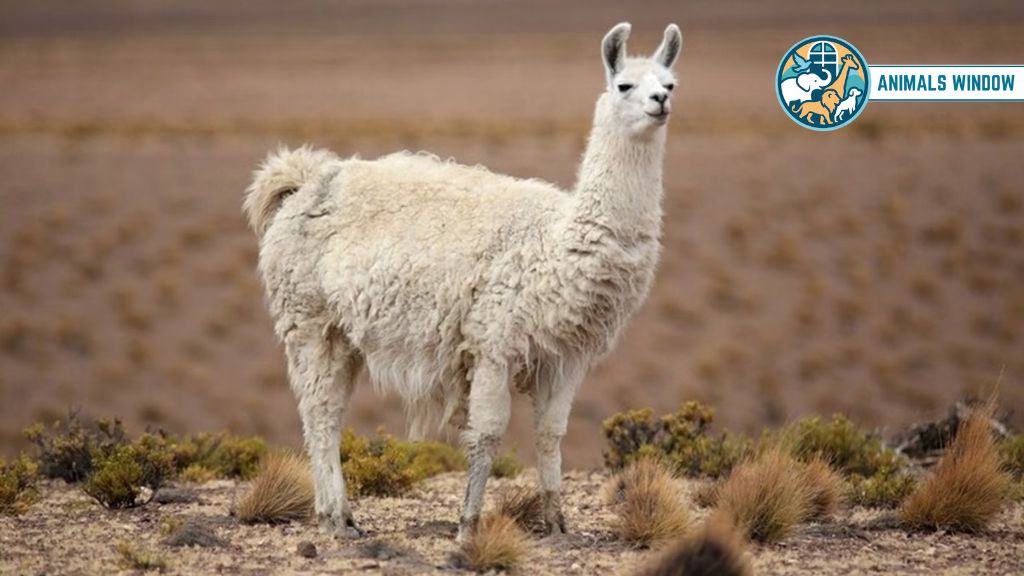
Llamas are animal with long neck and fur — their famously fluffy coats and upright, curved necks give them an almost regal look. They were domesticated in the Andes around 4,000 years ago, originally as pack animals for moving goods across mountain terrain where no wheeled vehicle could go.
Llamas are fiercely protective of flocks — including sheep. Farmers across South America and now North America use them as livestock guardians, where their alertness and willingness to chase off coyotes and foxes makes them genuinely effective. One llama can protect a flock of 200–300 sheep on its own.
🔥 Comparison Fact: A llama’s neck and head, combined, are roughly the length of a baseball bat.
5. Alpaca
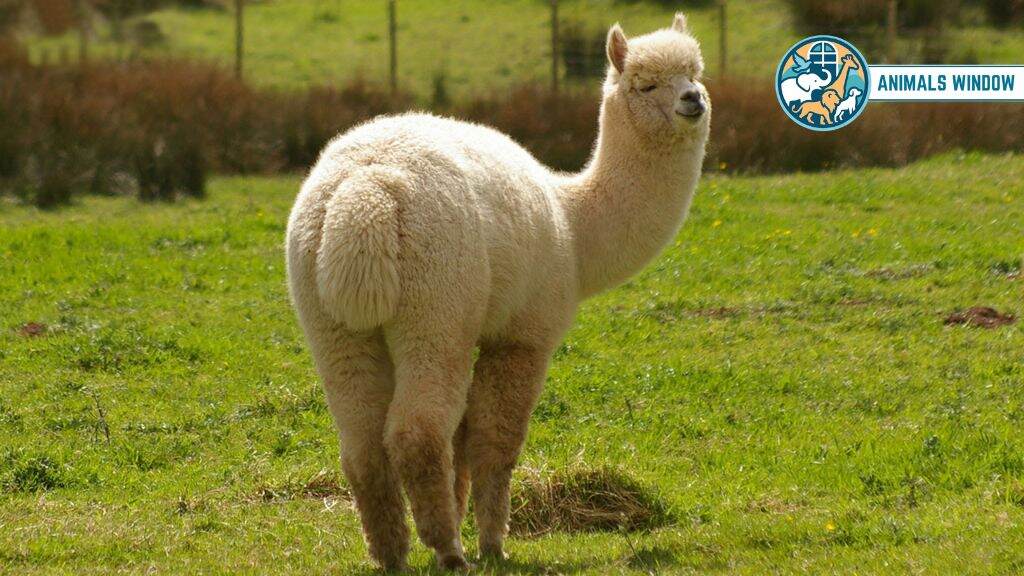
- Scientific name: Vicugna pacos
- Size: 4–5 feet tall at the head
- Weight: 100–185 lbs
- Diet: Grasses, hay, shrubs
- Habitat: High-altitude Andean plateaus
- Lifespan: 15–20 years
Alpacas look like a cuter, smaller version of a llama — but they serve a completely different purpose. They were bred specifically for fiber production, not pack carrying. Their wool is warmer than sheep’s wool, hypoallergenic, and comes in 22 natural colors without needing dye.
Unlike llamas, alpacas are social to the point of anxiety. Remove one from its herd and it will often refuse to eat and develop signs of acute stress. They communicate herd status through a fascinating system of ear positions, tail angles, and neck postures — a raised neck with ears forward is dominant; a lowered neck with laid-back ears is submissive.
🔥 Comparison Fact: An alpaca’s neck is about the same length as a standard 12-inch ruler — not huge, but perfectly scaled for reaching low bushes from standing height.
6. Vicuña
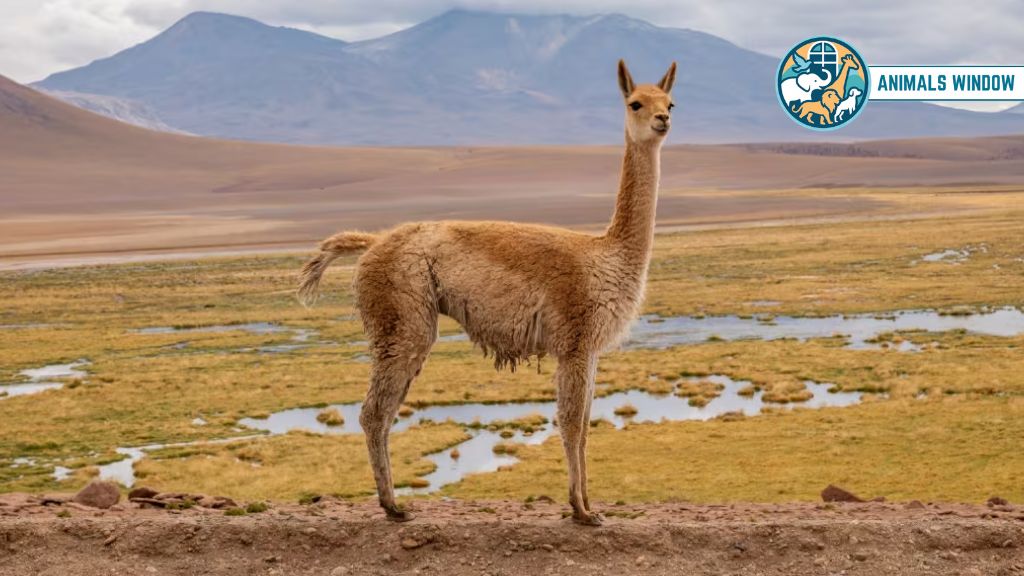
- Scientific name: Vicugna vicugna
- Size: 4.5–5.5 feet tall at the head
- Weight: 99–130 lbs
- Diet: Short, tough Andean grasses
- Habitat: High Andes, 11,000–16,400 feet altitude
- Lifespan: 15–20 years
The vicuña is the wild ancestor of the alpaca and produces the finest natural fiber in the world — each strand is just 12–14 microns thick, compared to 20+ microns for cashmere. Its long, slender neck is well-adapted for grazing the sparse grasses of extreme high altitude, where oxygen is thin and plants grow low to the ground.
Vicuñas are the only wild camelid that can’t be domesticated. The Inca used a remarkable method called the “chaku” — a ceremonial roundup where thousands of people formed human chains to funnel vicuñas into enclosures, shear them gently, and release them unharmed. This tradition is still practiced in parts of Peru today.
🔥 Comparison Fact: A vicuña’s neck fiber is so fine that a full scarf made from it would weigh less than an AA battery.
7. Common Ostrich
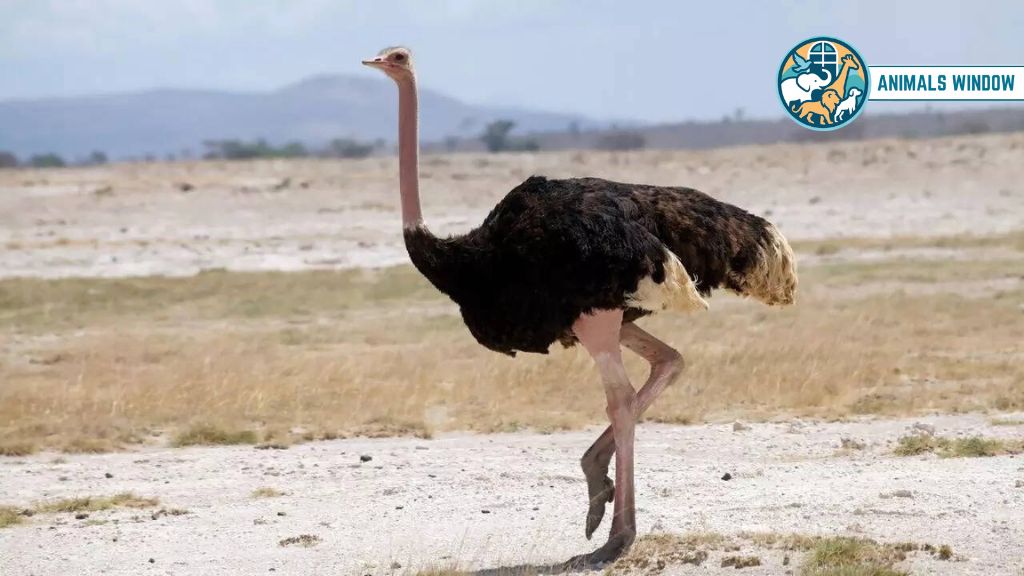
- Scientific name: Struthio camelus
- Size: 7–9 feet tall
- Weight: 220–350 lbs
- Diet: Plants, seeds, insects, small vertebrates
- Habitat: African savannas and semi-arid plains
- Lifespan: 40–45 years
The ostrich is the tallest and heaviest bird alive, and its long bare neck makes up nearly half its total height. That neck isn’t feathered — the skin is a flushed pinkish-gray that can change color during courtship or threat displays, acting as a visual signal to rivals and mates.
Ostriches don’t actually bury their heads in the sand — that’s a myth. When they lower their heads to the ground, they’re turning eggs or listening for vibrations through the earth. And the kick that comes at the end of those long legs? It can deliver 2,000 pounds of force, enough to kill a lion.
🔥 Comparison Fact: An ostrich neck alone is roughly as long as a standard tennis racket handle to head.
8. Emu
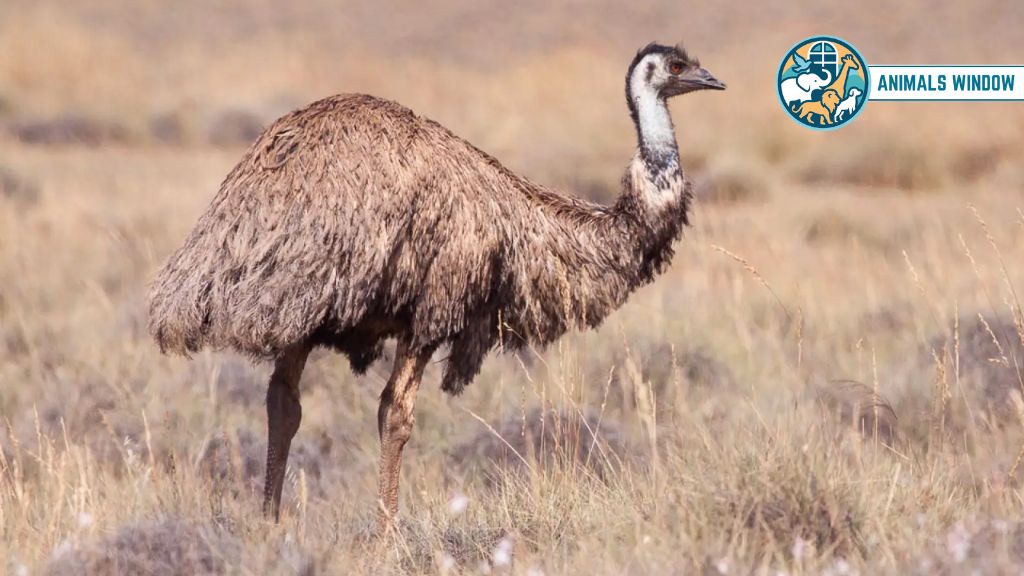
- Scientific name: Dromaius novaehollandiae
- Size: 5.7–6.2 feet tall
- Weight: 99–132 lbs
- Diet: Plants, fruits, insects, small animals
- Habitat: Australian grasslands, scrublands, forests
- Lifespan: 10–20 years
Australia’s largest bird, the emu, has a long blue-gray neck covered in very thin, sparse feathers — so thin the skin is visible underneath, especially when flushed during breeding season. Unlike ostriches, emus are built for endurance, capable of trotting at 30 mph for hours across the outback.
The emu famously “won” a battle against the Australian government. In 1932, the military was deployed to cull emus damaging wheat crops. The birds absorbed bullets, scattered, and reformed — the military withdrew after 10 days with minimal impact. This actual conflict is known as the Great Emu War, and it’s well-documented.
🔥 Comparison Fact: An emu’s neck is about as long as a standard men’s necktie — roughly 18 inches.
9. Greater Flamingo

- Scientific name: Phoenicopterus roseus
- Size: 3.9–4.7 feet tall
- Weight: 4.4–9 lbs
- Diet: Algae, brine shrimp, small crustaceans
- Habitat: Shallow lakes, lagoons, estuaries across Africa, Europe, Asia
- Lifespan: 40–60 years in the wild
The greater flamingo’s S-curved neck is one of the most distinctive silhouettes in the bird world. But here’s what makes it truly unusual: flamingos eat upside down. They dip that long neck until their beak is inverted in the water, then pump water through comb-like structures called lamellae that filter out tiny food particles.
Their pink color comes entirely from the pigments in the algae and crustaceans they eat. A flamingo raised on a diet without those pigments turns white. The most vibrantly colored birds are usually the ones eating the richest food — which is why flamingos use color as a direct signal of health and feeding success when choosing mates.
🔥 Comparison Fact: A flamingo’s neck is about as long as a 12-inch vinyl record is wide — elegant, thin, and surprisingly flexible.
10. Anhinga
- Scientific name: Anhinga anhinga
- Size: 2.8–3.3 feet long
- Weight: 2.6–2.9 lbs
- Diet: Fish, amphibians, crustaceans
- Habitat: Freshwater swamps, marshes, lakes across the Americas
- Lifespan: 11–16 years
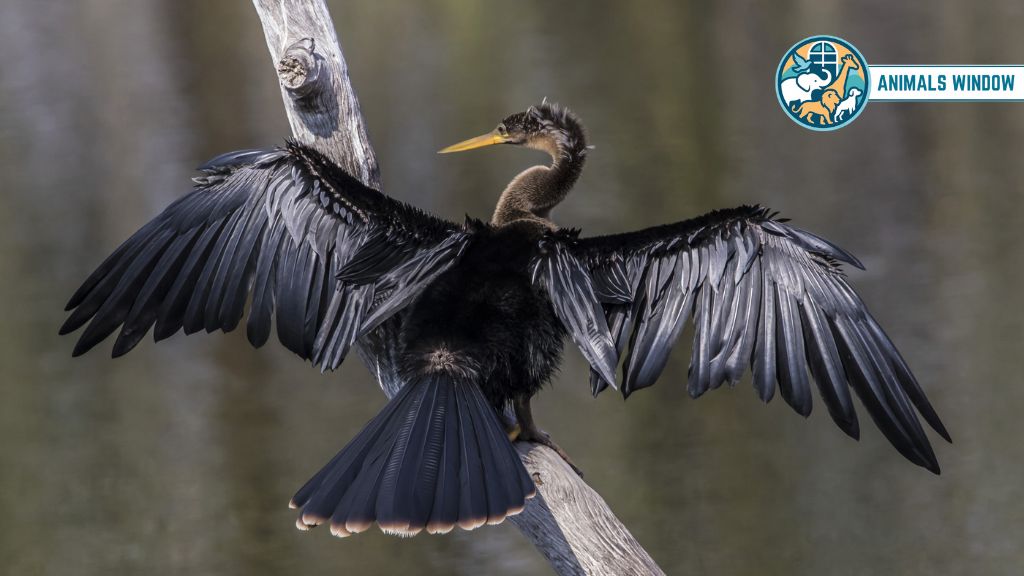
The anhinga earned the nickname “snakebird” for a reason. When it swims, only its long, flexible neck shows above water, weaving back and forth exactly like a serpent gliding through a swamp. Its neck has a specialized kink at the 8th and 9th vertebrae that allows it to lock like a spring and then release, shooting its beak forward to spear fish at close range.
Unlike ducks, the anhinga has no oil glands to waterproof its feathers. This means it soaks through completely when diving. After every swim, it climbs out and stands with wings fully spread to dry — a pose you’ll see constantly if you visit Florida wetlands.
🔥 Comparison Fact: The anhinga’s neck flexes like a released mousetrap — the whole strike from trigger to impact takes less than a tenth of a second.
11. Trumpeter Swan

- Scientific name: Cygnus buccinator
- Size: 4.6–5.5 feet long
- Weight: 17–30 lbs
- Diet: Aquatic plants, algae, grains
- Habitat: Lakes, rivers, wetlands of North America
- Lifespan: 20–30 years
The trumpeter swan is North America’s largest native waterfowl — and its neck, which can stretch to 25 inches, is the longest of any swan species on the continent. That length matters. It lets them reach underwater plants in depths of up to 4 feet while keeping their heavy bodies floating on the surface.
Their name comes not from their appearance but their voice — a loud, low, brassy call that carries across wide stretches of open water. Trumpeters are lifetime monogamous, often pairing by age 2 and staying together until one dies. When a mate is lost, the surviving swan may not pair again for several years.
🔥 Comparison Fact: A trumpeter swan’s neck is about as long as a standard 24-inch ruler, plus a few extra inches.
12. Great Blue Heron
- Scientific name: Ardea herodias
- Size: 3.2–4.5 feet tall
- Weight: 4.6–7.9 lbs
- Diet: Fish, frogs, mice, small birds
- Habitat: Wetlands, rivers, coastlines across North America
- Lifespan: 15–23 years
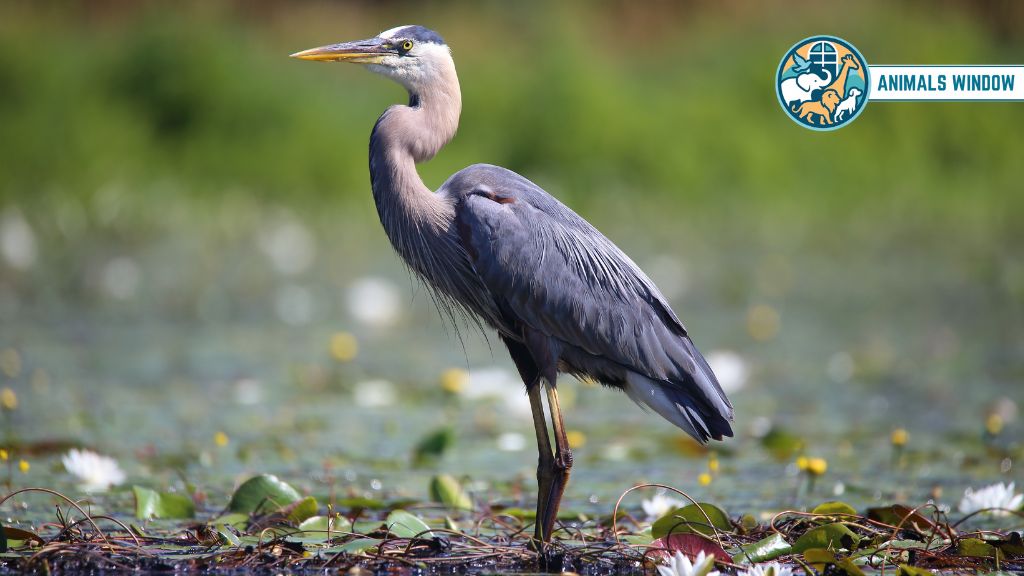
The great blue heron stands motionless at the water’s edge, neck folded into a tight S-curve — waiting. Then it strikes. That retractable neck isn’t just for looks. The S-bend stores elastic energy like a compressed spring, letting the heron straighten and strike faster than a human eye can easily track.
What stands out is their dietary range. A great blue heron has been documented catching and swallowing entire gophers, voles, and small ducks in addition to fish. The neck is flexible enough to allow large prey to slide down — and occasionally, herons choke on prey that was just slightly too big to handle.
🔥 Comparison Fact: A great blue heron’s outstretched neck equals roughly the length of a standard skateboard deck.
13. Jabiru
- Scientific name: Jabiru mycteria
- Size: 4–5 feet tall
- Weight: 13.5–19.8 lbs
- Diet: Fish, frogs, snakes, carrion
- Habitat: Wetlands of Central and South America
- Lifespan: 20–30 years
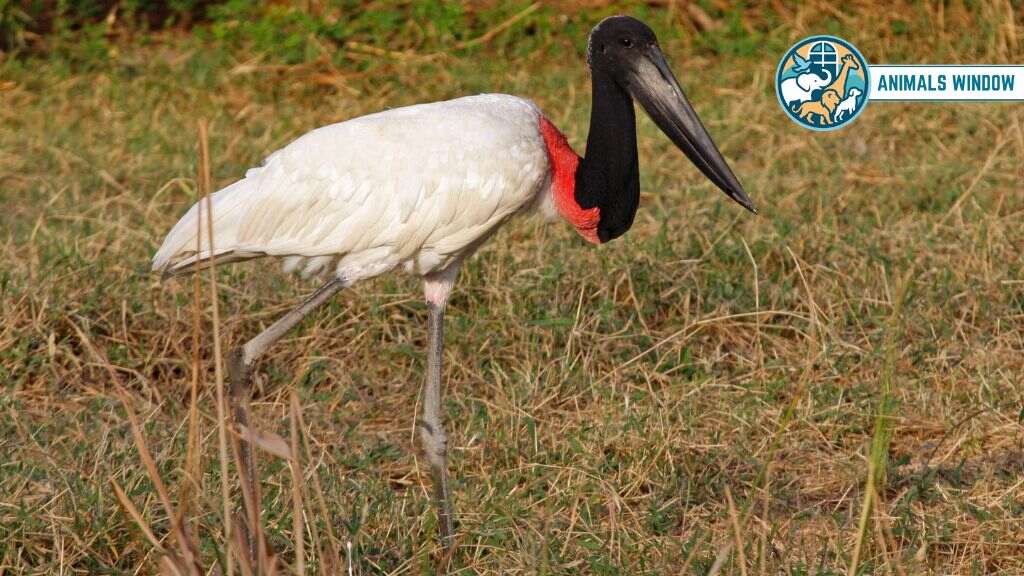
The jabiru is the tallest flying bird in the Americas. Its neck is featherless and jet black, topped with a vivid scarlet band at the base — a color band that deepens and brightens during breeding season. The combination of black, red, and a pure white body makes it one of the most visually striking birds in the Western Hemisphere.
Jabiru pairs are intensely cooperative parents. Both male and female take turns incubating eggs and guarding nests built on treetops up to 100 feet off the ground. They return to the same nest site year after year, repairing and expanding it each season until it can reach over 6 feet wide.
🔥 Comparison Fact: The scarlet collar band on a jabiru’s neck is about as wide as a standard coffee mug is tall.
14. Black-necked Stork

- Scientific name: Ephippiorhynchus asiaticus
- Size: 4–5 feet tall
- Weight: 11–19.8 lbs
- Diet: Fish, crabs, frogs, turtles
- Habitat: Freshwater wetlands of South and Southeast Asia, Australia
- Lifespan: 20–30 years
The black-necked stork carries its name plainly — that glossy, iridescent black neck shimmers green and purple in direct sunlight. It’s one of the few stork species where males and females look almost identical, except for one detail: females have yellow eyes, males have brown eyes. That’s the only reliable field distinction between the sexes.
In Australia, it’s known as the “policeman bird” by some communities for its tall, upright posture and slow, deliberate stride through shallow water. Its long bill works like forceps — precise enough to extract a small crab from a tangle of reeds without disturbing the water around it.
🔥 Comparison Fact: The black-necked stork stands as tall as a 5-year-old child.
15. Scarlet Ibis
- Scientific name: Eudocimus ruber
- Size: 22–25 inches tall
- Weight: 2.8–3.1 lbs
- Diet: Crustaceans, mollusks, small fish, insects
- Habitat: Tropical coasts and mangroves of South America and Caribbean
- Lifespan: 16–20 years
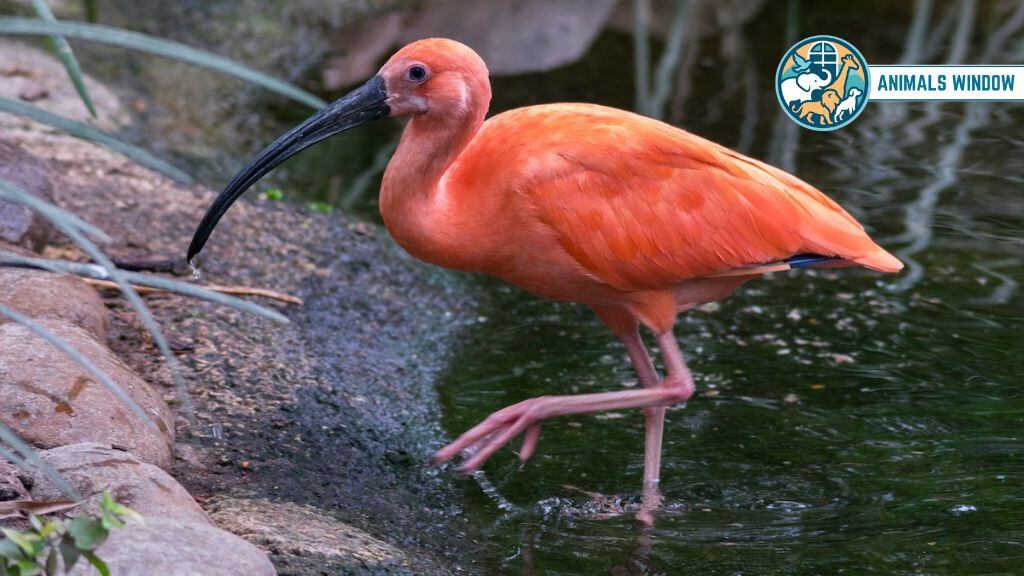
The scarlet ibis is one of the only birds in the world whose intense red coloration is matched in both sexes equally. That long, curved neck combined with a downward-curved bill creates the perfect tool for probing mud flats and shallow water without having to submerge the head.
Here’s an unusual fact: in Trinidad, where the scarlet ibis is a national bird, flocks of tens of thousands roost in the Caroni Swamp each evening. The trees turn completely red as the birds land — a natural spectacle that has been compared to watching a forest catch fire just before sunset.
🔥 Comparison Fact: A scarlet ibis weighs about the same as a large can of soup, yet its wingspan stretches nearly two feet across.
16. Turkey Vulture
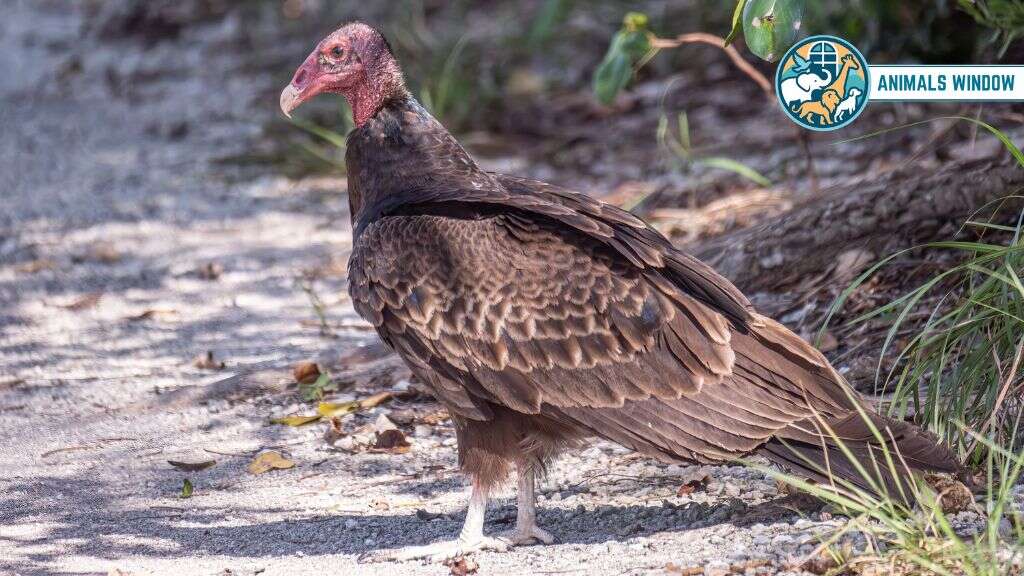
- Scientific name: Cathartes aura
- Size: 25–32 inches body length
- Weight: 3.8–5.1 lbs
- Diet: Carrion exclusively
- Habitat: Open land across the Americas
- Lifespan: 20–30 years
The turkey vulture has a small, featherless red head sitting on a long, bare neck — and that design isn’t accidental. When feeding inside a carcass, a feathered neck would quickly become clogged with blood and bacteria. The bare skin keeps clean. And when it’s done eating, it simply bakes itself dry in the sun.
Its detection system is remarkable. Turkey vultures can smell carrion from over a mile away using an unusually large olfactory bulb in the brain. Most birds have virtually no sense of smell. Gas pipeline engineers have historically used turkey vulture flight patterns to locate underground methane leaks — the birds circle wherever decaying matter releases gas.
🔥 Comparison Fact: A turkey vulture’s bare neck is roughly the diameter and length of a toilet paper roll.
17. Eastern Snake-necked Turtle
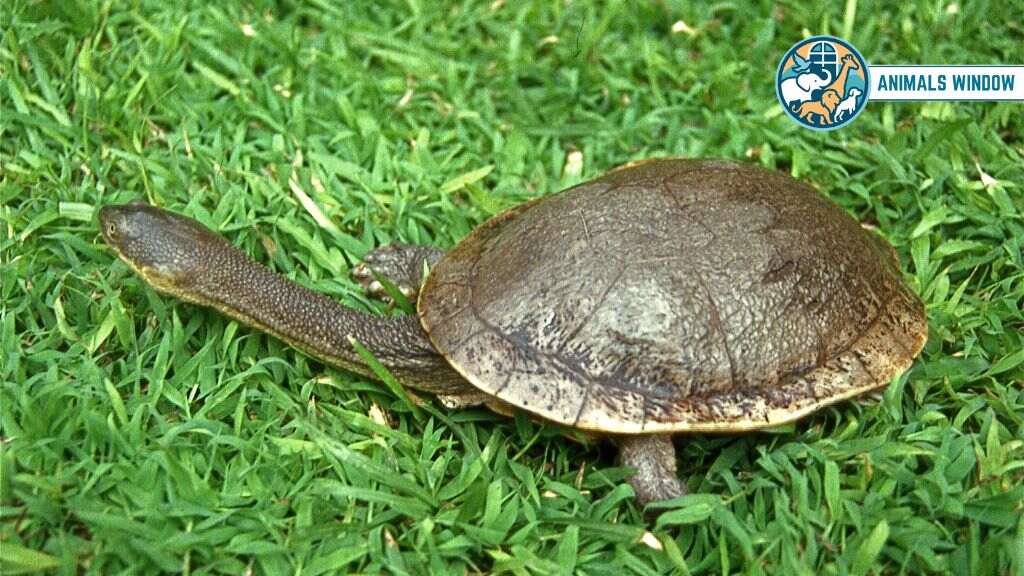
- Scientific name: Chelodina longicollis
- Size: Shell: 7–11 inches; Neck: up to 9.8 inches
- Weight: Up to 2 lbs
- Diet: Invertebrates, fish, tadpoles, carrion
- Habitat: Rivers, swamps, and lakes of southeastern Australia
- Lifespan: 30–37 years
This is one of the most astonishing long neck creatures in the reptile world: the eastern snake-necked turtle’s neck is longer than its shell. It cannot fully retract its head — instead it folds the neck sideways under the shell’s rim, earning the group the name “side-necked turtles.”
When threatened, the turtle deploys a chemical defense straight from its neck glands — releasing a foul-smelling musk potent enough to deter most predators. During dry season droughts, it can travel remarkable distances overland to find new water, using its long neck to help navigate uneven terrain.
🔥 Comparison Fact: A snake-necked turtle’s neck is about as long as a standard smartphone, and longer than its own shell.
18. Monitor Lizard
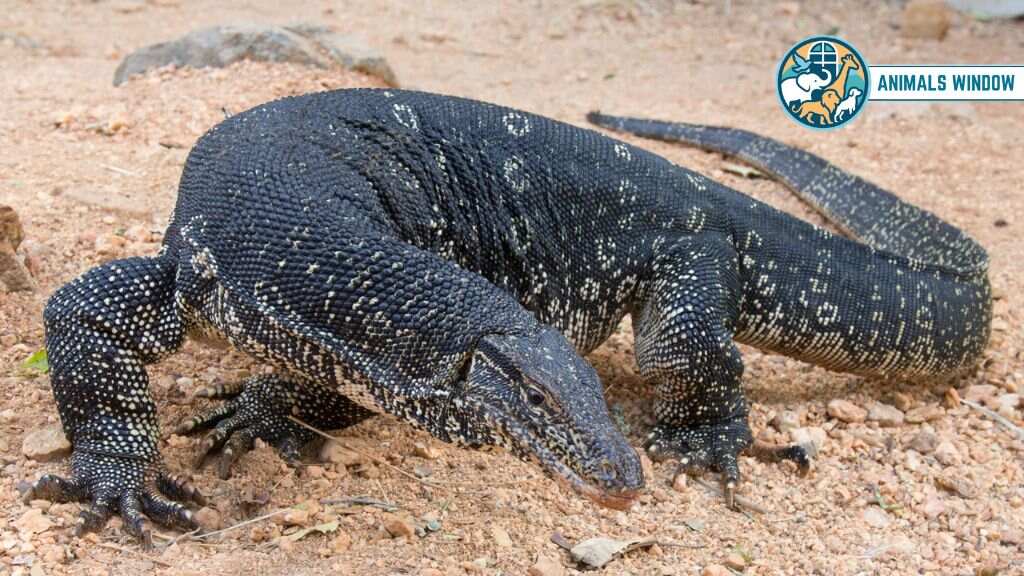
- Scientific name: Varanus spp.
- Size: 8 inches to 10 feet, depending on species
- Weight: Under 1 lb to over 150 lbs
- Diet: Insects, eggs, birds, mammals, carrion
- Habitat: Africa, Asia, Australia, across tropical and subtropical zones
- Lifespan: 8–30 years depending on species
Monitor lizards have a long, muscular neck built for power rather than reach — it helps them pin down prey, tear meat from carcasses, and hold struggling animals in place. Their forked tongues gather scent particles from the air, and the long neck lets them sweep that sensory organ in wide arcs to triangulate smell sources.
The Komodo dragon, the world’s largest living lizard, hunts using a venomous saliva that inhibits blood clotting — a discovery only confirmed in 2009, overturning decades of “bacterial infection” explanations. A monitor’s long neck lets it both scent prey from distance and deliver that neck-and-body lunge that drives its serrated teeth into flesh.
🔥 Comparison Fact: The neck of a full-grown Komodo dragon is about as long as a standard wine bottle.
19. Giraffe Weevil
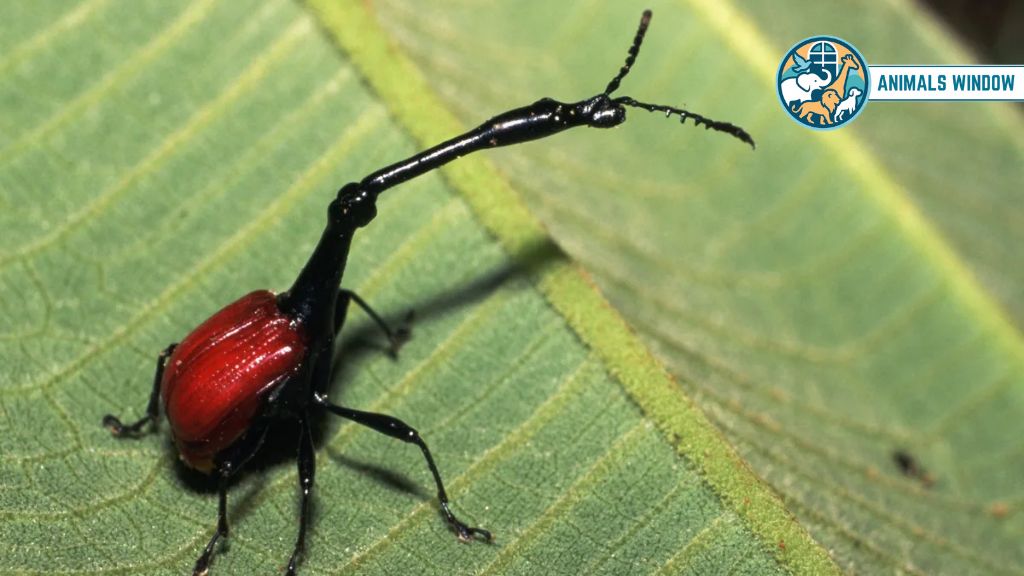
- Scientific name: Trachelophorus giraffa
- Size: About 1 inch long (males)
- Weight: A fraction of a gram
- Diet: Leaves of the Dichaetanthera tree (Madagascar)
- Habitat: Rainforests of Madagascar
- Lifespan: Unknown, likely under 1 year
You might expect a small animal with long neck to be a mammal or bird — but the giraffe weevil is a beetle. The male’s neck is three times the length of its body, giving it proportionally the longest neck of any animal relative to body size on Earth.
That neck exists for one purpose: wrestling. Male giraffe weevils climb onto a leaf, then lock necks with rivals and shove. The loser falls off. The winner stays on the leaf and mates with females nearby. The female’s neck, by contrast, is much shorter — she uses hers for the precise task of rolling leaves into tight cylinders where she deposits a single egg, then cuts the stem so the roll falls to the forest floor.
🔥 Comparison Fact: The male giraffe weevil’s neck, at about 0.6 inches, is roughly the same length as a shirt button is wide — yet it’s three times its body length.
20. Mamenchisaurus
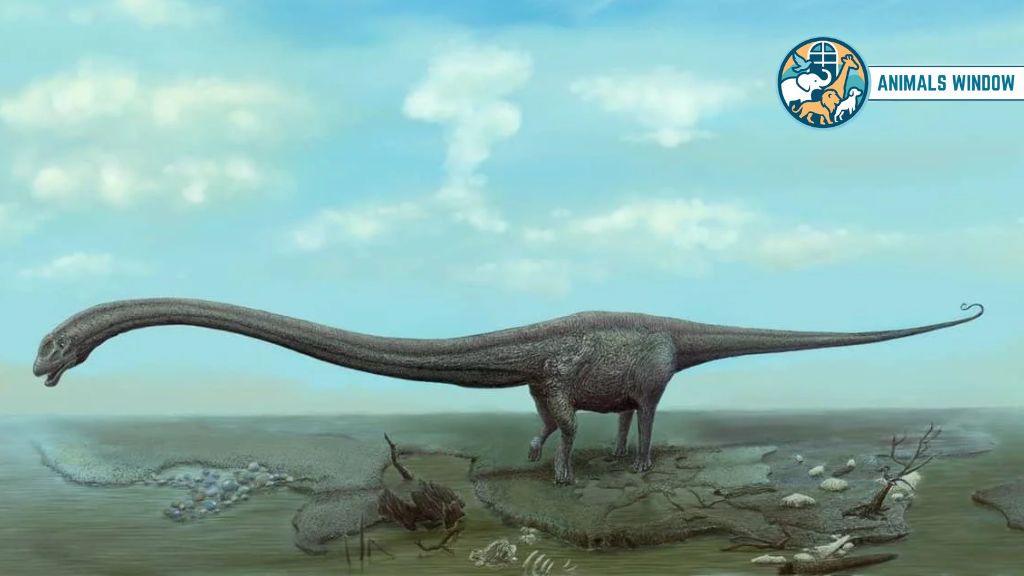
- Scientific name: Mamenchisaurus constructus
- Size: 82–115 feet total length; neck: up to 49 feet
- Weight: Estimated 50–70 tons
- Diet: Plants (conifer needles, ferns, cycads)
- Habitat: Late Jurassic China (~160–145 million years ago)
- Lifespan: Unknown, likely 70–100 years
Mamenchisaurus had the longest neck of any known dinosaur — up to 49 feet, over half its entire body length. That neck was built from up to 19 vertebrae, each one honeycomb-hollowed to reduce weight. Without that adaptation, the neck would have been too heavy for the muscles to lift.
Debate exists over whether that neck pointed upward like a crane or extended horizontally like a suspension bridge. The horizontal hypothesis is now more accepted — it would have allowed Mamenchisaurus to sweep enormous areas of vegetation without moving its legs, covering a wide feeding arc the way a crane arm sweeps a construction site.
🔥 Comparison Fact: Mamenchisaurus’s neck alone was longer than a standard city bus.
21. Brachiosaurus
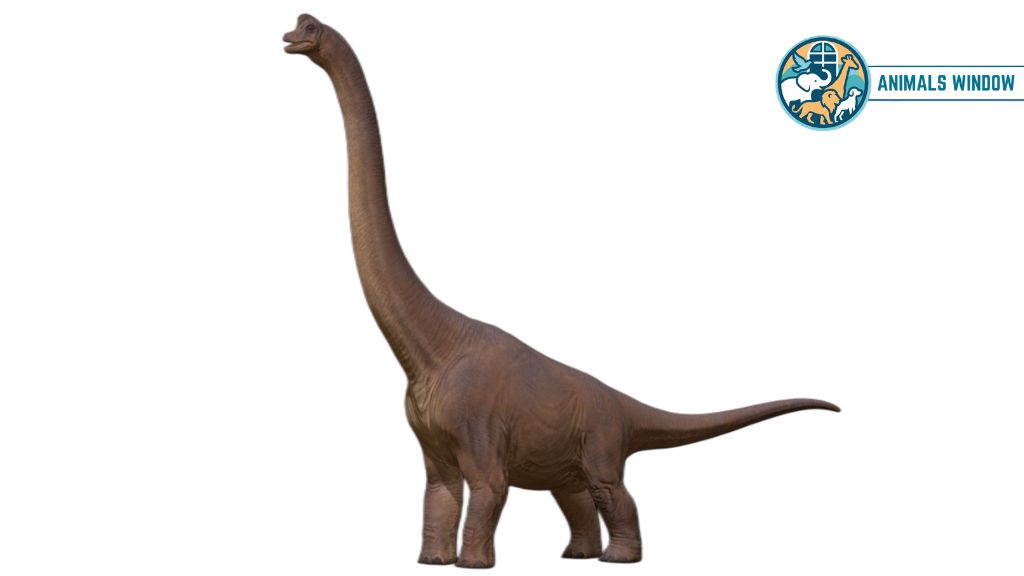
- Scientific name: Brachiosaurus altithorax
- Size: 85 feet long; height at head: ~30 feet
- Weight: Estimated 56–62 tons
- Diet: Conifers, ginkgos, ferns
- Habitat: Late Jurassic North America (~154–153 million years ago)
- Lifespan: Unknown, estimated at 100+ years
Brachiosaurus is the dinosaur most people picture when they think “long neck” — and for good reason. Unlike most sauropods, it had front legs longer than its back legs, giving it a permanently upward-sloping posture. Combined with a neck estimated at 30 feet, this let it browse treetops in the same way a giraffe does today, just at a prehistoric scale.
Recent modeling of Brachiosaurus circulatory systems suggests it would have needed an extraordinarily powerful heart — possibly multiple hearts or a highly pressurized circulatory system — to pump blood all the way up that neck. Some researchers believe it may have had supplementary “booster” pressure stations built into the neck’s blood vessel structure.
🔥 Comparison Fact: Brachiosaurus could have peered into the window of a 3-story building while standing on the sidewalk.
22. Diplodocus
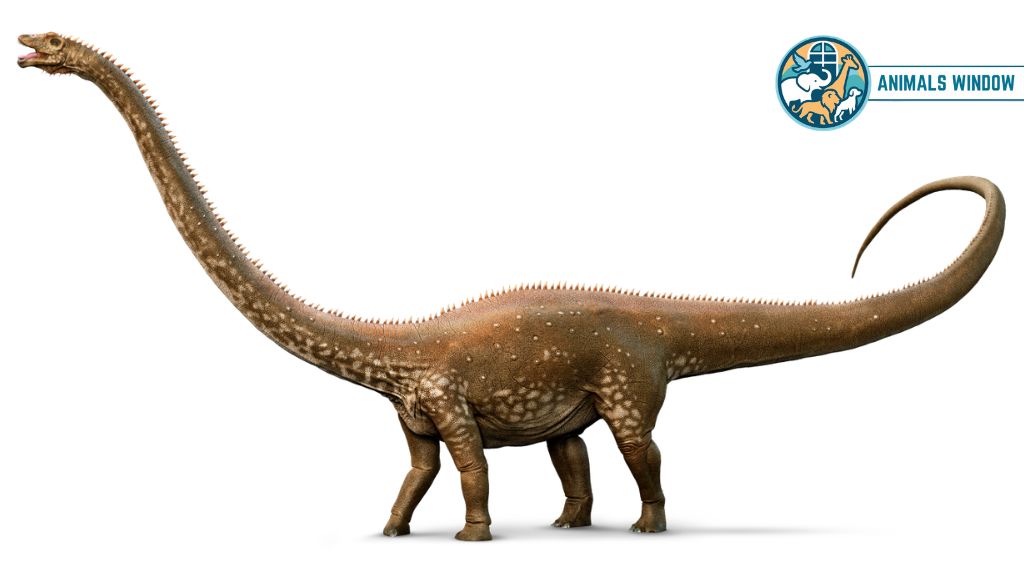
- Scientific name: Diplodocus longus
- Size: 85–100 feet long; neck: ~21 feet
- Weight: Estimated 10–16 tons
- Diet: Low-growing ferns, horsetails, soft vegetation
- Habitat: Late Jurassic North America (~154–152 million years ago)
- Lifespan: Unknown, estimated decades
Diplodocus is one of the longest animals ever to live, though its weight was far less than Brachiosaurus because its build was far more slender. Its neck, while long at around 21 feet, was designed for a completely different feeding strategy — horizontal low-grazing, sweeping ferns and soft plants at or near ground level rather than reaching upward into trees.
Its tail, which was just as long as its neck, could be cracked like a whip — producing a sound equivalent to a small sonic boom. Some paleontologists now think this whip-crack display was used for territory and predator deterrence, making Diplodocus one of the only herbivores to have a built-in noise weapon.
🔥 Comparison Fact: Diplodocus’s neck was roughly as long as a double-decker London bus from front bumper to rear.
23. Elasmosaurus
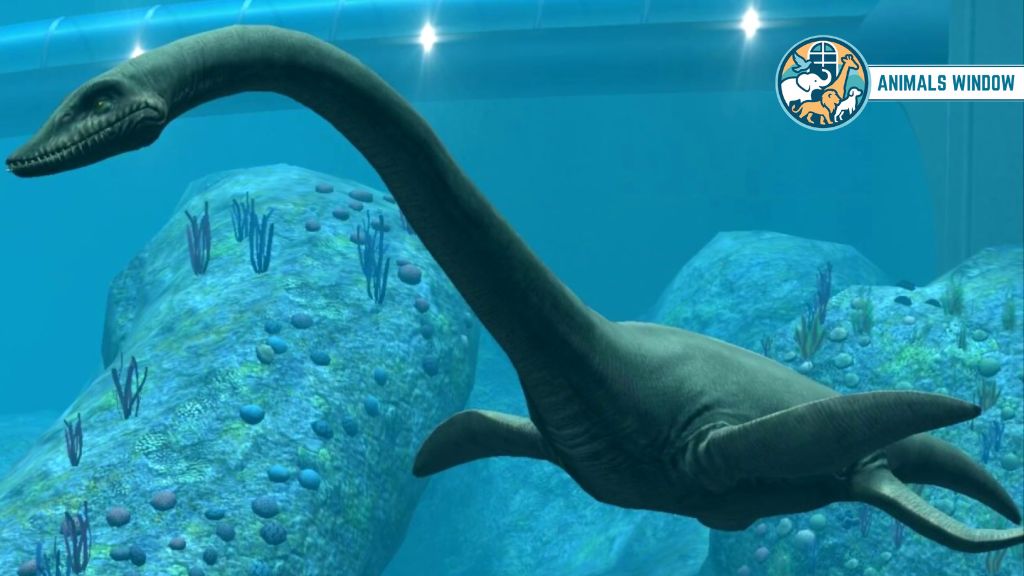
- Scientific name: Elasmosaurus platyurus
- Size: ~46 feet total; neck: ~23 feet
- Weight: Estimated 2–3 tons
- Diet: Fish, squid, ammonites
- Habitat: Late Cretaceous seas (~80 million years ago)
- Lifespan: Unknown
Elasmosaurus was a plesiosaur — a marine reptile, not a dinosaur — with a neck containing 71 vertebrae and stretching to half its total body length. When American paleontologist E.D. Cope first described it in 1869, he famously placed the skull on the wrong end — attaching it to the tail — and it took years for the error to be corrected.
The long neck likely wasn’t used to wave above the water like a sea serpent. More recent analysis suggests Elasmosaurus fed by stalking fish from below, using its neck to dart upward and pick off fish schools from beneath — a stealth ambush predator swimming under prey rather than above it.
🔥 Comparison Fact: Elasmosaurus’s neck was long enough to stretch across a standard 4-lane road with room to spare.
24. Arambourgiania
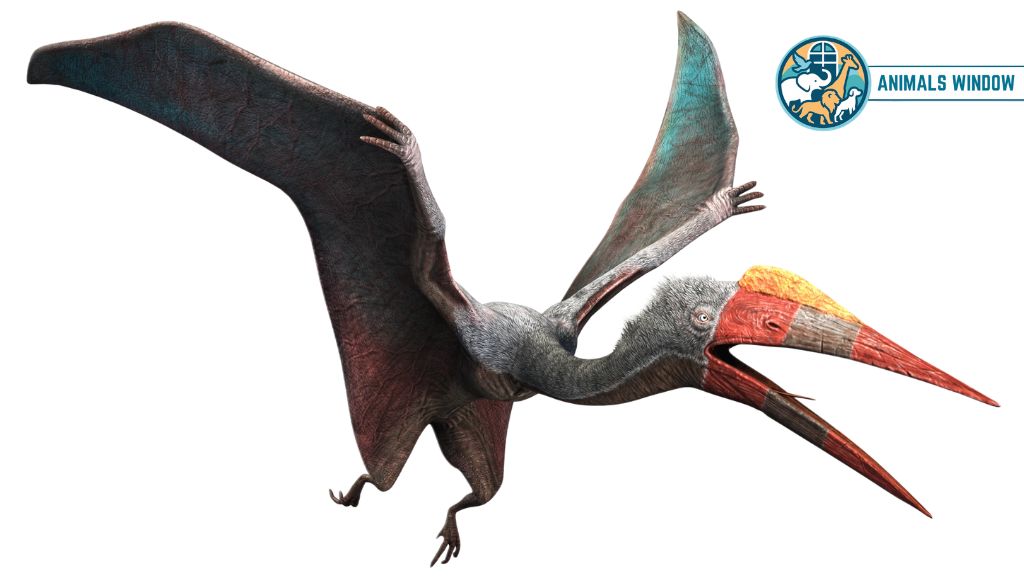
- Scientific name: Arambourgiania philadelphiae
- Size: Wingspan: ~36 feet; neck alone: ~8–10 feet
- Weight: Estimated 440–550 lbs
- Diet: Large fish, possibly small dinosaurs
- Habitat: Late Cretaceous sky (~70 million years ago)
- Lifespan: Unknown
Arambourgiania was a flying reptile — a pterosaur — with a wingspan the size of a small aircraft and a neck longer than the entire body of a modern giraffe. Its single known cervical vertebra is 30 inches long, giving scientists a rough estimate of a neck approaching 10 feet in a flying creature that wasn’t much heavier than an adult human male.
This raises an extraordinary question: how did it fly with a neck that long? The current best answer is a combination of hollow bones, a rigid neck during flight, and a body balanced enough that the neck acted less like a liability and more like a forward-swept boom for spotting fish below during low-altitude gliding.
🔥 Comparison Fact: Arambourgiania’s neck alone was as long as a standard door is tall.
25. Tanystropheus
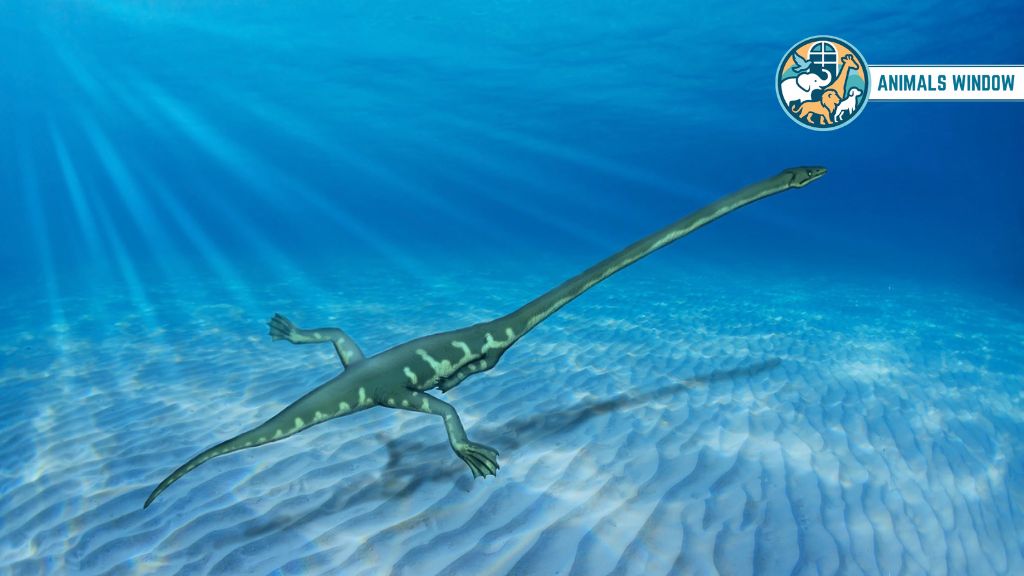
- Scientific name: Tanystropheus hydroides
- Size: ~20 feet long total; neck: ~10 feet
- Weight: Estimated 330 lbs
- Diet: Fish, cephalopods (adults); insects, small reptiles (juveniles)
- Habitat: Middle Triassic coastal waters (~242 million years ago)
- Lifespan: Unknown
Tanystropheus puzzled scientists for over a century. Its neck was half its total body length, made from just 13 massively elongated vertebrae — so rigid the animal could barely bend it. For decades, researchers thought it lived on land. But micro-CT scans of its teeth in 2020 finally confirmed it was fully aquatic, catching fish and squid from the water’s surface with a long, rigid neck acting like a fishing rod.
The study also revealed something extraordinary: juvenile and adult Tanystropheus had completely different teeth and diets. Juveniles ate insects and small lizards on land. Adults transitioned to the water and hunted fish. Same species, two completely different ecological niches — one of the earliest examples of age-based habitat separation ever discovered in a reptile.
🔥 Comparison Fact: Tanystropheus’s neck was about as long as a standard sofa, and barely any more flexible.
FAQ’s About Animals With Long Neck
Which animal has the longest neck in the world today?
The giraffe. Its neck reaches up to 6 feet long, making it the longest neck of any living land animal.
Which animal had the longest neck ever?
Mamenchisaurus, a dinosaur from Jurassic China, had a neck estimated at up to 49 feet — longer than any other known creature in Earth’s history.
What is a long neck animal with fur?
Several, including the giraffe, llama, alpaca, vicuña, gerenuk, and dromedary camel. All are mammals with notably elongated necks and varying amounts of fur or hair.
What small animal has a long neck?
The giraffe weevil of Madagascar has proportionally the longest neck of any animal relative to body size — its neck is three times the length of its own body.
Are there long-necked animals in the ocean?
Yes. Elasmosaurus was a prehistoric marine reptile with a 23-foot neck containing 71 vertebrae. No living sea creature comes close to that today.
Why do flamingos have long necks?
Flamingos feed with their heads inverted underwater. The long neck allows them to reach down while their body stays afloat, and it helps filter-feed efficiently through their specialized lamellae.
Did any long-necked dinosaurs really exist, or are they just movies?
They absolutely existed. Brachiosaurus, Diplodocus, and Mamenchisaurus are all confirmed by extensive fossil records, not movie inventions. The movies actually undersize them.
Related More Animals Guides:

I have loved animals since I was a kid. I enjoy reading about how animals live, eat, move, and survive. I started Animals Window to share what I learn in a simple and easy way. I write about animal body parts, size, behavior, diet, habitats, and species. My goal is to make animal facts clear and fun for everyone to understand.