Striped animals are found on every continent, across land, sea, and air. Their stripes serve different purposes camouflage, warning signals, temperature control, or species recognition. From the powerful tiger to the tiny bumblebee, these animals with stripes have evolved some of the most visually striking patterns in the natural world.
Table of Contents
Quick List of Striped Animals
- Tiger
- Striped Hyena
- Ring-tailed Lemur
- Banded Mongoose
- Bengal Cat
- Zebra
- Okapi
- Bongo
- Malayan Tapir
- Numbat
- Striped Skunk
- Chipmunk
- Clownfish
- Striped Marlin
- Striped Dolphin
- Coral Snake
- Five-Lined Skink
- Tiger Salamander
- White-crowned Sparrow
- Bumblebee
This list covers 20 real striped animals from across the world. Some use their stripes to hide. Some use them to warn. And a few use them in ways that will genuinely surprise you.
You’ll also find out which animal has striped legs but no body stripes, which ones are black and white striped animals that often get mistaken for each other, and what animals have stripes on their back that actually work against predators instead of hiding from them.
20 Striped Animals With Unique Facts
1. Tiger

- Scientific name: Panthera tigris
- Size: Up to 10–12 feet (head to tail)
- Weight: 260–660 lbs
- Diet: Carnivore (deer, wild boar, cattle)
- Habitat: Forests, grasslands, mangroves (Asia)
- Lifespan: 10–15 years in the wild
The tiger is the largest wild cat on Earth. It lives across South and Southeast Asia, from the cold forests of Siberia to the tropical mangroves of India. Every tiger carries a coat of orange fur broken up by bold black stripes, and that pattern isn’t just decoration.
Here’s the surprising part — tiger stripes go all the way down to their skin, not just their fur. Shave a tiger and the stripes are still there. Each tiger’s pattern is completely unique, making them individually identifiable like fingerprints. That’s something most big cat guides forget to mention.
🔥 Comparison Fact: A fully grown Siberian tiger is about as long as a mid-size sedan — from nose to tail tip.
2. Striped Hyena

- Scientific name: Hyaena hyaena
- Size: 3.3–4.3 feet (body length)
- Weight: 57–90 lbs
- Diet: Omnivore (carrion, insects, fruit)
- Habitat: Savannas, scrublands, rocky terrain (Africa, Middle East, South Asia)
- Lifespan: 10–12 years in the wild
Most people picture the spotted laughing hyena when they hear “hyena.” But the striped hyena is a quieter, more solitary animal that looks closer to a wolf than anything else. Its body is covered in vertical gray and black stripes, and it has a dramatic mane along its spine that stands up when it feels threatened.
What sets it apart is its jaw strength. The striped hyena can crush and digest bones that other predators leave behind, including hooves and skulls. Its digestive system is so efficient it can extract nutrients from material most animals can’t even chew. That makes it one of nature’s most effective recyclers.
🔥 Comparison Fact: A striped hyena’s body is roughly the size of a German Shepherd, but it weighs about as much as a medium-sized car tire.
3. Ring-tailed Lemur
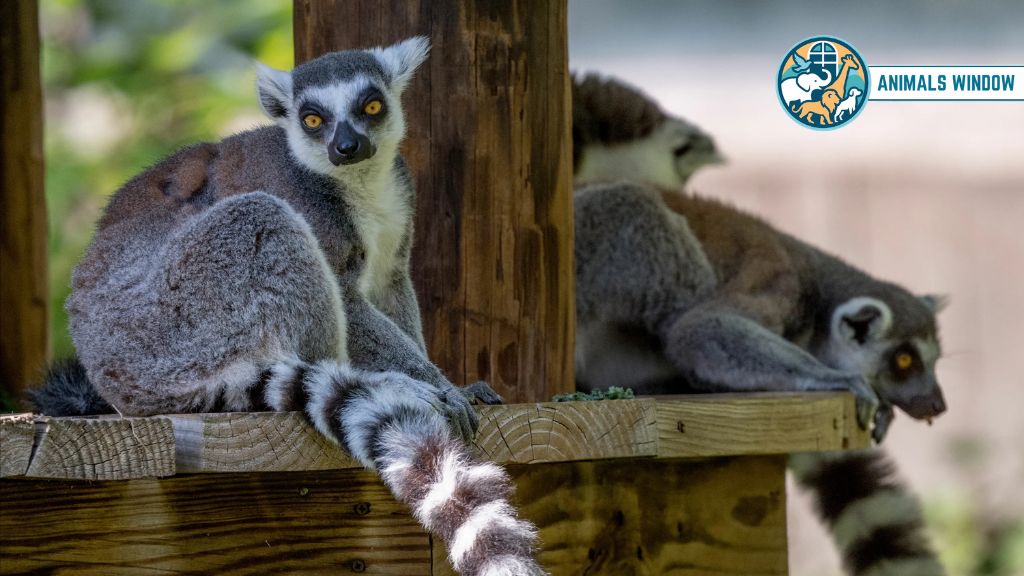
- Scientific name: Lemur catta
- Size: 15–18 inches (body); tail up to 24 inches
- Weight: 5–7.5 lbs
- Diet: Omnivore (fruit, leaves, insects)
- Habitat: Southern Madagascar forests and scrublands
- Lifespan: 16–19 years in the wild
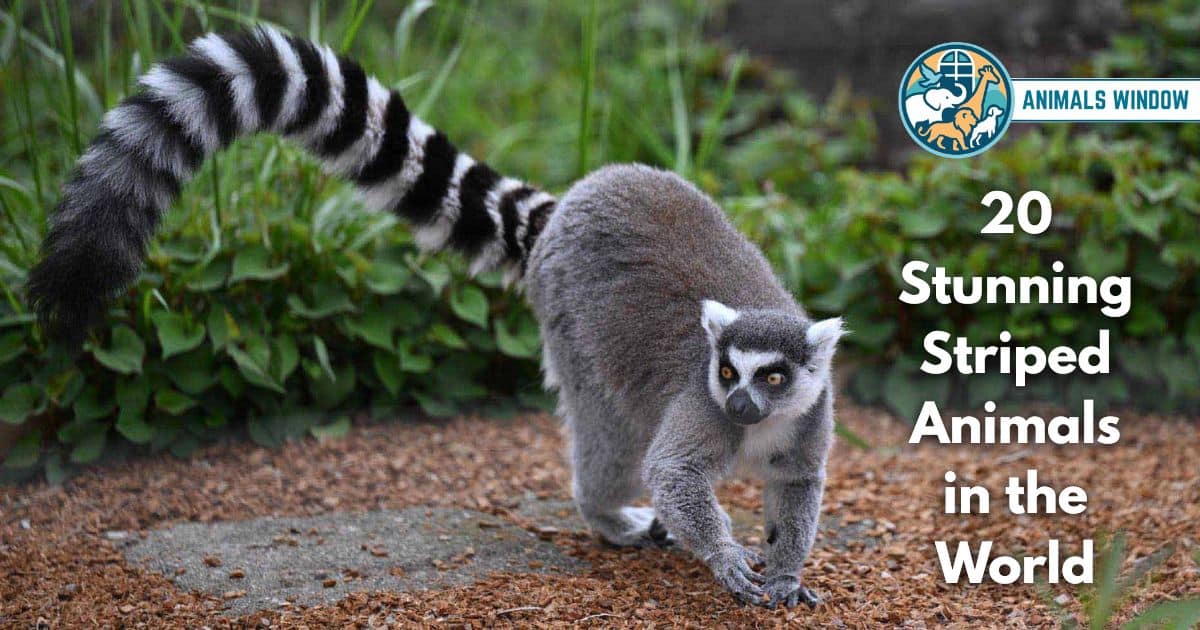
The ring-tailed lemur is immediately recognizable by its black-and-white striped tail, which it holds high in the air while moving through open ground. That raised tail isn’t just a style choice — it helps keep the group together while traveling.
But the stranger behavior happens during mating season. Males rub their tails against scent glands on their wrists, then wave those tails at rivals in what researchers call a “stink fight.” The male whose scent lingers longest typically wins without any physical contact. It’s a chemical battle fought entirely through smell.
🔥 Comparison Fact: Its striped tail alone is longer than a standard ruler — about 22–24 inches.
4. Banded Mongoose

- Scientific name: Mungos mungo
- Size: 12–18 inches (body)
- Weight: 3–5.5 lbs
- Diet: Omnivore (insects, eggs, small reptiles)
- Habitat: Savannas and woodlands of sub-Saharan Africa
- Lifespan: Up to 10 years in the wild
The banded mongoose is a small, fast-moving mammal with dark brown stripes across its back, running from the middle of its body to the base of its tail. It lives in large family groups of up to 40 individuals, which is notable — but what’s even more notable is how it handles parasites.
Banded mongooses form cross-grooming partnerships that last for years. One individual consistently grooms the same partner, removing ticks and debris. These are not random interactions — they’re stable, long-term relationships within the group. Scientists have found these bonds actually reduce parasite loads better than random grooming behavior does.
🔥 Comparison Fact: A banded mongoose is about the length of a standard computer keyboard, nose to tail.
5. Bengal Cat
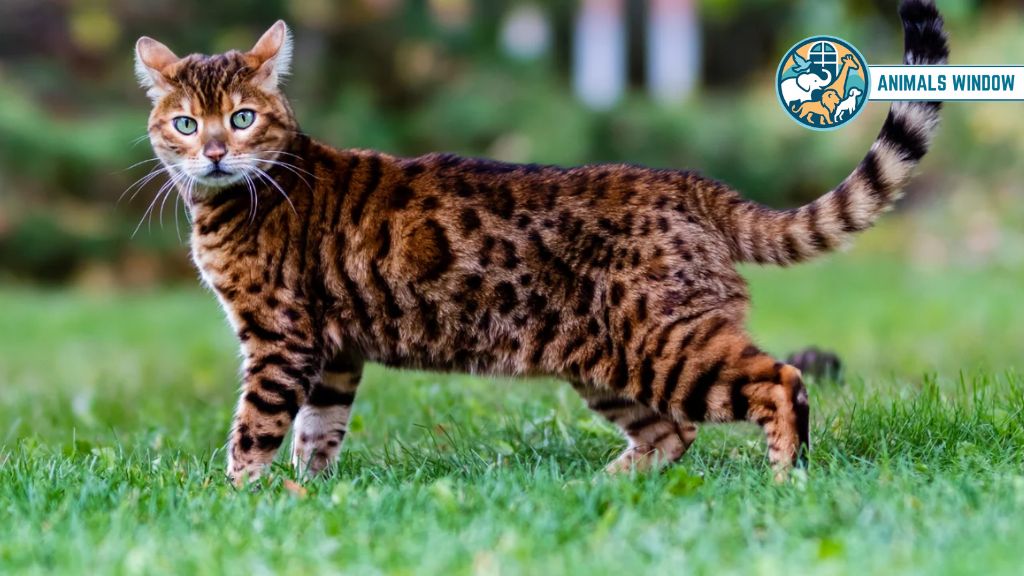
- Scientific name: Felis catus × Prionailurus bengalensis
- Size: 13–16 inches at the shoulder
- Weight: 8–15 lbs
- Diet: Carnivore (commercial cat food; hunting instinct remains strong)
- Habitat: Domestic; bred from Asian leopard cat
- Lifespan: 12–16 years
The Bengal cat is a domestic-wild hybrid, bred from the Asian leopard cat and domestic cats. Its coat displays bold rosettes and dark stripes that look more like a small jungle cat than a house pet. The pattern shifts depending on the individual — some show heavy striping on the legs and face, others across the full body.
What stands out is the Bengal’s unusual relationship with water. Most domestic cats avoid it. Bengals actively seek it out, dipping paws in water bowls, joining their owners in the shower, and sometimes swimming voluntarily. This trait is inherited directly from their wild ancestor, which hunts near rivers and streams.
🔥 Comparison Fact: A Bengal cat’s body is about the length of a standard skateboard deck — compact but surprisingly muscular.
6. Zebra

- Scientific name: Equus quagga (Plains Zebra)
- Size: 7.5–9 feet (body length)
- Weight: 440–990 lbs
- Diet: Herbivore (grasses, shrubs, bark)
- Habitat: Savannas and grasslands of Eastern and Southern Africa
- Lifespan: 20–25 years in the wild
The zebra is probably the first animal people think of when they hear “black and white striped animals.” And while the stripes look simple at a glance, the science behind them is anything but. Each zebra’s pattern is completely individual — no two are identical, just like fingerprints.
Current research strongly supports that zebra stripes disrupt the landing pattern of biting flies, particularly horseflies and tsetse flies. These insects struggle to land on striped surfaces because the pattern interferes with their visual navigation.
Zebras in regions with more biting flies tend to have denser, more defined stripes — and that’s not a coincidence.
🔥 Comparison Fact: A plains zebra stands about as tall at the shoulder as a typical kitchen countertop.
7. Okapi
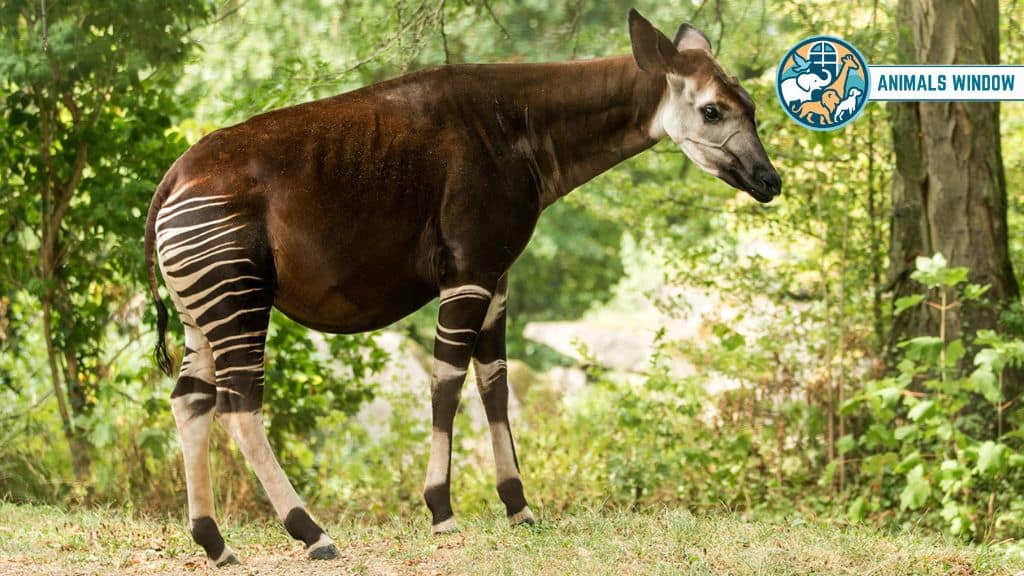
- Scientific name: Okapia johnstoni
- Size: 6.2–8.2 feet (body length)
- Weight: 440–770 lbs
- Diet: Herbivore (leaves, buds, grasses, fruits)
- Habitat: Dense rainforests of the Congo Basin
- Lifespan: 20–30 years
The okapi is one of the most unusual entries on any striped animals list — because only part of it is striped. Its body looks like a brown horse, but its legs and hindquarters carry bold black-and-white horizontal stripes like a zebra. This makes it the only living relative of the giraffe, and one of the most visually confusing animals on Earth.
It lives deep in the Congo rainforest and was unknown to Western science until 1901. Its tongue is long enough — about 14–18 inches — to clean its own eyelids and ears. That tongue, combined with its ability to move each ear independently, makes it exceptionally tuned to detecting predators in a dense forest environment.
🔥 Comparison Fact: An okapi’s tongue is longer than a standard school ruler. It can wrap completely around a tree branch to strip leaves.
8. Bongo
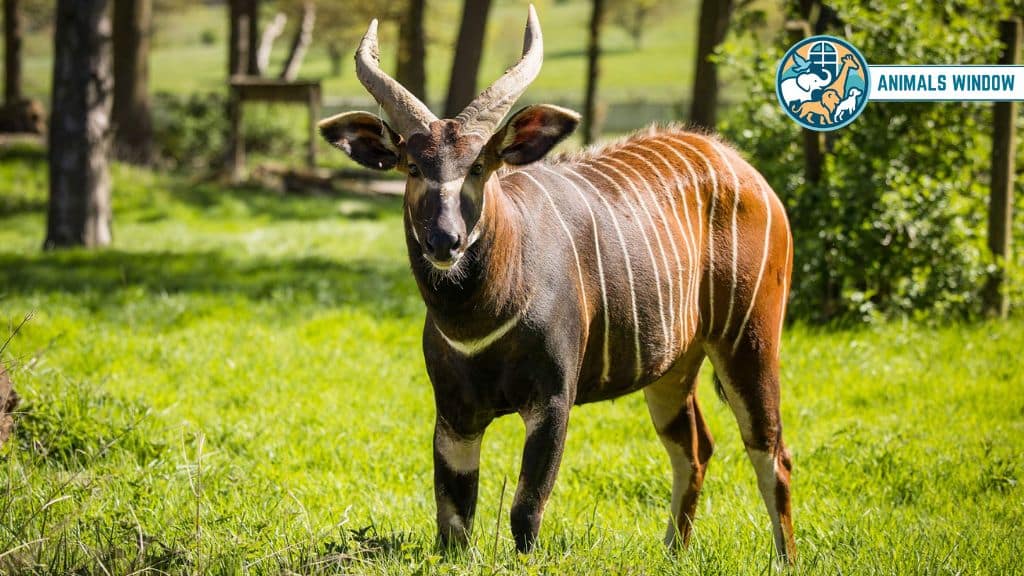
- Scientific name: Tragelaphus eurycerus
- Size: 5.6–8.2 feet (body length)
- Weight: 330–900 lbs
- Diet: Herbivore (leaves, bark, roots, grasses)
- Habitat: Lowland forests and mountain forests of Central Africa
- Lifespan: 19–21 years
The bongo is the largest forest antelope in the world, and one of the most visually striking. Both males and females carry a rich chestnut-red coat marked with 10–15 vertical white stripes along the sides. It also has spiraling horns — making the bongo one of the few animals that qualifies as an animal with striped legs and horns at the same time.
The bongo uses those stripes as a breaking system while running. In dense forest environments, its white stripes mimic shafts of light filtering through trees. When it freezes mid-stride, it can become nearly invisible against the dappled forest floor — even at its large size.
🔥 Comparison Fact: A male bongo weighs about as much as a grand piano — powerful enough to push through dense undergrowth at speed.
9. Malayan Tapir

- Scientific name: Tapirus indicus
- Size: 6–8 feet (body length)
- Weight: 550–700 lbs
- Diet: Herbivore (leaves, fruit, aquatic plants)
- Habitat: Lowland rainforests of Southeast Asia
- Lifespan: 25–30 years
The Malayan tapir has one of the most striking two-tone coats in the animal kingdom — a completely black front half and a stark white rear half and sides. This isn’t striping in the traditional sense, but it functions the same way: the sharp contrast breaks up the animal’s body outline in low-light forest conditions, making it incredibly hard for predators like tigers to track.
Young tapirs look completely different from adults. Calves are born with white spots and stripes across their brown bodies — a pattern that fades within the first year of life.
That camouflage serves a specific purpose during the most vulnerable stage of their lives, then disappears entirely once they reach adult size.
🔥 Comparison Fact: A Malayan tapir’s body is roughly the size of a full-grown donkey, but it’s a much closer relative of horses and rhinos than it looks.
10. Numbat
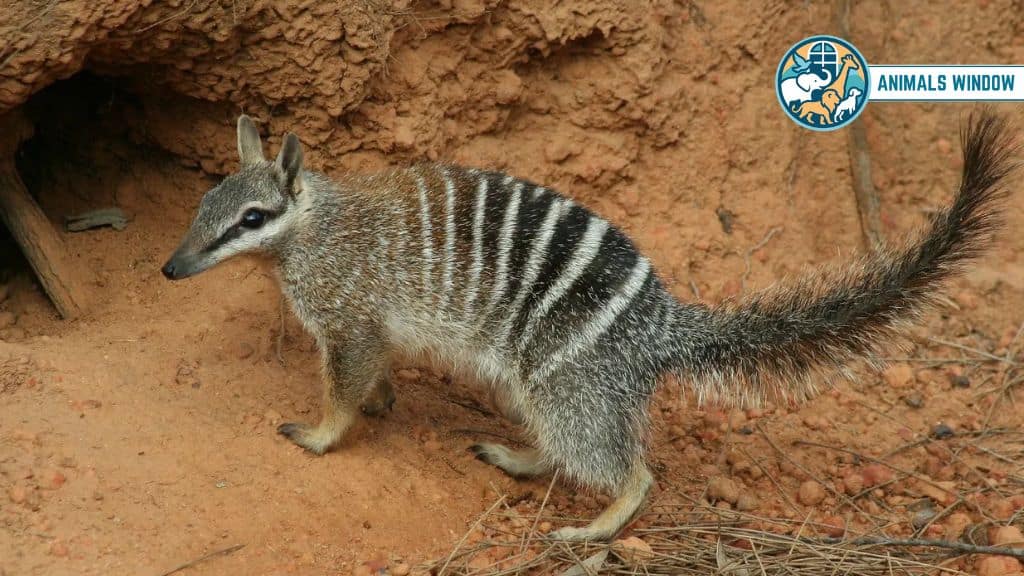
- Scientific name: Myrmecobius fasciatus
- Size: 7–11 inches (body)
- Weight: 10–22 oz
- Diet: Insectivore (termites exclusively)
- Habitat: Eucalyptus woodlands of Western Australia
- Lifespan: 5–6 years in the wild
The numbat is a small, flame-colored marsupial with white horizontal stripes across its back and a pointed snout built for one thing: eating termites. It’s one of the few mammals that is exclusively diurnal (active only during the day) and doesn’t have a pouch despite being a marsupial — the young simply cling to the mother’s belly fur.
A single numbat consumes up to 20,000 termites per day, located entirely by smell. It has no special claws for digging deep tunnels — instead, it targets termites moving near the surface or in shallow galleries. Its long, sticky tongue darts in and out up to 100 times per minute to collect them.
🔥 Comparison Fact: The numbat’s body is about the size of a large hot dog bun — but its daily food intake would fill a soda can.
11. Striped Skunk
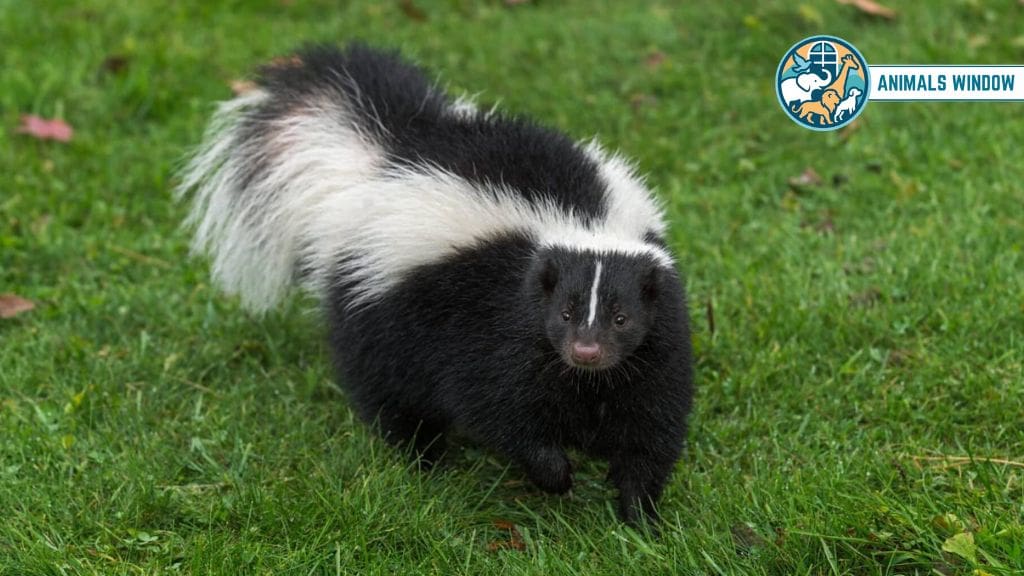
- Scientific name: Mephitis mephitis
- Size: 13–18 inches (body)
- Weight: 4–10 lbs
- Diet: Omnivore (insects, small mammals, berries, eggs)
- Habitat: Forests, grasslands, and suburban areas of North America
- Lifespan: 2–4 years in the wild
The striped skunk is one of the most recognized black and white striped animals in North America, and its pattern is a direct warning signal to predators. The two bold white stripes running from head to tail are essentially a billboard that says “back off.” Most experienced predators learn this lesson quickly — and permanently.
The chemical it sprays is a compound called thiol, and it can be detected by the human nose from nearly a mile away. What’s less known is that skunks give a clear warning sequence before spraying — stomping feet, raising the tail, doing a handstand — and will only fire as a last resort because recharging the glands takes up to 10 days.
🔥 Comparison Fact: A striped skunk is about the size of a household cat, but its spray can temporarily blind a predator at close range.
12. Chipmunk

- Scientific name: Tamias striatus (Eastern Chipmunk)
- Size: 5–6 inches (body)
- Weight: 2.7–5.3 oz
- Diet: Omnivore (seeds, nuts, berries, fungi, insects)
- Habitat: Forests and woodland edges of North America and Asia
- Lifespan: 2–3 years in the wild
The chipmunk is a small ground-dwelling rodent with five dark stripes running along its back, alternating with lighter tan bands. These stripes make it a classic example of an animal with stripes on back that actually provides effective forest-floor camouflage when the animal is still.
But its real survival skill is its cheek capacity. Chipmunks can stuff their expandable cheek pouches with enough food to triple the width of their head. They spend autumn running hundreds of cache trips, storing thousands of individual food items in underground burrows — and they remember where most of those caches are with impressive spatial accuracy.
🔥 Comparison Fact: A chipmunk’s body is roughly the length of a standard pen — but it can carry almost its own body weight in food in one cheek-load.
13. Clownfish

- Scientific name: Amphiprioninae (various species)
- Size: 3–5 inches
- Weight: Under 1 oz
- Diet: Omnivore (algae, zooplankton, small invertebrates)
- Habitat: Warm tropical reefs of the Indian and Pacific Oceans
- Lifespan: 6–10 years
The clownfish is one of the most recognizable striped animals in the ocean — bright orange with two or three bold white stripes outlined in black. Those stripes, combined with its coloring, play a social role: different species of clownfish have slightly different stripe patterns, which helps them identify their own kind on a crowded reef.
Here’s the part most people don’t know: clownfish are sequential hermaphrodites. Every clownfish is born male. If the dominant female of a group dies, the largest male in the group changes sex and becomes the new female. The change is permanent and biological. This system keeps every anemone colony reproductive without ever needing an outside mate.
🔥 Comparison Fact: A clownfish is about the length of a lipstick tube — tiny enough to live entirely within a single sea anemone.
14. Striped Marlin

- Scientific name: Kajikia audax
- Size: 7–14 feet
- Weight: 150–440 lbs
- Diet: Carnivore (fish, squid, octopus)
- Habitat: Tropical and subtropical waters of the Pacific and Indian Oceans
- Lifespan: 10–15 years
The striped marlin is a large, fast-moving billfish with pale blue vertical stripes along its sides that become vivid and bright during feeding or excitement. At rest, the stripes are subtle. The moment it enters a high-energy hunt, they flash electric — and researchers believe this sudden brightness may confuse and disorient schooling prey fish.
Speed-wise, the striped marlin is among the fastest fish in the ocean, reaching bursts of up to 50 mph. It uses a hunting technique called balling — corralling schools of sardines or mackerel into a tight sphere near the surface, then slashing through the ball with its bill to stun them before circling back to feed.
🔥 Comparison Fact: A striped marlin is roughly as long as a standard kayak — and about twice as heavy.
15. Striped Dolphin

- Scientific name: Stenella coeruleoalba
- Size: 6–8.5 feet
- Weight: 200–330 lbs
- Diet: Carnivore (fish, squid, crustaceans)
- Habitat: Deep offshore waters of the Mediterranean and Atlantic and Pacific Oceans
- Lifespan: 55–58 years
The striped dolphin has two distinctive dark blue stripes running from its eye to its flipper and a second one extending toward the tail — set against a clean gray-and-white body. This pattern is consistent across all individuals and makes it one of the most distinctly marked marine mammals in the world.
What sets this species apart behaviorally is its deep-water hunting ability. Striped dolphins regularly dive to depths of 700 meters to pursue squid, making them one of the deepest-diving dolphin species. They also display “roto-tailing” — a spectacular spinning leap where the tail rotates rapidly mid-air. Scientists believe this behavior is a form of social signaling, not just play.
🔥 Comparison Fact: A striped dolphin lives nearly as long as a human — some individuals in the wild reach their mid-50s.
16. Coral Snake
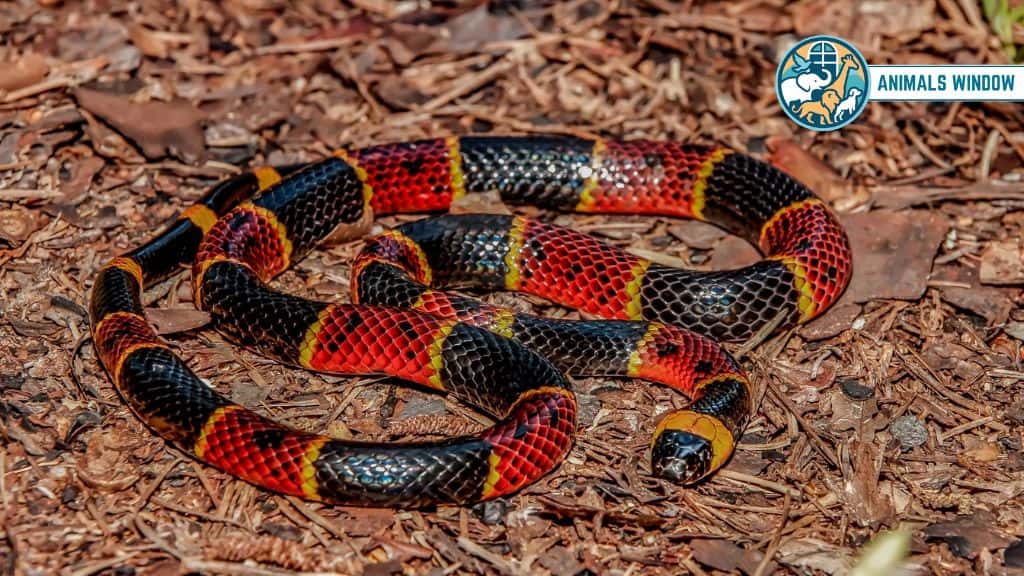
- Scientific name: Micrurus fulvius (Eastern Coral Snake)
- Size: 20–30 inches
- Weight: 2–5 oz
- Diet: Carnivore (lizards, small snakes, frogs)
- Habitat: Forests and scrublands of the southeastern United States
- Lifespan: Up to 7 years in the wild
The coral snake is one of the most visually striking striped animals in North America — bands of red, yellow, and black circling the entire body. Those bands are a direct warning: the coral snake carries a potent neurotoxin that affects the nervous system, not the blood. Its venom works by shutting down breathing rather than causing tissue damage like most pit vipers.
Several non-venomous snakes mimic the coral snake’s color pattern. The old rhyme “red on yellow, kill a fellow; red on black, friend of Jack” helps identify the real one in North America — but this rule doesn’t apply to coral snakes in Central and South America, where the patterns vary considerably. The mimicry system only works because the real snake is genuinely dangerous.
🔥 Comparison Fact: An Eastern coral snake is about the length of a standard umbrella — slender, quiet, and extremely easy to accidentally step near in leaf litter.
17. Five-Lined Skink

- Scientific name: Plestiodon fasciatus
- Size: 5–8 inches
- Weight: Less than 1 oz
- Diet: Carnivore (insects, spiders, earthworms, small lizards)
- Habitat: Moist woodlands and forest edges of eastern North America
- Lifespan: 4–6 years in the wild
The five-lined skink is a sleek, fast-moving lizard with five pale yellow stripes running down a dark brown or black body. Juveniles have a bright blue tail — and that tail is the key to its survival strategy. When a predator grabs it, the tail detaches and keeps wriggling on the ground while the skink escapes. The tail grows back, though usually shorter and different in color.
What most guides skip: the blue tail color specifically targets bird predators. Blue is a color birds associate with warning signals in certain insects. So the flash of blue as the skink runs may actually startle a bird mid-strike — buying just enough time for a getaway. The tail fades to gray or brown as the skink matures and becomes faster and better at escaping on its own.
🔥 Comparison Fact: A five-lined skink is about the length of a popsicle stick — but it can sprint across a log faster than most people can track with their eyes.
18. Tiger Salamander
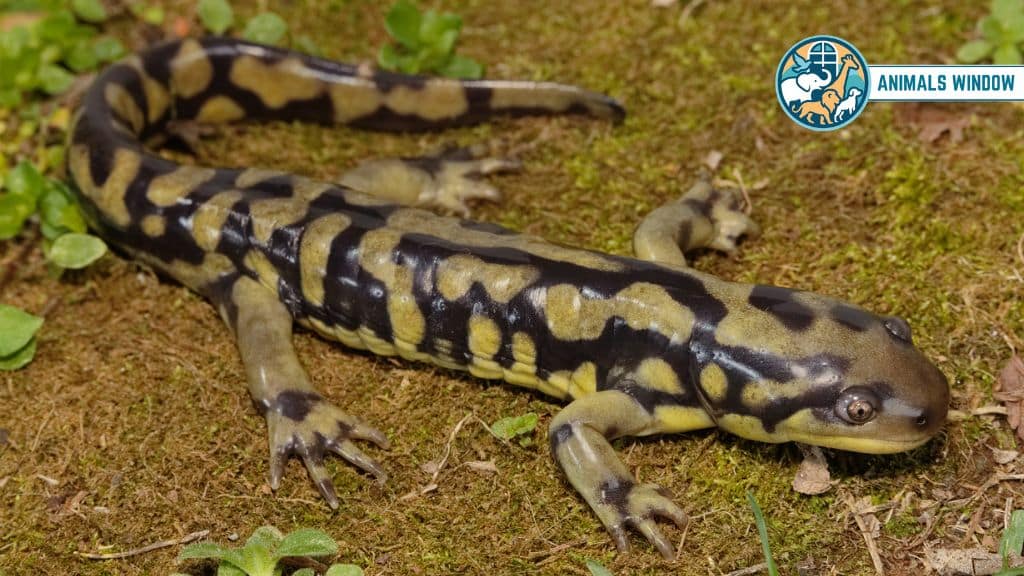
- Scientific name: Ambystoma tigrinum
- Size: 7–14 inches
- Weight: 1–4 oz
- Diet: Carnivore (worms, slugs, small mice, other salamanders)
- Habitat: Forests, grasslands, and wetlands across North America
- Lifespan: 10–16 years
The tiger salamander is the largest land-dwelling salamander in North America. Its dark body is broken up by irregular yellow or olive blotches and stripes, and no two individuals look exactly alike. It spends most of its adult life underground, using old mammal burrows rather than digging its own.
Tiger salamanders sometimes become cannibalistic. In crowded larval conditions, some individuals develop a different head shape — wider jaws, larger teeth — specifically suited for eating other larvae, including their own siblings. This “cannibal morph” isn’t random; it’s a triggered physical change driven by population density. Scientists call it polymorphism, and it’s one of the most dramatic developmental shifts in any amphibian.
🔥 Comparison Fact: A full-grown tiger salamander is about the length of a standard TV remote control — one of the few salamanders large enough to eat a small mouse.
19. White-crowned Sparrow
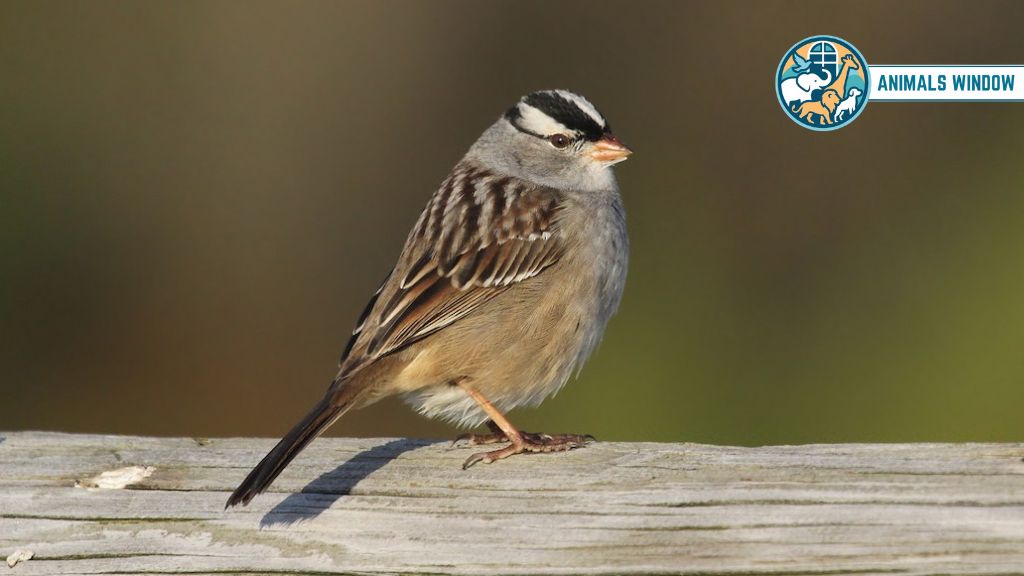
- Scientific name: Zonotrichia leucophrys
- Size: 5.9–6.3 inches
- Weight: 0.9–1.1 oz
- Diet: Omnivore (seeds, insects, berries)
- Habitat: Open shrubby areas, forest edges; breeds in northern Canada and Alaska
- Lifespan: Up to 13 years
The white-crowned sparrow is a small bird with a clean white crown bordered by bold black stripes on either side of the head — one of the most precisely patterned heads of any North American songbird. The stripes aren’t just for appearance; they’re used for individual and population recognition during migration and breeding seasons.
What makes this bird remarkable to scientists is its song dialect system. White-crowned sparrows in different geographic regions sing measurably different songs — and young sparrows learn their local dialect by listening during a sensitive developmental window.
A bird raised in silence never learns to sing correctly. This makes them one of the most studied models for understanding how vocal learning works in birds — research that directly informs human speech development studies.
🔥 Comparison Fact: This sparrow weighs about as much as four standard paper clips — but it migrates thousands of miles between Alaska and Mexico each year.
20. Bumblebee

- Scientific name: Bombus terrestris (Buff-tailed Bumblebee)
- Size: 0.6–1 inch
- Weight: Less than 0.01 oz
- Diet: Herbivore (nectar and pollen)
- Habitat: Meadows, gardens, and forests across Europe, Asia, and North America
- Lifespan: Queens up to 1 year; workers 2–6 weeks
The bumblebee is the smallest entry on this striped animals list — and arguably the one with the biggest ecological job. Its alternating black and yellow stripes are a classic warning pattern called aposematism, signaling to predators that it can sting. Many harmless insects copy this same pattern to gain protection they don’t actually have.
But the bumblebee’s most underappreciated trait is buzz pollination (sonication). Honeybees can’t do this. Bumblebees grab a flower and vibrate their flight muscles at a specific frequency — around 400 Hz — which shakes loose pollen that would otherwise stay locked inside the flower.
Crops like tomatoes, peppers, and blueberries rely almost entirely on this technique. Without bumblebees specifically, those crops would need manual pollination to survive.
🔥 Comparison Fact: A bumblebee’s body is about the size of a large grape — but it can carry up to 80% of its body weight in pollen at once.
FAQs About Striped Animals
What animals have stripes?
Many animals have stripes, including tigers, zebras, chipmunks, coral snakes, clownfish, bumblebees, and okapis. Stripes appear across mammals, reptiles, fish, birds, and insects. They serve different functions — camouflage, warning signals, temperature control, and species identification.
Why do animals have stripes?
Stripes evolved for different reasons depending on the species. Some use them to blend into their environment, some to warn predators of toxins or bad taste, and some to break up their body outline so they’re harder to track while moving.
What is the animal with striped legs and horns?
The bongo is the clearest example — it has white vertical body stripes and long spiraling horns. The okapi also has striped legs (black and white) but its body is solid brown, and it has no horns.
What are common black and white striped animals?
The most recognized include the zebra, striped skunk, ring-tailed lemur, okapi (on its legs), and badger. The Malayan tapir has a dramatic two-tone black-and-white body pattern, though not in stripes.
What animals have stripes on their back?
The chipmunk, numbat, banded mongoose, five-lined skink, and tiger salamander all have distinctive stripes running along their backs. These back stripes typically work as camouflage or disruptive coloration.
Are any striped animals endangered?
Yes. The tiger is endangered, with some subspecies critically so. The okapi and bongo (mountain subspecies) are also threatened. The numbat is classified as endangered with fewer than 1,000 individuals estimated in the wild.
Do stripes make animals harder to see?
It depends on the environment. In forests with dappled light, yes — vertical stripes can make an animal nearly invisible. But in open savannas, stripes on zebras may work differently, disrupting how predators track moving targets rather than hiding the animal outright.
Related More Animals Guides:

I have loved animals since I was a kid. I enjoy reading about how animals live, eat, move, and survive. I started Animals Window to share what I learn in a simple and easy way. I write about animal body parts, size, behavior, diet, habitats, and species. My goal is to make animal facts clear and fun for everyone to understand.