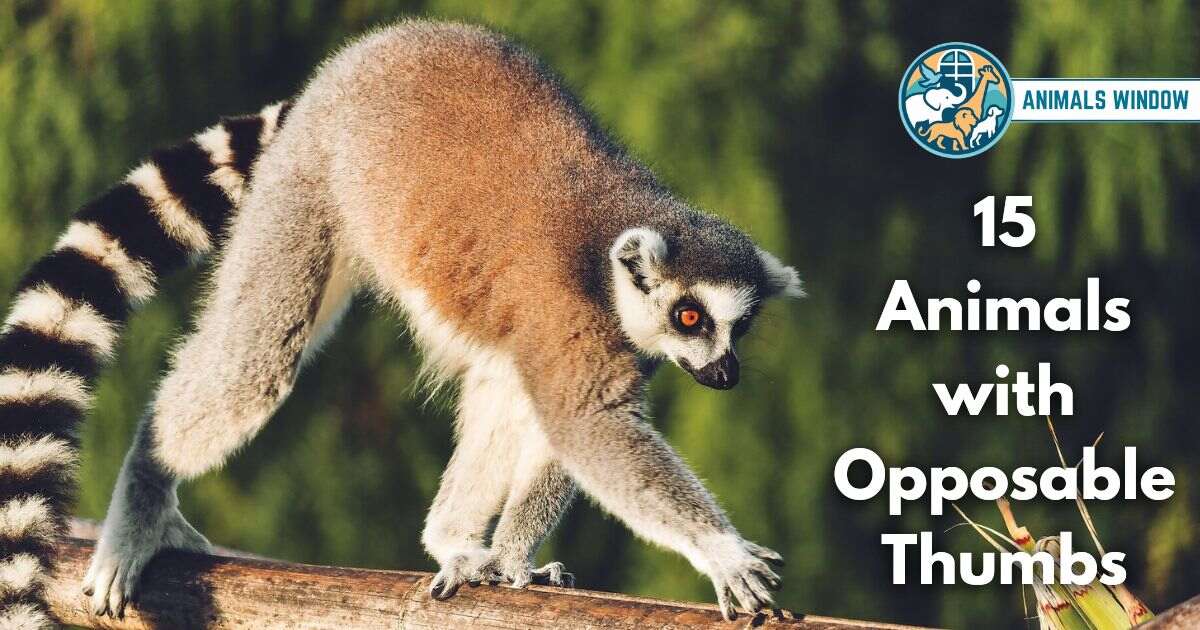
Animals with opposable thumbs include humans, great apes, certain monkeys, koalas, opossums, giant pandas, and even a few frogs and reptiles. These animals can move their thumb (or thumb-like digit) across the hand to grip objects. Most are primates, but some surprising non-primates have evolved similar gripping tools for climbing, feeding, or survival.
Table of Contents
Quick Table of Animals that have Opposable Thumbs
| Animal Name | Scientific Name | Key Trait |
| Human | Homo sapiens | Fully opposable, tool-making thumb |
| Chimpanzee | Pan troglodytes | Uses sticks as tools |
| Gorilla | Gorilla gorilla | Short thumb, powerful knuckle-walk grip |
| Orangutan | Pongo pygmaeus | Longest reach of any primate |
| Gibbon | Hylobates lar | Reduced thumb for faster swinging |
| Baboon | Papio ursinus | Ground-adapted precision grip |
| Capuchin | Cebus capucinus | Pseudo-opposable, nut-cracking expert |
| Lemur | Lemur catta | Toilet claw on second toe |
| Slow Loris | Nycticebus coucang | Toxic bite + powerful grip |
| Koala | Phascolarctos cinereus | Two thumbs per hand |
| Opossum | Didelphis virginiana | Thumb on hind feet only |
| Giant Panda | Ailuropoda melanoleuca | Fake thumb made of wrist bone |
| Waxy Monkey Tree Frog | Phyllomedusa sauvagii | Opposable grip on all four feet |
| Chameleon | Chamaeleo chamaeleon | Zygodactyl tong-like feet |
| Monkeydactyl | Kunpengopterus antipollicatus | Oldest known opposable thumb fossil |
What you’ll find in this list isn’t just a roster of primates. You’ll meet a venomous primate that squeezes poison into its own elbow, a marsupial whose thumbs are only on its back feet, and an extinct pterosaur whose discovery rewrote the story of opposable thumbs entirely.
Scroll down. Things get weird fast.
1. Human

- Scientific Name: Homo sapiens
- Size: 5–6 ft tall
- Weight: 130–180 lbs (average adult)
- Diet: Omnivore
- Habitat: Every continent
- Lifespan: 70–80 years
Humans are the benchmark when people talk about opposable thumbs. Our thumb sits at a wide angle from the fingers and can rotate far enough to touch every fingertip cleanly. That rotation comes from a saddle joint at the base of the thumb — a shape no other primate shares in quite the same way.
What makes the human thumb stand out isn’t just the angle. It’s the muscle precision. We have a muscle called the flexor pollicis longus that other great apes either lack or have only in a weak form. This one muscle is why humans can write, thread a needle, or type on a phone. It turns a basic grip into a fine-motor instrument.
🔥 Comparison Fact: Your thumb is roughly the same length as your nose — about 2.5 inches. That modest size controls more muscle attachments than any other finger.
2. Chimpanzee
- Scientific Name: Pan troglodytes
- Size: 3–5.5 ft tall
- Weight: 70–130 lbs
- Diet: Omnivore (fruit, nuts, insects, small animals)
- Habitat: Central and West African forests
- Lifespan: 40–50 years
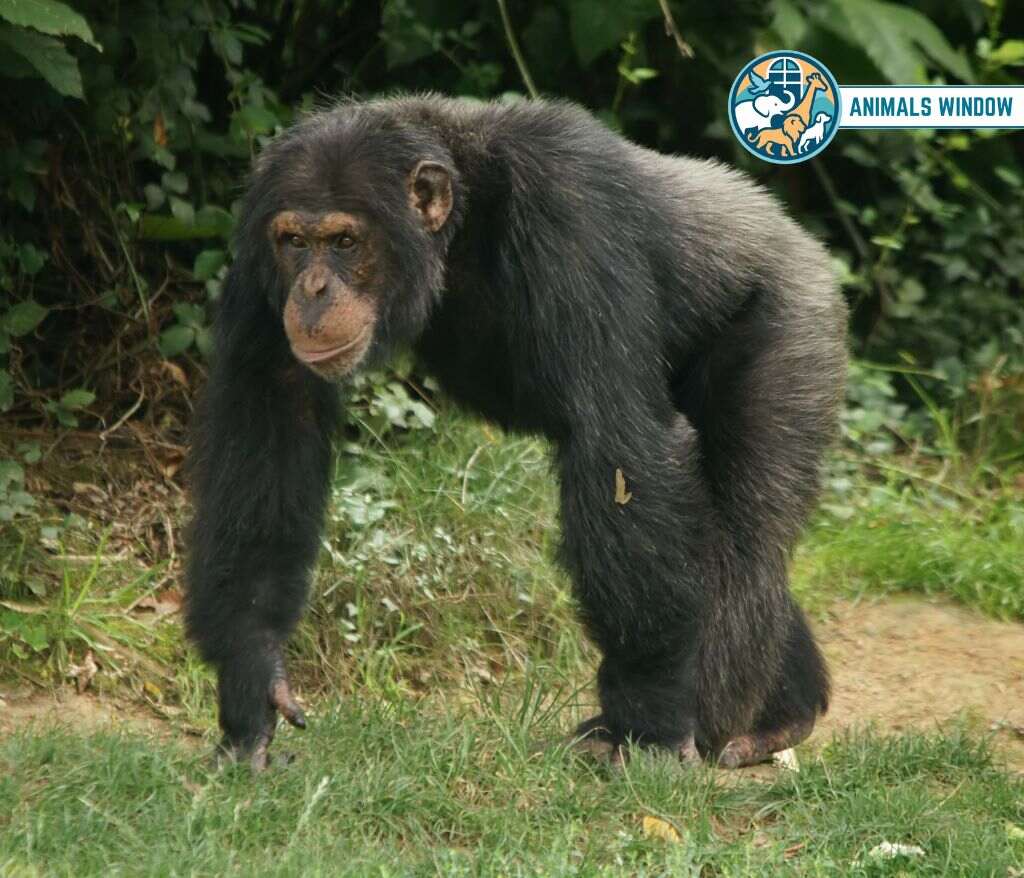
Chimpanzees are our closest living relatives, sharing about 98.7% of human DNA. Their thumbs are shorter relative to their fingers compared to ours, but they use them with surprising skill. Wild chimps strip leaves off sticks to fish termites out of mounds — a behavior that requires both grip control and intention.
Here’s the surprising part: chimps don’t just use tools, they teach tool use. Young chimps watch their mothers for years before attempting it themselves. Researchers at Bossou, Guinea recorded chimps using two stones — one as an anvil, one as a hammer — to crack open oil palm nuts. That’s not instinct. That’s learned behavior passed down like a family recipe.
🔥 Comparison Fact: A chimp’s grip strength is roughly twice that of an adult human male, despite having smaller hands. Their thumbs are shorter, but the surrounding muscles make up for it.
3. Gorilla
- Scientific Name: Gorilla gorilla
- Size: 4–6 ft tall (standing)
- Weight: 200–440 lbs
- Diet: Herbivore (leaves, stems, fruit)
- Habitat: Central African rainforests and montane forests
- Lifespan: 35–40 years in the wild
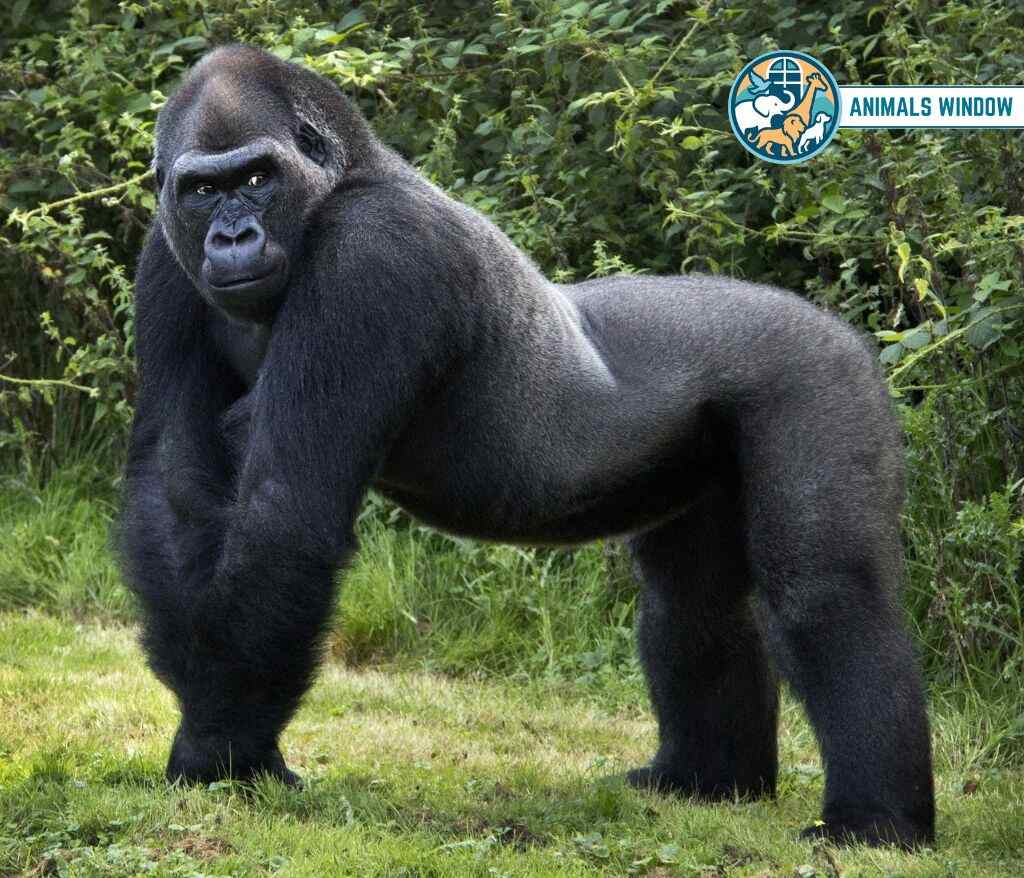
Gorillas have opposable thumbs on both their hands and feet, which makes them technically four-thumbed. Their hand thumbs are noticeably shorter and broader than those of chimps or humans. This shape works better for knuckle-walking than for precision tasks.
But don’t underestimate gorilla dexterity. In captivity, gorillas have been observed peeling thin-skinned fruits with careful thumb-and-finger coordination. Koko, a gorilla taught sign language, used over 1,000 signs with clear intentional hand movement — all driven by that short, powerful opposable digit.
🔥 Comparison Fact: A male gorilla’s hand span can reach 12 inches across — about the width of a standard sheet of paper lying sideways.
4. Orangutan
- Scientific Name: Pongo pygmaeus
- Size: 4–5 ft tall
- Weight: 90–200 lbs
- Diet: Fruit, bark, insects, leaves
- Habitat: Rainforests of Borneo and Sumatra
- Lifespan: 35–45 years
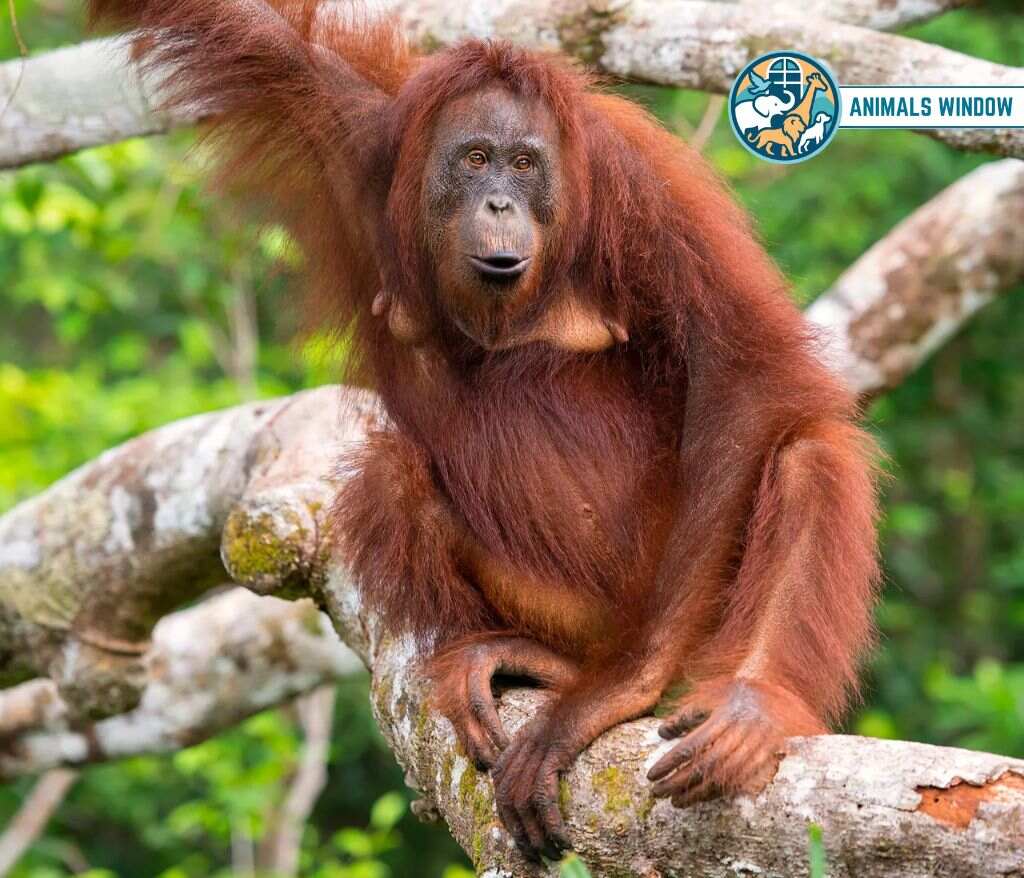
Orangutans have the longest arms relative to body size of any primate — a span that can reach 7 feet across. Their thumbs are short but fully opposable, and they use them differently depending on the task. When moving through trees fast, they hook their fingers and reduce thumb use entirely. When handling food slowly, they switch to a precise pinch grip.
What’s unusual is how much orangutans improvise. They’ve been documented using leaves as gloves to handle spiny fruits, and using sticks to pry open bee nests. One wild orangutan at Suaq Balimbing in Sumatra was observed making and using a hook-shaped tool to extract seeds — entirely on its own, without watching another orangutan do it first.
🔥 Comparison Fact: An orangutan’s arm span of up to 7 feet is wider than a standard door frame (6 ft 8 in). Their thumbs may be short, but their reach compensates in ways that seem almost unfair.
5. Gibbon
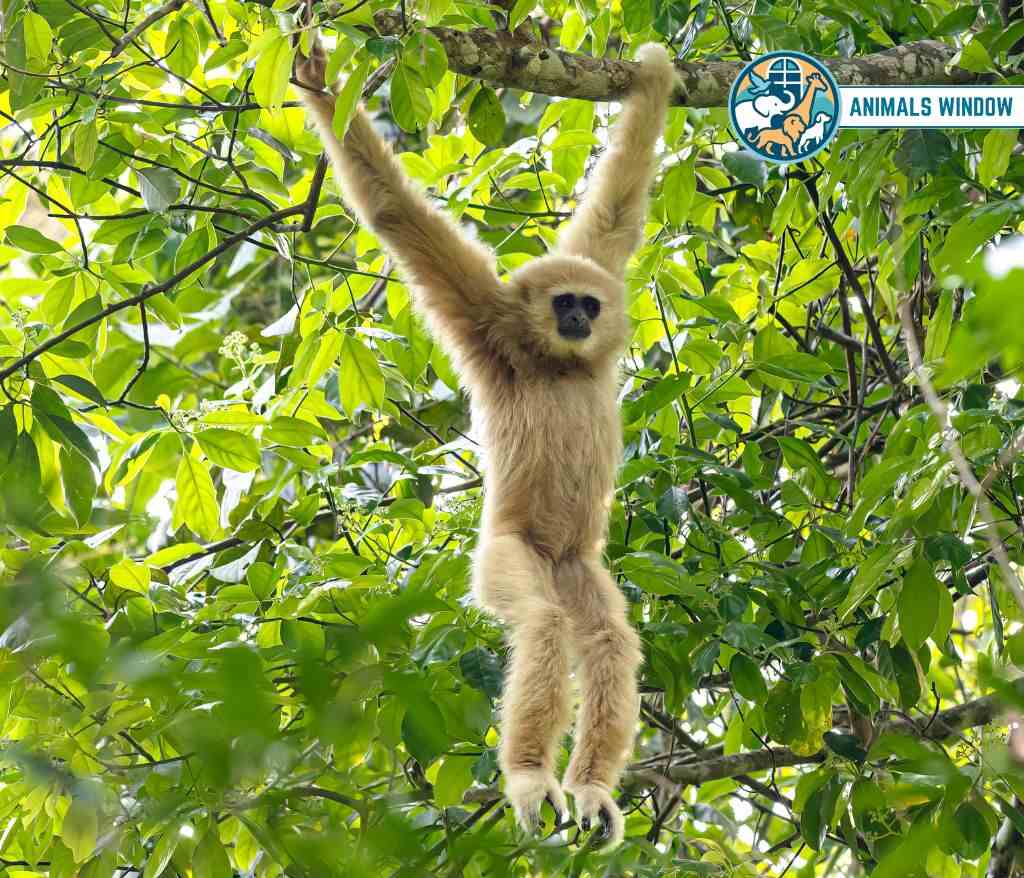
- Scientific Name: Hylobates lar
- Size: 17–25 inches tall
- Weight: 9–13 lbs
- Diet: Fruit, leaves, insects
- Habitat: Southeast Asian tropical forests
- Lifespan: 25–30 years
Gibbons made an interesting evolutionary trade-off. Their thumbs are opposable but noticeably reduced in size compared to other primates. The reason is speed. When brachiation — swinging arm-over-arm through trees — is your main way of traveling, a big thumb gets in the way. Gibbons essentially turned their hands into hooks, keeping just enough thumb to grip when they need to.
A gibbon can travel up to 35 mph through the tree canopy using this hook-grip method. That’s faster than most humans can sprint. Their reduced thumb allows their fingers to form a long, curved channel that works like a frictionless rope hook. It’s a beautiful example of evolution choosing one skill over another.
🔥 Comparison Fact: A gibbon weighs about as much as a bowling ball — 10 to 13 lbs — yet can cover 50 feet in a single swing between branches.
6. Baboon
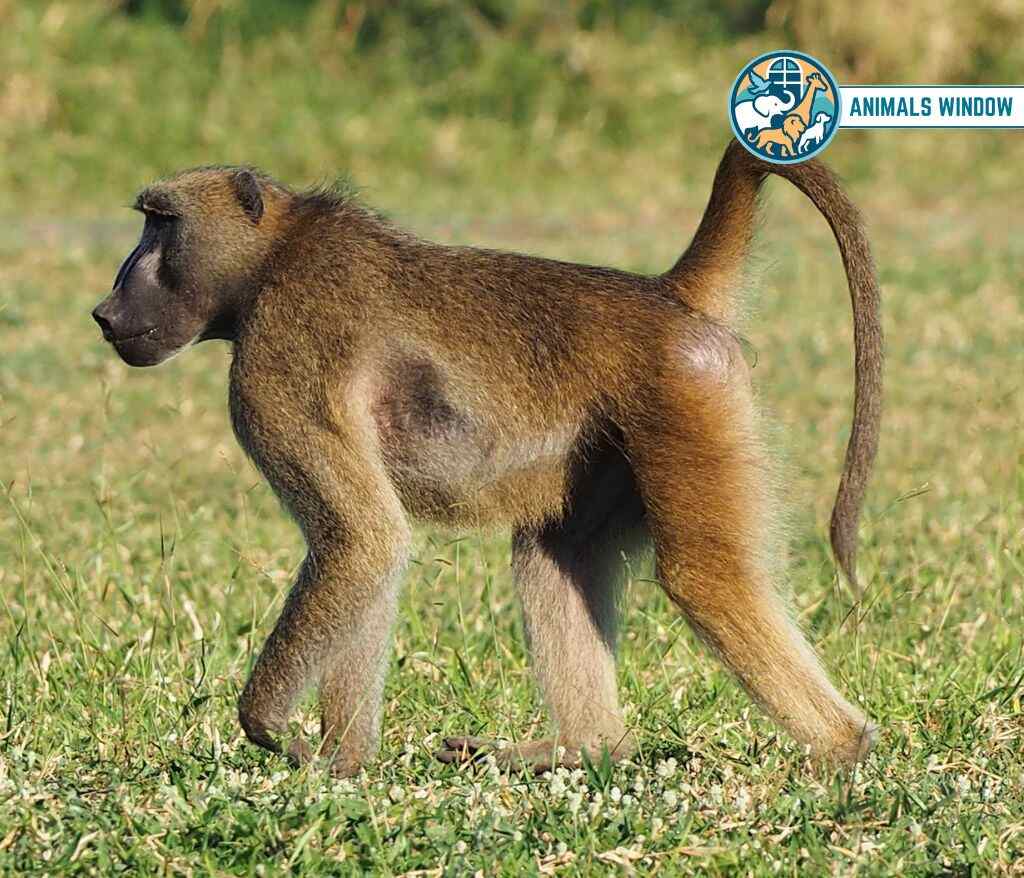
- Scientific Name: Papio ursinus
- Size: 20–34 inches (body length)
- Weight: 33–82 lbs
- Diet: Omnivore (grass, roots, insects, small animals)
- Habitat: African savannas, woodlands, semi-desert
- Lifespan: 20–30 years
Baboons live mostly on the ground, which sets them apart from tree-dwelling primates. Their opposable thumbs are adapted for terrestrial life — picking up small seeds, peeling tough roots, and digging into soil. They don’t swing through trees, so their hands evolved for a completely different job.
One understudied behavior: baboons use their thumbs to sort food with remarkable accuracy. Studies in South Africa showed baboons picking parasites off other baboons one by one during grooming, using a pinch grip almost identical to how a human picks up a pin from a flat surface. That level of fine motor control in a savanna animal is easy to overlook.
🔥 Comparison Fact: A male olive baboon can weigh up to 82 lbs — about the same as an average 11-year-old child — but his hand grip can crack open hardshell seeds that would need pliers to break in a kitchen.
7. Capuchin Monkey
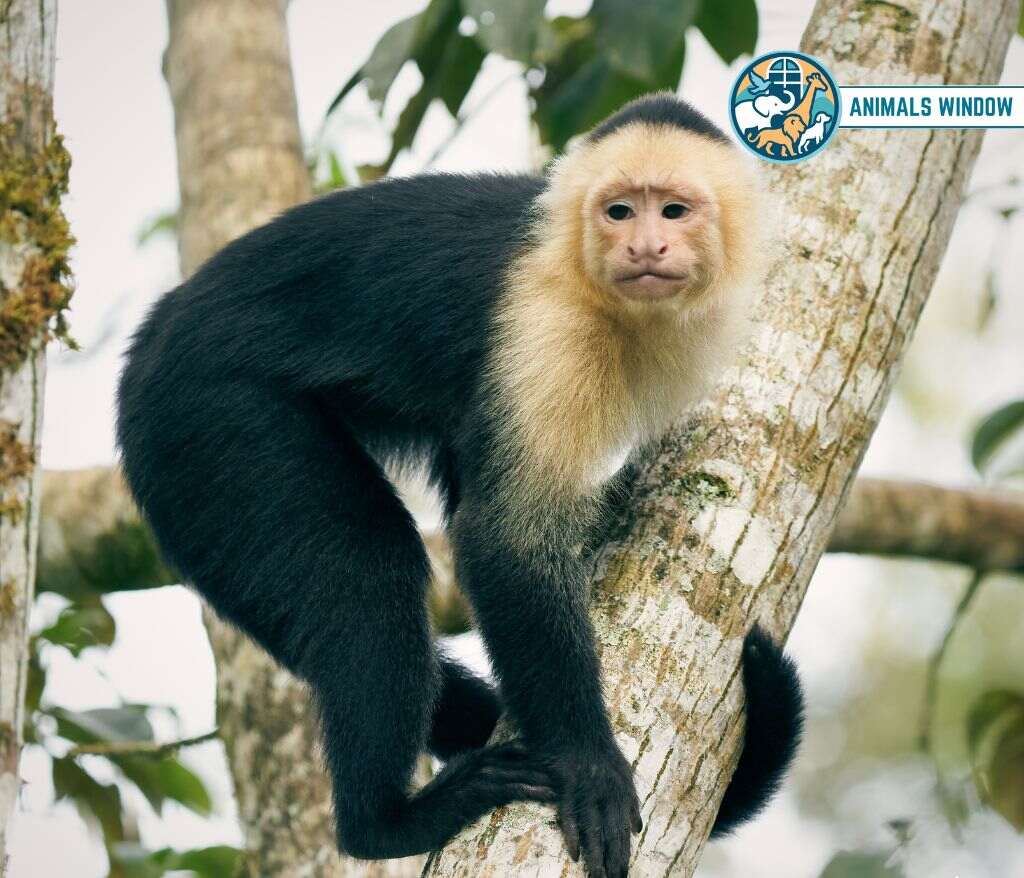
- Scientific Name: Cebus capucinus
- Size: 12–22 inches
- Weight: 3–9 lbs
- Diet: Fruit, nuts, insects, small vertebrates
- Habitat: Central and South American forests
- Lifespan: 15–25 years
Capuchins are interesting because they have pseudo-opposable thumbs — their thumbs don’t rotate as freely as a human’s, but they’re angled enough to create a workable grip. Despite this limitation, capuchins are considered the most cognitively advanced monkeys in the New World.
They crack nuts by carrying them to specific flat rocks and hammering them with a second stone. This behavior requires selecting the right stone size, positioning the nut, and adjusting strike force — all using that partially opposable thumb grip. Researchers at the University of São Paulo found that wild capuchins choose heavier stones to crack harder nuts, adjusting their tool selection based on the task. That’s not random. That’s planning.
🔥 Comparison Fact: A capuchin monkey weighs between 3 and 9 lbs — about the same as a standard house brick to a small laptop — yet regularly outperforms larger primates on cognitive puzzle tasks.
8. Lemur
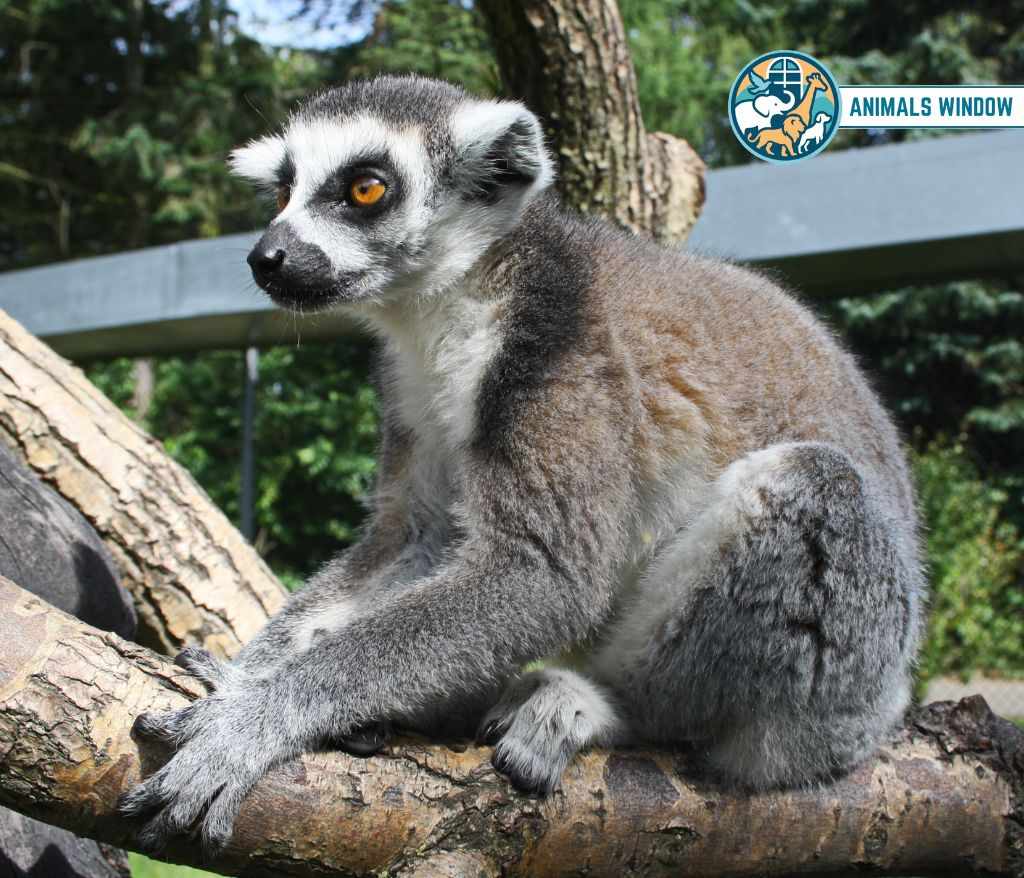
- Scientific Name: Lemur catta
- Size: 15–18 inches (body, not tail)
- Weight: 5–8 lbs
- Diet: Fruit, leaves, flowers, insects
- Habitat: Madagascar only
- Lifespan: 16–19 years
Lemurs are the oldest living primates, and their thumbs reflect that ancient lineage. All true lemurs have opposable thumbs on both hands and feet. But their second toe carries something unusual — a grooming claw called a toilet claw, which sits right next to an otherwise normal set of toes. It’s used specifically for scratching and fur maintenance, not gripping.
Lemurs found only on Madagascar have evolved in isolation for about 60 million years. Their thumb grip is less refined than monkeys or apes, but they make up for it with scent glands on their wrists that they rub onto branches while gripping them. So every time a lemur grabs a branch, it’s also leaving a chemical message. Their thumbs are doing double duty.
🔥 Comparison Fact: A ring-tailed lemur’s tail is roughly 24 inches long — longer than its entire body — and while they can’t grip with it, they wave it during “stink fights” where wrist scent is applied to the tail and fanned at rivals.
9. Slow Loris
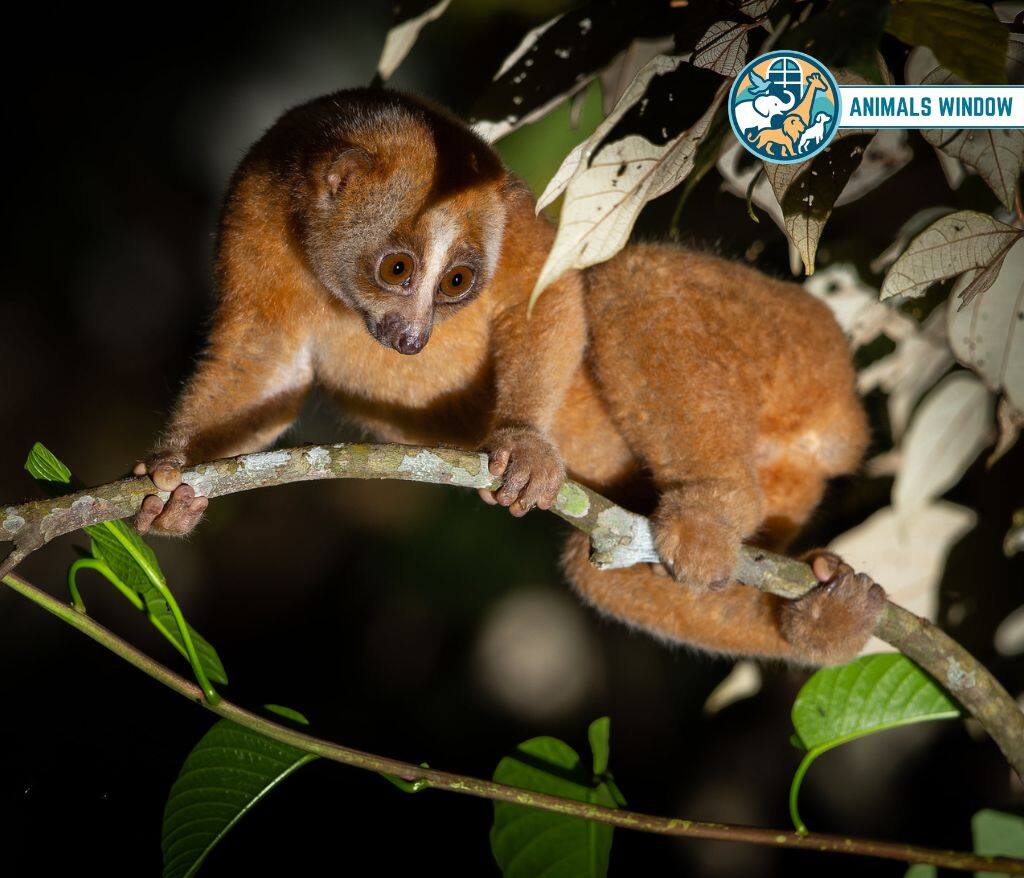
- Scientific Name: Nycticebus coucang
- Size: 10–15 inches
- Weight: 1–4.5 lbs
- Diet: Tree gums, nectar, insects, small animals
- Habitat: Southeast Asian tropical forests
- Lifespan: 20–25 years in captivity
The slow loris doesn’t look dangerous. It moves slowly, has enormous eyes, and grips branches with a quiet, deliberate hold. But it’s the only venomous primate on Earth. The venom comes from glands near its elbows. The loris licks these glands and mixes the secretion with saliva, creating a toxic bite capable of causing anaphylactic shock.
What connects this to thumbs: the loris has a powerful vise-like grip from fully opposable thumbs on both hands and feet. It can hang motionless from a branch for hours without muscle fatigue, which is extremely rare in mammals. This grip is what allows it to ambush insects and small prey without moving — a hunting strategy that depends entirely on stillness and clamping force, not speed.
🔥 Comparison Fact: A slow loris can maintain its gripping hold for up to two hours without rest — roughly the length of an average movie — without the muscle trembling that would affect a human doing the same.
10. Koala
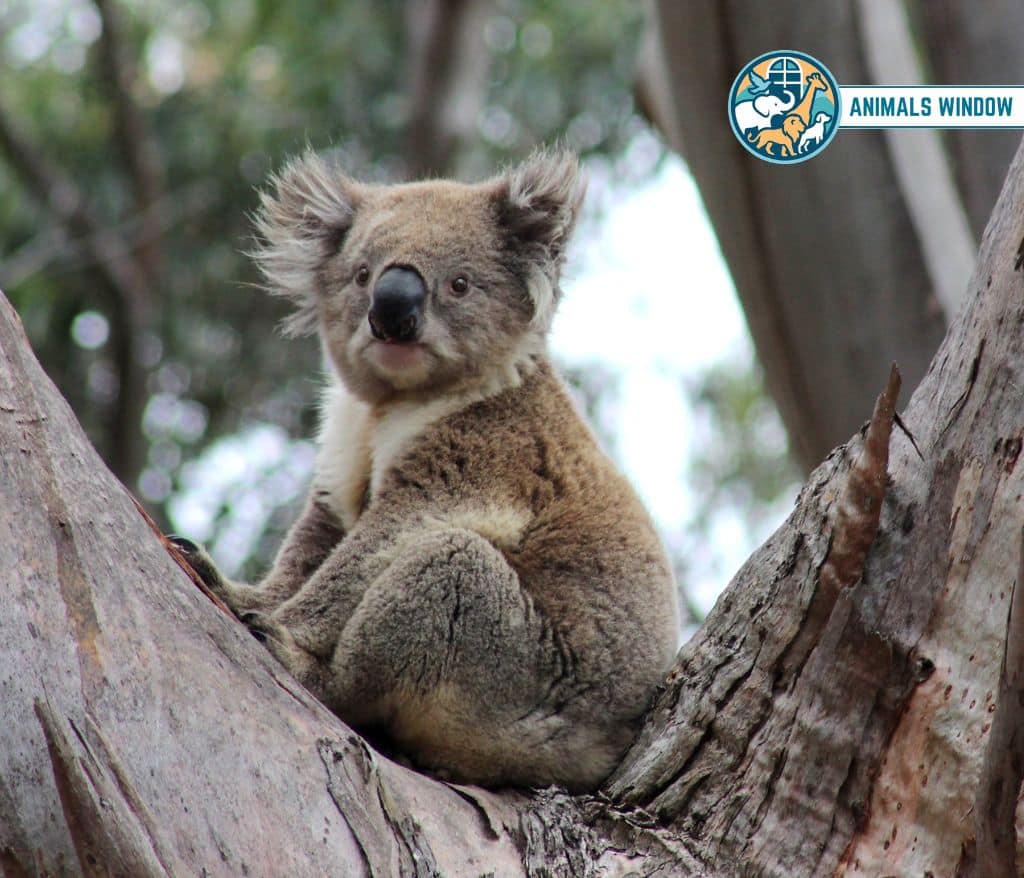
- Scientific Name: Phascolarctos cinereus
- Size: 24–33 inches
- Weight: 9–33 lbs
- Diet: Eucalyptus leaves almost exclusively
- Habitat: Eastern and southeastern Australia
- Lifespan: 13–18 years
Koalas are not primates, which makes their hands genuinely surprising. Each front paw has two thumbs — the first and second digits are both opposable, sitting side by side against the remaining three fingers. No other animal has this exact hand arrangement. It’s a tree-climbing solution that evolved completely independently from primates.
Their grip is built for one specific tree: eucalyptus. The bark is smooth, the branches are vertical, and the koala needs to cling for most of its 18–22 hours of daily sleep. Those double thumbs create a wide, fork-like grip that locks around branches without muscular effort. Koalas also have fingerprints nearly identical to human fingerprints — so similar that forensic scientists have noted they could theoretically contaminate a crime scene.
🔥 Comparison Fact: A koala’s double-thumb grip is strong enough to hold its body weight — up to 33 lbs, roughly the weight of a car tire — on a vertical branch while completely asleep.
11. Opossum
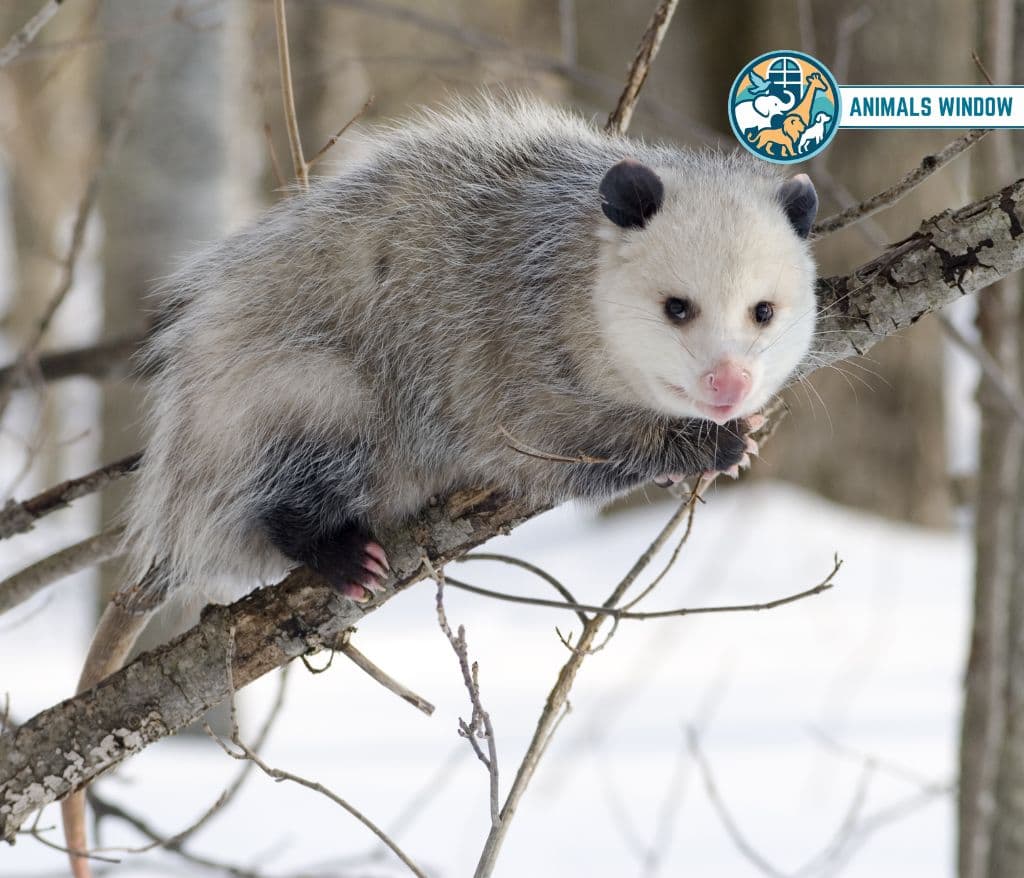
- Scientific Name: Didelphis virginiana
- Size: 15–20 inches (body)
- Weight: 4–14 lbs
- Diet: Omnivore — insects, fruit, carrion, small animals
- Habitat: North and Central America
- Lifespan: 2–4 years
The opossum is the only marsupial in North America, and its thumbs are in an unexpected location — only on its hind feet. The front paws have no opposable digit at all. The rear thumb is large, claw-less, and fully opposable, designed specifically for locking onto tree branches while the animal sleeps or forages.
This makes opossums functional climbers without needing both sets of hands to grip. They also have a prehensile tail that works as a fifth limb, so between the rear opposable toes and the gripping tail, they’re well-equipped for tree life. Baby opossums are born at just 13 days after conception — the size of a honeybee — and crawl entirely on their own to the mother’s pouch using only their front limbs, before their rear thumb-feet even develop.
🔥 Comparison Fact: A newborn opossum weighs less than one gram — lighter than a paperclip — yet makes the entire journey to the pouch with no help from its mother.
12. Giant Panda
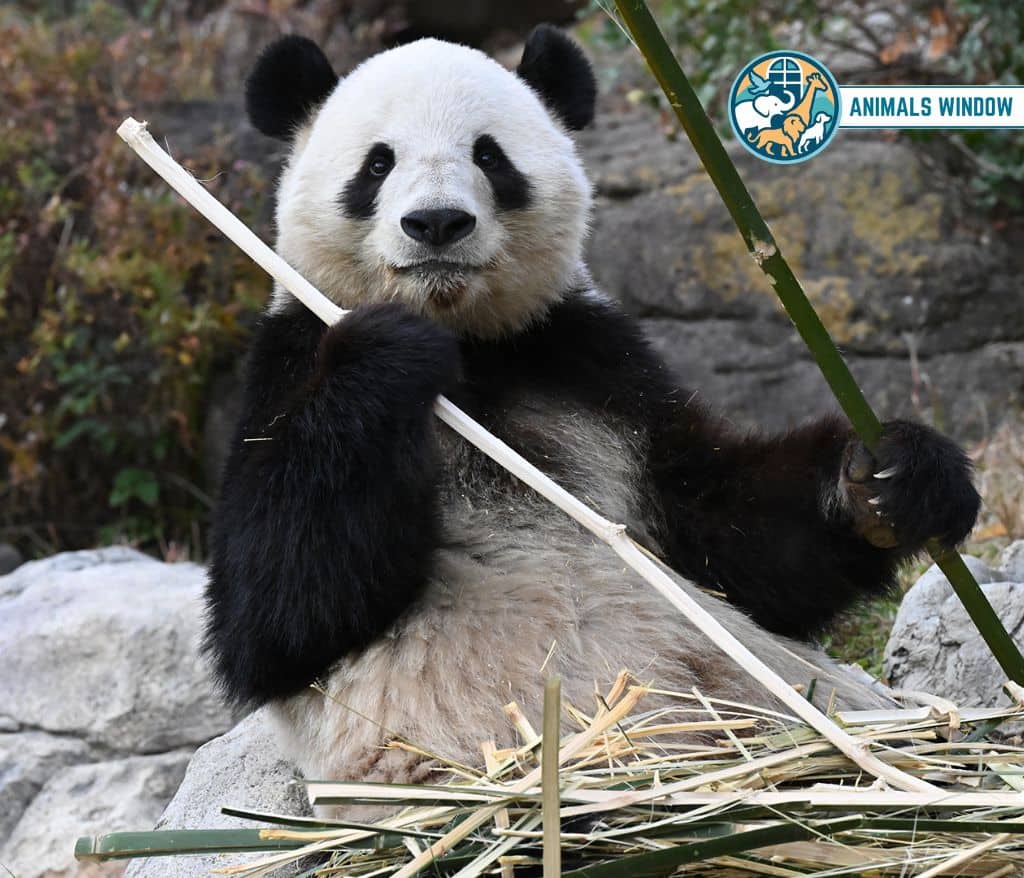
- Scientific Name: Ailuropoda melanoleuca
- Size: 4–5 ft tall (standing)
- Weight: 150–280 lbs
- Diet: Bamboo (99% of diet)
- Habitat: Mountain forests of central China
- Lifespan: 20 years in the wild
The giant panda doesn’t technically have an opposable thumb. What it has is arguably more interesting — a modified wrist bone called the radial sesamoid that sticks out like a thumb and works almost exactly the same way. This “false thumb” evolved specifically to grip bamboo stalks, which is the panda’s almost exclusive food source.
Real bear paws aren’t built for precision. But pandas need to strip bamboo leaves, rotate stalks, and hold them steady while eating — tasks that require a pinch grip. Evolution answered that need by slowly enlarging a wrist bone over millions of years until it could act like a digit. It’s one of the best-known examples of convergent evolution — nature solving the same problem twice using completely different anatomy.
🔥 Comparison Fact: A giant panda eats 26–84 lbs of bamboo per day — the upper end close to the weight of a medium-sized dog — and its false thumb makes every single bite possible.
13. Waxy Monkey Tree Frog
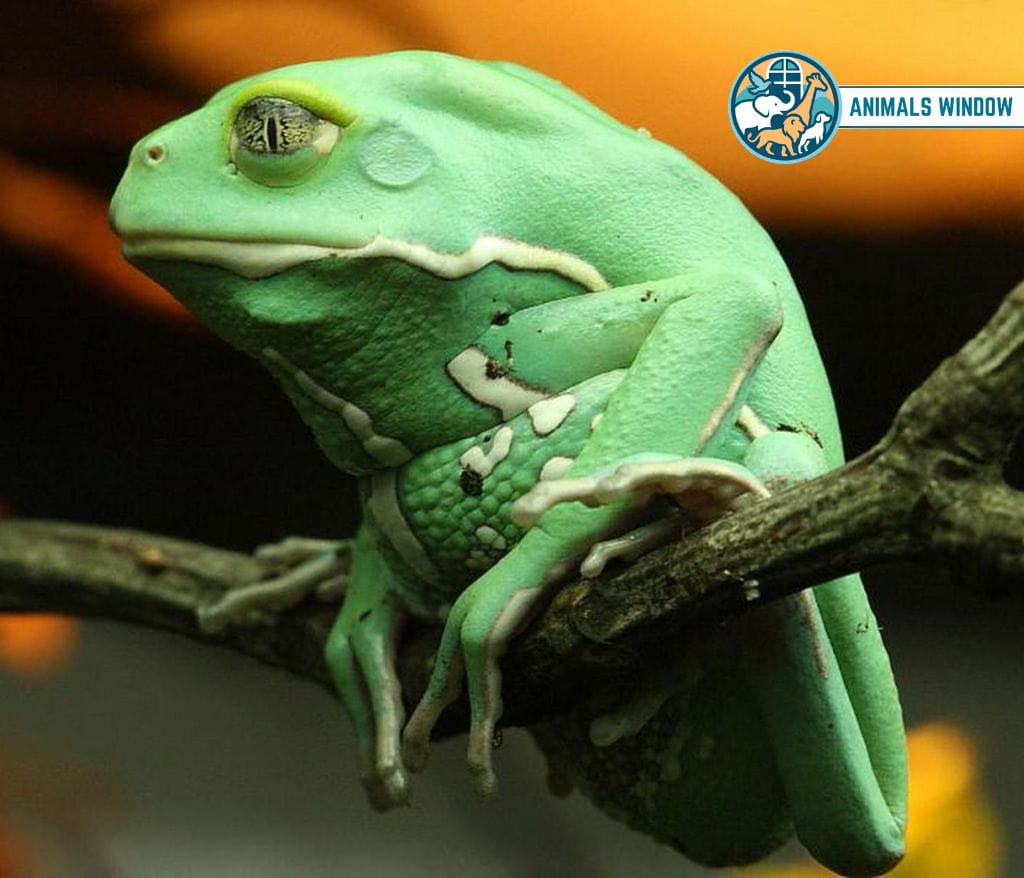
- Scientific Name: Phyllomedusa sauvagii
- Size: 2.5–3.5 inches
- Weight: Less than 0.5 oz
- Diet: Insects
- Habitat: Gran Chaco region of South America
- Lifespan: 5–10 years
Most frogs cling to surfaces using sticky pads. The waxy monkey tree frog does something else entirely — it walks through branches like a primate, using a slow, deliberate hand-over-hand movement. Its toes are structured so the inner digits can oppose the outer ones, creating a gripping action on all four feet. This is the closest thing to opposable thumbs found in any amphibian.
The name “waxy” comes from another unusual behavior: it rubs a waxy lipid secretion all over its skin using its legs, coating itself against water loss. This is unique among frogs, most of which rely on moisture. The combination of a primate-like grip and a self-waterproofing skin makes this small frog one of the strangest amphibians alive. It answers the question “do frogs have opposable thumbs?” with a resounding, weird yes.
🔥 Comparison Fact: This frog’s entire body, at 3.5 inches, is roughly the length of a car key — and its grip across all four limbs is strong enough to stay planted on a smooth branch in strong wind.
14. Chameleon
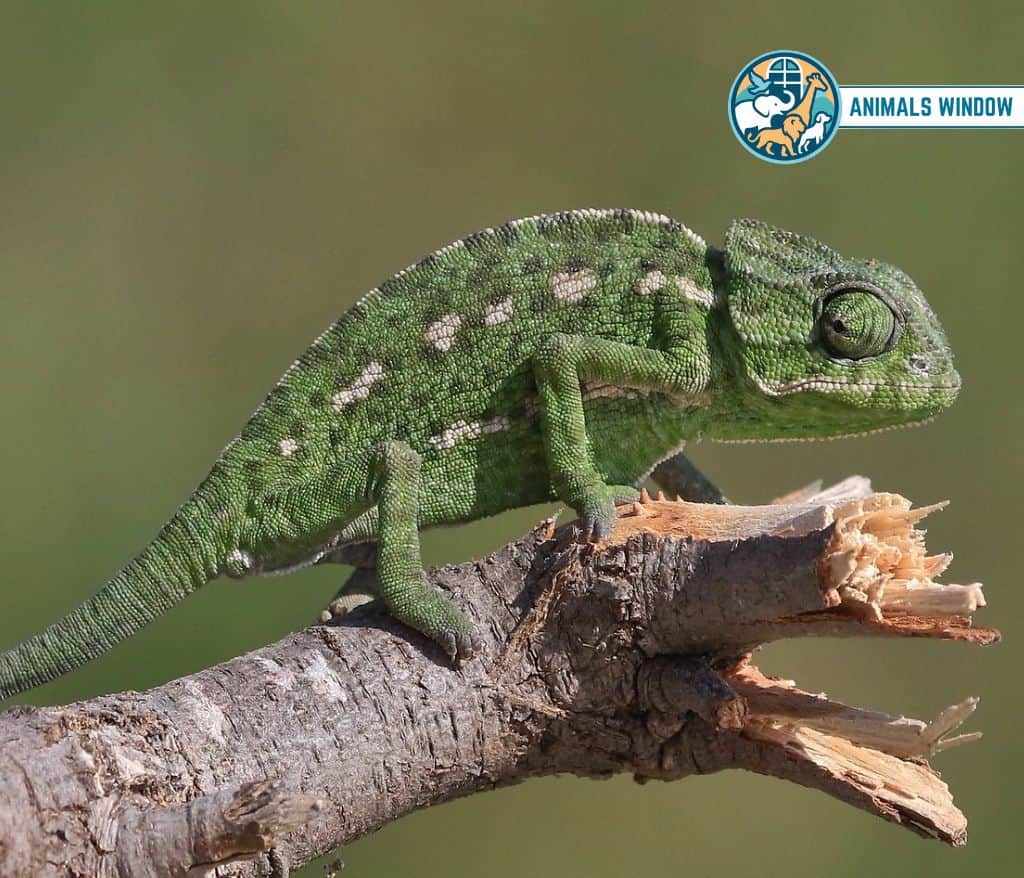
- Scientific Name: Chamaeleo chamaeleon
- Size: 1–27 inches depending on species
- Weight: 0.07–5.5 oz
- Diet: Insects, occasionally small vertebrates
- Habitat: Africa, Madagascar, southern Europe, parts of Asia
- Lifespan: 3–10 years
Chameleons don’t have thumbs in the mammal sense. Their feet are zygodactyl — the toes are fused into two opposing groups, two on one side and three on the other, forming a natural tong grip around branches. It functions like an opposable thumb but uses entire groups of toes instead of a single digit.
What makes chameleon feet genuinely remarkable is the precision. Their grip adjusts constantly as they move — tightening on thinner branches, loosening on thick ones — without the animal consciously thinking about it. And this is the same animal using independently moving eyes, a tongue that fires at 13 mph, and active color change for communication. The feet are doing complex mechanical work while the rest of the body is running a completely separate set of operations.
🔥 Comparison Fact: A chameleon’s tongue can reach twice its body length and strike in under 0.07 seconds — fast enough that if you blinked at the right moment, you’d miss the entire hunt.
15. Monkeydactyl
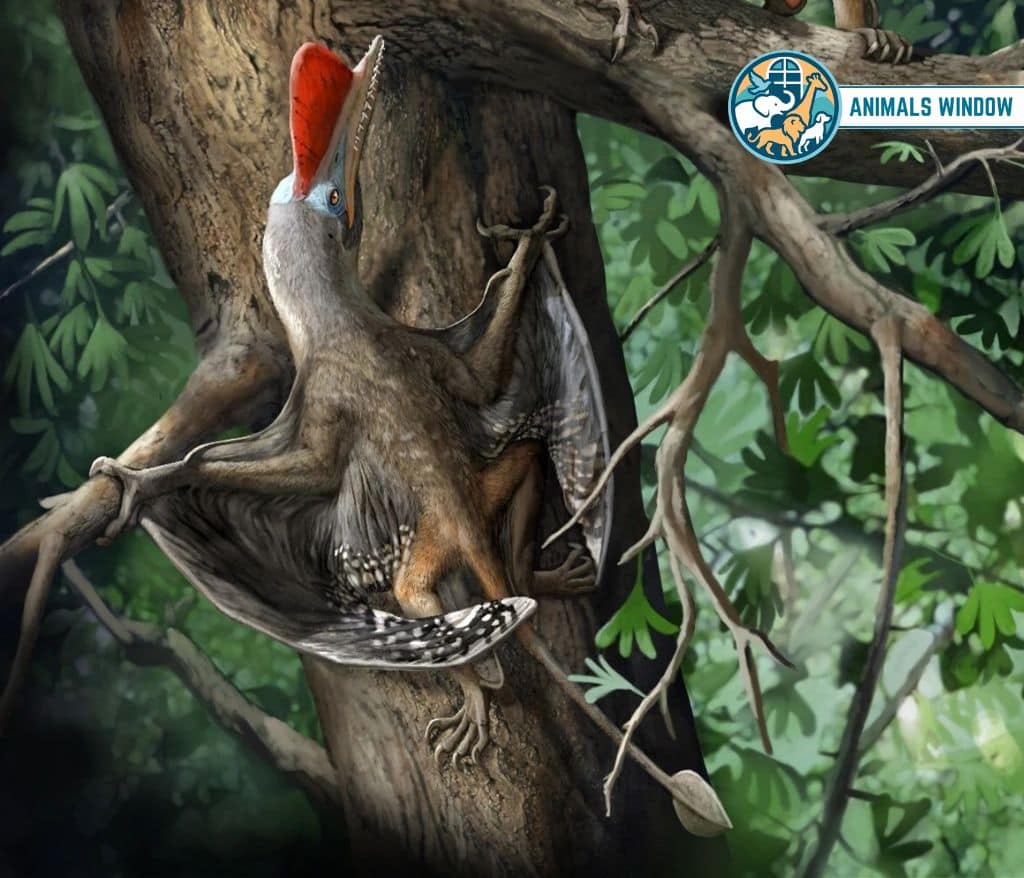
- Scientific Name: Kunpengopterus antipollicatus
- Size: Wingspan approximately 2.8 ft
- Weight: Estimated under 1 lb
- Diet: Insects (likely)
- Habitat: What is now northeastern China (Late Jurassic)
- Lifespan: Unknown (extinct)
The Monkeydactyl is a pterosaur — a flying reptile — that lived about 160 million years ago. Its fossil, discovered in the Tiaojishan Formation of China and described in 2021, shows a clear opposable first digit on the foot. This is the oldest known opposable appendage in the fossil record, predating all primate thumbs by tens of millions of years.
The name antipollicatus actually means “opposite thumbed” in Latin. Researchers believe the foot grip was used for perching in trees, similar to how modern birds grip branches. But this was a flying reptile, not a bird, not a primate — which means opposable gripping evolved independently at least one more time than scientists previously counted. Every time a new fossil surfaces, the story of the opposable thumb gets older and stranger.
🔥 Comparison Fact: The Monkeydactyl’s 2.8-foot wingspan is about the width of a standard school desk — remarkably small for a pterosaur, which is likely why it lived in trees rather than soaring open skies.
Common FAQ’s Animals with Opposable Thumbs
Q1: Do all primates have opposable thumbs?
Most do, but not all. Spider monkeys have reduced or absent thumbs because their hands evolved for fast brachiation. Opposable thumbs are common in primates but not universal.
Q2: Do frogs have opposable thumbs?
Most frogs don’t. But the waxy monkey tree frog has opposable toe structures on all four feet, giving it a primate-like grip used for slow, deliberate climbing through branches.
Q3: What animals have opposable thumbs but are not primates?
Koalas, opossums, giant pandas (false thumb), chameleons, and the waxy monkey tree frog all have opposable or pseudo-opposable digits — none of them are primates.
Q4: Do tigers have opposable thumbs?
No. Tigers have retractable claws but no opposable digit of any kind. Their paws are built for striking and holding prey, not gripping or pinching.
Q5: What is the difference between opposable thumbs and pseudo-opposable thumbs?
A true opposable thumb rotates at the base joint and can touch all other fingertips. A pseudo-opposable thumb is angled away from the fingers but lacks full rotation — useful for gripping but less precise. Capuchins and some lemurs have pseudo-opposable thumbs.
Related Animals Guides:
Trait Comparison: True Opposable Thumbs vs. Pseudo-Opposable Thumbs vs. False Thumbs
| Feature | True Opposable Thumb | Pseudo-Opposable Thumb | False Thumb |
| Rotation at base | Full saddle-joint rotation | Limited or partial | None — it’s a bone, not a digit |
| Can touch all fingers | Yes | Usually not | No |
| Examples | Humans, chimps, gorillas | Capuchins, some lemurs | Giant panda |
| Gripping precision | Highest | Moderate | Moderate (task-specific) |
| Evolutionary origin | Primate lineage | Primate lineage | Wrist bone (sesamoid) |
| Used for tools | Yes (regularly) | Yes (limited) | No |
| Found in non-primates | Koala, opossum (feet) | Waxy monkey tree frog | Giant panda only |
The key takeaway: not all gripping digits are built the same way. A giant panda and a chimpanzee can both hold a bamboo stalk, but the anatomy behind each grip is completely different. Evolution found multiple routes to the same solution — and some of those routes are far stranger than others.

I have loved animals since I was a kid. I enjoy reading about how animals live, eat, move, and survive. I started Animals Window to share what I learn in a simple and easy way. I write about animal body parts, size, behavior, diet, habitats, and species. My goal is to make animal facts clear and fun for everyone to understand.