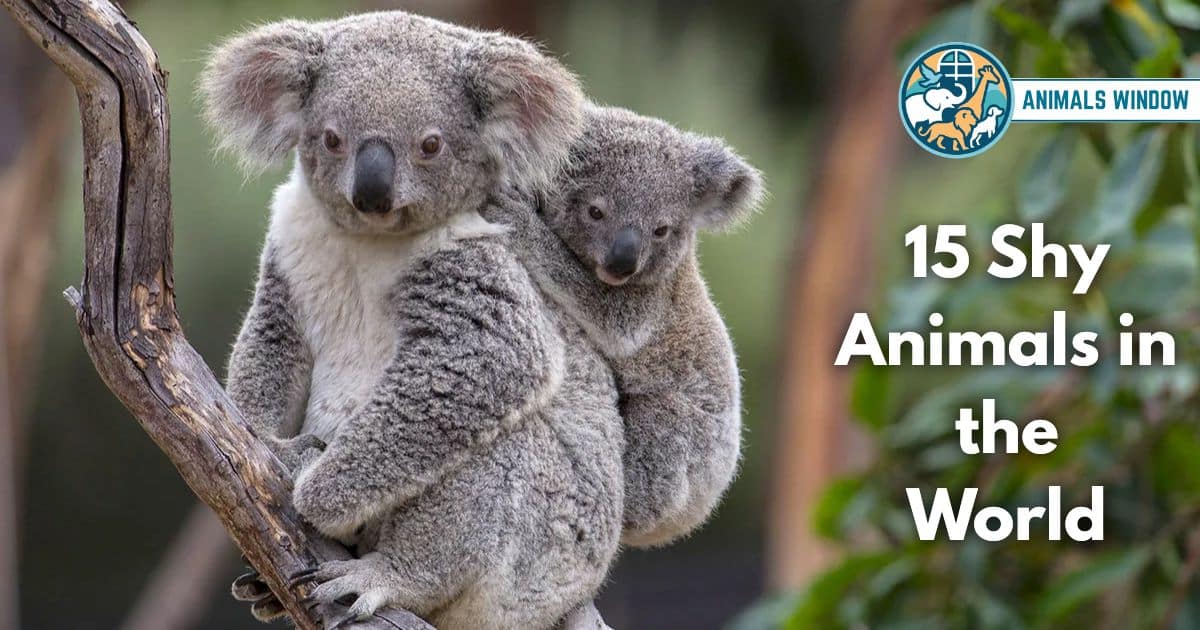
Shy animals are species that naturally avoid contact with humans and other animals. They hide, stay silent, or come out only at night to stay safe. Most are solitary, extremely rare, or have special defense traits. You’ll find them in dense forests, mountain ranges, and remote islands — places where humans rarely go.
Table of Contents
Quick Table of Shyest Animals in the World
| Animal Name | Scientific Name | Key Trait |
| Aardwolf | Proteles cristata | Eats termites only |
| Aye-aye | Daubentonia madagascariensis | Long tapping finger |
| Ili Pika | Ochotona iliensis | Rarely seen since 1983 |
| Kakapo | Strigops habroptilus | Only flightless parrot |
| Kiwi | Apteryx australis | Nostrils at beak tip |
| Koala | Phascolarctos cinereus | Sleeps 22 hours a day |
| Margay | Leopardus wiedii | Mimics monkey calls |
| Okapi | Okapia johnstoni | Cleans ears with tongue |
| Pangolin | Manis javanica | Rolls into a hard ball |
| Pink Fairy Armadillo | Chlamyphorus truncatus | Size of a large brownie |
| Platypus | Ornithorhynchus anatinus | Detects prey electrically |
| Quokka | Setonix brachyurus | Looks like it’s smiling |
| Saola | Pseudoryx nghetinhensis | Seen less than 10 times |
| Snow Leopard | Panthera uncia | Never roars |
| Sunda Colugo | Galeopterus variegatus | Glides 200 feet between trees |
These 15 shy animals aren’t just quiet — they’re among the most unusual creatures on Earth. Some have body parts that don’t make sense at first glance. Others survive in places where almost nothing else can live.
Keep scrolling. Every single one of these animals has something you’ve probably never heard before.
1. Aardwolf
- Scientific name: Proteles cristata
- Size: 22–31 inches long
- Weight: 15–30 lbs
- Diet: Termites
- Habitat: Dry savannas and shrublands of East and Southern Africa
- Lifespan: Up to 15 years in the wild
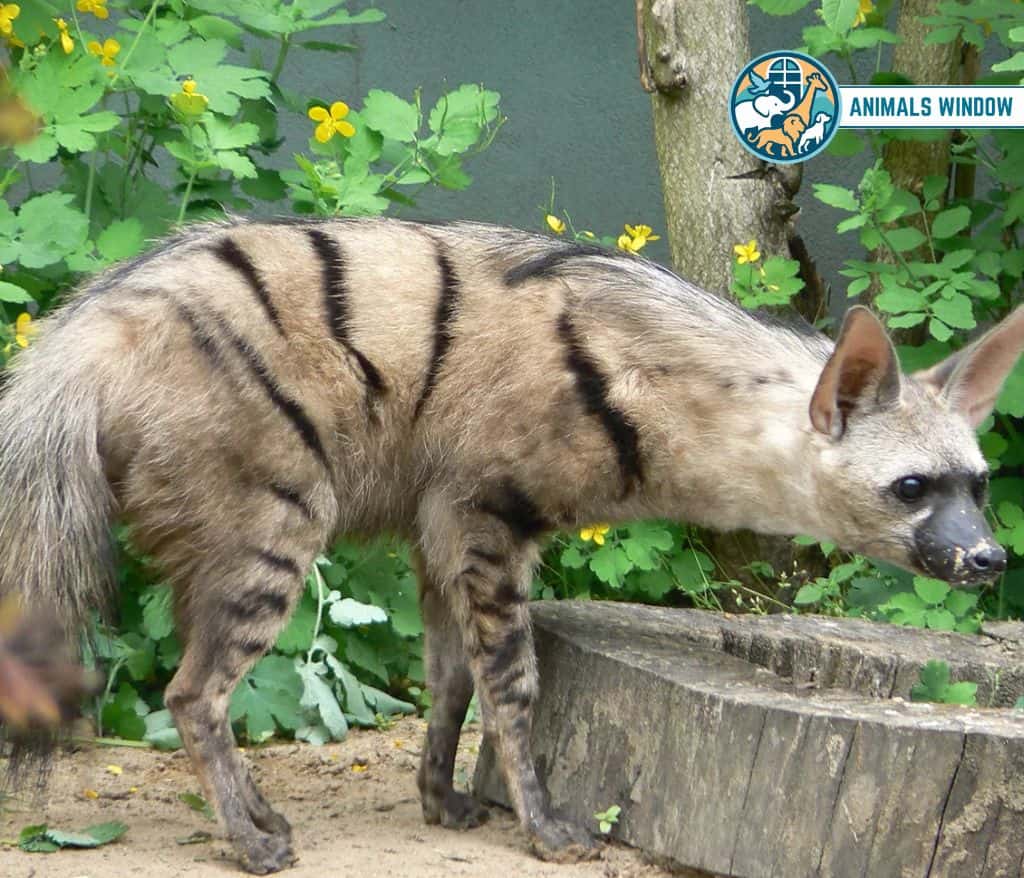
The aardwolf looks like a small, striped hyena. But it behaves nothing like one. It’s one of the shyest animals in Africa — mostly nocturnal, rarely seen, and almost never aggressive. When threatened, it raises its mane to look bigger. Most of the time, though, it simply runs.
Here’s what makes it truly strange: the aardwolf eats almost nothing but termites. Not just any termites — it prefers Trinervitermes termites specifically. In a single night, one aardwolf can eat around 250,000 termites using its wide, sticky tongue. Its teeth are so small and weak that it couldn’t chew meat even if it wanted to. It gave up being a predator a long time ago and became a termite specialist instead.
🔥 Comparison Fact: An aardwolf’s body is roughly the size of a medium-sized dog, like a Beagle.
2. Aye-aye
- Scientific name: Daubentonia madagascariensis
- Size: 14–17 inches (plus a 22-inch tail)
- Weight: 4–6 lbs
- Diet: Grubs, fruit, seeds, fungi
- Habitat: Rainforests of Madagascar
- Lifespan: Up to 23 years in captivity
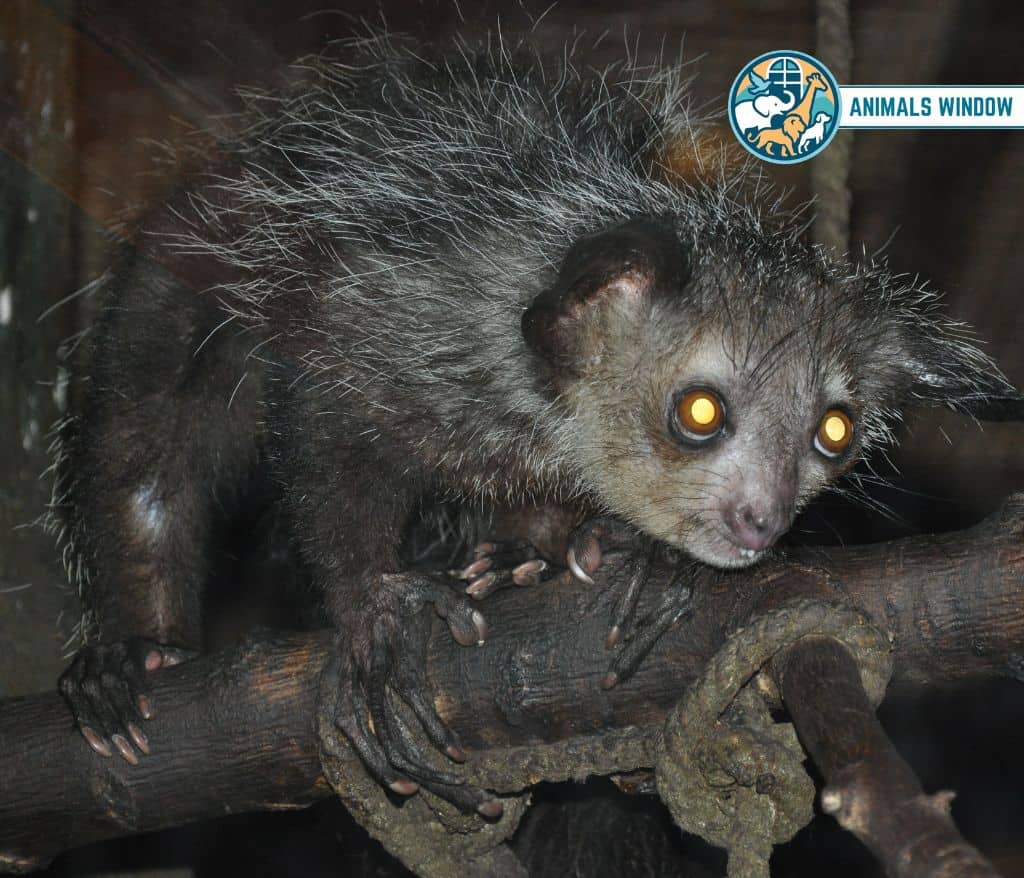
The aye-aye is one of the most visually unusual animals alive. It has bat-like ears, rodent-like teeth, and eyes that glow orange in the dark. Local people in Madagascar sometimes fear it as a bad omen, which has made it even more endangered. It’s deeply shy and stays high in the trees at night, almost impossible to spot in the wild.
What really sets it apart is its middle finger. That finger is extremely long and thin — almost skeletal — and the aye-aye uses it to tap on tree bark. It listens for hollow spaces underneath, then chews a hole and uses that bony finger to hook out the grub inside. This is called percussive foraging, and no other primate in the world does it quite this way. It’s basically doing the same job as a woodpecker, but with its hand.
🔥 Comparison Fact: The aye-aye’s body (without the tail) is about the size of a large house cat.
3. Ili Pika
- Scientific name: Ochotona iliensis
- Size: 7–8 inches long
- Weight: Around 7 oz
- Diet: Grasses, herbs, and mountain plants
- Habitat: Rocky mountain slopes of the Tianshan Mountains, China
- Lifespan: Unknown in the wild
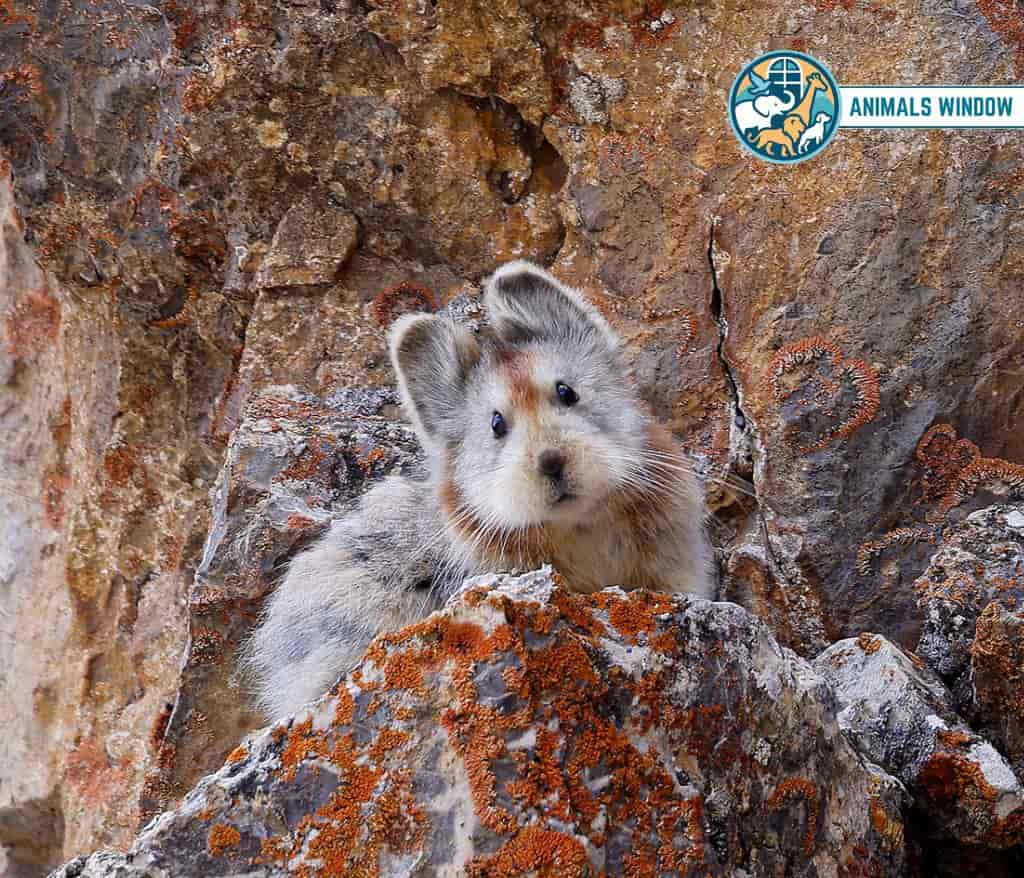
The ili pika looks like someone crossed a tiny rabbit with a teddy bear. It has round ears, a flat face, and rusty-orange patches on its fur that make it look almost hand-painted. But spotting one in real life is nearly impossible. Scientists first discovered it in 1983, and for over 20 years, there were no confirmed sightings at all. The man who discovered it, Li Weidong, finally spotted one again in 2014 — and he’d been searching for decades.
The ili pika doesn’t hibernate like most small mountain animals. Instead, it spends summer collecting and storing piles of dried plants under rocks to eat through winter. It’s highly sensitive to temperature changes, and as climate change pushes warm air higher up the mountain, the ili pika keeps climbing — until there’s no mountain left to climb.
🔥 Comparison Fact: An ili pika fits comfortably in one human hand, about the size of a large lemon.
4. Kakapo
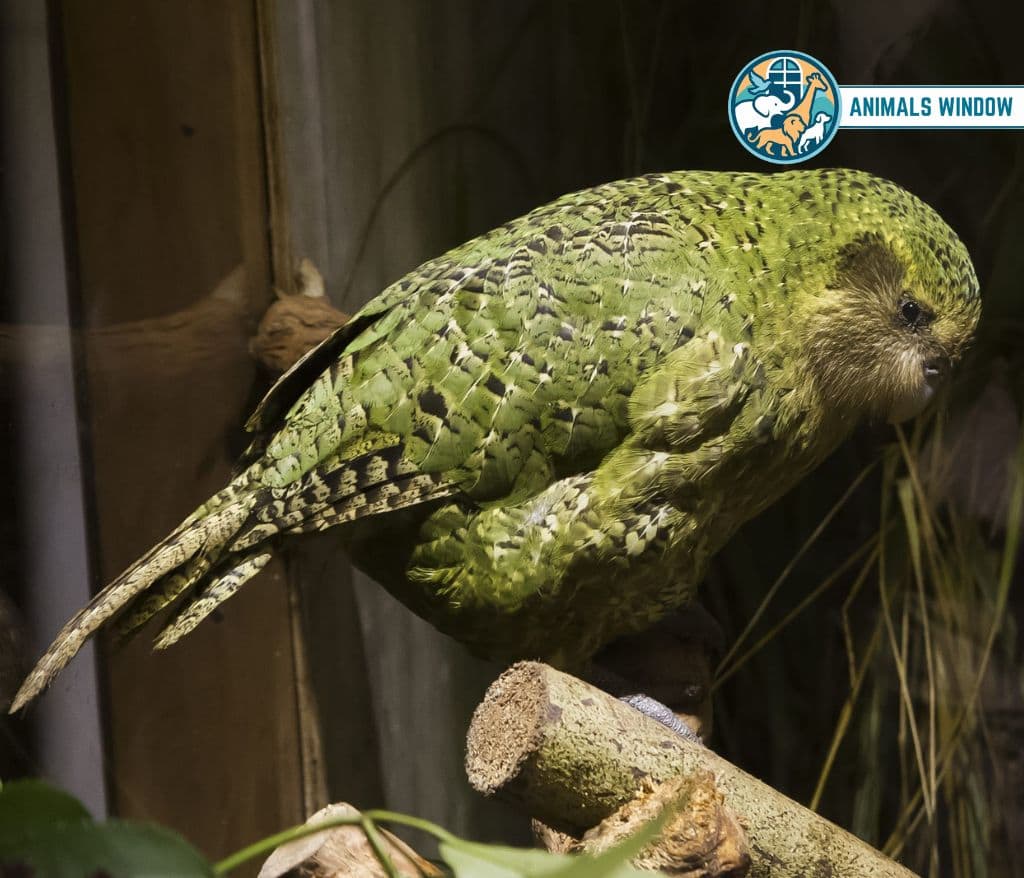
- Scientific name: Strigops habroptilus
- Size: 23–25 inches tall
- Weight: 4–9 lbs
- Diet: Fruits, seeds, plants, pollen
- Habitat: Native forests of New Zealand (now on protected islands)
- Lifespan: Up to 90 years
The kakapo is the world’s only flightless parrot, and it may also be the heaviest. It’s also one of the longest-living birds ever recorded — some kakapos alive today were already adults when your grandparents were children. Because New Zealand had no land predators for millions of years, the kakapo never needed to fly. It just walked everywhere, quietly, at night.
What’s fascinating is how it finds a mate. Male kakapos dig bowl-shaped depressions in the ground and make deep booming calls that travel up to 5 kilometers through the forest. This system is called a lek, and each male may boom for hours every night across several months — all just to get a female’s attention. As of 2024, only around 247 kakapos exist in the entire world, making every breeding season critical.
🔥 Comparison Fact: A large kakapo weighs about the same as a standard bag of sugar — around 4 lbs on the light end, up to 9 lbs for bigger individuals.
5. Kiwi
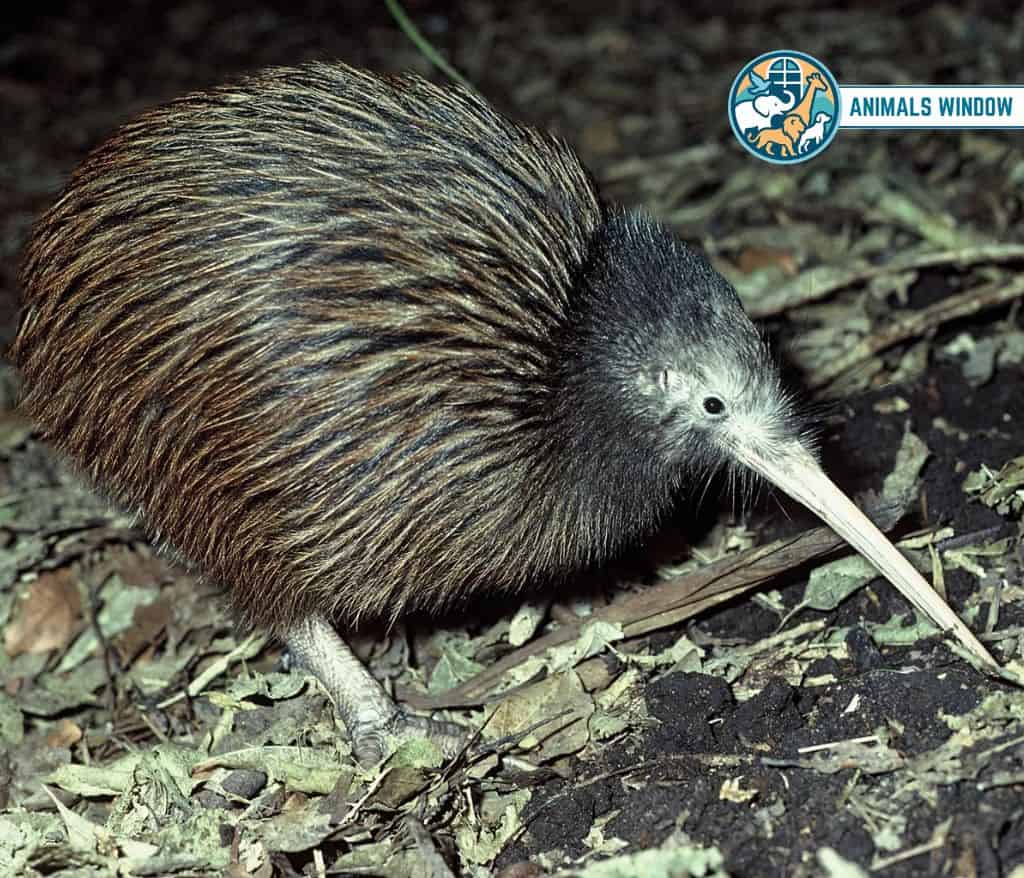
- Scientific name: Apteryx australis
- Size: 14–18 inches tall
- Weight: 3.3–7.3 lbs
- Diet: Worms, insects, berries, seeds
- Habitat: Forests, scrublands, and grasslands of New Zealand
- Lifespan: 25–50 years
The kiwi is a bird that barely looks like a bird. It has hair-like feathers, no visible wings, and its nostrils are at the very tip of its beak — the only bird on Earth built that way. It uses its long beak to probe deep into the soil and actually smell its food underground. Most birds use their eyes to find food. The kiwi uses its nose.
Female kiwis produce one of the largest eggs relative to body size of any bird in the world. The egg can make up up to 20% of the mother’s body weight — imagine a human carrying a 30-pound baby. The male then incubates the egg for about 75 to 80 days, which is a much longer incubation period than most birds of its size. After hatching, the chick is completely independent within a few days.
🔥 Comparison Fact: A kiwi stands roughly as tall as a standard 16-oz water bottle, making it surprisingly small for such a famous national symbol.
6. Koala
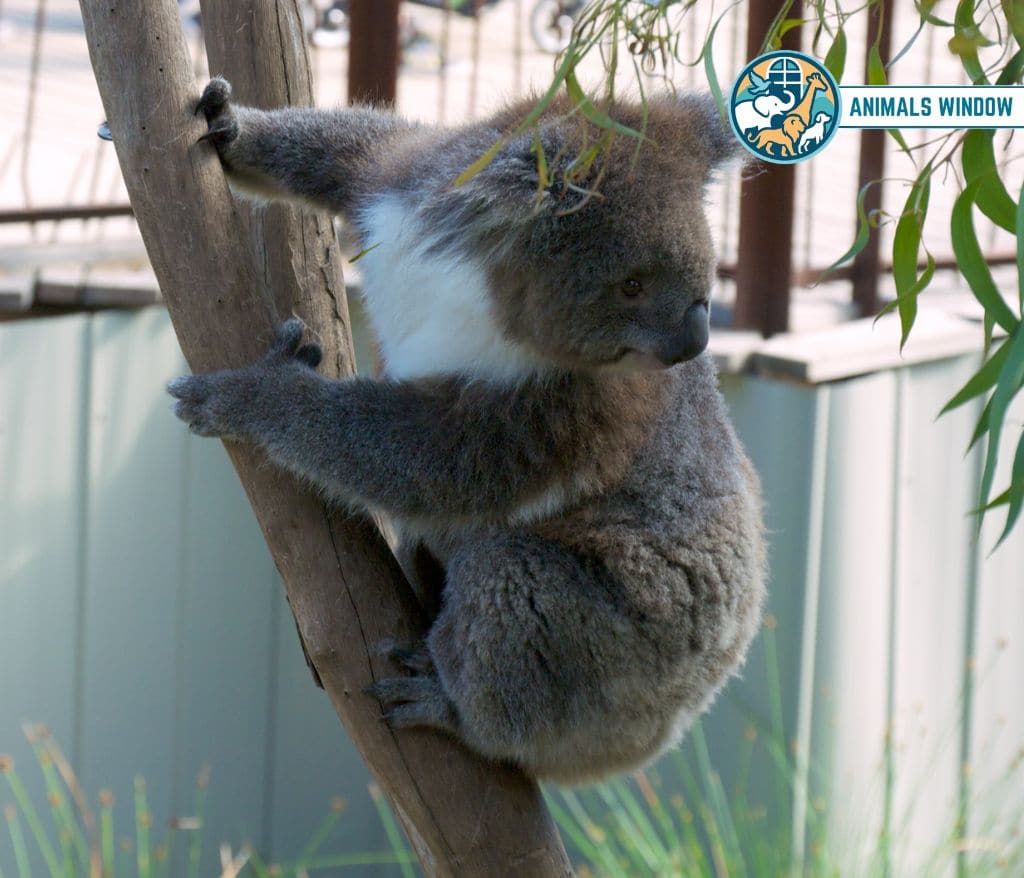
- Scientific name: Phascolarctos cinereus
- Size: 24–33 inches long
- Weight: 9–33 lbs
- Diet: Eucalyptus leaves almost exclusively
- Habitat: Eastern and southeastern Australia
- Lifespan: 13–18 years in the wild
Koalas are famous for being sleepy, and the reason is real. Eucalyptus leaves are toxic and low in nutrition, so digesting them costs enormous energy. To manage that, koalas sleep up to 22 hours a day. That’s not laziness — that’s a survival strategy built over millions of years.
But here’s something most people don’t know: koalas have fingerprints almost identical to human fingerprints. Even under a microscope, forensic scientists have had trouble telling them apart. They also have a unique digestive organ called a caecum, which can reach up to 200 cm long — one of the longest relative to body size in any mammal — specifically designed to detoxify the eucalyptus compounds that would kill other animals.
🔥 Comparison Fact: A baby koala (called a joey) when first born is about the size of a jellybean — roughly 2 cm long.
7. Margay
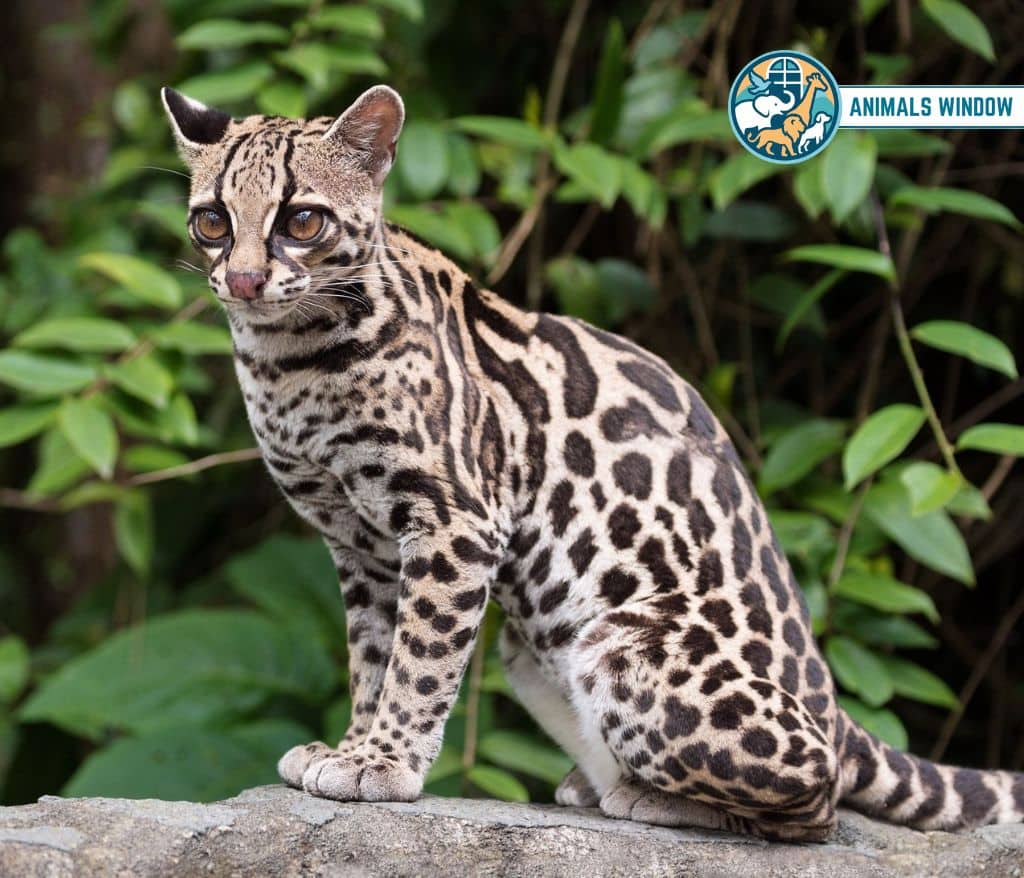
- Scientific name: Leopardus wiedii
- Size: 18–31 inches long
- Weight: 5.5–9 lbs
- Diet: Birds, small mammals, frogs, insects
- Habitat: Tropical and subtropical forests from Mexico to Argentina
- Lifespan: Up to 20 years in captivity
The margay is a small wild cat that spends almost its entire life in trees. Unlike most cats, it can rotate its back ankles 180 degrees, which means it can run headfirst down a tree trunk the same way a squirrel does. It can also hang from a single back foot while reaching for prey with its front paws. No other cat in the Americas moves quite like it.
What really stands out is its hunting trick. Researchers documented a margay mimicking the calls of a baby pied tamarin monkey to lure adult tamarins closer. The adults came to investigate the sound, and the margay ambushed from the trees. This is one of the very rare recorded cases of a wild cat using vocal deception to hunt. It’s not just shy — it’s clever in ways that still surprise scientists.
🔥 Comparison Fact: A margay is roughly the size of a large domestic cat — about the length of a standard school ruler from nose to base of tail.
8. Okapi
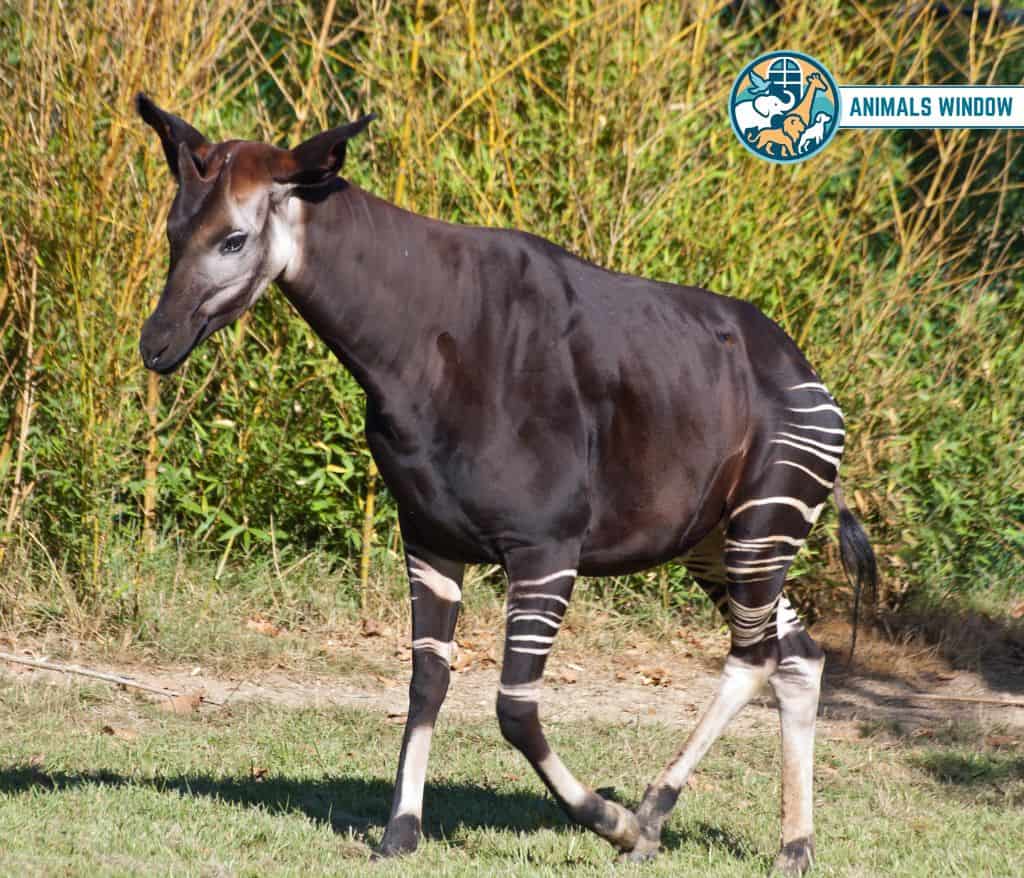
- Scientific name: Okapia johnstoni
- Size: 5–6.5 feet tall at the shoulder
- Weight: 440–770 lbs
- Diet: Leaves, fruits, grasses, fungi
- Habitat: Dense rainforests of the Democratic Republic of Congo
- Lifespan: Up to 30 years in captivity
The okapi is one of the most secretive large animals on Earth. It lives only in the Ituri Rainforest in the DRC, and for years, Western scientists didn’t even believe it existed — locals described it, but no scientist had seen one. It wasn’t officially documented until 1901. Despite being related to the giraffe, it looks like a horse with zebra-striped legs and a very long neck.
The okapi uses its 18-inch, dark blue-black tongue for more than eating. It can lick its own eyelids and clean inside its own ears. The tongue is long enough to reach around the face and behind the head. Okapis are also nearly silent — they communicate using low-frequency sounds called infrasound, below what humans can hear, which helps them stay hidden in the dense forest while still coordinating with their young.
🔥 Comparison Fact: An adult okapi weighs about as much as a grand piano — somewhere between 440 and 770 lbs.
9. Pangolin
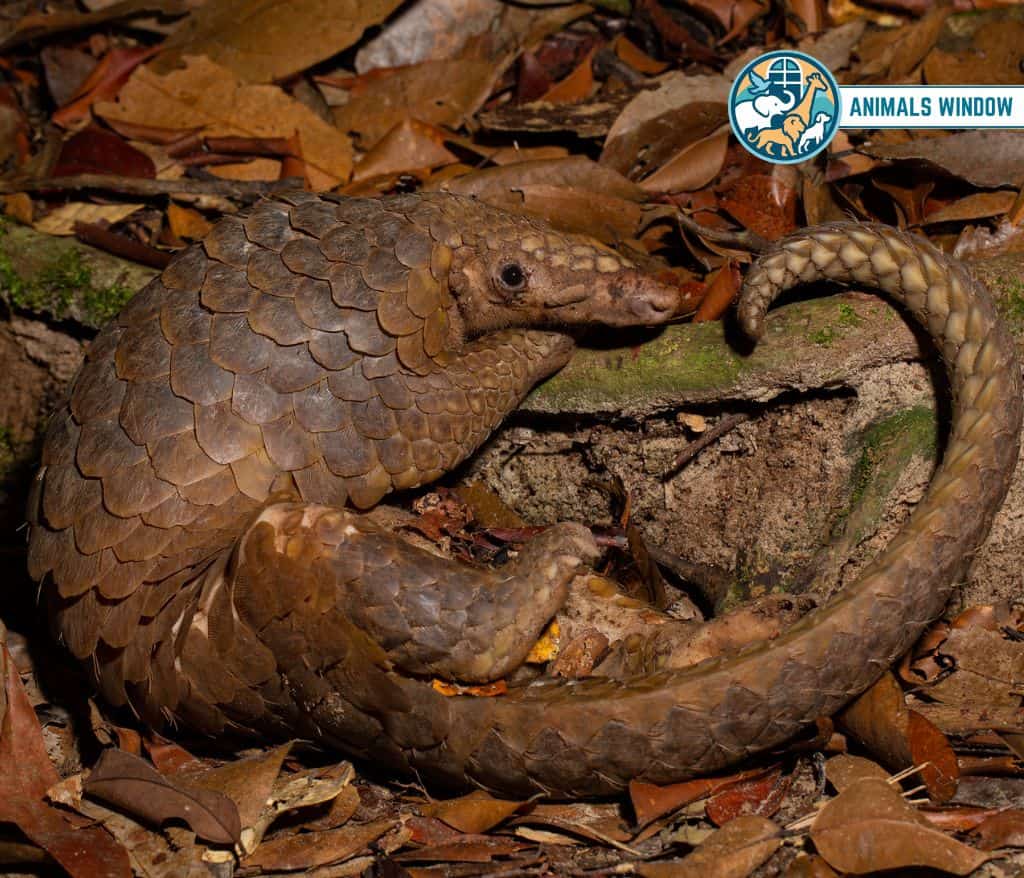
- Scientific name: Manis javanica (Sunda Pangolin)
- Size: 25–35 inches long
- Weight: 4.4–14.3 lbs
- Diet: Ants and termites exclusively
- Habitat: Forests and grasslands across Asia and Africa
- Lifespan: Up to 20 years in captivity
The pangolin is the most trafficked wild mammal on Earth, which is heartbreaking for an animal this shy. It has no teeth. It doesn’t fight back. When threatened, it simply rolls into a tight ball, its overlapping keratin scales forming an almost impenetrable armor. Lions and hyenas have been seen trying to uncurl a pangolin for several minutes before giving up.
A pangolin’s tongue is longer than its entire body — it can extend up to 40 cm and is anchored not in the mouth but deep in the chest cavity. It licks up ants at a rate of around 70 licks per second. To protect its eyes and nose while doing this, it seals them shut with specialized muscles. It finds ant colonies by smell alone and can consume up to 70 million insects per year — which makes it one of the most effective natural pest controllers in its ecosystem.
🔥 Comparison Fact: A rolled-up pangolin is about the size and shape of a volleyball.
10. Pink Fairy Armadillo
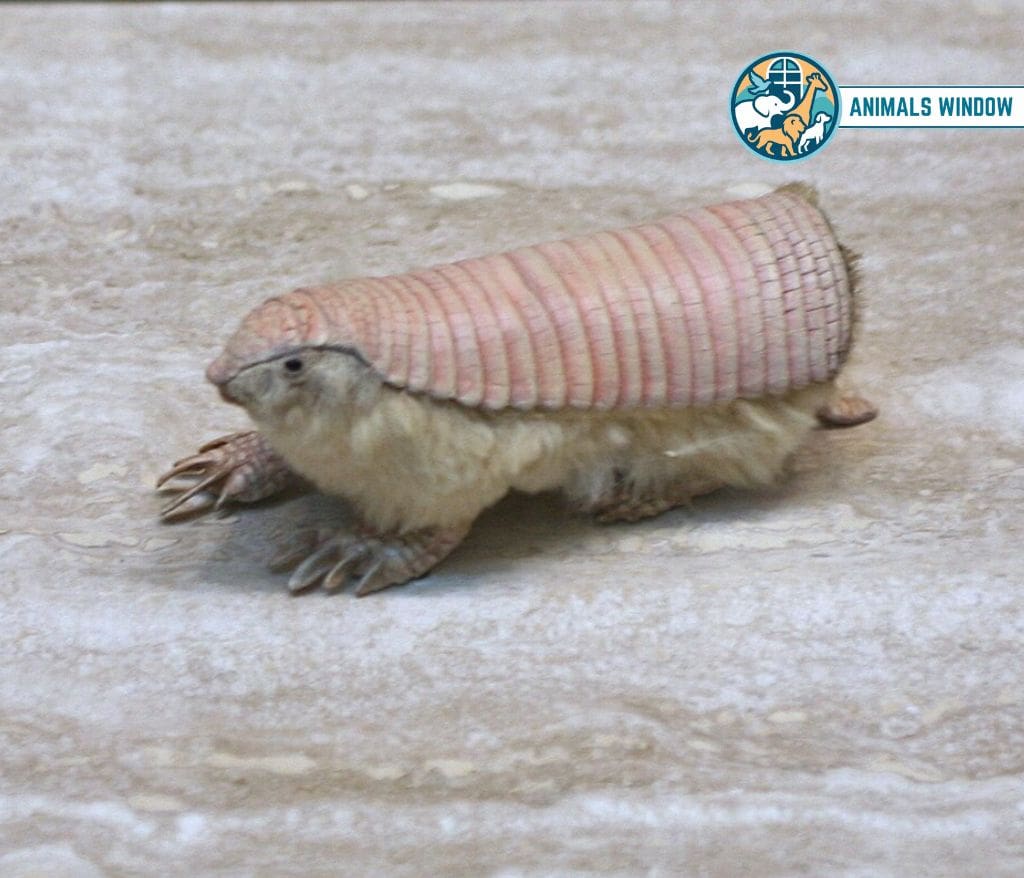
- Scientific name: Chlamyphorus truncatus
- Size: 3.5–4.5 inches long
- Weight: 3–4.5 oz
- Diet: Ants, worms, plant matter, insect larvae
- Habitat: Sandy plains and dry grasslands of central Argentina
- Lifespan: Estimated 5–10 years (rarely studied)
The pink fairy armadillo is the smallest armadillo species in the world, and it might also be the hardest to study. It spends almost all of its life underground and comes to the surface so rarely that most wildlife researchers have never seen one in person. Its tiny pink shell isn’t bone — it’s attached loosely to its skin and acts more like a heat regulator than armor.
What’s unusual is how it moves underground. It doesn’t dig like a mole using its claws in a pushing motion. Instead, it swims through the sand, using its front claws to break up loose soil and its back end (which has a flat plate) to pack sand behind it. If it gets too cold or wet, it can die quickly — it’s so specialized for dry sandy soil that it can’t survive in captivity for more than a few days, making it nearly impossible to study closely.
🔥 Comparison Fact: A pink fairy armadillo is roughly the size of a large brownie bar — about 4 inches long and fitting in the palm of a hand.
11. Platypus
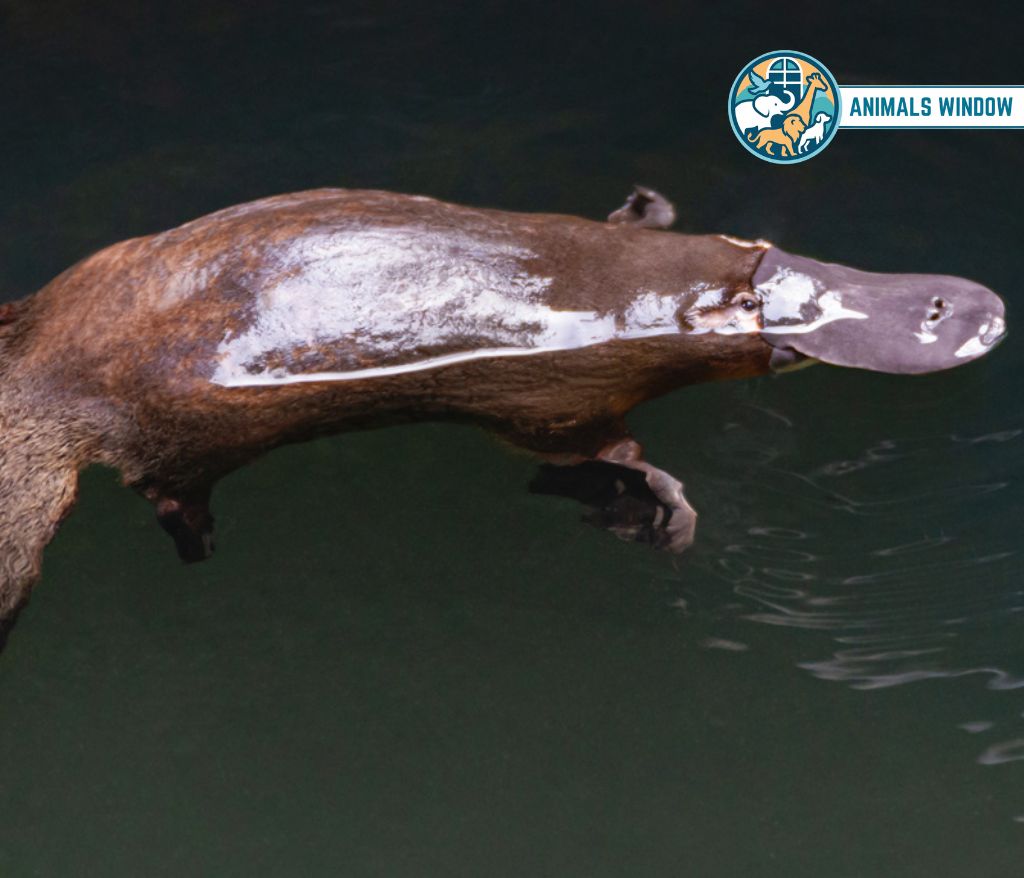
- Scientific name: Ornithorhynchus anatinus
- Size: 15–24 inches long
- Weight: 1.5–5.3 lbs
- Diet: Worms, shrimp, crayfish, insect larvae
- Habitat: Rivers and streams of eastern Australia and Tasmania
- Lifespan: Up to 17 years in the wild
When European scientists first saw a platypus skin in 1799, they thought someone had sewn a duck’s bill onto a beaver. It was that strange. The platypus is a mammal that lays eggs, has a duck bill, beaver tail, otter feet — and the males have venomous spurs on their hind legs capable of causing severe pain in humans.
But here’s the most remarkable thing about it: the platypus hunts completely blind, deaf, and with its nostrils closed underwater. Its bill is packed with around 40,000 electroreceptors that detect the tiny electric fields produced by the muscle movements of prey. It essentially “sees” electricity. It sweeps its head side to side while swimming, triangulating the source of electrical signals the way other animals use eyes. No other mammal on Earth hunts this way.
🔥 Comparison Fact: A platypus is about the length of a 30 cm ruler — small enough that most people are surprised how compact it is in real life.
12. Quokka
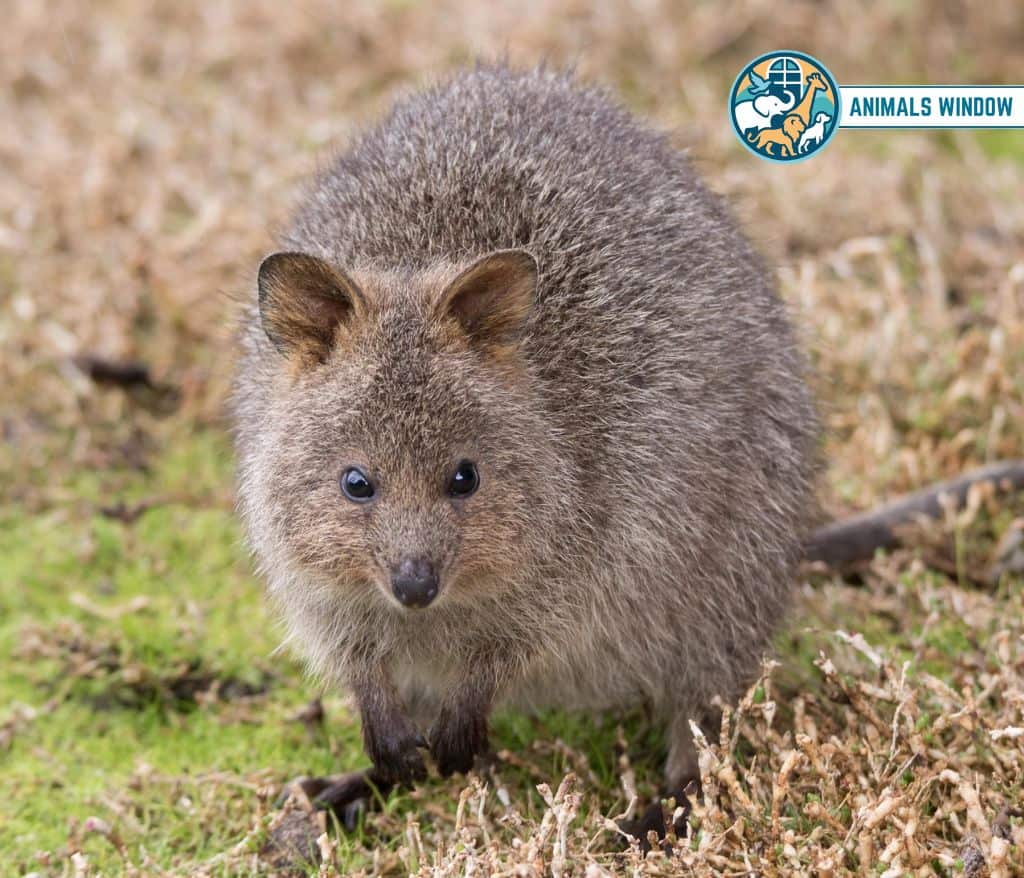
- Scientific name: Setonix brachyurus
- Size: 16–21 inches long
- Weight: 5.5–11 lbs
- Diet: Grasses, leaves, bark, stems
- Habitat: Rottnest Island and small areas of southwestern Australia
- Lifespan: Up to 10 years in the wild
The quokka has been called the happiest animal on Earth, and it’s not hard to see why. The natural shape of its face — round, with upturned edges around the mouth — makes it look like it’s always smiling. Tourists on Rottnest Island take selfies with them constantly, and the quokka usually walks right up to people without fear. For a timid animal, it’s surprisingly comfortable around humans on its protected island home.
What most people miss is how it survives tough conditions. The quokka can re-absorb a developing embryo if food becomes scarce — essentially pausing reproduction until conditions improve. It can also survive on very low-water plants during dry seasons, pulling moisture from its food alone. At night, it creates small runways through dense vegetation, like private tunnels only it knows how to navigate.
🔥 Comparison Fact: A quokka is roughly the size of a domestic cat — maybe slightly stockier, about the weight of a large bag of flour.
13. Saola
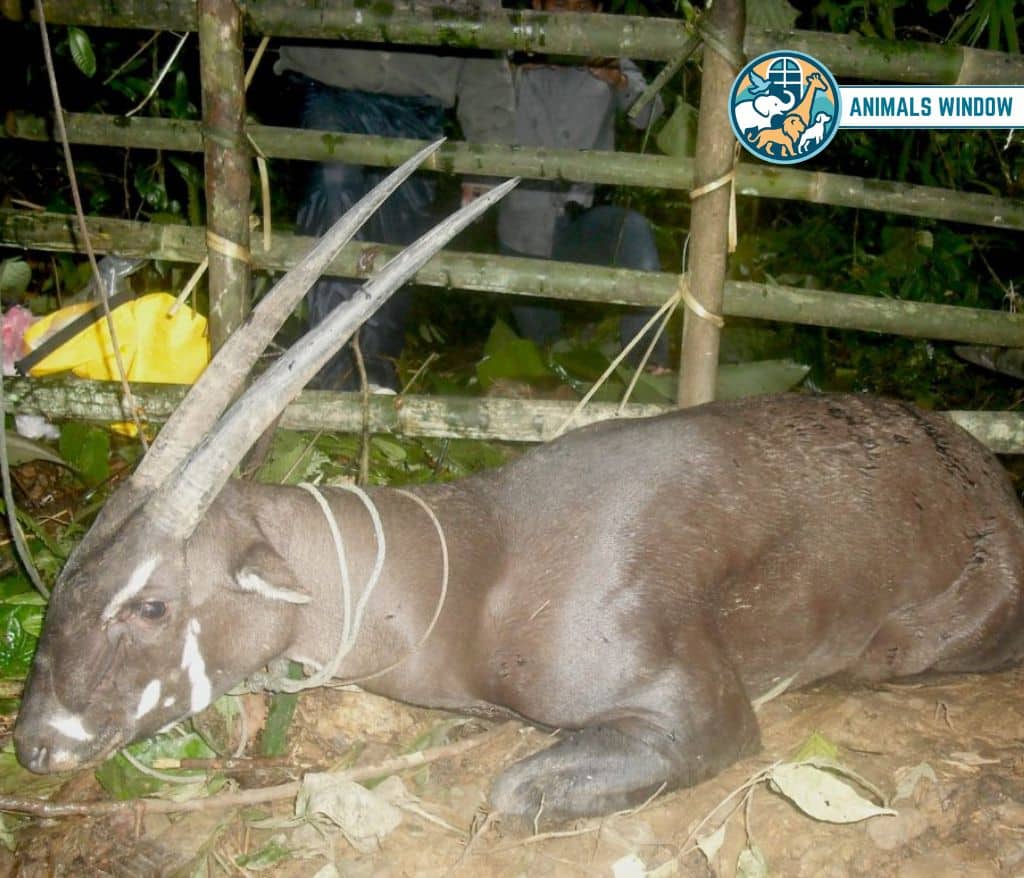
- Scientific name: Pseudoryx nghetinhensis
- Size: 33–35 inches at the shoulder
- Weight: 175–220 lbs
- Diet: Plants, figs, and riverside vegetation
- Habitat: Annamite Mountains on the Vietnam–Laos border
- Lifespan: Unknown in the wild
The saola might be the rarest large animal alive. It was only discovered in 1992, making it one of the most recent large mammal discoveries in the 20th century. Since then, it has been photographed by camera traps fewer than 10 confirmed times total. No scientist has ever observed a living saola in the wild. The entire population size is unknown. Some estimates suggest fewer than 100 remain.
It has two long, nearly parallel horns — unique among bovine animals — and large facial glands that can open and secrete a strong-smelling substance, possibly used for marking territory. Locals call it the “Asian unicorn,” not because it’s magical but because it is almost impossible to find. Every confirmed photo has come from camera traps triggered automatically in the forest, never from a human choosing to watch one.
🔥 Comparison Fact: A saola stands about as tall at the shoulder as a large German Shepherd dog, though it’s much longer and heavier.
14. Snow Leopard
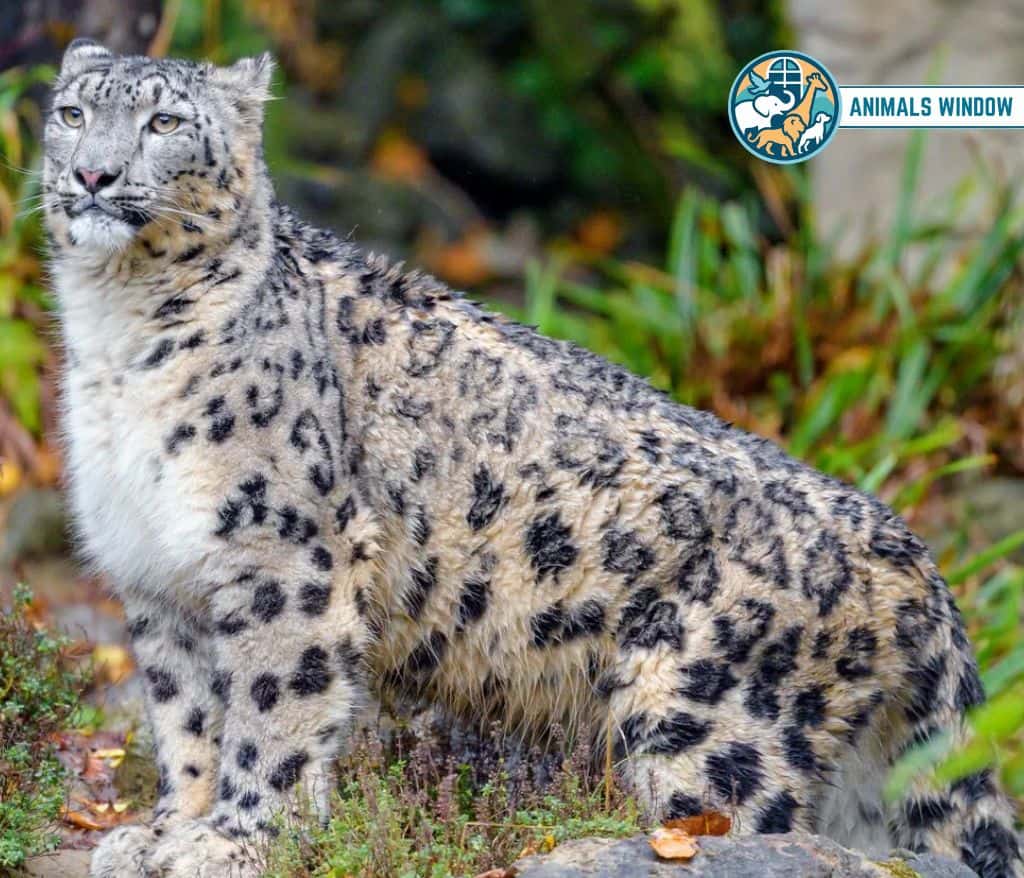
- Scientific name: Panthera uncia
- Size: 35–60 inches long (plus a 40-inch tail)
- Weight: 60–120 lbs
- Diet: Blue sheep, ibex, small mammals
- Habitat: Mountain ranges of Central Asia, including the Himalayas
- Lifespan: Up to 21 years in captivity
The snow leopard is possibly the most elusive large predator alive. It lives at altitudes between 9,800 and 17,000 feet, in some of the coldest, windiest terrain on Earth. Local communities in the Himalayas call it the “ghost of the mountains” — not as a nickname, but because generations of herders have lived beside them their whole lives without ever seeing one.
Snow leopards cannot roar. Unlike lions, tigers, and leopards, their throat anatomy won’t allow it. Instead, they produce a soft, puffing sound called a “chuff” — used between individuals as a friendly greeting. Their tails are almost as long as their bodies and are so thick with fat and fur that the cats wrap them around their face like a scarf in extreme cold. They’re not just shy — their entire body is built for silence and disappearance.
🔥 Comparison Fact: A snow leopard’s tail alone can be 40 inches long — nearly as long as a baseball bat.
15. Sunda Colugo
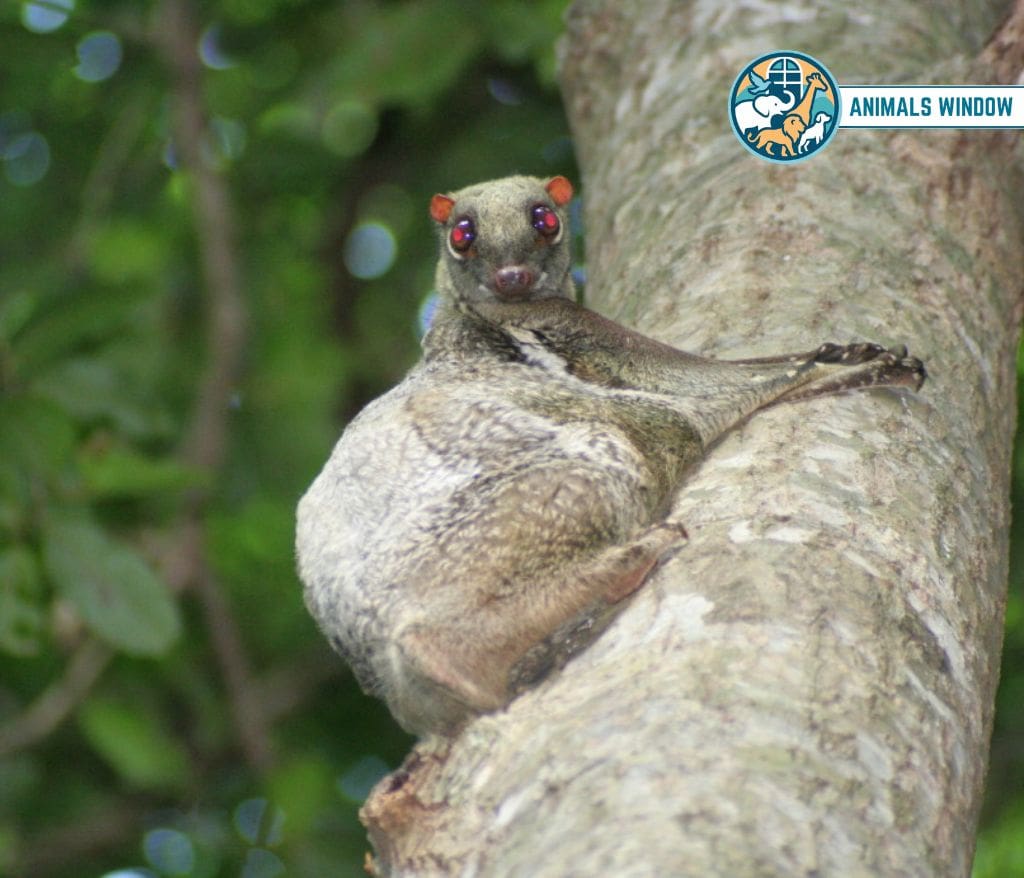
- Scientific name: Galeopterus variegatus
- Size: 13–16 inches long
- Weight: 2.2–4.4 lbs
- Diet: Leaves, flowers, sap, soft fruits
- Habitat: Rainforests of Southeast Asia (Malaysia, Indonesia, Thailand)
- Lifespan: Up to 17 years in captivity
The Sunda colugo is not a flying squirrel, not a monkey, and not a bat — though it looks like all three at once. It has a thin membrane of skin (called a patagium) that stretches from its neck all the way to the tips of its fingers, toes, and tail. When it spreads its limbs, it becomes a living parachute.
And it uses it well. A single glide can cover over 200 feet — about two-thirds the length of a football field — with almost no loss in height. That’s the best glide ratio of any tree-dwelling mammal on Earth. During the day, it clings motionless to a tree trunk, camouflaged perfectly in bark-like patterns. At night, it moves through the forest silently, launching from tree to tree without ever touching the ground. Colugos are also the closest living relatives of primates — genetically closer to monkeys and apes than to any other mammal group.
🔥 Comparison Fact: A Sunda colugo spread out mid-glide has a wingspan-like stretch roughly equal to a large open newspaper.
FAQ’s About Shy Animals in the World
What is the shyest animal in the world?
The saola. It was discovered in 1992 and has been photographed fewer than 10 times. No scientist has ever seen one alive in the wild.
Are shy animals dangerous?
Most shy animals are not dangerous to humans. They avoid humans entirely. The platypus has a venomous spur and the snow leopard is a predator, but neither seeks out humans.
Why are some animals shy or timid?
Shyness in animals is usually a survival response. Small or slow animals stay hidden to avoid predators. Others hide so their prey doesn’t run before they can hunt.
Can shy animals be friendly?
A few, yes. Quokkas approach humans on their own. Koalas tolerate close contact. But most shy animals — like the saola or ili pika — avoid all human interaction.
Which shy animals are the rarest?
The saola (possibly under 100 left), the kakapo (around 247 individuals), and the ili pika (missing from records for over 20 years) are the rarest on this list.
Trait Comparison: Shy vs. Elusive vs. Nocturnal Animals
| Trait | Shy Animals | Elusive Animals | Nocturnal Animals |
| Avoids humans | ✅ Yes | ✅ Yes | Partially |
| Active during day | Rarely | Sometimes | ❌ No |
| Can be spotted with patience | Sometimes | Very rarely | With night equipment |
| Examples | Quokka, Koala | Saola, Ili Pika | Aye-aye, Kiwi, Pangolin |
| Defense strategy | Hiding, freezing | Living in remote areas | Active only in darkness |
| Risk of extinction | Medium to High | Critical | Varies |
| Studied by scientists | Often | Rarely | Moderately |
Shy animals use hiding and avoidance as their main tool. Elusive animals are rarely seen because they live in remote areas with tiny populations. Nocturnal animals aren’t necessarily shy — they’re just active when humans aren’t. The overlap between all three is where the most mysterious creatures on Earth tend to live.
More Related Animals Guides:

I have loved animals since I was a kid. I enjoy reading about how animals live, eat, move, and survive. I started Animals Window to share what I learn in a simple and easy way. I write about animal body parts, size, behavior, diet, habitats, and species. My goal is to make animal facts clear and fun for everyone to understand.